










Oil, gas, and green ambition: Azerbaijan’s dual energy strategy Review by Khazar Akhundov
The ongoing global energy crisis, linked to the conflict in the Middle East in general and the de facto blockade of the Strait of Hormuz in particular, continues to affect the economies of most countries around the world. Against this backdrop, the recently launched Baku Energy Week has gained particular importance. It includes the 31st International Caspian Oil and Gas Exhibition - Caspian Oil and Gas, the 14th Caspian International Clean Energy Exhibition - Caspian Power, and the 31st Baku Energy Forum.
The opening ceremony of Baku Energy Week was attended by the President of Azerbaijan, Ilham Aliyev, who outlined the role of the extractive industry in the development of the national economy, highlighted the country’s contribution to global energy security, and assessed the prospects of the “green” transition.
Since 1994, when the first international oil and gas exhibition, Xazarneftgaz, and an energy forum were organised in the capital of independent Azerbaijan on the initiative of national leader Heydar Aliyev, these events have annually become the largest gathering in the Caspian region.
In the years that followed, the exhibition was renamed Caspian Oil & Gas, and the numerous events held within Baku Energy Week have played a significant role in showcasing the achievements of the “Contract of the Century”, becoming an international platform for presenting promising directions in oil and gas extraction and processing.
Today, Baku Energy Week has established itself as a reliable energy platform at both regional and international levels, becoming one of the most important and anticipated events on the global energy calendar. Retaining its status as the largest event in the Caspian region, the Caspian Oil & Gas exhibition and the Baku Energy Forum have not lost their relevance in 2026. This year, they feature innovations in oil and gas field development, drilling technologies, pipelines, the implementation of digital solutions, and artificial intelligence (AI), among others.
To participate in the events held on June 1–3 in Baku, official delegations and representatives of around 274 companies from 44 countries arrived in the city. Interest in Azerbaijan’s oil and energy sector continues to grow: about 60% of exhibitors are foreign companies, while 40% are local enterprises. Notably, in 2026, 35% of participants are new companies.
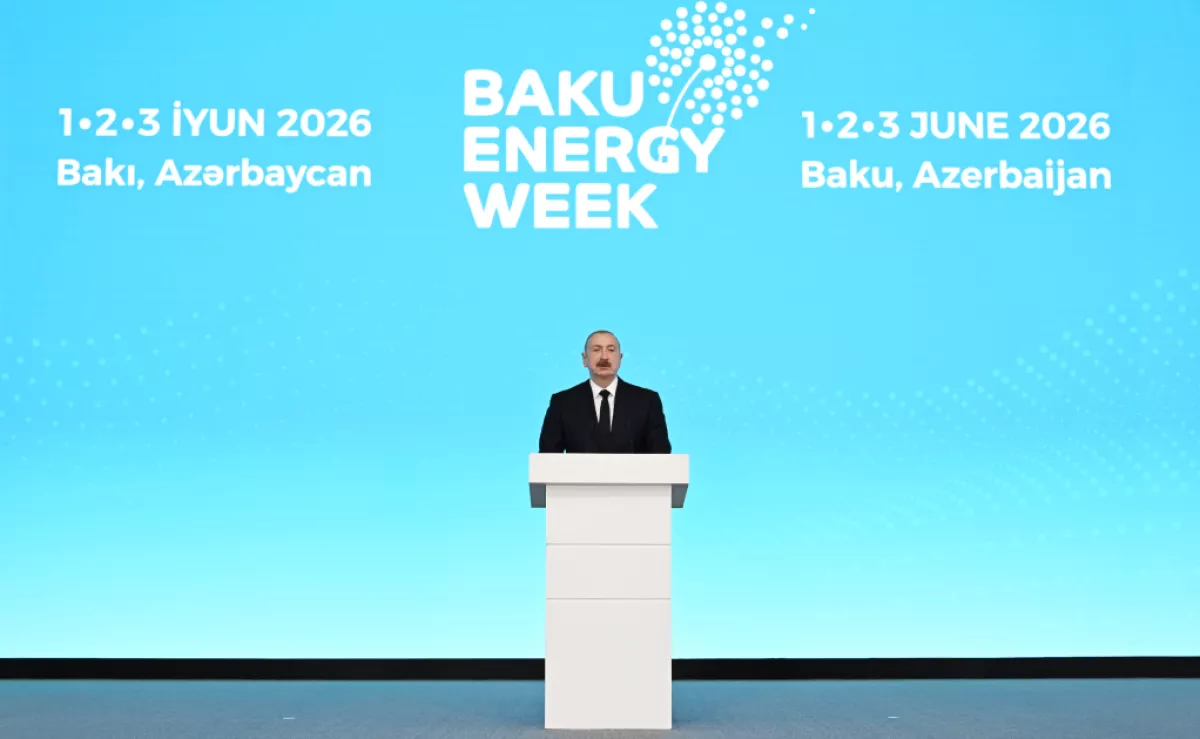
In his speech at the opening ceremony, the head of state particularly emphasised the status of Baku Energy Week and noted that, thanks to a sound energy policy, Azerbaijan is now able to invest beyond its borders: “There was a time, 30 years ago, when we were attracting investors. Now we are taking our investments abroad. Today, our State Oil Company, SOCAR, is investing in the Middle East, Africa, and Central Asia. And this geography will continue to expand.”
Ilham Aliyev also recalled that over the past three decades Azerbaijan has fully utilised its energy potential and was among the first in the post-Soviet space to open its fields to international oil companies. At that time, the country’s economy was in a very difficult situation: financial resources were lacking, electricity and gas were being imported, the poverty rate exceeded 50%, and unemployment was widespread.
“And the only way for us to survive as an independent country and move forward was to use what we had—our natural resources,” the head of state noted, stressing that after the signing of the “Contract of the Century” and cooperation with foreign partners in the development of oil and gas fields, the resulting revenues were reinvested into social infrastructure, education, healthcare, and energy development.
Today, Azerbaijan’s economic indicators are very positive, with ratings from leading international agencies improving year by year. The poverty and unemployment rates have fallen to 5%, while external debt stands at just over 6% of GDP, making it one of the lowest levels in the world. In addition, the country’s reserves exceed its external debt by more than 18 times.
President Ilham Aliyev also addressed the issue of energy security: “Energy security. We all talk about that, especially now, when the crisis in the Middle East has largely damaged the energy security of many countries, producers, and consumers. We worked on that for many years. We invested heavily and initiated large-scale infrastructure projects such as the Baku-Tbilisi-Ceyhan oil pipeline, connecting the Caspian and the Mediterranean for the first time; the Baku-Supsa oil pipeline, connecting the Caspian and the Black Sea; and TANAP and TAP—the Trans-Anatolian and Trans-Adriatic gas pipelines—which, together with the South Caucasus Gas Pipeline, are part of the Southern Gas Corridor, one of the most ambitious energy infrastructure projects of our time: a 3,500-kilometer integrated pipeline system. Part of it goes across high mountains; part of it runs along the seabed. Today, it provides energy security for a growing number of countries.”
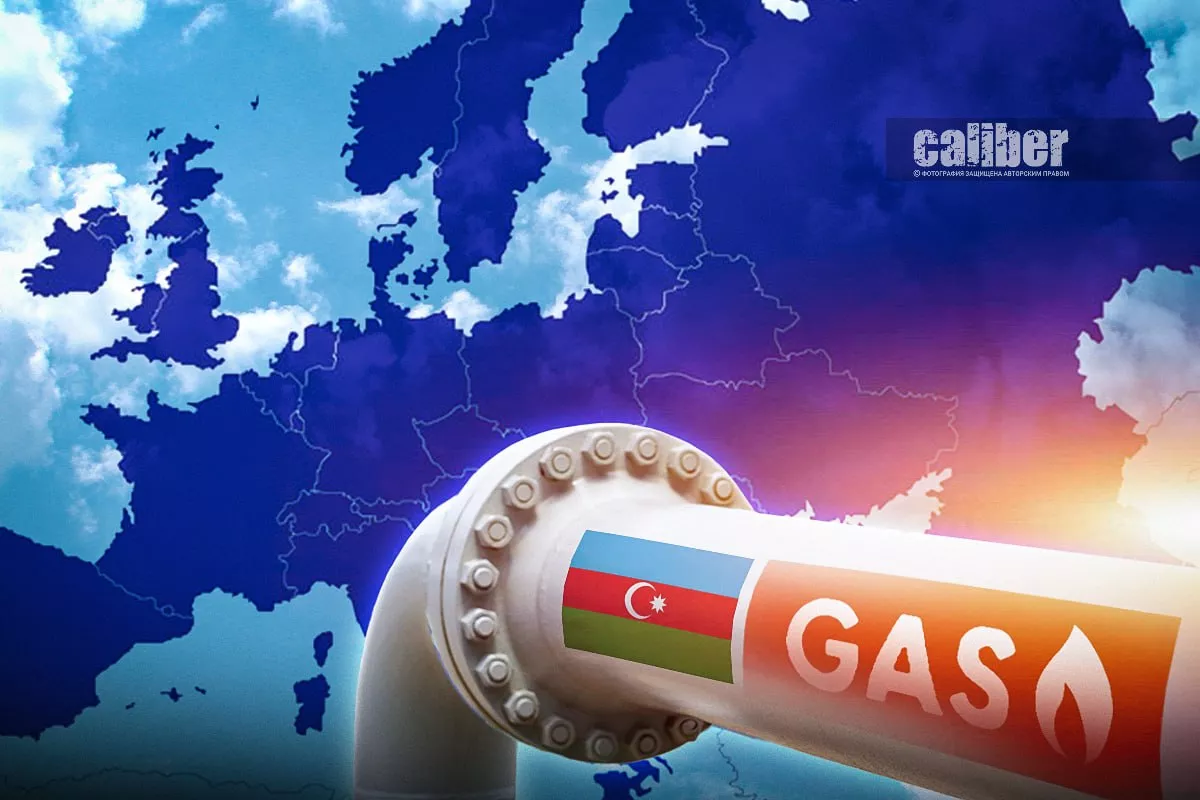
Ilham Aliyev recalled in this regard that last year, during Baku Energy Week, he informed the audience that Azerbaijan supplied gas to 12 countries; today, that number has increased to 16, including 10 European Union member states. In terms of pipeline gas deliveries to different countries and regions – that is, by the parameter of geographical coverage – Azerbaijan ranks first in the world.
The Azerbaijani leader also noted that the number of gas-buying countries will continue to grow, as will export volumes. “In particular, I would like to highlight the Azeri-Chirag-Gunashli deep gas project, which will generate additional gas production, along with Absheron and many other projects,” he said.
It is worth recalling that the start of deep-gas production from the deep-water section of the ACG field is expected around June this year. The free natural gas reserves here are estimated at approximately 4 trillion cubic feet. In turn, full-scale development of the Absheron field is expected to begin within two to three years, with a threefold increase in gas production; its reserves are estimated at 350 billion cubic metres.
In addition, gas production is expected to begin under the second phase of development of the Umid field, whose proven and probable reserves are estimated at around 3.5 trillion cubic feet of gas and 100 million barrels of gas condensate. Thus, Azerbaijan possesses substantial reserves of “blue fuel” both for domestic consumption and for expanding exports via the Southern Gas Corridor for at least the next 100 years. This is a key factor in energy security, without which the stability of the European energy market today is difficult to imagine.
The country’s efforts in this direction have received high appreciation from the international community, as the President of Azerbaijan noted in his speech: “I'm very grateful to President Trump for his kind message and also very grateful to President Erdoğan of Türkiye and UK Prime Minister Starmer for their messages to the event.
President Trump deserves additional gratitude for bringing the energy trend back to normality. As we all know, for many years countries and companies involved in oil and gas production have been demonized and sometimes blackmailed, accused of ruining the planet, and without any grounds, cornered in public opinion.
President Trump changed that trend, and that was a really remarkable event because we all know that some of the big oil companies even changed their names to be in line with so-called modern trends. But the reality is absolutely different. The world cannot live without fossil fuels. We all want to have a better climate and save the planet. We all want to live in a better environment. But today we must be very pragmatic and, based on realism, plan our future with respect to energy security while also investing in renewables.”
In this context, it is quite logical that the Caspian Power programme of the forum and exhibition places particular emphasis on the topic of “green” energy. It showcases modern technologies in the field of solar and wind energy, hydrogen production, electric transport projects, and energy efficiency. These trends represent the main direction of Azerbaijan’s electricity sector development: it is expected that by 2027, investments in the construction of 10 solar and wind power plants will exceed $2.7 billion, while the country’s energy system will gain an additional 2 GW of capacity.
Today, Azerbaijan is closely cooperating with international partners on the development of energy cable infrastructure. As an example, President Ilham Aliyev mentioned the Black Sea Energy Cable project, which will be laid from Azerbaijan to Georgia and further across the Black Sea to Romania, Hungary, and several other countries. He also recalled that another project is currently under implementation – the Azerbaijan–Georgia–Türkiye–Bulgaria onshore electricity transmission line.
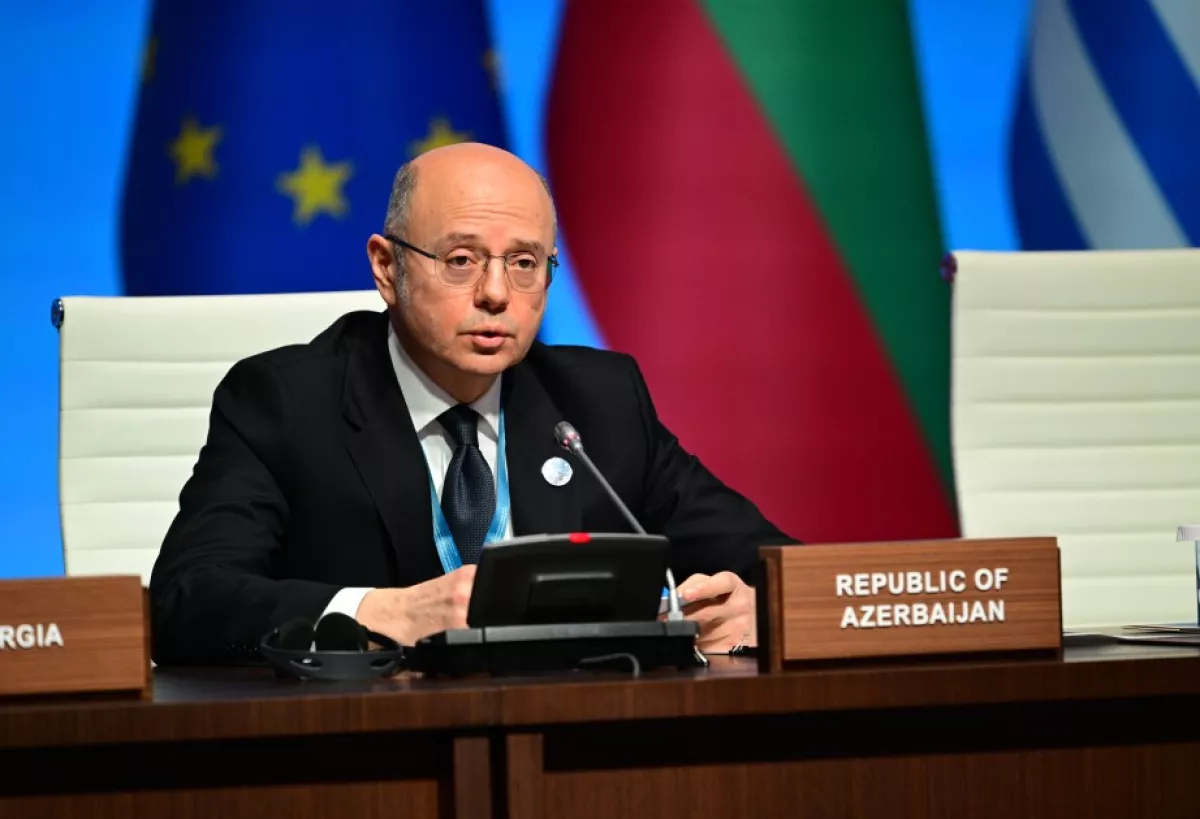
In turn, speaking at the forum, Energy Minister Parviz Shahbazov also focused on “green” energy initiatives. In particular, he emphasised that the Azerbaijan–Türkiye energy hub passing through Nakhchivan, as well as the Azerbaijan–Georgia–Türkiye–Bulgaria energy corridor projects, have already entered an active phase thanks to the strategic unity and leading role of the two brotherly states. At the same time, according to the minister, the TRIPP project creates a strategic foundation for forming an energy architecture linking “Central Asia – Azerbaijan – Türkiye – Europe”. Meanwhile, the feasibility study of the “Central Asia – Azerbaijan” energy corridor project, financed by the Asian Development Bank and the Asian Infrastructure Investment Bank, is expected to be completed in May 2027.
It should be recalled that Kazakhstan, Uzbekistan, and Turkmenistan, which possess significant potential in solar and wind energy, consider Azerbaijan a reliable transit route for access to external markets. Against this backdrop, planned investments in generation capacities and energy infrastructure in Central Asia and the South Caucasus have already reached $289 billion. This cooperation is ongoing, and during Baku Energy Week new memoranda of understanding on the development of the “Trans-Caspian Green Energy Corridor”, agreements on solar and wind projects, and a dedicated Central Asia Energy Transition Investment Forum (with the participation of the International Renewable Energy Agency) are expected to be signed. The focus will be on energy storage, digitalisation of energy systems, green hydrogen, and the development of the Middle Corridor.
Azerbaijan is a key link in all the aforementioned initiatives due to its rapidly expanding “green” generation capacity. As the Energy Minister noted, the country is successfully implementing plans to develop renewable energy sources with a capacity of 8 GW by 2032, intended for domestic consumption, export, and the power supply of AI infrastructure and data centres. “The integration of 2 GW of these capacities into the national power system will be completed next year: studies of the power grid are nearing completion, aimed at increasing the share of renewables in installed capacity to around 43% by 2035,” he said.
As for the sustained demand for “green” electricity produced in Azerbaijan and Central Asian countries, it can be ensured by the sizeable market of European states. According to the minister, statistics and forecasts suggest that, given the growing demand for electricity in the European market, an additional demand of 300 terawatt-hours will emerge by 2030. “If we take into account the development of data centres for artificial intelligence, digitalisation, e-mobility, and so on, this figure will almost double. This means that Europe itself will require additional sources of electricity,” he noted.
Aspects of international cooperation in the renewable energy sector were discussed at the 31st Baku Energy Forum, with the main sessions continuing at the Baku Congress Centre. These sessions will address current issues related to energy security, “green” energy and decarbonisation, regional cooperation, and sustainable energy systems.
It should also be noted that a number of major oil and gas companies from the United States have shown interest in participating in Baku Energy Week. Today, on June 2, the 1st US–Azerbaijan Economic Dialogue will take place, jointly organised by the Ministry of Economy and the US Department of State in line with the Charter on Strategic Partnership between the two countries.
The main objective of the event is to expand cooperation in the fields of regional connectivity, trade, industry, transit, energy security, investment, and the development of artificial intelligence and digital infrastructure. Within the framework of the dialogue, a special session will be held with the participation of American and Azerbaijani business communities, and the signing of several memoranda of cooperation and commercial contracts is also planned.







 editor@caliber.az
 +994 55 444-88-98
 Азербайджан, Баку, ул. Низами, 203, Af Business House, 5-й этаж