










Path to Europe through reform: Is Chisinau rethinking its EU integration strategy? Article by Matanat Nasibova
Against the backdrop of growing social polarisation, an intensifying struggle between the authorities and opposition forces, persistent tensions over European integration and regional security issues, as well as the promotion of the idea of unionism, Moldova’s domestic political atmosphere is increasingly taking on the features of a deep confrontation, which continues to attract the attention of expert and analytical circles.
The difficult situation is also reflected in the sweeping changes within the government’s composition. As we reported earlier, Prime Minister Alexandru Munteanu, who headed the Cabinet of Ministers, resigned on July 3 of this year after serving in office for only eight months. He explained his departure by citing a conflict with his own principles, stating in a post on X: “I realized that I could no longer carry out my mandate in accordance with my principles and convictions.” However, a number of media outlets effectively challenged this explanation, reporting that Munteanu had developed deep disagreements with the ruling Party of Action and Solidarity (PAS).
As a result of these tectonic shifts, investor and entrepreneur Vasile Tofan was appointed as the new prime minister, with his candidacy receiving the support of the parliamentary majority on July 22.
While swearing in the Cabinet headed by the new prime minister, President Maia Sandu stated: “We must continue to lead the Republic of Moldova towards European standards. In the coming months, we will have to reach important milestones in the European integration process, and I ask you to make these efforts a priority.”
She also called on the ministers to stimulate economic development, improve the business climate, manage state assets more effectively, and make fuller use of European funds, effectively confirming the conclusion that Moldova is now placing its emphasis on economic growth and moving from political slogans toward technocratic governance.
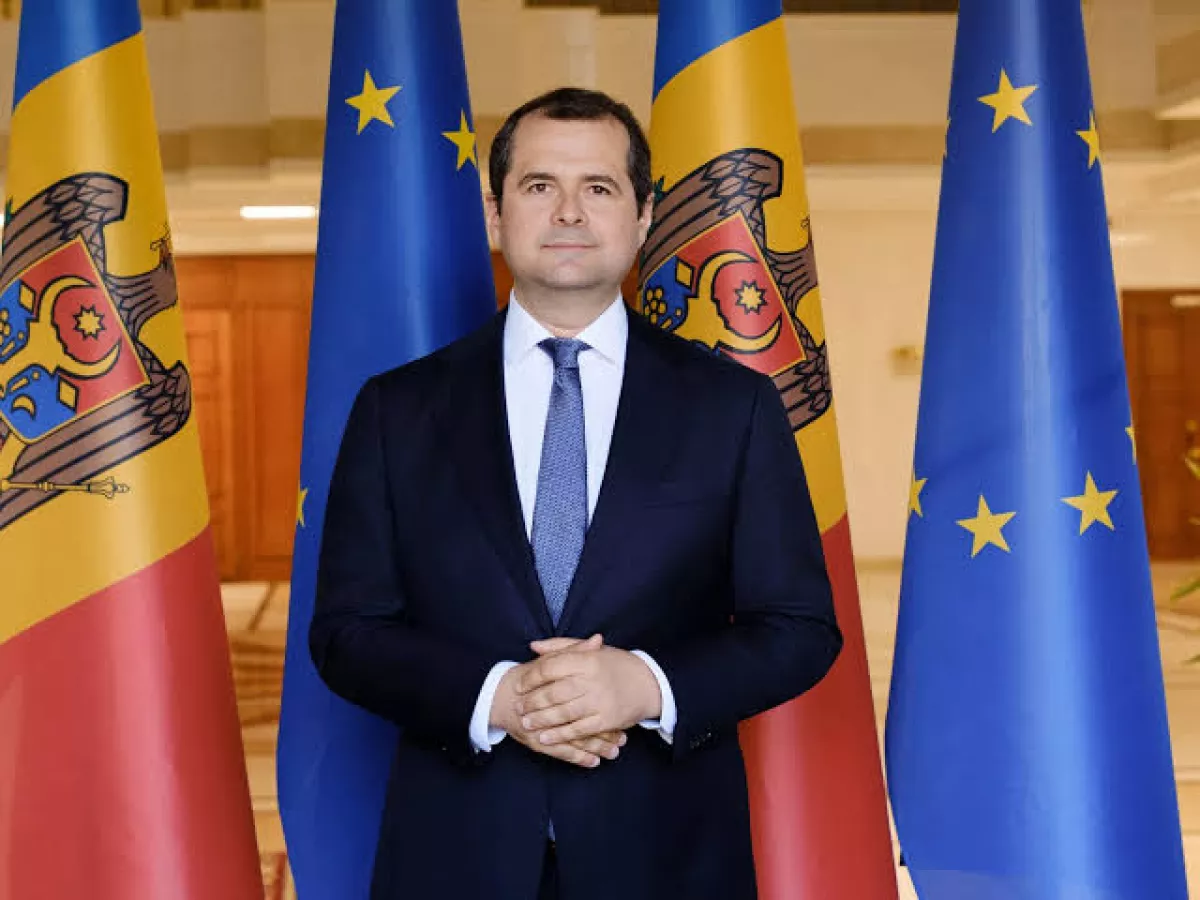
This is clearly reflected in the biography of the new head of government as well. An investor and manager with international professional experience in Europe and the United States, Vasile Tofan received his bachelor’s degree in public administration from Erasmus University Rotterdam and his master’s degree in business administration from Harvard Business School. Between 2006 and 2010, he worked for various companies in the Netherlands.
He is a firm supporter of the country’s European integration process and believes that membership in the European Union is Moldova’s only opportunity to build a competitive economy. Last year, he even founded a civic movement called “Europe-2028”, which was supported by 28 economists and businesspeople with business ties in Transnistria, Gagauzia, and among representatives of the Moldovan diaspora abroad.
Tofan’s vision for Moldova’s future is also clearly reflected in the 147-page government action programme he presented, titled “The European Economy, an Effective State”, which outlines the country’s development trajectory through 2029. The document contains several key priorities, each of which fully corresponds to its overall title.
The first point focuses on accelerating integration into the European Union, including the completion of accession negotiations by 2028 and the rapid opening of all negotiation clusters. The second aims to transform Moldova into the country with the most business-friendly environment in Europe. The third envisages reforms in public administration. The fourth focuses on strengthening security and the justice system. The fifth addresses improving living standards, including enhancing the quality of education and healthcare, as well as supporting the most vulnerable segments of society.
It is therefore abundantly clear that the new prime minister has set his sights on sweeping transformations capable of reshaping the country’s economy and political landscape. This approach bears some resemblance to the British model of governance that will be pursued by Andy Burnham’s government after he assumed the post of prime minister of the United Kingdom following Keir Starmer’s resignation.
At the same time, a closer examination reveals a fundamental difference: following Brexit, London is seeking closer economic and defence cooperation with Brussels while not considering a return to the “larger European family,” whereas Chisinau has firmly chosen the path of close political and economic integration, meaning it intends to become a full-fledged member of the European Union.
However, as is well known, Moldova’s European integration process is accompanied by a number of challenges. For instance, Chisinau lacks the necessary resources to carry out a profound judicial reform. The process is moving extremely slowly and faces internal resistance from the system, as well as a shortage of qualified personnel. Meanwhile, the fight against money laundering and corruption at the institutional level remains the EU’s key requirement within the “fundamentals” negotiating cluster (Cluster 1).
The second issue hanging over Moldova like the sword of Damocles is Transnistria, where pro-Russian forces wield considerable influence. It is widely known that Brussels is highly cautious about admitting countries with frozen territorial disputes, and Chisinau must either develop a clear roadmap for the reintegration of the region or find a special format for accession, as a military solution to the Transnistrian issue is, a priori, unrealistic, at least at the present stage.
Another factor complicating Moldova’s EU accession process is the polarisation of Moldovan society regarding the country’s future development trajectory.
Even this incomplete list of challenges facing Moldova demonstrates that its European integration process is not as stable as the authorities would like it to be. This may explain, at least in part, the statements by the Moldovan establishment regarding the issue of unionism, particularly those of Maia Sandu, who has repeatedly expressed support for the idea in public.
In this context, it is worth noting that the newly appointed prime minister holds a different position on the matter. While openly acknowledging that he holds dual citizenship — Moldovan and Romanian — Tofan supports closer ties with Bucharest aimed at accelerating Moldova’s European integration, but not at its absorption by the neighbouring state.
This particular issue could well become a stumbling block in relations between the head of state and the new prime minister, especially if his ambitious programme fails to be fully implemented — a scenario that currently appears rather likely. This is primarily due to the fact that the proposed solutions to the Transnistrian conflict outlined in the programme are unlikely to produce tangible results, while the methods for consolidating public support around the issue of integration are addressed only in a very general manner.
Nevertheless, there is a hypothetical possibility that by setting the wheels of economic transformation in motion, Tofan could succeed in bringing Moldovan society closer to a common position on EU accession and ultimately transform the Cabinet of Ministers from a “government of European choice” into a “government of economic results”. Such an outcome would automatically strengthen the position of the PAS party ahead of the 2029 parliamentary elections.







 editor@caliber.az
 +994 55 444-88-98
 Азербайджан, Баку, ул. Низами, 203, Af Business House, 5-й этаж