










Macron’s social scorecard: poverty in France hits record highs Analysis by Artem Kirpichenok
In modern economic research, the poverty rate is recognised as one of the key indicators of a country’s development, as it reflects not only a nation’s nominal wealth but also the effectiveness of income distribution and the degree of social protection provided to citizens. Against this backdrop, the situation in France has attracted particular attention from researchers. The consequences of high inflation and the reduction of government support measures have resulted in 15.4% of the population in the Fifth Republic now living below the official poverty line, according to data from the National Institute of Statistics and Economic Studies (INSEE). This figure is equivalent to approximately 9.8 million people.

To understand what is happening, we believe it is necessary to take a look back at the past. After a significant decline in poverty levels during the 1970s and 1980s, the indicator remained relatively stable in France until the mid-2000s. Since 2004, however, it has been steadily increasing, reaching 2.8% of the population that year when the poverty threshold is calculated at 40% of median income. In 2023, the rise in poverty was particularly striking: compared with 2022, the number of people living in poverty increased by another 650,000.
Undoubtedly, part of this development is linked to overall population growth. On the other hand, rising inequality is intensifying social tensions in French society. It is important to note that the poverty rate in France is calculated relative to the average standard of living. Therefore, its increase does not necessarily indicate absolute impoverishment among the poor, but rather a widening gap between them and the middle class. As a result, a social divide is becoming increasingly evident.
Another important factor behind the rise in poverty is unemployment. According to data from the French Ministry of Labour, unemployment increased by 4% in the last quarter of 2024: “The number of people registered with the employment agency (France Travail) who are required to look for work stands at 5,495,100. In mainland France, the number of job seekers in category A (those without any regular employment – ed.) rose by 4.0% during the quarter and by 3.7% year-on-year.”
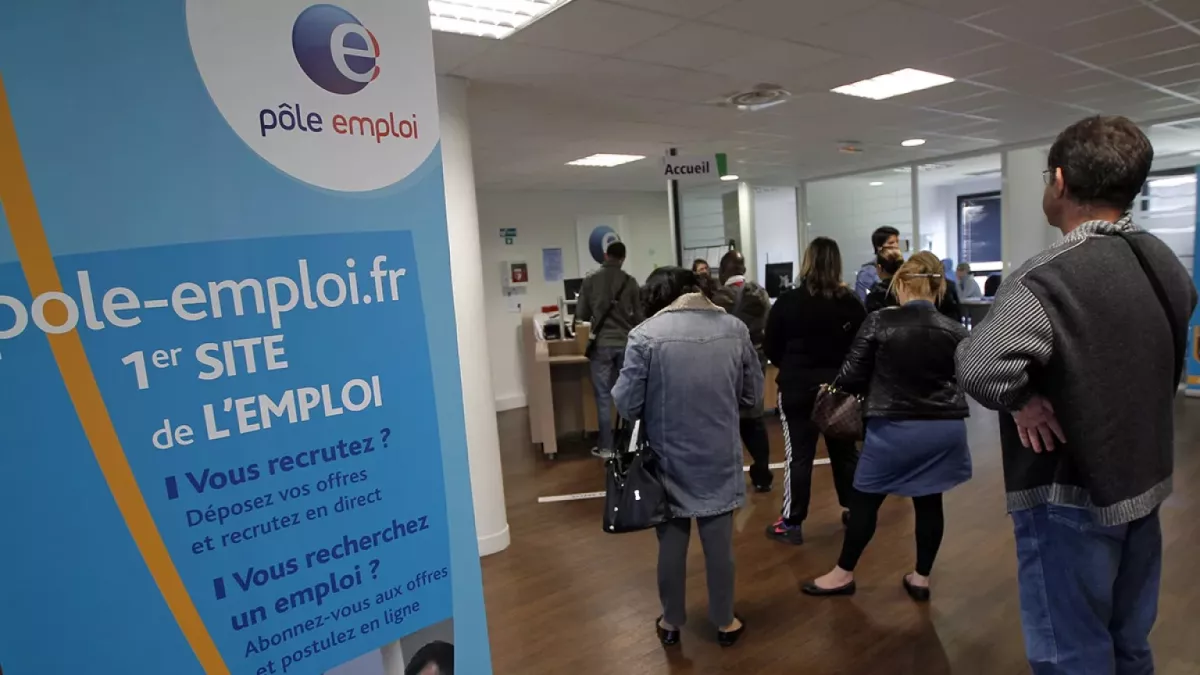
According to the latest INSEE figures, the unemployment rate (based on the International Labour Organisation methodology) rose to 8.1% in the first quarter of this year, marking the highest level since the beginning of 2021. The French Ministry of Labour, in turn, reports that the total number of job seekers registered with France Travail (across categories A, B and C) has exceeded 5.75 million people.
Meanwhile, the breakdown by demographic groups paints the following picture: young people (aged 15–24) face the most critical situation, with the unemployment rate reaching 21.1%; people aged 25–49 saw the rate rise to 7.3%; the gender gap has also widened, with male unemployment climbing to a five-year high of 8.5%, while the rate among women remains at 7.7%; long-term unemployment has also increased, with the share of people unable to find work for more than a year reaching 2% of the economically active population (around 626,000 people).
In this context, it should also be noted that INSEE reports do not include certain categories of French citizens, in particular residents of overseas territories, or, in other words, former colonies. This concerns approximately 2.7 million people, and, for example, on the island of Mayotte, the poverty rate stands at 75% of the population.
The second category includes those “living on the streets.” This refers not only to the homeless, whose number in France is estimated at 350,000 people.
France also has a category of people classified as “without a stable place of residence”, referring to those who do not have a permanent postal address to receive correspondence. In theory, this could include drivers or sales representatives who stay in hotel rooms, but more likely it concerns residents of hostels, mobile homes, squatters, and similar forms of temporary accommodation. As of February 2026, the number of people in this category in France had exceeded one million.

Such a far from reassuring picture inevitably raises concerns among French citizens. According to a sociological survey conducted by IFOP and Dons Solidaires at the beginning of 2025, half of French people fear they will not have enough income to make it through the end of the month (49%; down 8 percentage points compared with 2024 and down 4 percentage points compared with 2023). Two out of five believe they could fall below the poverty line (41%; down 5 percentage points compared with 2024 and down 6 percentage points compared with 2023), while a quarter fear they may have to rely on humanitarian organisations to receive free food supplies (21%; down 5 percentage points compared with both 2024 and 2023).
Concerns among parents about their children’s future are also growing: 78% of respondents say their children will face greater difficulties in adult life than they themselves did. Another quarter of French citizens (27%) say that over the past twelve months they have struggled to make ends meet.
At the same time, such a situation is fueling waves of protests across the country. As is known, in autumn 2025 France witnessed mass demonstrations against austerity measures and the government’s plan to “tighten belts” by €44 billion. According to one of the participants, “behind (former French Prime Minister – ed.) Bayrou stands a harsh austerity plan worth €44 billion, which affects pensioners, public services, and freezes wages. In other words, it is always the same people who are being forced to pay — namely workers and the poorest people in this country. At the same time, billionaires have never been as wealthy as they are today, and dividends have never been paid out so generously… On one side, there is a centre of wealth, and on the other, a centre of poverty. Meanwhile, the situation on the labour market is deteriorating at an enormous pace. We, the workers, are the ones who generate profits for companies. I work in a hospital, and I know that they are destroying healthcare so that billionaires and the bourgeoisie can continue accumulating their fortunes. The wealth of France’s 500 richest people amounts to billions. It was created by us, the workers, collectively through our labour.”
At the same time, a number of global media outlets, particularly Turkish ones, have noted that France has become the country with the highest level of inequality in Europe, while Eurostat considers the Fifth Republic to have a larger share of people living in poverty than any other European Union member state. However, as the facts indicate, this appears to be of little concern to the government of Emmanuel Macron, which is focused primarily on defence spending, radical market reforms, and high-profile foreign policy ventures.







 editor@caliber.az
 +994 55 444-88-98
 Азербайджан, Баку, ул. Низами, 203, Af Business House, 5-й этаж