










The search for a negotiator with Russia: a sign of the EU’s crisis Analysis by Preigerman
Viewed from the outside, the debate that has recently emerged within the European Union over the possible appointment of a special envoy for negotiations with Russia creates a striking impression: the EU appears to be facing the deepest crisis in its history.
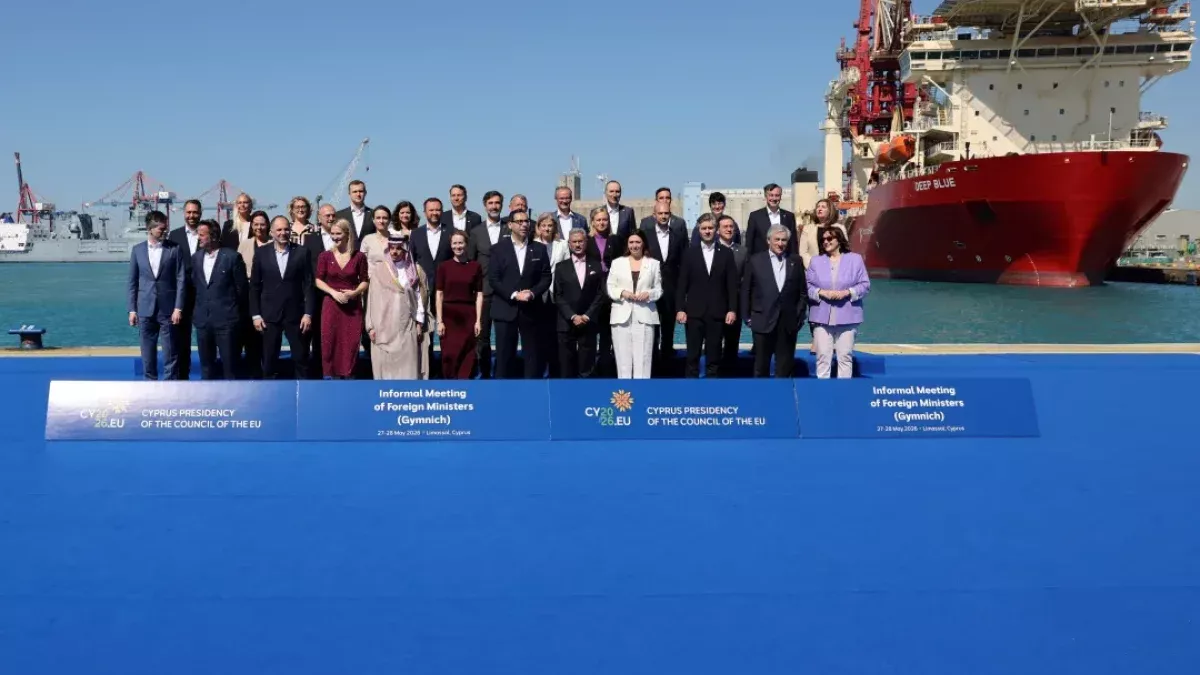
On May 27–28, an informal meeting of the foreign ministers of EU member states took place in Limassol, Cyprus. The gathering was held in the so-called Gymnich format, which has been used since the mid-1970s for strategic brainstorming sessions that are free from the constraints of formal protocol and do not produce official decisions or conclusions. In recent years, such meetings have typically been organized every six months, under each new rotating presidency of the Council of the European Union.
Despite the format’s strategic purpose, the main items on the informal agenda differed little from the day-to-day issues currently occupying diplomats from EU member states and institutions.
The central part of the agenda focused on the situation in the Middle East. Discussions covered Iran, the Strait of Hormuz, Lebanon, the Gaza Strip, the West Bank, and Israel. Significantly, the foreign ministers of Saudi Arabia and India were invited to participate in the meeting as special guests.
A separate discussion was devoted to Russia and the Ukrainian crisis. In diplomatic and expert circles, this issue generated the greatest interest surrounding the meeting in Limassol. Many observers expected that the informal nature of the talks would help advance discussions on the possible appointment of a European Union special envoy for negotiations with Russia. In recent weeks, this topic has been increasingly raised at various political levels in Brussels and other European capitals.
Special envoy for Russia: to be or not to be?
Following the foreign ministers’ meetings in Limassol, brief remarks on their discussions were shared with the media by Cyprus’s Foreign Minister, Constantinos Kombos, and the EU High Representative for Foreign Affairs and Security Policy, Kaja Kallas. The latter had previously expressed her own interest in becoming the EU’s chief negotiator with Russia. Given Kallas’s position, which effectively makes her the European Union’s top diplomat, such an ambition is natural and fully consistent with her official responsibilities. However, considering her personal and professional profile, many EU member states view the prospect of the former Estonian prime minister taking on this role with limited enthusiasm.
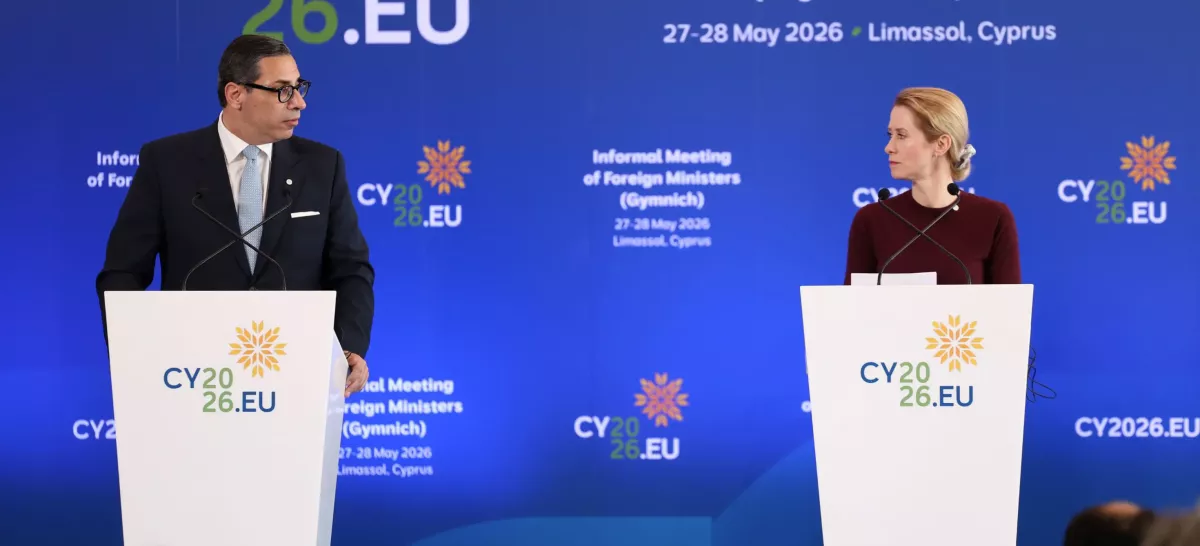
It is precisely because the officials who are formally tasked with conducting diplomacy on behalf of the European Union have, for one reason or another, been unable to do so effectively that the search for a special envoy-negotiator representing a united Europe began in the first place.
The story, it must be said, is not only strange but also, unfortunately, somewhat comical. It perhaps serves as the clearest illustration of the argument that the EU is not only farther than ever from achieving its desired status as one of the world's key geopolitical actors, but is also mired in an increasingly deepening crisis that is gradually raising questions about whether the Union’s current institutional structure remains relevant to today's global realities.
Apparently, the informal discussions on the Russian issue in Cyprus produced no tangible progress. During the final press briefing, the EU’s chief diplomat had little substance to say. Kaja Kallas merely repeated the EU’s customary demands toward Russia and emphasised that Moscow had shown no willingness to meet them. Therefore, according to her logic, there are no grounds for diplomatic dialogue with Russia. In this connection, she referred to a discussion paper prepared by her team in February, in which the conditions for initiating dialogue with Russia were presented in such a way that even within the EU, few could read them without a bewildered smile.
Responding to a journalist’s follow-up question about the prospects of appointing a special envoy for negotiations with Moscow, Kallas stated that “the talk was mostly on the substance.” She referred to a “broad consensus” on the importance of first developing a common position on the agenda for the negotiations, and only then considering the individuals who would represent the EU in such talks. These remarks also reveal a great deal about the real state of affairs in European diplomacy on an issue that is clearly central to the EU’s very ability to claim any geopolitical significance.
Above all, the words of the EU High Representative point to a lack of unity and, consequently, the absence of a shared substantive position on the issue of future negotiations with Russia. In terms of value-based and normative assessments of the Russian-Ukrainian war, there was undoubtedly a “broad consensus” at the table in Limassol. But the question of “what to do?” in the current realities has clearly long ceased to be a matter of consensus among the 27 member states and various EU institutions.
Moreover, the methodology outlined by Kallas regarding the path toward negotiations with Moscow is, in reality, an acknowledgement of an inability to move forward from a deadlock. Despite the apparent logic that it is first necessary to have a unified position and a shared understanding of goals and approaches before defining a negotiation team, such reasoning does not correspond to the institutional and political realities of the EU. Long observation of the European integration project suggests that achieving results requires a different sequence. First, it is necessary to establish a common understanding that the European Union wants to be at the negotiating table. Then, it is important to decide who will represent the Union in such a negotiation process and in what capacity. Only after that should this person and their team take on the extremely difficult task of developing a common negotiating framework that would be acceptable to all EU member states.
The envoy search exposes the EU’s deep crisis
If we take one more step back and look at the entire discussion about a possible special envoy from a more detached perspective, it is hard to escape the impression that the EU has found itself in the deepest crisis in its history. In the media and in public statements by European officials, such a conclusion is still not being voiced—at least not in a direct and unvarnished way. However, in diplomatic backrooms and closed expert formats, it is rapidly becoming a widely accepted assessment.
As a former very high-ranking European diplomat recently emphasised at one such closed, semi-official meeting, the most serious crisis today has struck three foundations of the EU integration project.
First, the “bicycle” of European integration used to move almost continuously forward on the understanding that all member states and institutions in Brussels were working within a set of shared common interests accepted by all.
Secondly, such a perception of a common interest naturally generated pan-European solidarity.
Thirdly, all of this could rely on effective political leadership and responsible state governance.
It cannot be said that these three pillars have been completely lost today. However, as the aforementioned diplomat emphasised, they are facing perhaps the most serious crisis in the entire history of the EU. This is also a consequence of the rapid enlargement of the European Union, during which new member states brought into it historical, geographical, and cultural specificities that, within the EU’s framework of unity of interests and objectives, have become extremely difficult to “digest” today.
The problem is further complicated by the fact that it is not entirely clear how, in practice, the Union can overcome this crisis—or even where to begin in addressing it. In the past, systemic contradictions and crisis tendencies were resolved through negotiations aimed at revising the EU’s foundational treaties and adopting them in a new form. Today, however, it is difficult even to imagine that the growing divergences among member states, along with intensifying political tensions within most of them, could allow such negotiations to achieve any meaningful success.







 editor@caliber.az
 +994 55 444-88-98
 Азербайджан, Баку, ул. Низами, 203, Af Business House, 5-й этаж