










Steel arteries of Eurasia: Baku–Tbilisi–Kars reaches a new level Review by Khazar Akhundov
Having firmly established itself as a regional transport hub, Azerbaijan is steadily modernising its transport infrastructure to expand freight transit between Europe and Asia. An important step in this direction was taken in 2023–2024 by Azerbaijan Railways CJSC (ADY), which carried out a major upgrade of the Baku–Tbilisi–Kars (BTK) railway line, significantly enhancing the capacity of the Middle Corridor.
As a result, on June 2, an official ceremony was held at the Akhalkalaki logistics complex, attended by Azerbaijani and Georgian officials, to mark the commissioning of the reconstructed BTK railway line. In addition, the upgraded capabilities of the Baku–Tbilisi–Kars route, along with other key developments in the transport sector, were showcased at the Baku Expo Center, where the 22nd Caspian International Transport, Transit and Logistics Exhibition – TransLogistica Caspian – opened on June 1.
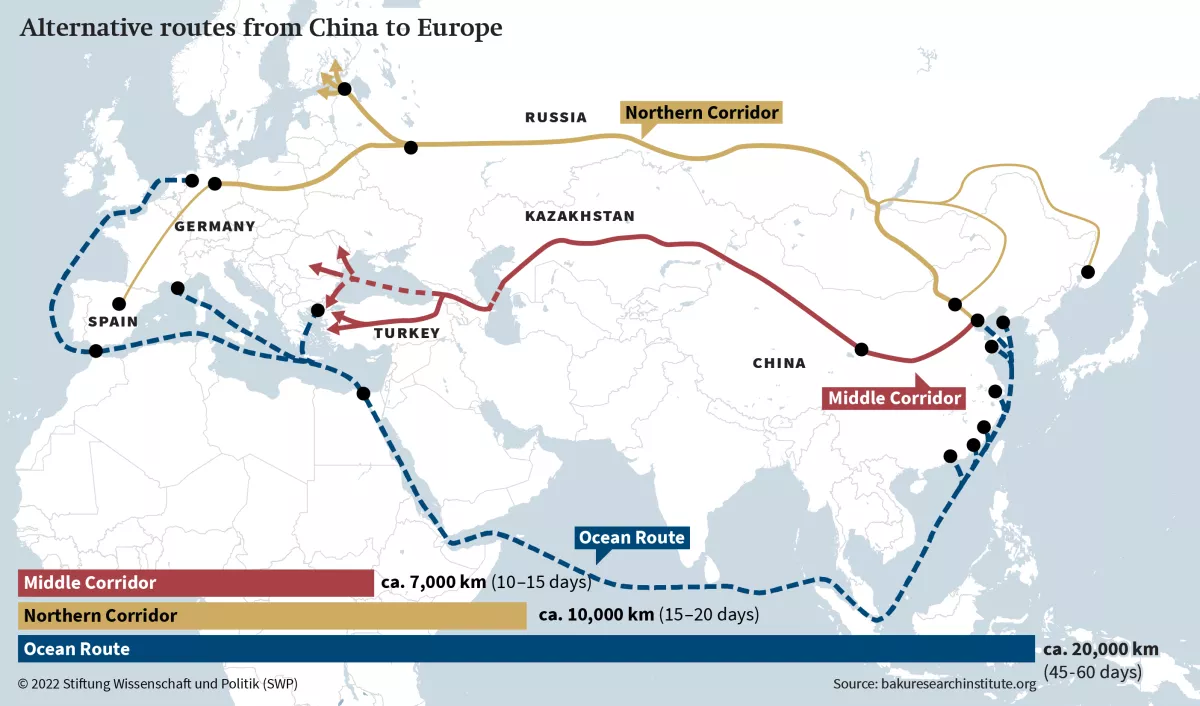
With the active support of the Caspian littoral states, the Trans-Caspian International Transport Route (TITR) has been operating successfully for the past eight years. Its rapid growth has been driven by strong demand for the multimodal routes of the Middle Corridor, widely regarded as the shortest, fastest, and safest option for transporting goods from China to Europe, as well as in the reverse direction—from the EU and Türkiye to the countries of Central Asia.
In recent years, the Caspian states have modernised their railway infrastructure, steadily streamlined cross-border and customs procedures, accelerated transit through the introduction of electronic CMR documentation, permit systems, and digital single-window platforms, and expanded multimodal transshipment schemes. As a result of these and other measures, transit times along the TITR have fallen dramatically over the past four years—from 58–60 days to just 15 days—while cargo volumes have increased more than sevenfold, rising from 600,000 tonnes in 2021 to 4.5 million tonnes in 2025.
As a regional freight crossroads, Azerbaijan has increased its transit transportation volume by 2.5 times over the past six years. Thus, in 2025 alone, the total volume of transit cargo through the country reached 14.3 million tonnes, of which around 4.7 million tonnes were transported via the Middle Corridor, underscoring its growing role in ensuring regional connectivity.
Notably, a significant contribution to the expansion of the Trans-Caspian International Transport Route’s freight capacity has been made by the efforts of Azerbaijan Railways CJSC (ADY) in reconstructing and developing the country’s railway infrastructure. In recent years, the track system has been reconstructed and electrified, communication and signalling systems have been modernised, and the capacity of rolling stock has been strengthened, all of which have contributed to faster cargo handling and transit operations.
A key initiative in this direction has also been the modernisation of the Georgian section of the Baku–Tbilisi–Kars railway. It should be recalled that the BTK line, with a total length of 826 km, was commissioned on October 30, 2017; however, its full potential was not utilised, including due to a number of technical inconsistencies.
Following its launch, the average annual cargo handling volume on the BTK amounted to less than half a million tonnes, a level that could not be considered sufficient. Moreover, freight delivery from Baku to Kars took more than three days on average, while delays were even more significant during the winter period.
In order to overcome these inefficiencies, from March 2023 to May 2024, Azerbaijan allocated approximately $120 million for the improvement of the railway infrastructure on the 183-km Georgian section of the BTK line. This segment, characterised by highly complex terrain, passes through mountainous and forested areas.
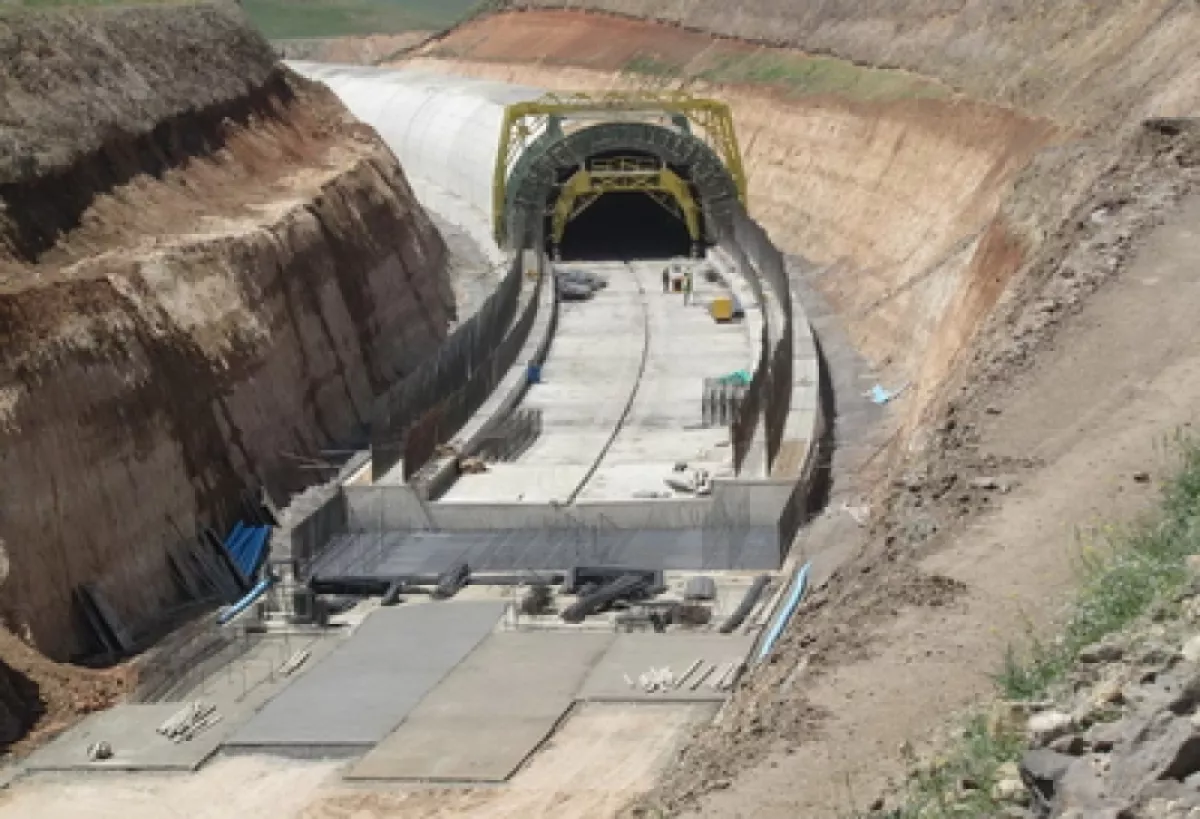
On several sections, contact network lines were laid, signalling, centralisation and interlocking systems were commissioned, and upgrades were carried out at multiple railway stations and passenger platforms. Snow protection barriers were installed, tunnels were constructed, and traction substations were built.
In particular, railway tracks and tunnels were reconstructed on the Akhalkalaki–Kartsakhi section, as well as on the Tsalka–Akhalkalaki railway line and other segments. During the implementation of the five-stage project, 13 railway stations, 55 bridges, 8 traction substations, as well as 320 buildings and various engineering structures were constructed.
The project also included the construction of an additional 30.3 km railway line, a wheelset change facility, and the rehabilitation and reconstruction of 153.1 km of existing railway infrastructure. As a result, the annual capacity of the BTK railway increased from 1 million to 5 million tonnes of cargo, transforming it into one of the most functional overland routes of the Middle Corridor.
To this end, in October last year, Azerbaijan, Türkiye, and Georgia signed a Memorandum of Understanding on the organisation of freight transportation via the Baku–Tbilisi–Kars railway line.
In particular, the parties agreed to enhance the competitiveness of the BTK route by establishing a stable and predictable operational regime, attracting additional freight flows to the corridor, ensuring optimised delivery times, applying competitive tariffs for carriers, and creating a mechanism for transparent pricing.
According to information from Azerbaijan Railways CJSC (ADY), the trilateral agreement stipulates that the delivery time (excluding customs and border procedures) along the Alat–Boyuk Kasik and Gardabani–Akhalkalaki sections shall not exceed 24 hours, while on the Yalama–Boyuk Kasik section it shall not exceed 48 hours. In Türkiye, delivery times are set at no more than 60 hours for the Kars–Mersin section and no more than 70 hours for the Kars–Istanbul section.
Thus, freight delivery from Alat to Mersin will take approximately 4.5 days. At the same time, tariffs for transportation along the BTK route will be determined on the basis of mutual agreements. In addition, the introduction of a unified long-term tariff across the entire Trans-Caspian International Transport Route is also planned.
To optimise this work, on May 18, 2026 in Baku, in the presence of the President of Azerbaijan, Ilham Aliyev, and the Prime Minister of Georgia, Irakli Kobakhidze, the heads of the relevant agencies of the two countries signed the protocol of the 41st meeting of the Coordinating Council on the rehabilitation, reconstruction, and construction of the railway section from Marabda to the border with the Republic of Türkiye (Kartsakhi) within the framework of the implementation of the new BTK railway line project.
This document officially formalised the transfer of the relevant railway infrastructure to the joint Azerbaijani–Georgian company BTKI Railways LLC for operational management and control of the line, marking an important step in strengthening regional connectivity.
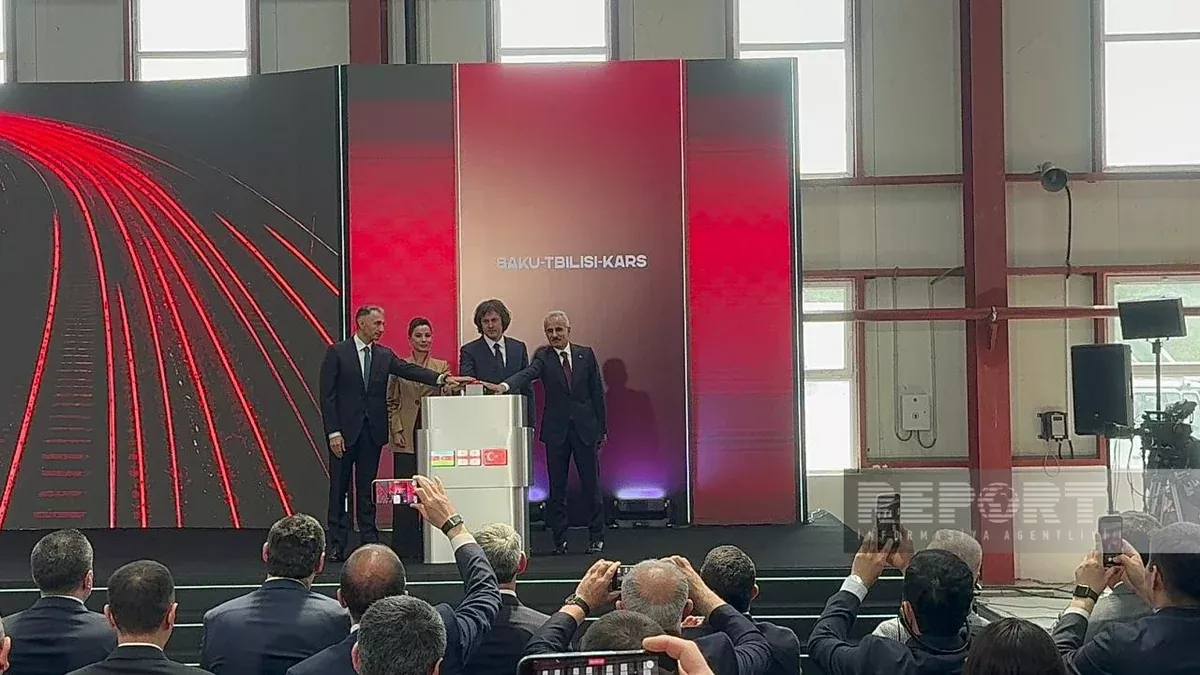
As noted at the official opening ceremony of the BTK line by Tamar Ioseliani, Deputy Minister of Economy and Sustainable Development of Georgia, “the Baku–Tbilisi–Kars railway line is of strategic importance for the entire region and opens up additional opportunities for freight transportation between Europe and Asia. A new railway line is being added to our transport network – a joint project of Georgia, Azerbaijan, and Türkiye, and we are confident that, through joint efforts, we will be able to ensure the full-scale operation of this railway.”
In turn, Bakhtiyar Hajiyev, Head of Public Relations at the Azerbaijan Railways Communications Department, emphasised in his comment to local media that “the BTK line is one of the most important segments of the Middle Corridor, and in recent years the growth in freight volumes along this route has made the expansion of its capacity increasingly necessary. Yesterday’s event (the opening ceremony – ed.) demonstrates that the project is entering a new phase. Full-capacity operation of the BTK line will make an important contribution to the further increase of freight transportation in the region.”
As noted above, the achievements in Azerbaijan’s railway sector and the progress in developing the capacity of the BTK line were showcased at the 22nd Caspian International Transport, Transit and Logistics Exhibition – TransLogistica Caspian, one of the leading platforms in the Eurasian region in the field of logistics, bringing together professionals to discuss and demonstrate modern technologies and solutions in transport and transit.
Notably, panel discussions were also held on its sidelines with the participation of the Permanent Secretariat of the Intergovernmental Commission TRACECA and railway authorities of Azerbaijan, Türkiye, Georgia, and Moldova, focusing on multimodal rail transport in the Caspian region, as well as aspects of railway transport digitalisation.
In addition, on June 3, as part of the exhibition, the 2nd Caspian International Forum “Transport, Transit and Logistics” will take place at the Radisson Hotel Baku, featuring panel sessions dedicated to international transport, railway transit routes, and logistics solutions.







 editor@caliber.az
 +994 55 444-88-98
 Азербайджан, Баку, ул. Низами, 203, Af Business House, 5-й этаж