










Yerevan breaks from Moscow’s orbit Article by Vladimir Tskhvediani
On May 24, 2026, Armenian Prime Minister Nikol Pashinyan stated that the country’s railway isolation had effectively come to an end. According to him, via Georgia and Azerbaijan, Armenia has gained access to Russian, Chinese, and European markets, and the Akhalkalaki–Kars section has already been opened for Armenian cargo.
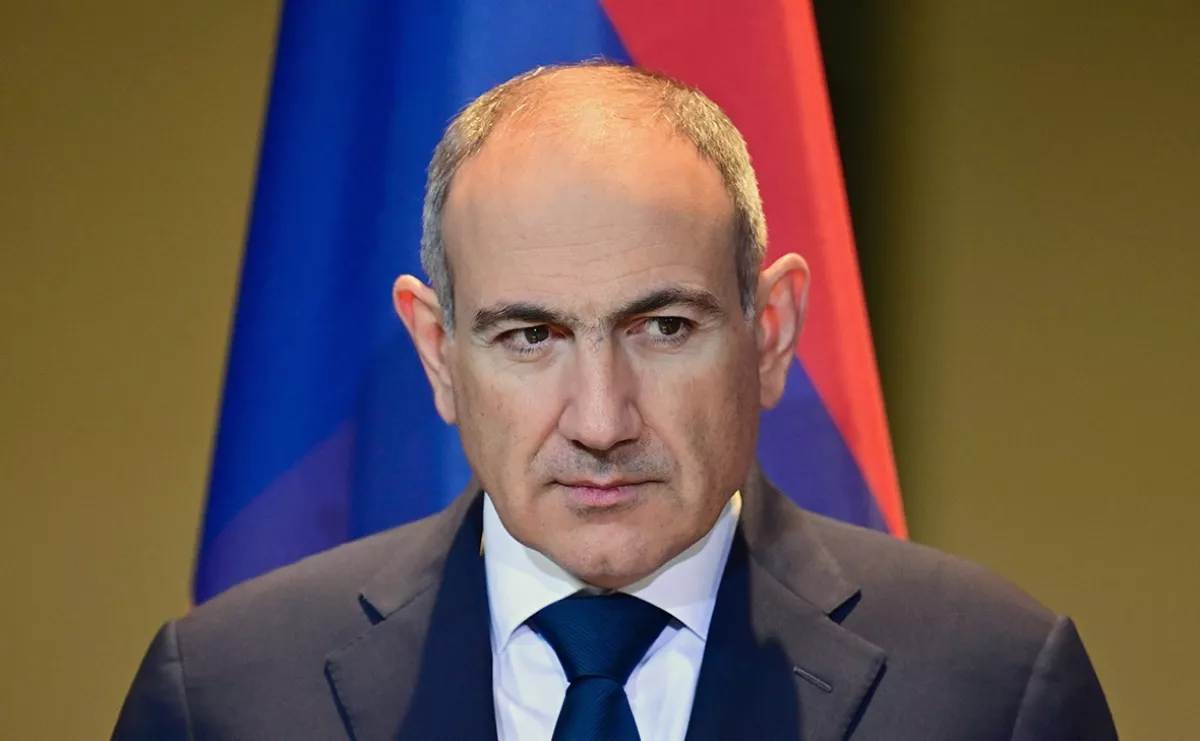
“The Akhalkalaki–Kars railway, as well as Azerbaijan’s railway, is already open for exports from Armenia and imports into Armenia. This is a major event in our country’s economic life. I thank our partners from Türkiye and Georgia… Now, railway communication is also possible with the European Union via the territories of Georgia and Türkiye. In the near future, the opening of Armenia–Türkiye, Armenia–Azerbaijan railway connections is expected, and then through Nakhchivan — Armenia–Iran. We will witness these events in the near future as a result of the implementation of the TRIPP project,” said Nikol Pashinyan.
It is symbolic that Pashinyan’s statement came on the eve of the official opening ceremony of the Baku–Tbilisi–Kars railway scheduled for June 2, 2026, in Georgia, at the Akhalkalaki station. The total length of the railway is 827 km, of which 213 km pass through Georgian territory.
The construction of the Georgian section was fully financed by Azerbaijan, which provided Georgia with two concessional loans totalling 775 million dollars. Their repayment is expected to be covered by the project’s future revenues.
The railway operated in a test mode from 2017, and from May 2023 to May 2024, CJSC “Azerbaijan Railways” (ADY) carried out modernisation works, increasing its capacity from 1 million to 5 million tons per year. After the official opening of the Baku–Tbilisi–Kars railway, Armenia will be able to fully use it, and freight trains will run to Türkiye via the Gyumri–Sadakhlo–Marabda–Akhalkalaki–Kars route.
At the same meeting with voters, Nikol Pashinyan effectively indicated that Armenia would begin reconstructing railway lines to Türkiye and Azerbaijan without Russia’s assistance, despite the fact that Armenian Railways are under a concession managed by Russia.
“Work on the Turkish side has already begun, and the railway will be opened. We will also start the reconstruction of the Yeraskh junction. The government of Armenia will take this upon itself; although there is a concession agreement (with Russian Railways), we will make investments, we will repair the railway, restore it, and the railway line will be opened,” said Nikol Pashinyan.
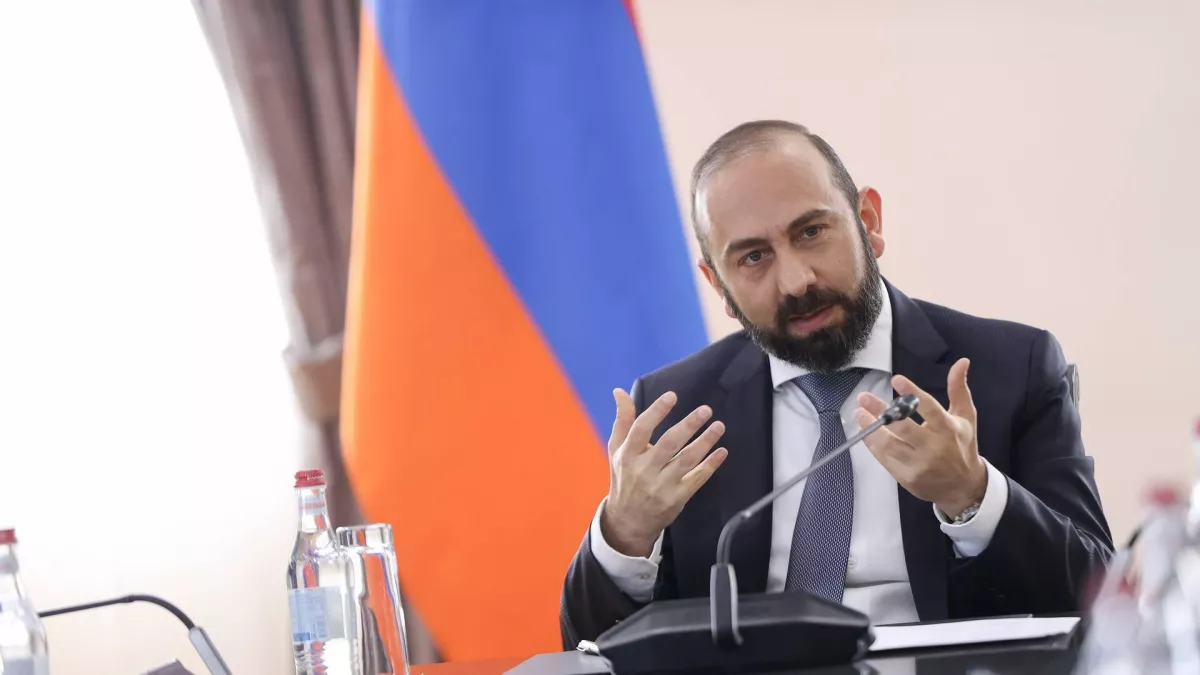
Armenian Foreign Minister Ararat Mirzoyan also stated that the Gyumri–Kars project could be implemented either with Russia’s assistance or without it: “The missing section of the railway, due to which there is no Gyumri–Kars connection, must be built. We are currently negotiating with our Russian partners regarding the possibility of resolving this issue jointly with them. If it works out, it works out. If not, we will find another solution; but this issue must be resolved.”

In response to statements by Nikol Pashinyan regarding the possible opening of the Akhalkalaki–Kars railway for Armenia’s import and export operations, the Turkish side has also reacted.
Türkiye’s Special Representative for the normalisation of relations with Armenia, Serdar Kılıç, described the initiative as “a new step towards direct trade within the framework of the normalisation process between Türkiye and Armenia. I hope that this new step will also strengthen four-party cooperation between Türkiye, Armenia, Azerbaijan and Georgia, and make a significant contribution to regional peace and stability, bringing success to all these countries.”
Nikol Pashinyan’s statements effectively overturn everything the Armenian side had previously done against the Baku–Tbilisi–Kars railway. This route, amid Armenia’s ongoing “turn away” from Moscow, has become necessary for Armenia itself, as it helps the country break out of its railway isolation. Moreover, having the possibility of railway communication with Kars via Georgia’s Akhalkalaki, making only a small “detour”, Armenia may not rush to restore the Gyumri–Kars railway line and may avoid critical dependence on Russian Railways in this regard.
Notably in the past, the Armenian lobby made significant efforts to prevent the launch of the Baku–Tbilisi–Kars project and later to delay it as much as possible. Not least because of this, the railway, completed by 2017, remained largely idle for a long time, operating in test mode at no more than 10% of its capacity.
As a result, years of the railway’s de facto inactivity led to losses exceeding 1 billion lari (around 370 million US dollars) for the Georgian operating company.
In Russia, the Baku–Tbilisi–Kars railway was viewed decidedly negatively — it was rightly seen as a competing project to the “northern” overland rail route from China through Russia, Belarus and Poland to Europe. It was only after the outbreak of Russia’s war against Ukraine in 2022 that the Baku–Tbilisi–Kars route unexpectedly became in demand for Russian companies, which gained through it the possibility of direct rail communication with Türkiye.
Opposition to the Baku–Tbilisi–Kars railway, and especially to the Akhalkalaki–Kars section, was for many years accompanied by efforts to influence the Armenian population of Georgia’s Samtskhe-Javakheti region.
At the same time, separatist sentiments were being incited there, effectively preparing a “second Karabakh” in the Georgian region and promising “Russian support” in this process. However, the fate of the separatists in Azerbaijan’s Karabakh region had a sobering effect on the Armenian population of Akhalkalaki and its surrounding areas.
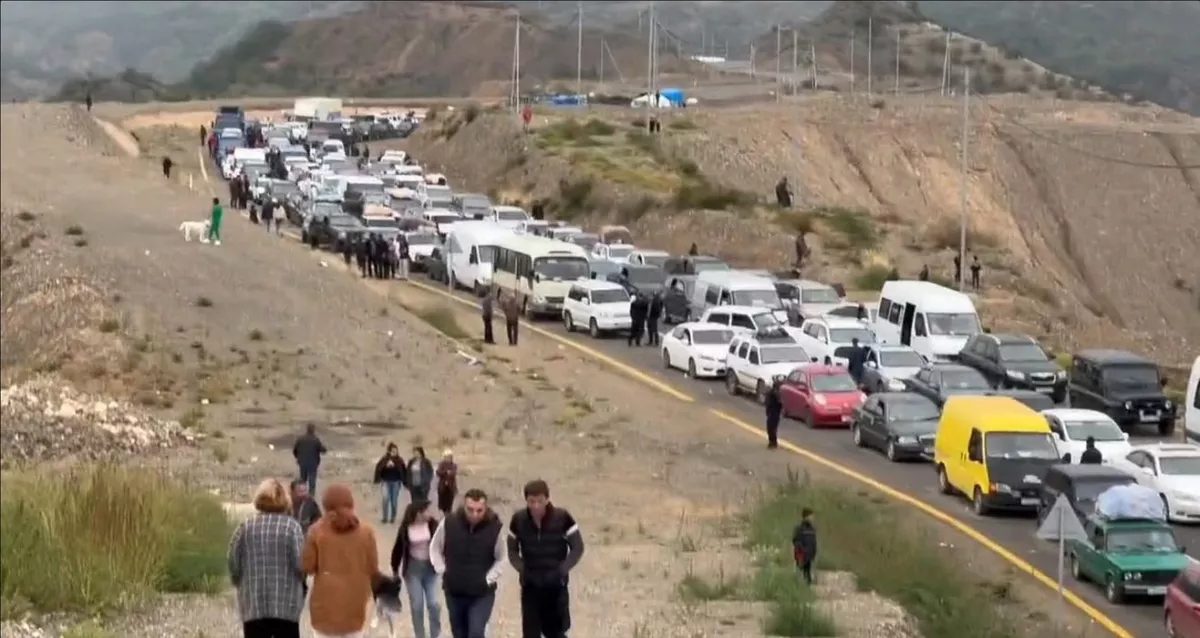
Images of Armenians leaving Azerbaijan’s Karabakh region in 2023, with portraits of Putin previously installed by separatists in the background, clearly demonstrated how little the separatists’ hopes for “Russian assistance” were worth in today’s geopolitical environment.
In contrast, full-scale operation of the Akhalkalaki–Kars railway provides Armenians in Georgia with jobs and contributes to the economic development of the region where they live.
The newly emerged possibility of direct rail communication for Armenia with the outside world via Georgia, Türkiye and Azerbaijan makes the opening of a railway route through Russia-occupied Abkhazia less relevant. This is especially true given that the route through Abkhazia is supported by political opponents of Nikol Pashinyan — revanchist forces backing separatist “projects”.
However, they still have no answer to the question: how can Georgia be compelled to open rail transit to Armenia via Abkhazia without de-occupation and the return of refugees?

Many homes and apartments belonging to Georgian refugees in Abkhazia are still occupied by ethnic Armenians who are ideologically close to revanchist circles in Armenia itself. Yet there is not a single word of “persuasion” from those same revanchist groups, who are so concerned about the homes of Armenians in Azerbaijan’s Karabakh, urging their compatriots to return property to Georgian refugees expelled in 1992–1993.
Today, it can be stated that, by relying on separatism and “frozen” conflicts with blocked communications, deliberately sowing mutual hatred between peoples and instilling fear of alleged “genocides” without Russia’s “supervision,” the Kremlin has lost almost everything in the South Caucasus.
Armenia is moving out of Russia’s sphere of influence definitively and irreversibly. Recent clumsy attempts to extract “gratitude” from the Armenian side for Russian Railways allegedly unlocking direct rail communication with Türkiye and Azerbaijan “bypassing” Georgia also came to nothing. Nikol Pashinyan made it clear in his latest statements that Armenia can manage the issue of restoring rail links with Türkiye and Azerbaijan without Russian assistance.
At present, Moscow’s main leverage remains Armenia’s membership in the Eurasian Economic Union (EAEU). However, the development of new transport routes is gradually reducing Yerevan’s dependence on Russia and transit through the Upper Lars checkpoint.
In 2022–2025, Yerevan was also linked to Moscow through shadow schemes to circumvent sanctions, including trade in Russian gold and diamonds via Armenia. However, even these schemes have recently become less effective.
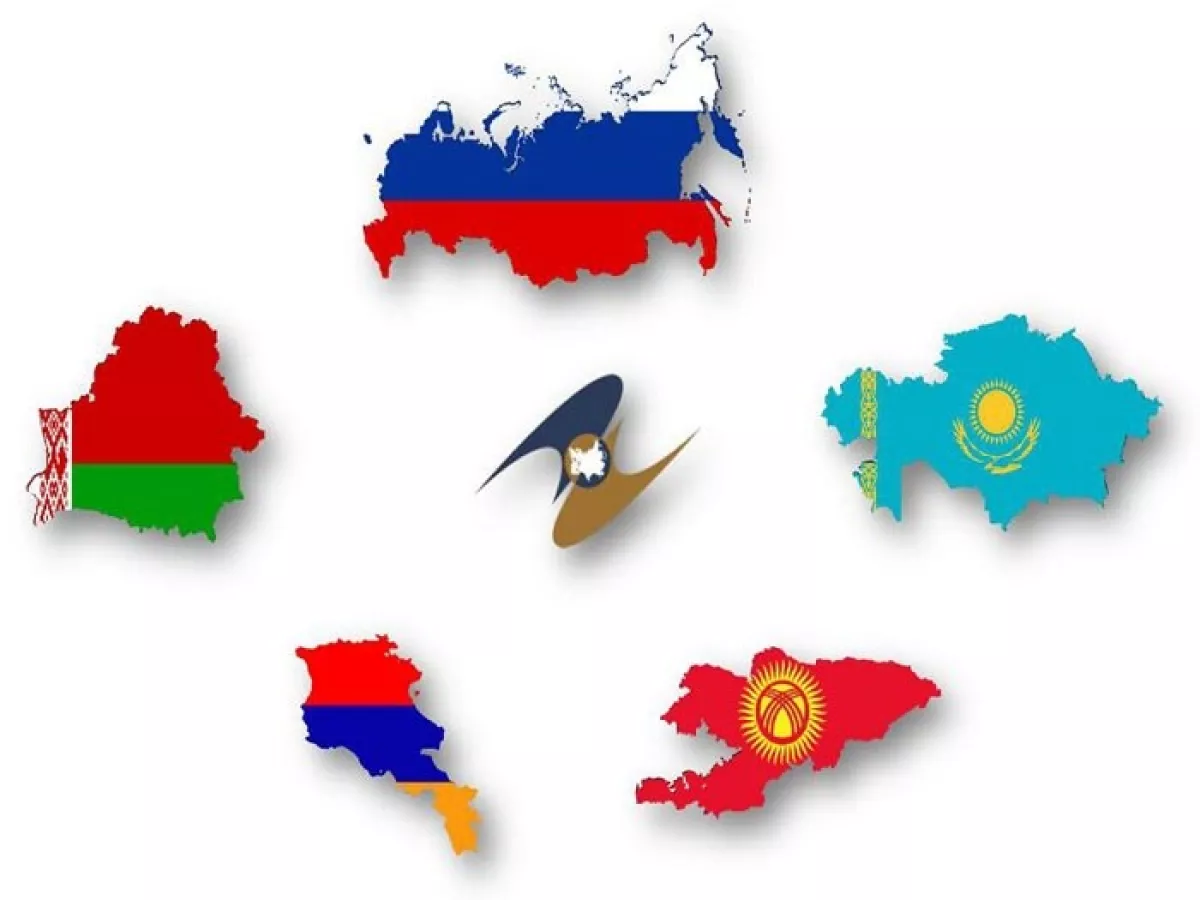
Cheaper rail transport via Akhalkalaki would allow Armenia to partially offset potential losses resulting from restrictions on the EAEU market. In addition, through Azerbaijan, the republic gains access to the markets of Central Asian countries, bypassing Russia.
In Moscow, measures against “disloyal” Armenia are already being hastily introduced, including restrictions on the supply of Armenian products. However, this is unlikely to significantly help pro-Russian forces in the elections — if anything, the opposite may happen.
Russia could still preserve the remnants of its influence in the South Caucasus by unilaterally initiating the de-occupation of Georgian territories in exchange for access to international transit communications. However, this “window of opportunity” is rapidly closing. Abkhazia and the Tskhinvali region will eventually have to be returned to Georgia, but the later this happens, the more serious the reputational and political losses for the Russian authorities will be.
The de-occupation of Georgian territories could become an opportunity for Moscow to restore relations with Tbilisi and maintain access to promising economic projects in Georgia.
However, further escalation of Russia’s relations with Ukraine and the West may deprive Moscow of this opportunity.
By Vladimir Tskhvediani, Georgia, specially for Caliber.Az







 editor@caliber.az
 +994 55 444-88-98
 Азербайджан, Баку, ул. Низами, 203, Af Business House, 5-й этаж