










America and the Arab atom Trump approves nuclear deal with Riyadh
The Trump administration has completed preparations for an agreement with Saudi Arabia on cooperation in the field of peaceful nuclear energy and will submit it to Congress for review in the coming days. The document is designed for 30 years and gives US companies access to one of the world’s largest projects to establish a new nuclear industry, valued at tens of billions of dollars.
However, the main intrigue lies not in the scale of investment, but in the fact that, in order to secure the deal, Washington has agreed for the first time in many years to reconsider its own rules governing nuclear cooperation. The issue concerns a Section 123 agreement under the US Atomic Energy Act — the mandatory legal framework required for the transfer of American nuclear technologies to foreign countries.
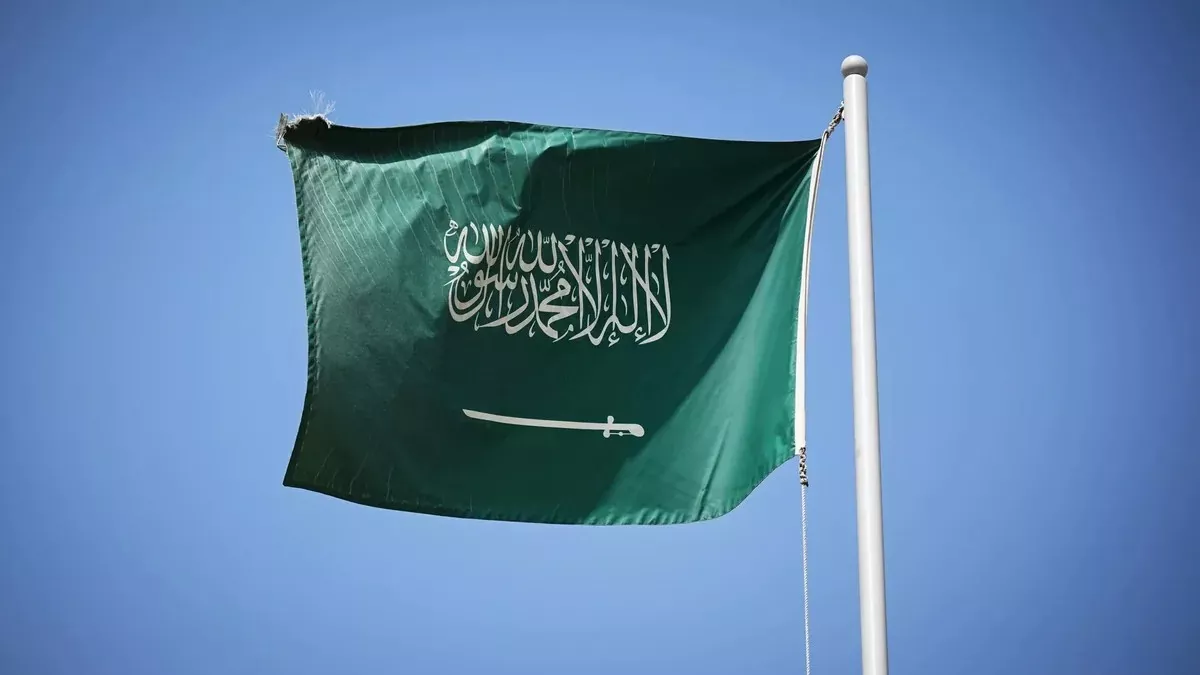
Negotiations over the agreement with Saudi Arabia had been ongoing for several years. Under Joe Biden, they were part of a broader diplomatic deal that also envisaged the normalisation of relations between the Kingdom and Israel. However, Donald Trump’s administration abandoned that linkage. Amid the war with Iran, talks on peaceful nuclear cooperation were separated into an independent track and brought to the signing stage.
For nearly two decades, the United States adhered to the so-called Gold Standard: countries receiving American nuclear technologies voluntarily agreed to forgo domestic uranium enrichment and the reprocessing of spent nuclear fuel. The United Arab Emirates accepted such conditions at the time. Saudi Arabia, however, consistently rejected these restrictions, insisting on its right to independently develop a complete nuclear fuel cycle.
Now Washington is prepared to make a compromise. The draft agreement does not require Saudi Arabia to follow the “Gold Standard” and does not oblige it to join the IAEA Additional Protocol, which provides the agency with expanded inspection powers. Moreover, the document allows for the possibility of building a uranium enrichment facility after a joint US-Saudi assessment of the project’s economic feasibility.

These provisions have become the main subject of criticism from some US lawmakers and non-proliferation experts. Their concerns have been heightened by statements from Crown Prince Mohammed bin Salman, who has repeatedly said that if Iran ever acquires nuclear weapons, Saudi Arabia would also seek to develop them.
However, it would be incorrect to say that the United States is removing all restrictions. The agreement is framework-based and does not provide for the automatic transfer of uranium enrichment technologies. It merely creates a legal foundation for cooperation. The White House is relying on a different oversight model: instead of strict preliminary prohibitions, it seeks to ensure continuous involvement of American companies in the construction and operation of Saudi Arabia’s nuclear infrastructure. The administration’s logic is straightforward: if Riyadh is determined to develop a civilian nuclear programme anyway, it is better for this to happen with the direct involvement of the United States rather than Russia or China.
Essentially, Washington is changing not the goal, but the method of achieving it. Previously, the primary tool for preventing the spread of sensitive technologies was considered to be the imposition of the strictest possible restrictions. The Trump administration now believes that long-term technological presence and political influence can provide an equally effective means of control.
In a broader sense, the agreement also reshapes the strategic balance in the Middle East. Following the war with Iran, Washington is seeking not only to keep Saudi Arabia within its sphere of influence but also to strengthen it as the main Arab centre of power in the Persian Gulf. By gaining access to advanced American nuclear technologies and the possibility of eventually developing its own nuclear fuel cycle infrastructure, Riyadh is strengthening its position in the long-term rivalry with the Islamic Republic. This is about creating a new balance of power in the region, where civilian nuclear energy becomes another instrument of great-power geopolitics.
The agreement will now be submitted to the US Congress, where lawmakers will review it for around 90 days. In theory, Congress could block the document by adopting a joint resolution of disapproval. However, for such a move to take effect, lawmakers would have to overcome an almost certain presidential veto, meaning they would need the support of two-thirds of both chambers. Given these circumstances, the chances of the deal being derailed are considered low.







 editor@caliber.az
 +994 55 444-88-98
 Азербайджан, Баку, ул. Низами, 203, Af Business House, 5-й этаж