










Baku–Berlin strategic partnership enters new phase Review by Teymur Atayev
On July 20, President of Azerbaijan Ilham Aliyev arrived in Germany on an official visit. The significance of the visit is reflected in analytical reports published by the German media ahead of the Azerbaijani-German talks.
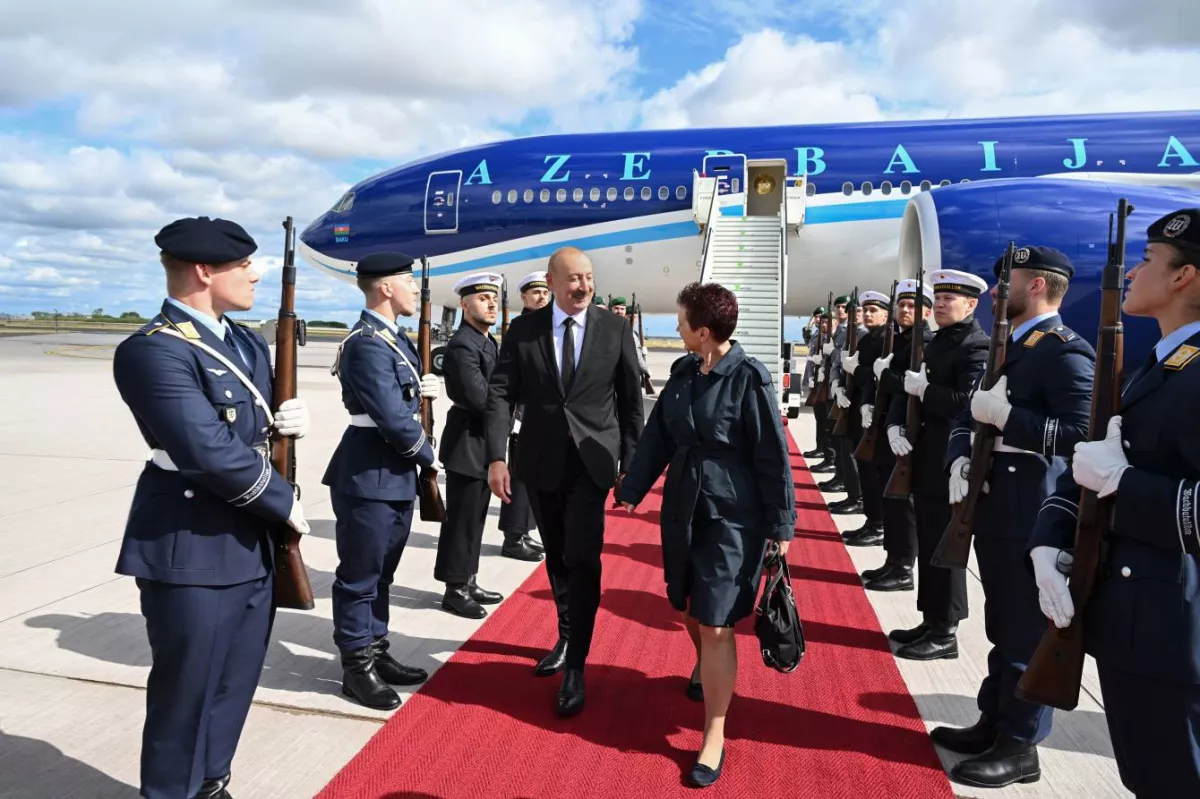
For instance, a report aired by Berlin-based TV Berlin on July 16 noted that Azerbaijan is becoming increasingly important to Germany and Europe in the areas of energy security, trade, transport, and regional stability. The authors also emphasised that since 2023, President Ilham Aliyev has visited Germany five times, while the growing importance of the Middle Corridor is turning Azerbaijan into one of the key links in freight transportation between Europe and Central Asia, providing Berlin with alternative logistics routes and additional guarantees of energy security.
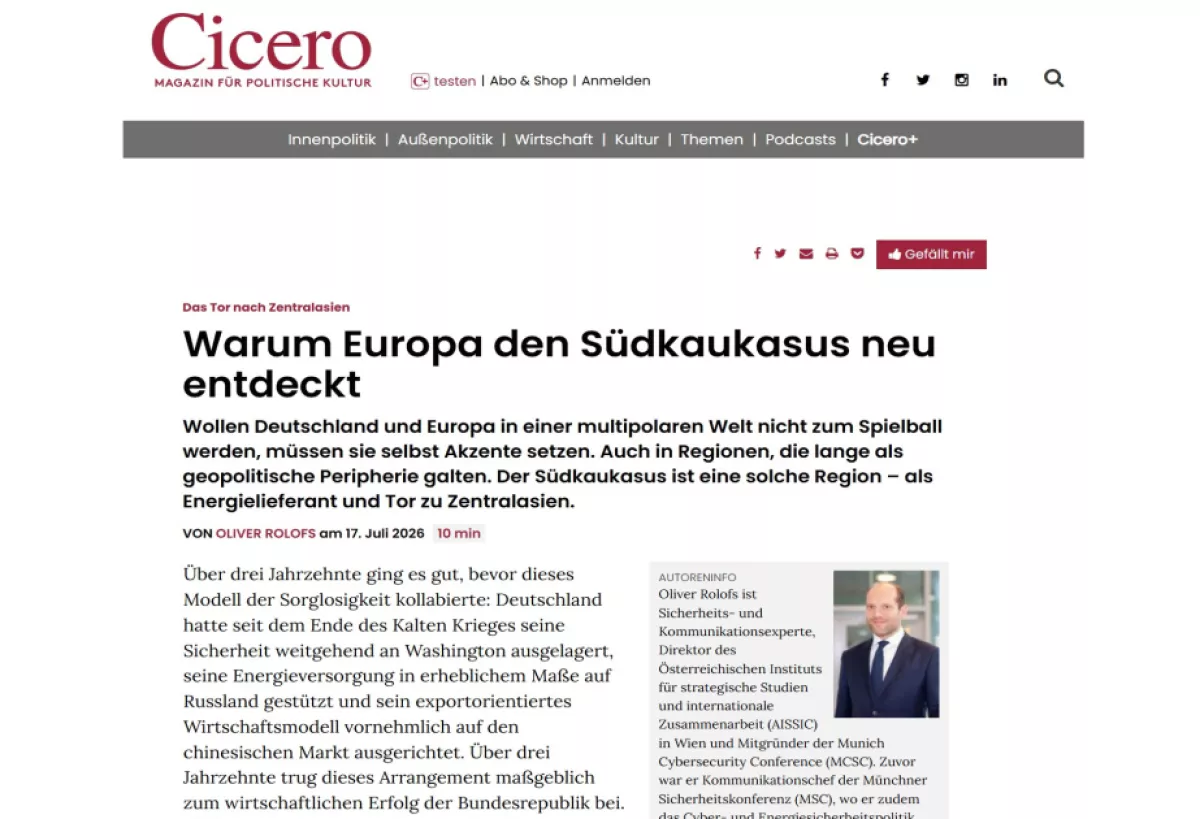
A day later, the influential German magazine Cicero published an article highlighting the significant transformation in Europe's approach to the South Caucasus, driven by the region's new geopolitical realities.
The authors emphasise Baku's growing role in strengthening Europe's energy security through the Southern Gas Corridor, while also describing the Middle Corridor as one of the flagship projects of the Global Gateway strategy in the fields of energy, transport, logistics, digitalisation, and critical raw materials.
Against this backdrop, German Chancellor Friedrich Merz's invitation to President Ilham Aliyev for an official visit to Germany confirms Berlin's commitment to deepening its political and economic partnership with Azerbaijan. These examples alone demonstrate the importance of the current visit for Germany. The reasons behind it become even clearer when viewed through the history of modern German-Azerbaijani relations.
Modern German-Azerbaijani relations date back three decades, when, during an official visit to Germany, National Leader Heydar Aliyev described Germany as an important strategic partner of Azerbaijan. The talks concluded with the signing of the Joint Statement on the Foundations of Bilateral Relations.
In 2002, during a meeting with a German delegation led by then State Secretary Axel Gerlach, Heydar Aliyev recalled the long-standing historical ties between the two countries. He noted that as early as 1863, Siemens had built copper smelters at the Gadabay copper deposits, followed later by a cobalt plant in Dashkasan.
Heydar Aliyev repeatedly expressed confidence that the friendship and cooperation between Azerbaijan and Germany would continue to strengthen and serve the interests of both nations.
The facts outlined at the beginning of this article clearly demonstrate how far-sighted that assessment proved to be. It was Heydar Aliyev who laid the foundation for the current level of cooperation, which was subsequently strengthened significantly by President of Azerbaijan Ilham Aliyev. During his official visit to Germany in 2004, the head of state outlined the prospects for greater participation by German businesses in Azerbaijan's economy.
Twenty-one years later, following high-level talks in Baku, German President Frank-Walter Steinmeier thanked Azerbaijan for the significant support it provided to Germany in 2022, when, after Russian gas supplies were halted, Azerbaijan assumed additional responsibility. He also described Azerbaijan as an important space through which key trade routes pass — “a basis for the unification of the world” — highlighting its role in Germany’s trade relations with Central Asia, China, and other countries in the Far East.
For his part, the President of Azerbaijan called for a more active diversification of trade between the two countries, including in the field of renewable energy.
Therefore, it is no coincidence that in 2025 SOCAR and Germany’s Uniper signed a cooperation programme for 2025–2026. The expert community described this document as a significant development in terms of strengthening Europe’s energy security.
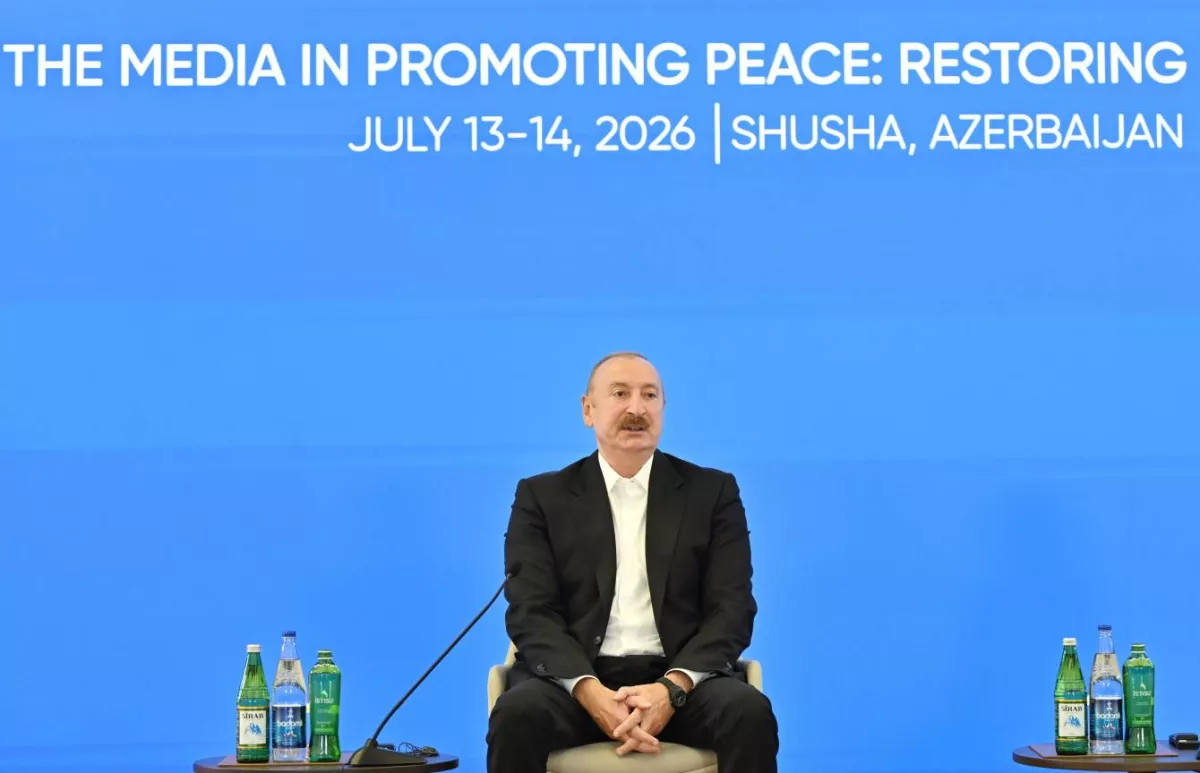
A few days ago, speaking at the 4th Shusha Global Media Forum, President Ilham Aliyev emphasised that Azerbaijan had begun supplying gas to Germany and Austria this year, and that this was part of the country’s broader strategy to expand its presence in the global, and particularly European, gas market.
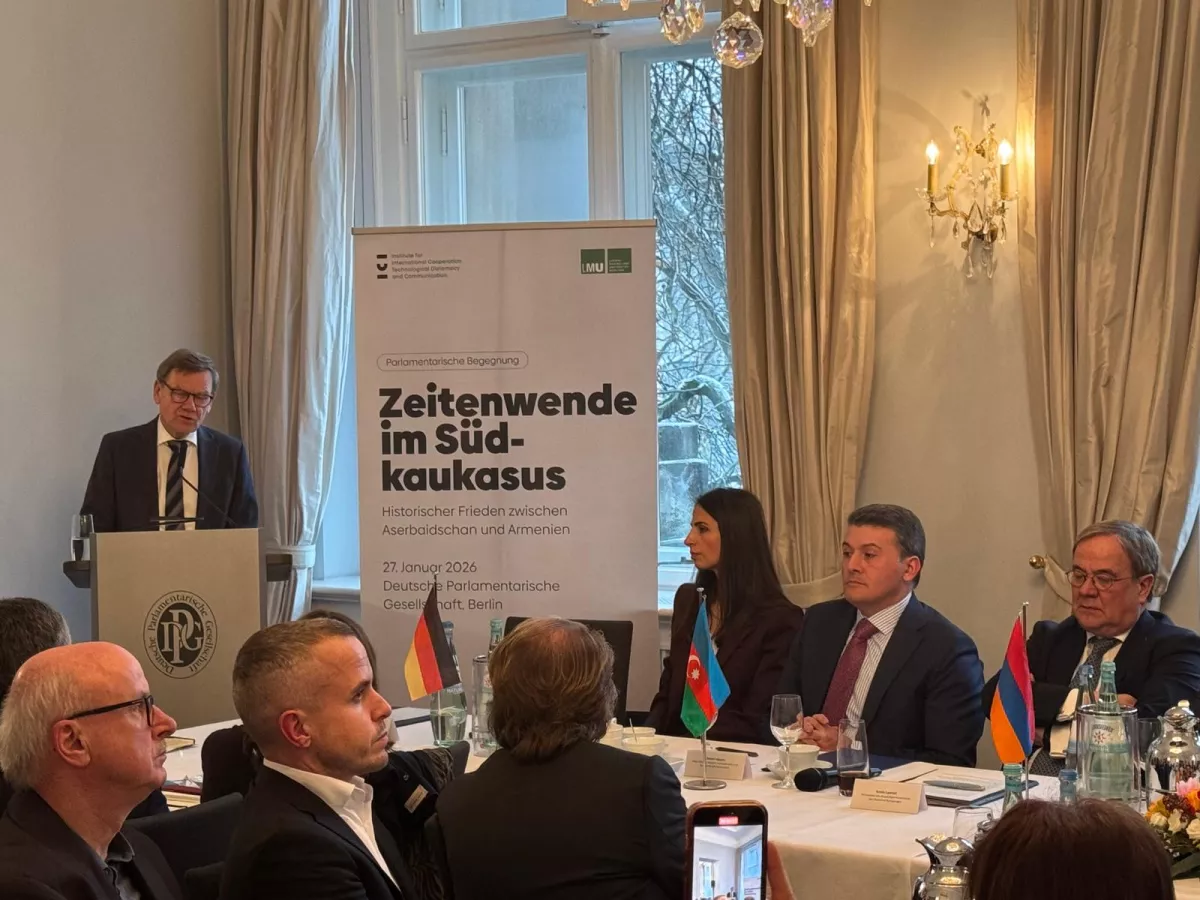
Confirmation of Berlin’s growing attention to the South Caucasus came in the form of an event held in Berlin at the beginning of the year, organised by the German ICI Institute and Ludwig Maximilian University of Munich. German Foreign Minister Johann Wadephul stated that the peace process between Azerbaijan and Armenia opens up opportunities for both countries to develop relations with Europe.
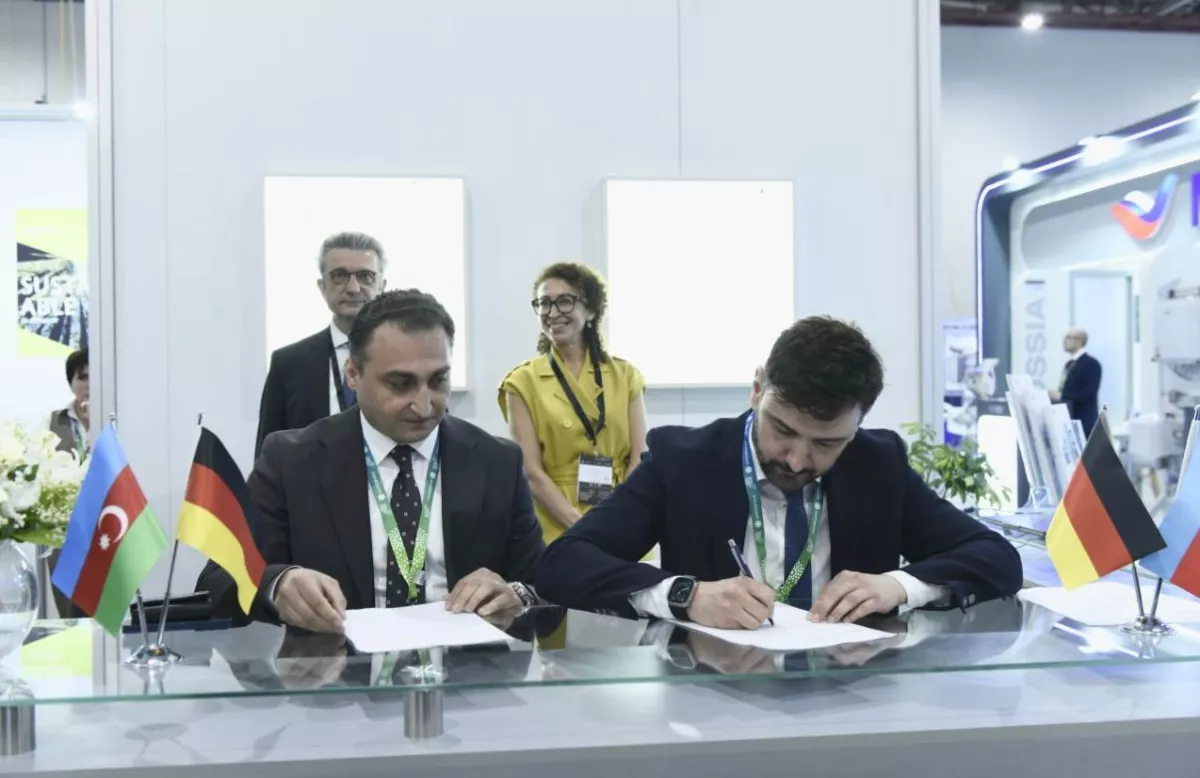
Another indication of deepening cooperation was the signing last month in Baku of a memorandum between Siemens Energy and Green Corridor Alliance JV on the development of the “Green Energy Corridor”.
The examples listed above represent only a part of the extensive German-Azerbaijani cooperation. However, even these cases convincingly demonstrate the broad prospects for bilateral engagement, as well as for cooperation in the Baku–Brussels format, which gained additional momentum this year following President Ilham Aliyev’s talks with European Council President António Costa, EU High Representative for Foreign Affairs and Security Policy Kaja Kallas, and European Commission President Ursula von der Leyen.
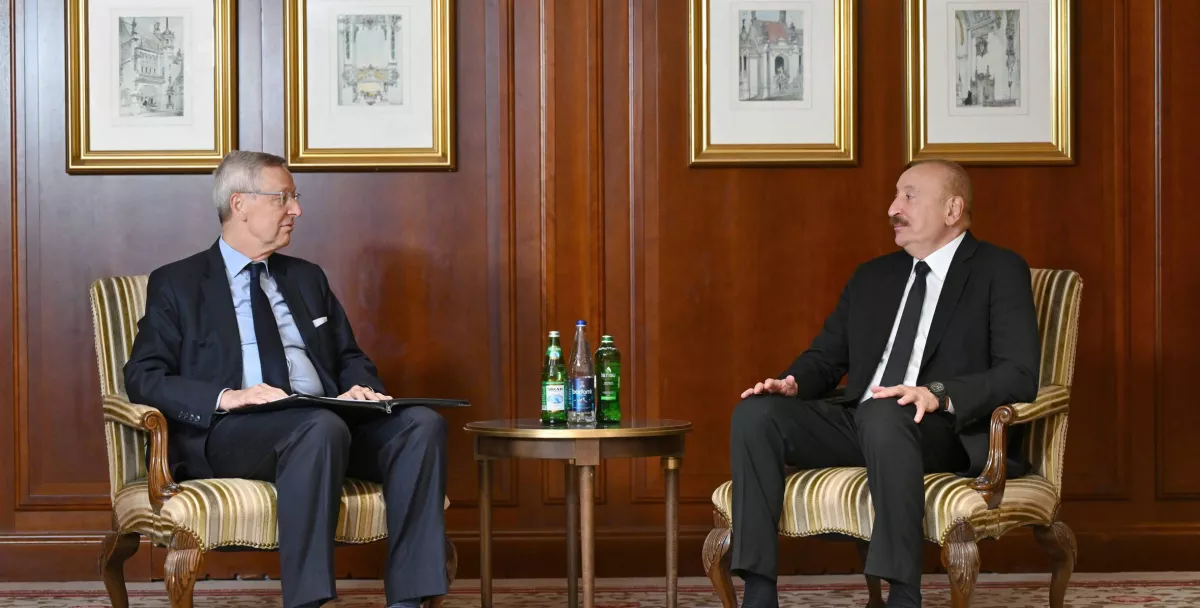
During the current visit, President Ilham Aliyev also met with Chairman of the Eastern Committee of the German Economy Michael Harms. The sides discussed the institutionalisation of cooperation between Azerbaijani and German businesses, prospects for cooperation in traditional and “green” energy, transport, logistics, the development of the Middle Corridor, agriculture — including the introduction of German technologies and solutions in the field of “smart agriculture” — as well as the utilisation of Azerbaijan’s tourism potential.
Therefore, President Ilham Aliyev’s official visit to Germany is expected to become a landmark event in many respects. This is especially significant given that a Conference on the Development of Infrastructure Projects between Germany and Azerbaijan is already scheduled for October 2026, with the agenda titled: “Mobilizing Finance for Infrastructure, Transport, Logistics, Green Energy, and Digitalization along the Middle Corridor.”
The very title of the forum reflects its main objective — to deepen bilateral and regional economic cooperation through discussions on investment opportunities and the implementation of strategic projects. It is within this context that President Ilham Aliyev’s current official visit to Germany should be viewed as another stage in the consistent strengthening of the strategic partnership between Baku and Berlin.







 editor@caliber.az
 +994 55 444-88-98
 Азербайджан, Баку, ул. Низами, 203, Af Business House, 5-й этаж