










Seventh in ten years: Britain’s revolving door of prime ministers Article by Matanat Nasibova
On July 20, Keir Starmer arrived at Buckingham Palace, handed King Charles III his resignation request, and uttered a brief phrase on the doorstep of Downing Street: “My work is done.”
Two years earlier, he had led the Labour Party to a landslide victory in the general election, securing a majority of more than 170 seats in the House of Commons and promising the country stability after years of Conservative chaos.
Stability never materialised. Starmer became the seventh British prime minister in ten years, and the very fact that his resignation came as little surprise to either the British public or outside observers says more about the state of British politics than any opinion poll could. He was succeeded by Andy Burnham, the former Mayor of Greater Manchester, who must now find out for himself whether Britain's political crisis can be cured by the personal energy of a new leader, or whether it runs deeper than any individual figure.
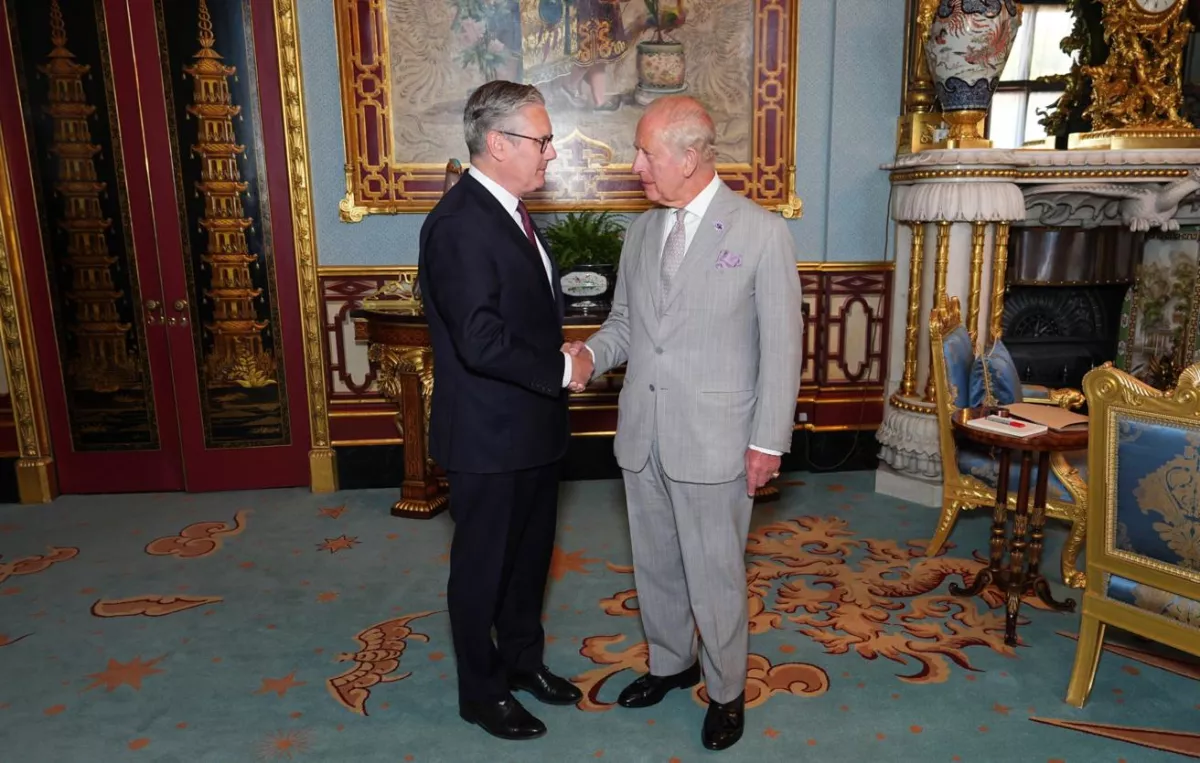
The circumstances surrounding Starmer's departure unfolded rapidly. On May 8, 2026, Labour suffered a crushing defeat in the local elections: it lost control of the Welsh Parliament and forfeited around 1,400 seats on local councils across England. The main victor was Nigel Farage's far-right Reform UK, which captured a significant share of Labour's protest vote on an anti-immigration platform. The result exposed what had been building for some time: by the end of 2025, Starmer's net approval rating had fallen to an average of minus 46 per cent. Party MPs and activists accused him of pursuing austerity, abandoning campaign promises, adopting a detached technocratic style, and losing touch with the electorate. On June 22, Starmer announced that he was stepping down as party leader, acknowledging that he had lost the confidence of his own parliamentary party. The formal transfer of power took place a month later.
Burnham's path to the top is itself revealing of the workings of Britain's party machine. As recently as early 2026, he—one of Labour's most prominent figures and a long-standing internal opponent of Starmer—was effectively prevented from returning to Parliament: under the rules, only a sitting MP may run for the party leadership, and the party's National Executive Committee blocked his nomination in a by-election, rightly viewing him as a threat. Only in June, after the MP for Makerfield vacated the seat, was Burnham able to return to the House of Commons by winning the by-election. His return immediately triggered the crisis surrounding Starmer, who announced his resignation just a few days later. In an uncontested internal party election, Burnham received 379 out of 403 votes—a level of support that rendered the nomination of any rival meaningless. Thus, without a general election, and through an internal party manoeuvre, Britain acquired a new head of government—the seventh since 2016.
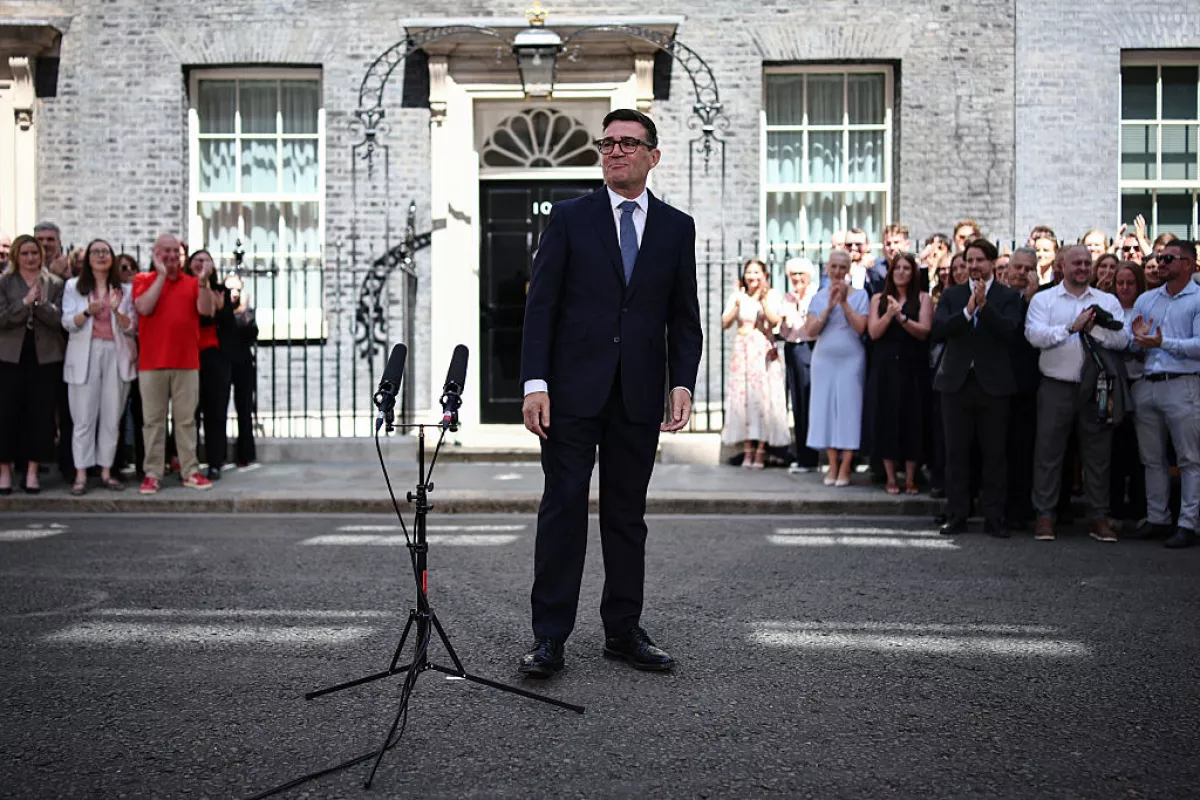
The central pledge with which Burnham enters Downing Street is one he has summed up in a single word: rewiring Britain. By this, he means redistributing power and resources from London to the regions. Burnham believes that the excessive concentration of political and economic influence in the capital is stifling the development of the rest of the country and undermining the quality of public services, while devolving powers to local authorities could accelerate growth. This is not empty rhetoric from a political newcomer: during his years as Mayor of Manchester, Burnham built a reputation as a champion of England's northern regions and a committed practitioner of devolution, particularly during the pandemic, when he publicly clashed with the government in London over funding. The calculation is clear—to restore Labour's image as the party of ordinary Britons, an image that became blurred under the technocratic Starmer, and to win back working-class voters drifting toward Farage and the political right. The question is whether regionalist rhetoric alone will be enough to reverse the nationwide discontent that has been building for years.
In foreign policy, no sharp shifts are to be expected, particularly when it comes to Europe. Starmer consistently ruled out rejoining the European Union, the single market, or the customs union, instead focusing on resetting economic relations with Brussels in order to mitigate the consequences of Brexit. In this respect, Burnham is a direct continuation of that course: he likewise opposes rejoining the EU, recognising its political infeasibility, but advocates the deepest possible expansion of trade and economic cooperation with the continent while reducing confrontation. In other words, under the new prime minister, London will seek to move closer to Europe economically while remaining outside its institutional framework. This has become the established post-Brexit consensus, one that does not depend on who occupies Downing Street and is unlikely to change as long as Brexit itself remains politically unquestionable.
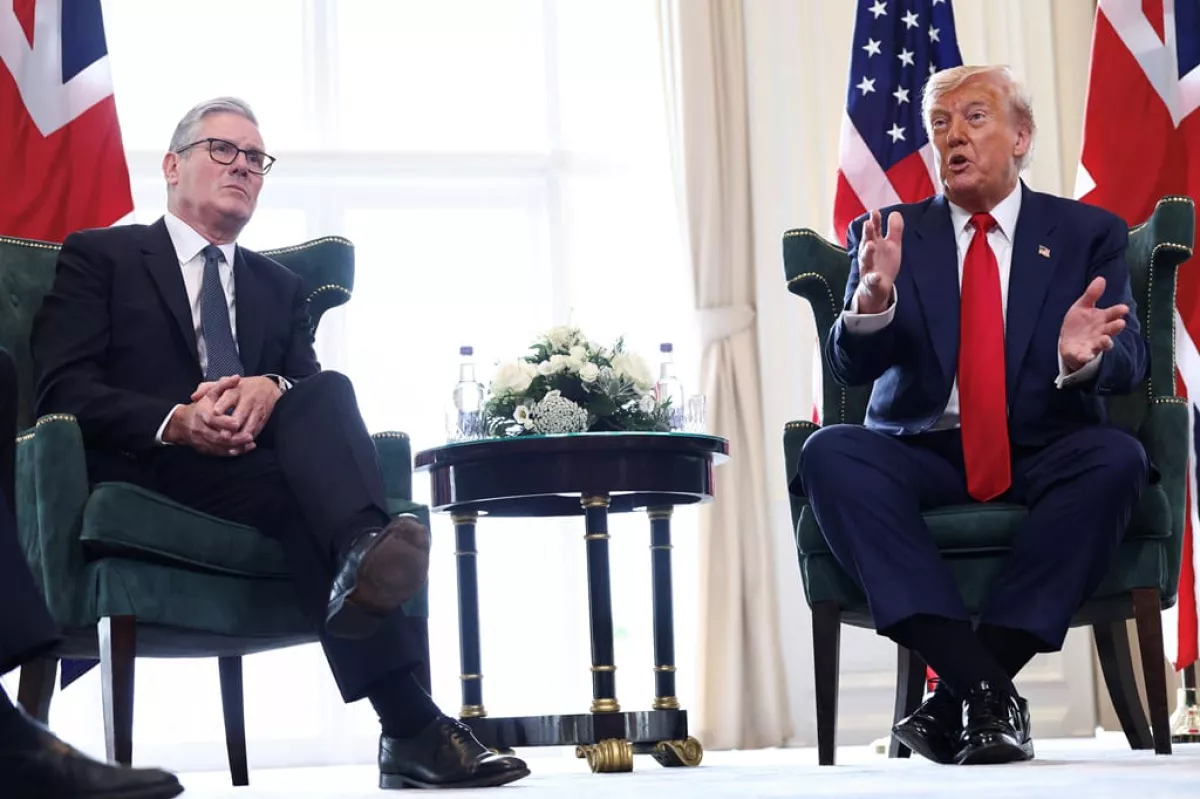
The American dimension is far more complicated, and here Burnham has inherited a difficult legacy. Relations between London and Washington were strained by the Iranian crisis: after the United States entered the war with Iran in late February 2026, Starmer initially refused to allow the Americans to use the Fairford and Diego Garcia bases for strikes against Iran, citing international law, and only partially relented under pressure by permitting the use of British bases for operations in the Strait of Hormuz. Trump reacted sharply, publicly comparing Starmer's caution to Neville Chamberlain's policy of appeasement before the war and calling allies who refused assistance cowards. Washington's attitude toward Burnham has been cautious from the outset: Trump previously described him as an extremely liberal politician, criticised him for being too lenient on illegal immigration, while Burnham himself condemned Trump's unilateral approach to the Middle East. At the same time, there are areas of common ground—Trump has already backed the new prime minister's plans to expand oil production in the North Sea. Burnham will have to strike a balance between preserving the special relationship with the United States and defending British interests where they diverge from those of Washington.
Behind the kaleidoscope of personal reshuffles lies the structural problem that has become the defining story of British politics over the past decade. Cameron, May, Johnson, Truss, Sunak, Starmer, Burnham—seven prime ministers in ten years, and almost all of them left office not because they lost a general election, but because they were brought down by their own party amid crises they failed to overcome. Britain's political system, once regarded as a model of stability, has entered a phase in which prime ministers are replaced faster than they can implement any long-term strategy. The reasons are deep-rooted: the consequences of Brexit, economic stagnation, declining living standards, the rise of right-wing populist forces, and the erosion of trust in the traditional parties. None of the seven leaders managed to resolve these problems because they cannot be solved simply by replacing the person at the top. Burnham inherits exactly the same set of structural challenges that brought down his predecessors, and no amount of rewiring government can diminish their weight.
That is why the fate of the new government will be decided not by rhetoric or foreign policy, but by the far more down-to-earth issue of living standards. If Burnham succeeds in reviving economic growth, raising real incomes, and easing the accumulated social discontent, Labour will have a chance of remaining in power until the 2029 general election and halting the drift of voters toward Farage. If not, Britain is likely to face yet another change of course, and the list of its prime ministers will gain another name well before the end of the decade. British politics in recent years has been governed by a harsh rule: voters no longer grant leaders a prolonged honeymoon and punish unresolved problems swiftly and ruthlessly. Burnham has assumed office without a general election and, in a sense, on borrowed authority. Whether he can retain it will depend on whether he succeeds where the six before him failed—turning a change of leadership into a genuine improvement in the lives of ordinary Britons. So far, no one has managed to do so, and that, rather than Burnham's personal qualities, is the central question hanging over his premiership.







 editor@caliber.az
 +994 55 444-88-98
 Азербайджан, Баку, ул. Низами, 203, Af Business House, 5-й этаж