










Politics and the power of victory Trump softens his tone toward Spain
Not long ago, Donald Trump called Spain "a terrible partner" in NATO, said "they’re hopeless," and threatened to halt trade with Madrid. On the evening of July 19, at MetLife Stadium in New Jersey (officially renamed "New York–New Jersey Stadium" for the duration of the tournament), the same Trump shook hands with Prime Minister Pedro Sánchez, congratulated the Spaniards on winning the World Cup, and personally presented the tournament's main trophy to Spain captain Rodri. This could, of course, be dismissed as a necessary formality, if the story did not carry a distinctly political dimension.
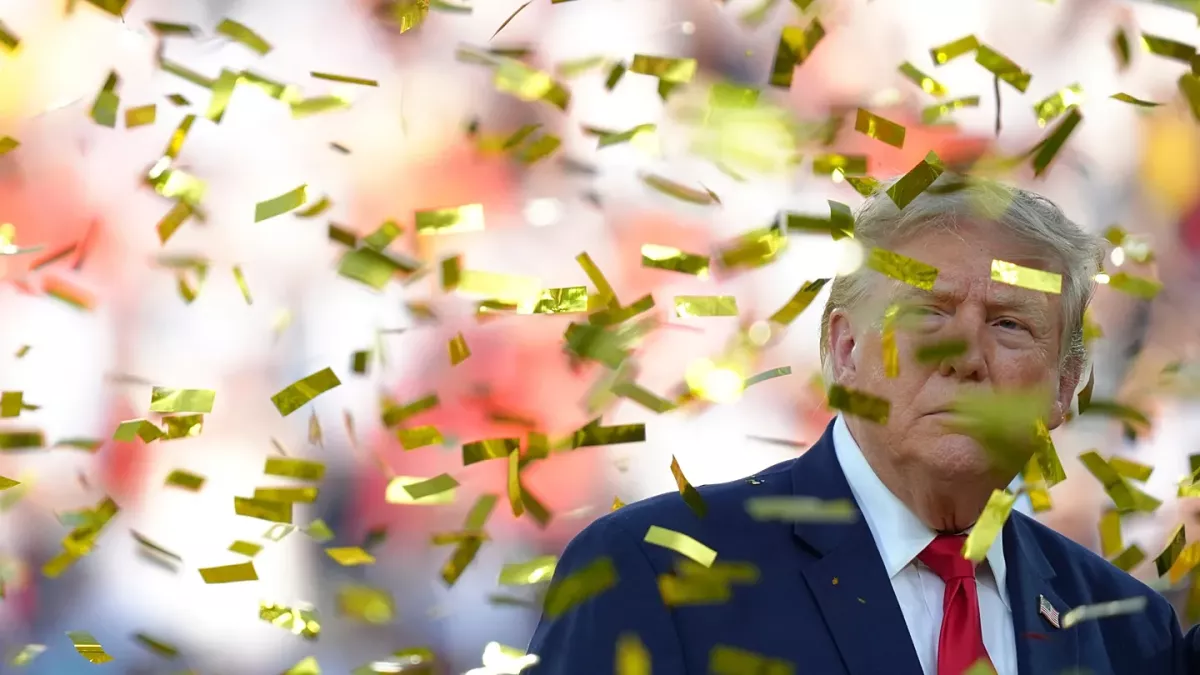
"I spoke to Spain [...] I have no tension. I have no tension with anybody," the U.S. president said a few hours later aboard Air Force One, in remarks that stood in marked contrast to the acute crisis that relations between Washington and Madrid had been experiencing in recent months.
Reducing the conflict to a dispute over defence spending would be an oversimplification. Yes, Spain's refusal to support Washington's demand to increase defence spending to 5 per cent of GDP became the main source of irritation for the White House. Sánchez described such a target as "unreasonable and counterproductive," while Trump turned it into a test of allied loyalty. But behind this lay far deeper disagreements.
Spain became one of Europe's strongest critics of Israel's actions in Gaza, while the Trump administration gave its ally unequivocal support. Following the U.S. operation against Iran, Madrid refused to allow the use of the Rota and Morón bases for strikes on Iranian territory, citing the terms of the bilateral agreement. It was after this that the White House's rhetoric became markedly more confrontational.
Trump even instructed his administration to prepare measures against Spanish exports. Although carrying out the threat to "cut off all trade" was far from straightforward—since trade policy falls under the European Union's jurisdiction—the message itself was unmistakably clear. Spain became an example of what, in Washington's view, awaited allies unwilling to follow the American line.
The situation bore all the hallmarks of a deepening crisis. However, at the NATO summit in Ankara, following yet another exchange of sharp rhetoric, Trump and Sánchez unexpectedly struck up a conversation while waiting for the official group photograph.
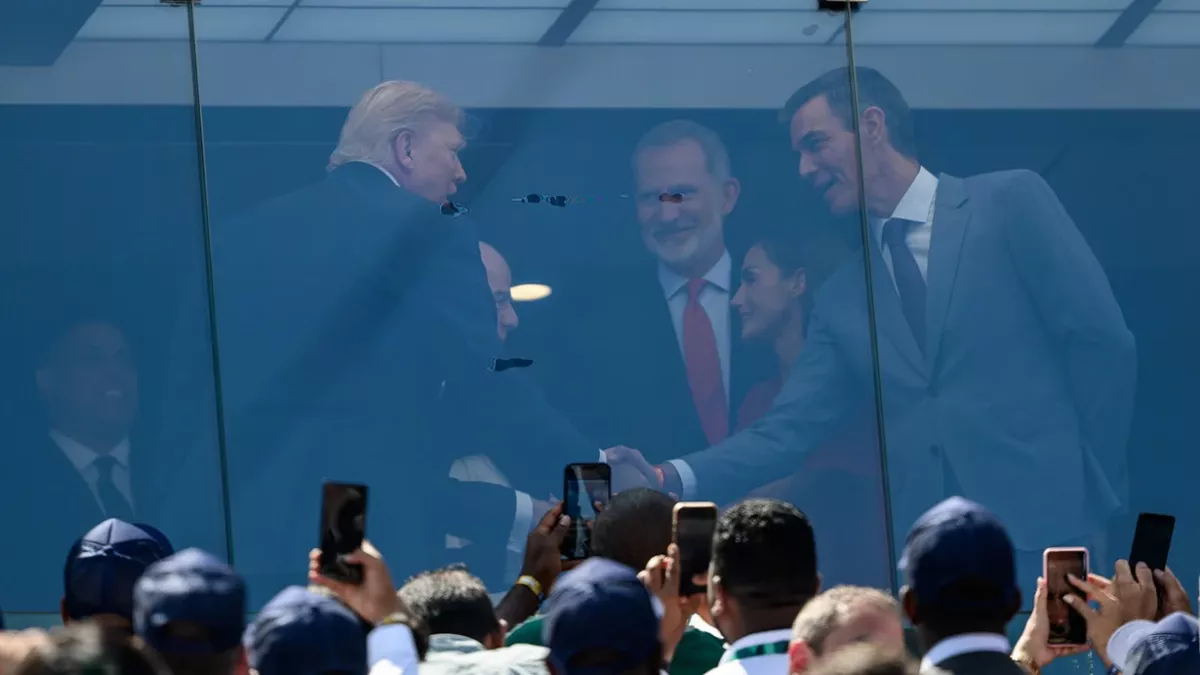
The handshake in the stands at the stadium in New Jersey and the positive remarks about Spain, in turn, confirmed that the U.S. president was seeking to overcome the differences in relations with Madrid. Among the reasons cited for Trump's change of position are his realization of the futility of waging a trade war against Spain (as noted above, this would have created unnecessary problems with Brussels), Spain's fulfillment of the existing minimum of its NATO obligations (having raised defense spending to 2.1 per cent of GDP), other economic factors, and, of course, America's positioning as a peace-loving power during the World Cup.
At the same time, it would be premature to say that the crisis between Washington and Madrid is now behind them. Disagreements over NATO, the Middle East, and trade have not disappeared. However, something else is no less important: the tone has changed.
During the first months of his second presidential term, Donald Trump relied on a strategy of intense pressure—sharp statements, public criticism, and constantly raising the stakes.
Such a strategy has repeatedly brought him political dividends, prompting allies to respond to Washington's demands. But every political style eventually reaches a point where the display of strength ceases to be an end in itself, and the focus shifts to the question of political legacy and the ability to consolidate the results that have been achieved.
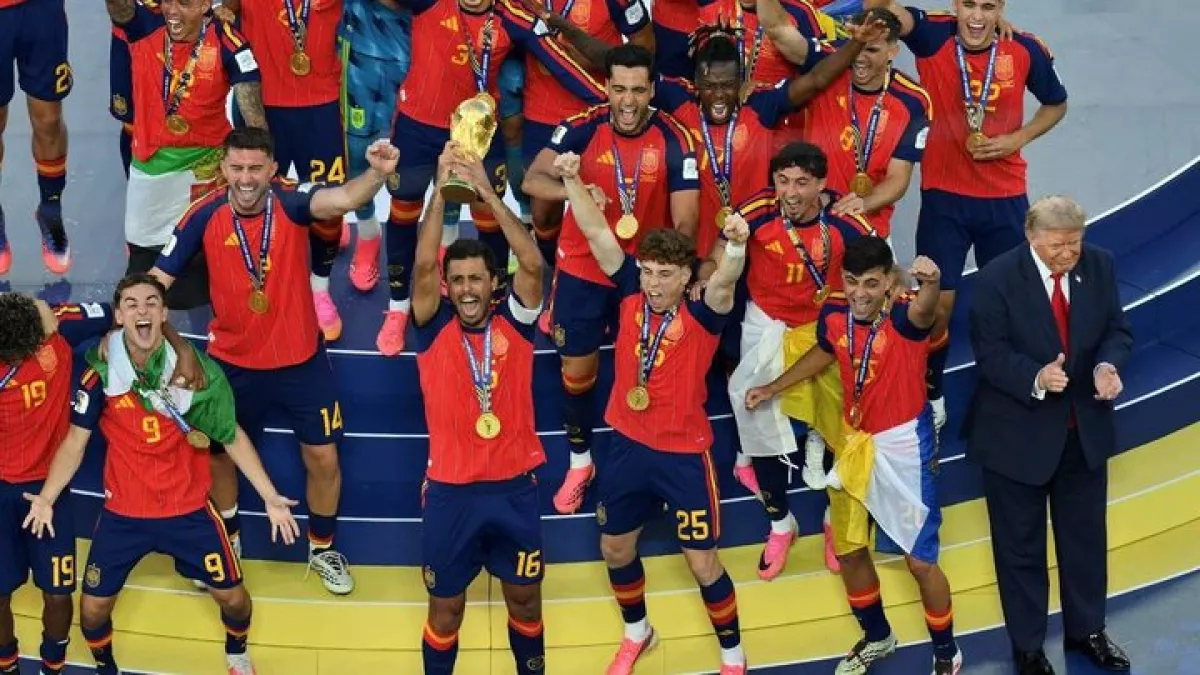
That is precisely why what happened in the stands of the stadium in New Jersey may prove more significant than it appears at first glance. Before a global television audience of billions, Trump had the opportunity not to retreat under pressure, but to change his tone on his own terms. He did so at the very moment Spain was celebrating its World Cup triumph—an achievement that could not be called into question. A politician who has always emphasised respect for strength and winners arguably chose the perfect moment to set aside the recent confrontation and publicly congratulate the country he had only recently described as "a terrible partner."
In this context, it is particularly worth noting that Trump, contrary to tradition, stepped onto the stage to be photographed with the Spanish national team as they triumphantly lifted the World Cup trophy. Yes, Trump likes winners, and that is highly significant.
Perhaps this was merely a well-timed diplomatic episode. But it is equally possible that it marks the beginning of a new phase—less emotional and more pragmatic. If that is indeed the case, then years from now, the handshake in the stands of the football stadium may be remembered not as a graceful protocol gesture, but as the first visible signal of a shift in political tone.







 editor@caliber.az
 +994 55 444-88-98
 Азербайджан, Баку, ул. Низами, 203, Af Business House, 5-й этаж