










Partnership of equals What the Baku–Berlin Strategic Declaration means
President Ilham Aliyev’s visit to Germany and the documents signed during the trip — the Joint Declaration on the Strategic Agenda for Bilateral Partnership and the agreement establishing the Azerbaijan–German Business Council — should be viewed not as another round of protocol-driven exchanges, but as the formalisation of a shift that has been developing over several years. Germany, Europe’s largest economy and its industrial powerhouse, is moving relations with Azerbaijan into the category of a strategic partnership built on a long-term institutional foundation.
Behind the dry wording of the documents lies a substantive change: Berlin is no longer viewing Baku solely as an energy supplier, but is beginning to treat it as a systemic partner in industry, logistics, and technology. This represents a different level of relations and a new perception of Azerbaijan’s role within the European architecture.
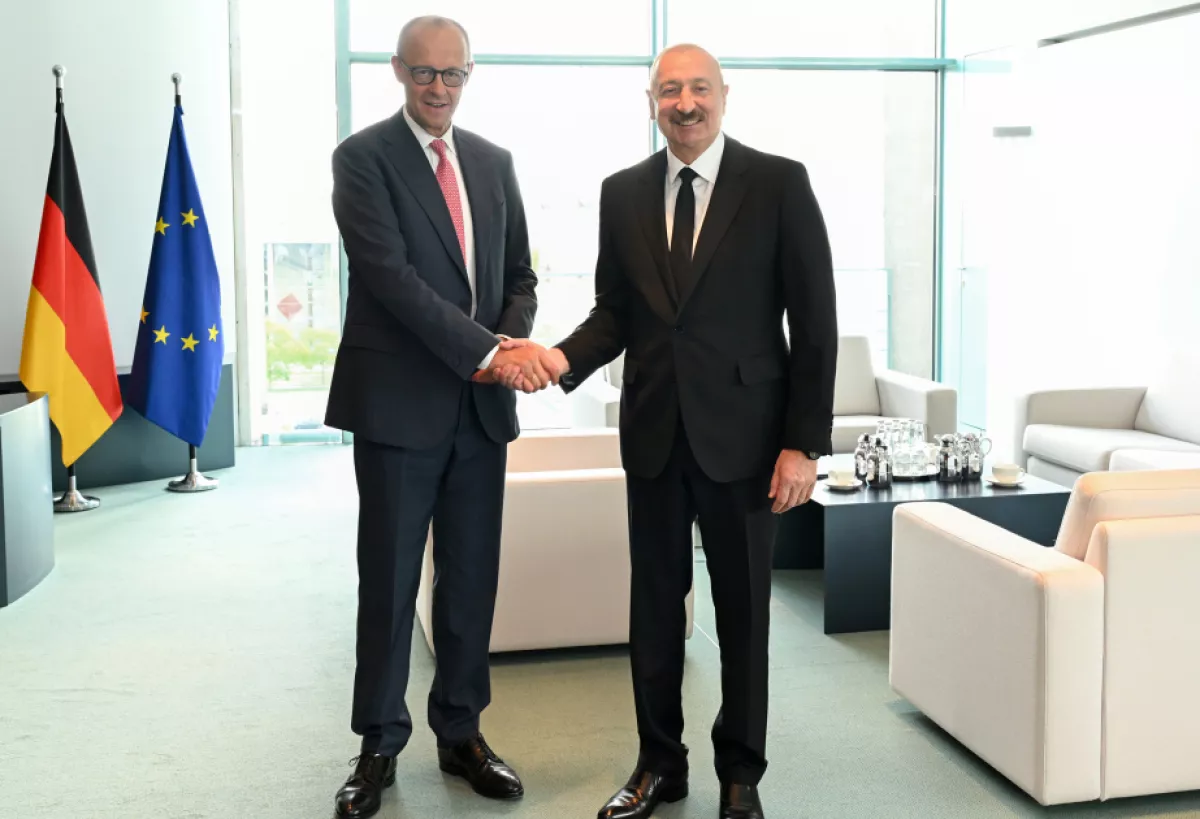
To assess the scale of this development, it is enough to look at what stands behind the signatures. More than 250 German companies are currently operating in Azerbaijan across industry, construction, logistics, and energy. Bilateral trade between the two countries reached approximately €1.7 billion in 2025, increasing by around 70% over five years. Significantly, this trade remains balanced: Germany is not only a seller but also a buyer, and such equilibrium in the trade balance is traditionally viewed as a sign of mature economic relations rather than a temporary market-driven trend. It is on this foundation that the strategic declaration is being built: it does not create relations from scratch, but rather gives institutional structure to an already dense network of cooperation, transforming a collection of individual contacts into a unified strategic agenda.
For many years, the core of this agenda was energy. It was precisely in this sphere that Azerbaijan reinforced its reputation as a reliable partner for Europe at a time when reliability had become a scarce commodity. After the continent lost its previous volumes of Russian gas supplies, Azerbaijani exports gained strategic importance for Europe. In early 2026, direct supplies of Azerbaijani gas to Germany and Austria began. However, this is precisely where the declaration takes a step that distinguishes a strategic partner from a mere supplier: energy cooperation is moving beyond natural gas deliveries and expanding into renewable energy, green and low-carbon hydrogen, energy efficiency, and support for the energy transition.
In other words, Baku and Berlin are no longer negotiating only about today’s gas, but about tomorrow’s energy landscape, where hydrocarbons will gradually give way to cleaner sources of energy. Through this process, Azerbaijan is becoming an integral participant in Europe’s energy transition rather than merely an external supplier.
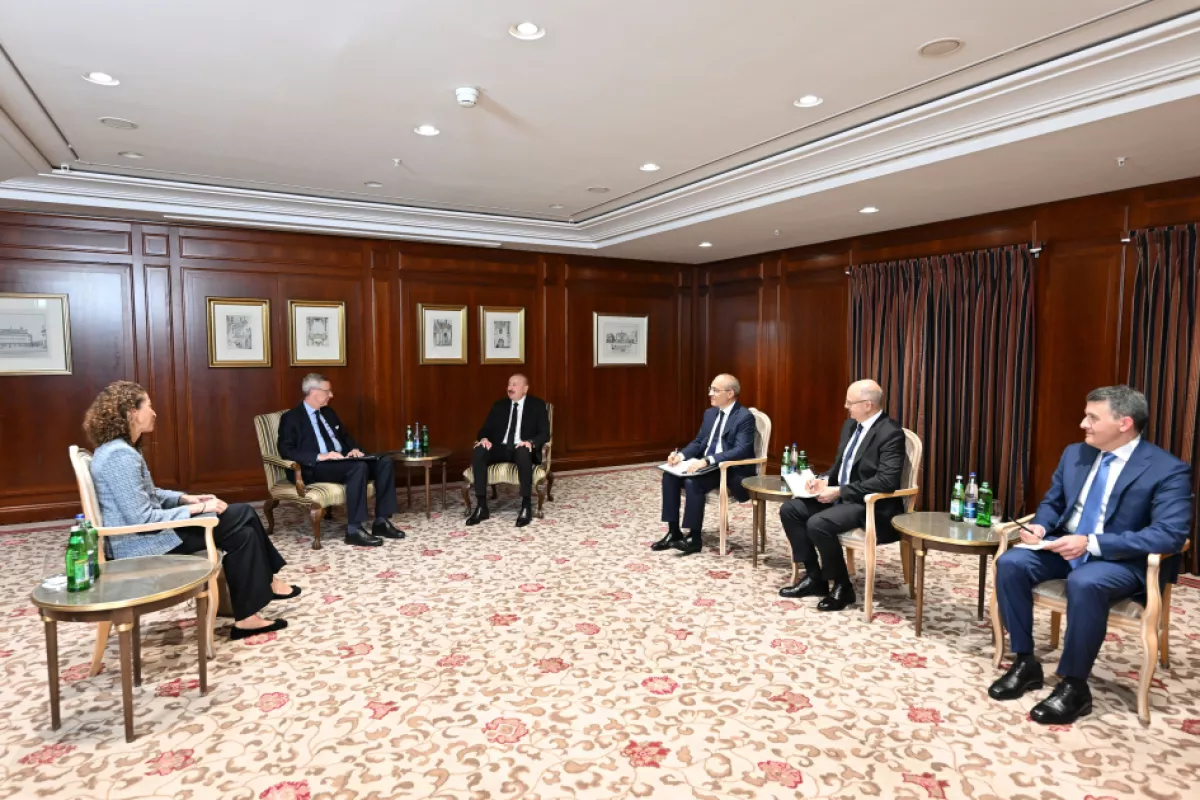
But the main message of the document extends beyond the energy agenda. The declaration covers industrial modernisation, digital transformation, agriculture, sustainable development, and transport connectivity — the full range of areas that transforms bilateral relations from a vertical model of “resources in exchange for money” into a horizontal partnership based on equal economic cooperation.
A particularly important dimension is transport and logistics, and this is no coincidence: Azerbaijan is increasingly strengthening its position as one of the key hubs of the Middle Corridor, through which cargo flows bypass both northern and southern routes. For Germany, whose export-driven economy depends critically on the resilience of supply chains, a reliable transit partner at the crossroads of continents has strategic importance. Baku is no longer merely a point on Berlin’s energy map; it is becoming part of a new Eurasian industrial and logistics architecture that Europe is developing as it diversifies its dependencies.
Another aspect that deserves particular attention is that the declaration institutionalises dialogue rather than leaving it vulnerable to political fluctuations. It provides for regular intergovernmental consultations, high-level exchanges of visits, thematic dialogues on key areas of cooperation, as well as the full engagement of the joint high-level working group on trade and investment.
The establishment of the Azerbaijan–German Business Council integrates a direct channel of interaction between the state and the business community into this framework — a permanent platform where entrepreneurs from both countries can address practical issues without bureaucratic delays. The essence of institutionalisation lies in making the partnership resilient to changes in governments and political sentiments: once a mechanism is launched and enshrined in official documents, it continues to function regardless of who occupies ministerial offices at a given moment. This shifts relations from a pattern of occasional breakthroughs to a mode of continuous, systematic cooperation.
Even the security sphere, traditionally the most sensitive area, has been included in the agenda without ambiguity. The declaration provides for dialogue on regional and international issues, cooperation in humanitarian demining, efforts to combat human trafficking and drug smuggling, exchanges of expertise between relevant institutions, and even interaction between defence academies and cooperation in the defence industry. Berlin’s willingness to discuss military-technical cooperation with Baku is significant in itself: it indicates that Germany no longer views Azerbaijan as a problematic partner to be kept at arm’s length, but rather as a state with which cooperation is possible in sensitive areas.
Particular attention should be paid to cooperation in the field of humanitarian demining — a direct response to the real challenge posed by mine-contaminated liberated Azerbaijani territories, while also representing an area where German expertise and technologies can provide tangible practical benefits.
The declaration also highlights climate change, environmental protection, and sustainable water resource management as separate areas of cooperation — fields that correspond both to global priorities and to Azerbaijan’s specific needs as the host country of the UN climate conference.
A significant place is given to the humanitarian dimension: cultural exchanges, intercultural and interfaith dialogue, academic mobility, vocational education, and joint scientific research.
Finally, cooperation in the fields of science, technology, and innovation has been identified as a separate priority — ranging from digital transformation to joint research projects. These areas rarely make headlines, yet they are precisely what create the dense human and intellectual fabric without which any strategic partnership remains merely a structure built around ministerial protocols.
Against the backdrop of Azerbaijan’s relations with other major European Union states, the German vector stands out in particularly sharp contrast. While some European capitals pursue a policy of pressure towards Baku, promote biased resolutions, and interfere in regional affairs under the banner of defending values, Berlin prefers pragmatism, mutual benefit, and respect for the sovereignty of its partner. This difference is not accidental and reflects two distinct traditions of foreign policy thinking: one is driven by post-colonial ambitions and domestic political calculations linked to diaspora sentiments, while the other is based on the sober assessment of an industrial power that needs markets, resources, and reliable transport routes.
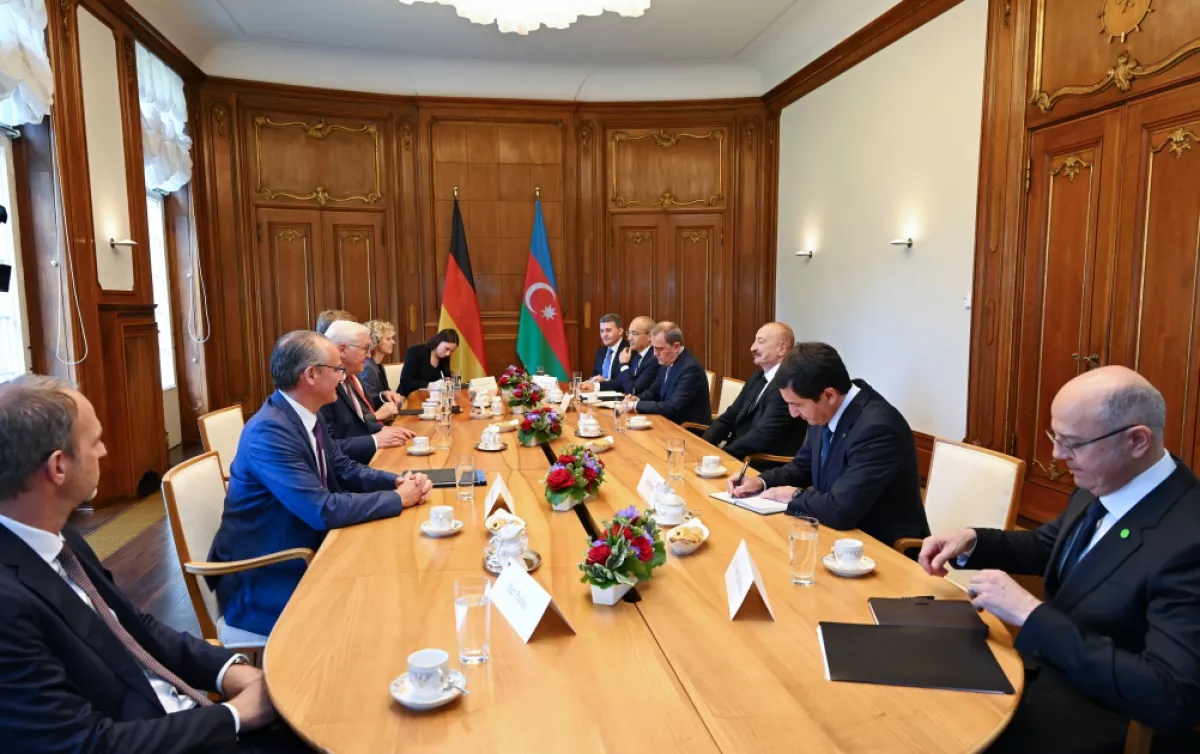
Germany is building its relations with Azerbaijan on the basis of equal partnership, and this is precisely why German–Azerbaijani cooperation rests on a far stronger foundation than the loud but unproductive gestures of some other European actors.
The significance of the signed documents extends far beyond the bilateral framework. They demonstrate that Azerbaijan has established itself as an independent actor in European politics, with which the continent’s largest economy is building relations based on strategic rather than short-term interests; they confirm that a model of cooperation founded on mutual benefit and respect for sovereignty is more effective than a model based on pressure and lecturing; and, finally, they underscore Azerbaijan’s new role — not as Europe’s raw-material periphery, but as its partner in the energy systems of the future, industrial cooperation, and logistics on a Eurasian scale.
The pipeline carrying Azerbaijani gas to Europe became the starting point of this relationship. The documents signed in Germany testify that the ties between the two countries have long moved beyond the energy sector and have acquired a fully-fledged strategic dimension.







 editor@caliber.az
 +994 55 444-88-98
 Азербайджан, Баку, ул. Низами, 203, Af Business House, 5-й этаж