










Belarusian concrete vs. Venezuelan quake: why Ciudad Tiuna stood strong Analysis by Limansky
A powerful earthquake that struck the Bolivarian Republic of Venezuela resulted in numerous casualties and widespread destruction. However, buildings in neighbourhoods constructed by Belarusians did not develop even a single crack.
Even seismic strikes failed to break the Fort Tiuna
On June 24, two powerful earthquakes with magnitudes of 7.2–7.5 struck Venezuela, killing more than 5,200 people, injuring over 11,000, and leaving around 43,000 citizens missing. According to satellite data from NASA and United Nations estimates, more than 58,000 buildings were either completely destroyed or damaged. Severe destruction was reported in the capital district of Caracas, La Guaira, and Aragua state. The earthquake became the strongest in the country in the past 126 years.
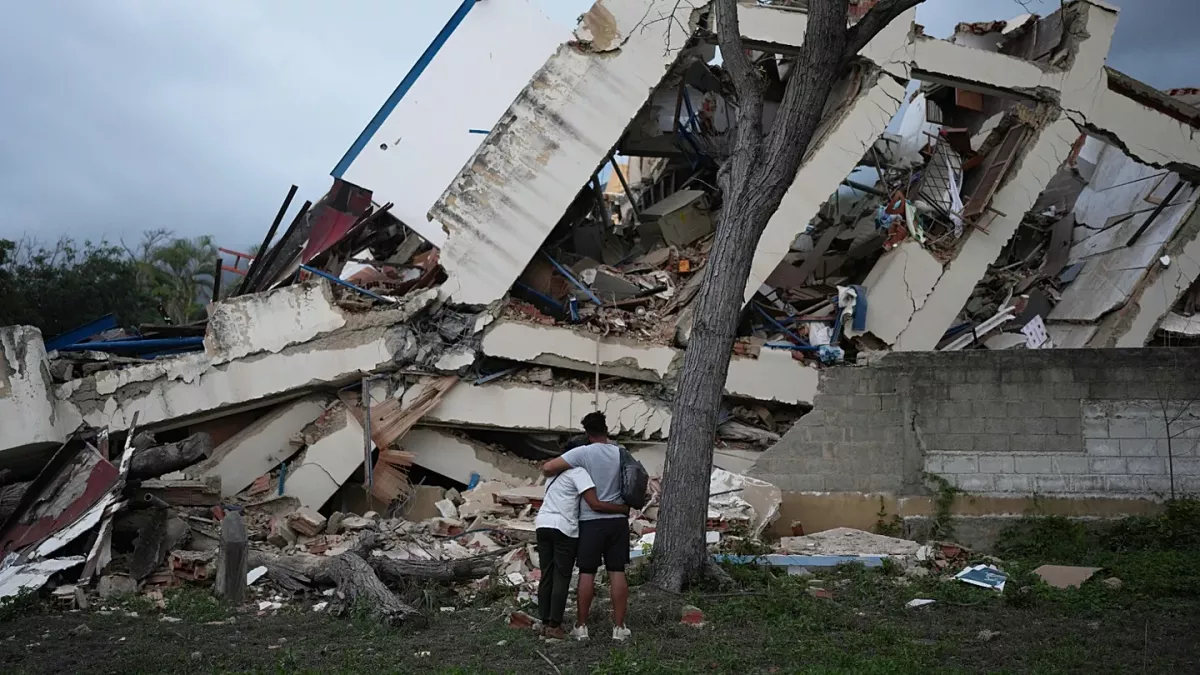
However, the residential complex Ciudad Tiuna on the outskirts of Caracas, built by specialists from the Belarusian company OJSC Belzarubezhstroy, was practically unaffected. Residential neighbourhoods constructed by the Belarusian company OJSC MAPID in La Guaira and Aragua also survived intact.
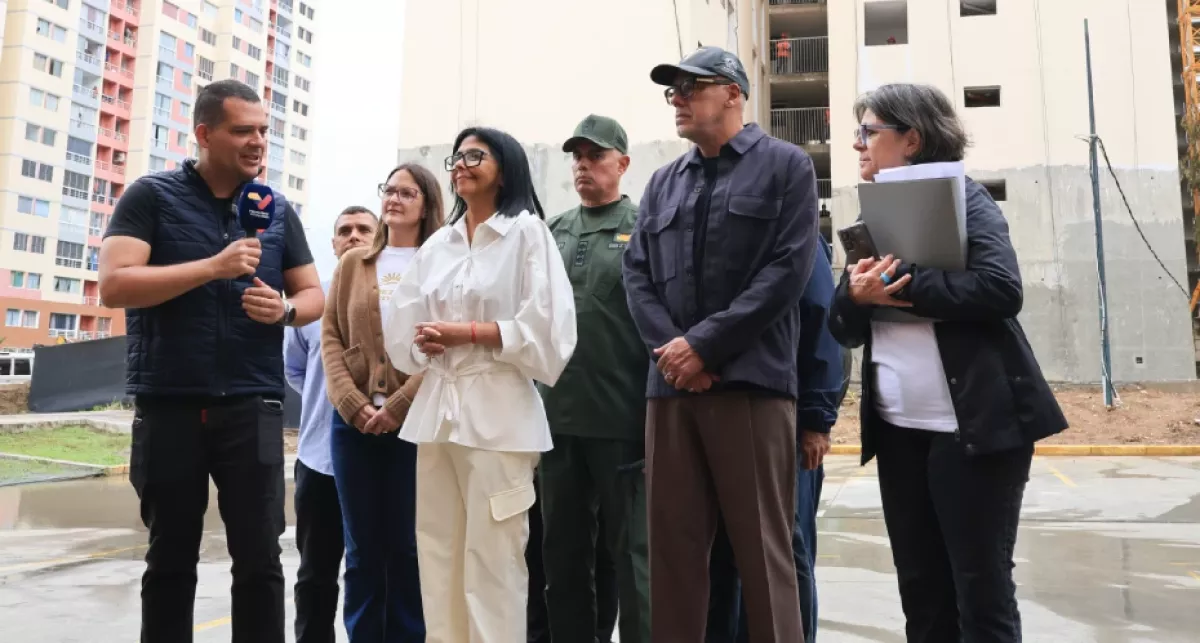
The Ciudad Tiuna residential complex was launched in 2011 as part of Venezuela’s social housing programme, the “Great Mission Housing Venezuela”, initiated by President Hugo Chávez. The initiative was prompted by catastrophic floods that left hundreds of thousands of residents of impoverished neighbourhoods homeless (notably, the presidential palace of Miraflores was even used as temporary shelter for some of those affected).
At the same time, a 174-hectare plot of land was allocated for construction on the territory of one of the country’s largest military bases — Fort Tiuna. The construction was carried out by companies from China, Russia, and Belarus.
The project was financed 80% by the state, primarily through Venezuela’s state-owned oil and gas company Petróleos de Venezuela (PDVSA), as well as through investments from China, Russia, Iran, Uruguay, Belarus, the savings fund of the Bolivarian National Guard (GNB), and other sources.
The first residents of Ciudad Tiuna were people affected by the floods and members of the National Guard. Apartments were purchased through long-term instalment plans, with housing costs calculated based on actual construction expenses rather than market prices and profit margins. The properties were transferred to families as private ownership, but with certain restrictions: if an apartment was sold within 30 years, the state had the preferential right to purchase it.
Apartments built for former slum residents met high social standards: many featured two bathrooms, while the average living area was around 68 square metres.
At the same time, schools, sports facilities, the Tiuna El Fuerte Cultural Park, as well as a cultural and arts education centre for children and adults, were opened.
However, the new district was also affected by criminalisation processes typical of many Latin American countries. Mobile phones and laptops were occasionally stolen from the offices of Chinese and Belarusian construction companies, although by local standards these incidents were considered relatively minor.
On the other hand, the new residents of Ciudad Tiuna have demonstrated a tendency toward community self-organisation. They have even taken measures to monitor local prices in order to prevent profiteering.
“It is a wonderful place to live, to socialise, to make friends, and to work,” one of the residents says.
In July 2014, during Chinese President Xi Jinping’s visit to Venezuela, Ciudad Tiuna became one of the prominent examples of successful cooperation between the Bolivarian Republic and China, Russia, and Belarus.
From 2011 to 2017 alone, the company Belzarubezhstroy built around 20,000 facilities in Venezuela. In addition to housing, Belarusian specialists constructed a brick factory, a workshop for assembling MAZ vehicles, a Belarus tractor manufacturing plant, and facilities for producing AMKODOR construction machinery.
Belarusian resilience
The new buildings in Ciudad Tiuna are high-rise structures. For example, residential tower A-13 of the Ciudad Tiuna complex has 15 floors. Yet it was precisely these high-rise buildings that withstood the earthquake. What is the secret behind their strength?
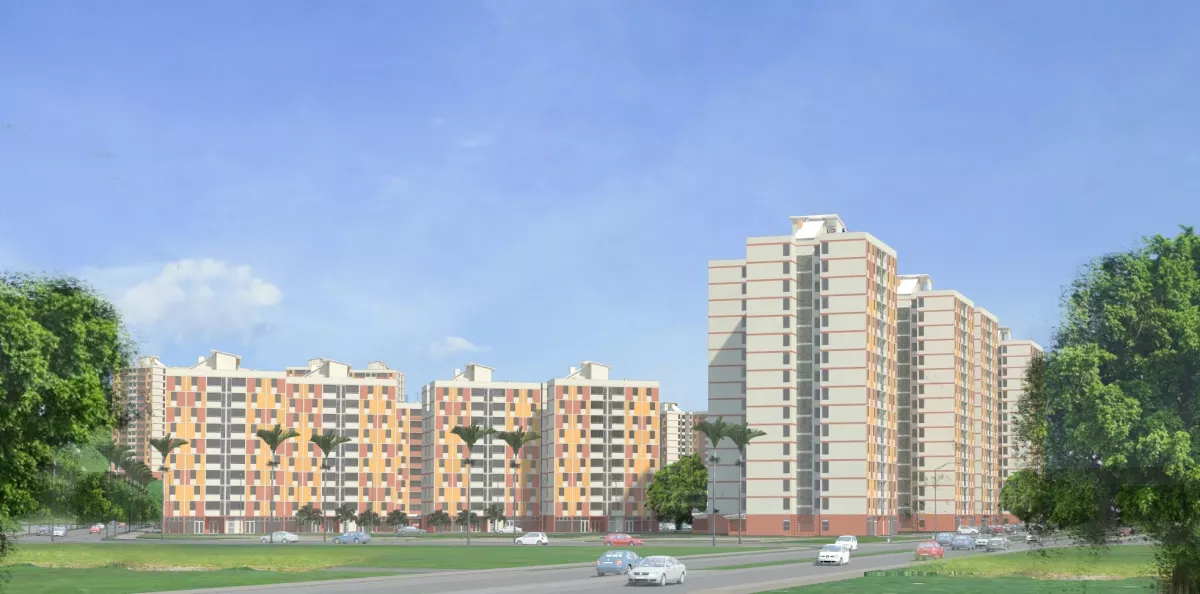
The first to report that the Belarusian-built houses had not suffered even a single crack was Elena, a Russian-speaking guide in Caracas. She also published a video showing the buildings, which was quickly picked up and widely discussed by users online.
Some commenters wrote: “So it’s not only Belarusian products that are high quality?”, “It is all thanks to the fact that the Belarusian engineering school preserved old Soviet SNiP and GOST standards,” and “Belarusian builders have a conscience.” Others expressed scepticism, pointing out that not only the buildings constructed by Belarusians had survived, but also other structures in the area. In their view, the reason was that the earthquake’s epicentre was not located in this district but closer to the coastline.
However, many high-rise buildings in Caracas itself were damaged during the earthquake. In many cases, buildings in the city are constructed using unreinforced brick masonry, while in private residential areas houses are often built from adobe. Belarusian designers and construction specialists had taken the region’s high seismic activity into account in advance. At the same time, in Belarus itself — a country not prone to strong earthquakes — additional measures to reinforce structures are generally applied only when constructing buildings taller than 75 metres and at the Belarusian Nuclear Power Plant.
In Venezuela, Belarusian builders, meanwhile, constructed facilities exclusively using reinforced monolithic concrete technology. In particular, for high-rise buildings in Caracas, pile foundations were installed to depths of up to 20 metres, followed by the pouring of a monolithic slab and the construction of a monolithic building frame. The thickness of the reinforcement, the spacing of the rebar grid, the concrete grade, and other parameters were calculated with an increased safety margin.
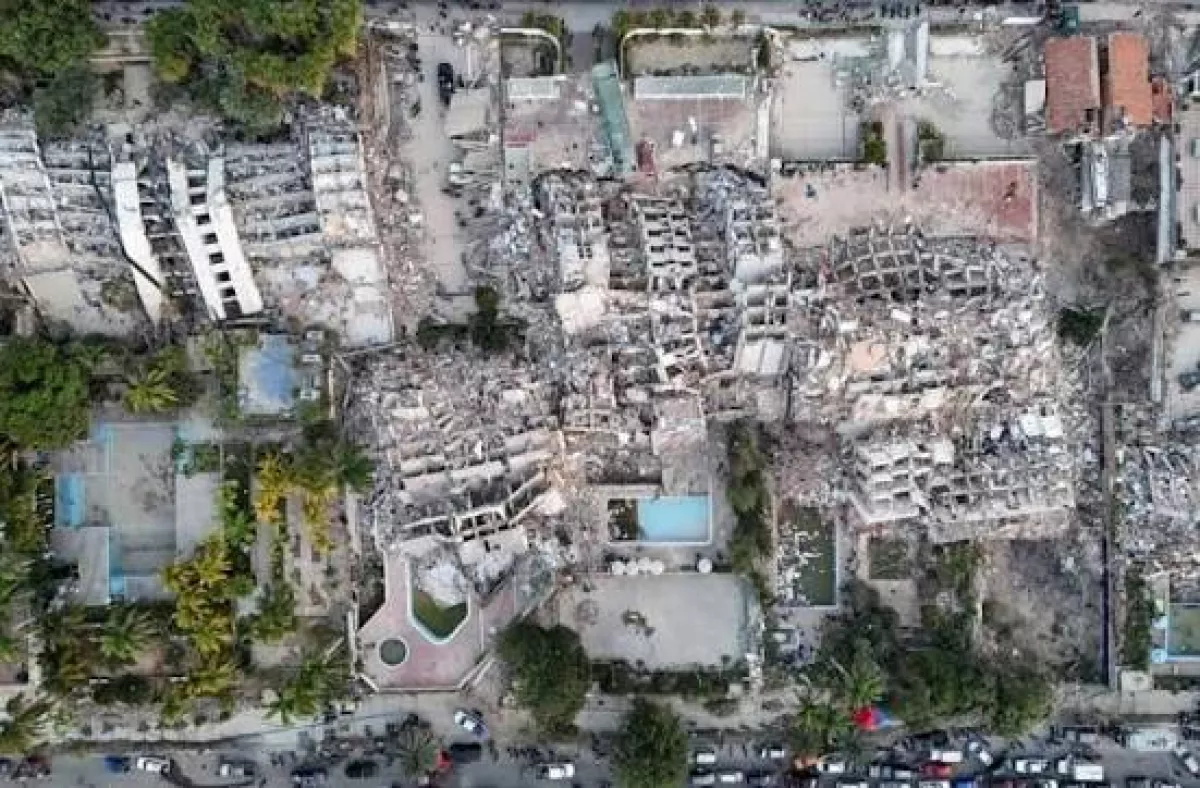
Some residential complexes built using other technologies, by contrast, suffered serious damage. For example, in La Guaira state, the earthquake destroyed the Ciudad Hugo Chávez Frías and Luisa Cáceres de Arismendi residential complexes, while the Ojos de Chávez residential complex in Caracas sustained significant damage.
Building regulations and GOST standards in Belarus have, of course, been partially updated over time in line with the needs of modern urban development. However, the requirements for quality, reliability, and safety remain unchanged.







 editor@caliber.az
 +994 55 444-88-98
 Азербайджан, Баку, ул. Низами, 203, Af Business House, 5-й этаж