










Vučić’s China pivot Belgrade and Beijing expand cooperation
President of Serbia Aleksandar Vučić is continuing a five-day state visit to China. The agenda of talks with Chinese President Xi Jinping appears largely practical in nature: investment, infrastructure, industry, and technology. In the first days of the trip alone, the two sides signed more than 30 agreements and memorandums — ranging from transport and energy projects to cooperation in the digital economy and science.
However, the current visit also carries significant geopolitical weight. For many years, Serbia has pursued a balancing policy: it officially seeks EU membership while maintaining close ties with Russia and simultaneously actively developing relations with China. That is why Vučić’s trip is seen by many as a demonstration of Belgrade’s political autonomy and its reluctance to fully align with Brussels. It is noteworthy that Serbia remains one of the few European countries that has not joined anti-Russian sanctions, while at the same time expanding cooperation with Beijing.
China plays a special role in this configuration for Serbia. Unlike the European Union, Beijing does not impose political conditions related to reforms, democracy, or foreign policy. Belgrade receives investments, loans, infrastructure projects, and access to the Chinese market while preserving room for foreign policy manoeuvre. In recent years, Chinese companies have already invested in Serbian metallurgical and mining enterprises, as well as in the construction of roads, bridges, and industrial facilities.
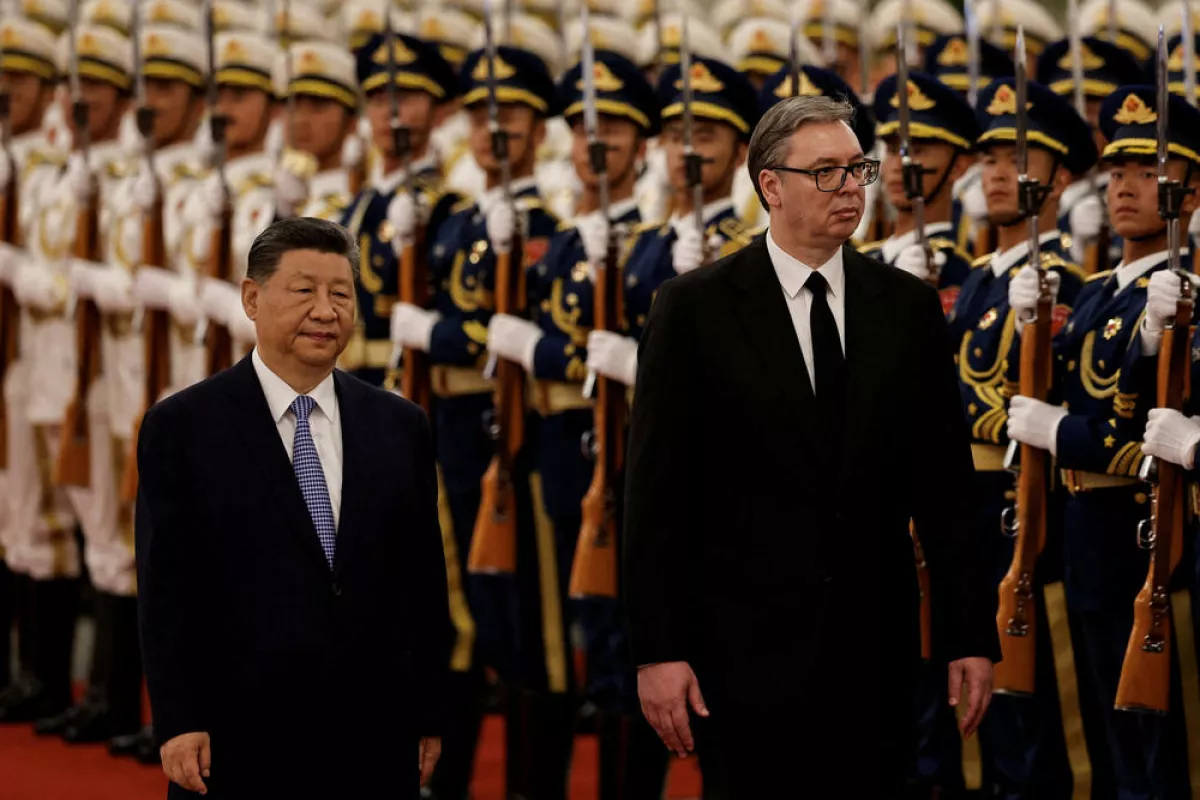
For China, Serbia also holds particular value. Beyond its advantageous geographic position, Belgrade remains one of the few European partners of Beijing that openly demonstrates a willingness for strategic rapprochement. Against the backdrop of China’s increasingly tense relations with the West, the Balkans are becoming an ever more important direction for Beijing. It is no coincidence that Serbia was among the first European countries to support many of China’s initiatives within the Belt and Road Initiative.
The visit itself is taking place amid significant domestic political challenges for Vučić. Mass opposition protests continue in Serbia. While in China, Vučić, in an attempt to stabilise the situation, announced his possible imminent resignation and the subsequent calling of early parliamentary and presidential elections. However, critics see this as merely a rhetorical device and accuse him of seeking to retain power at any cost. Among the opposition’s criticisms is Serbia’s growing dependence on China. Government opponents point to the risks of rising debt levels and potential environmental consequences of joint infrastructure projects with the PRC. In particular, Serbia has previously seen protests around the operations of Chinese industrial facilities due to complaints about environmental pollution.
Nevertheless, Vučić firmly presents strategic rapprochement with Beijing as an asset rather than a problem. His call for Europe to “consider China as a partner, not a threat” is particularly indicative. These remarks effectively reflect the essence of Belgrade’s current strategy: not to make a final choice between East and West, but to seek cooperation with all sides simultaneously.
It is also important to note that the current presidential term expires in May 2027, and Vučić has repeatedly stated that he will not initiate constitutional changes to extend his time in office. For now, as long as he remains at the helm of the country, he continues to manoeuvre assertively in foreign policy.
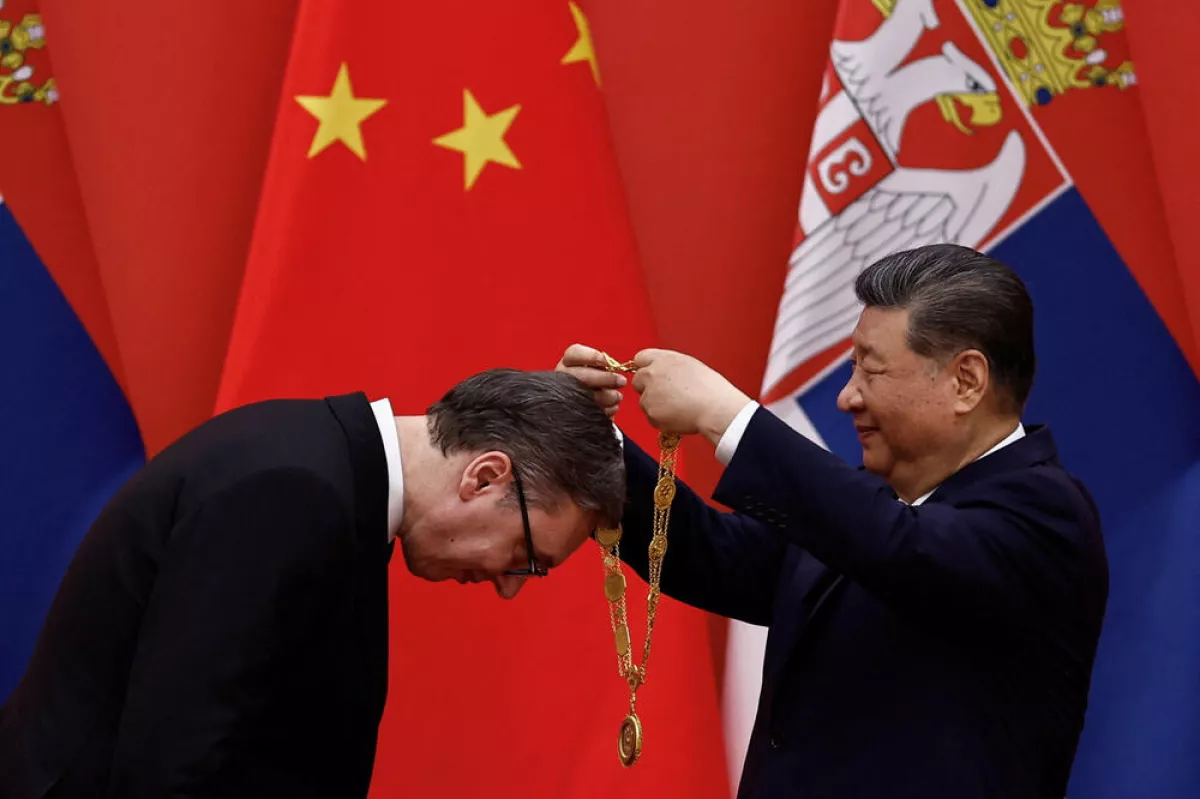
Thus, he described his current visit to China in advance as the “crowning achievement” of his political career and an important step for Serbia amid a complex international environment. A symbolic gesture was the awarding of the Order of Friendship — China’s highest state honour for foreign citizens — to Vučić by President Xi Jinping.
Ultimately, the trip to Beijing has become for Vučić not only a series of economic negotiations, but also an opportunity to demonstrate that Serbia retains international weight and is capable of attracting support from major global powers even under conditions of significant external and internal pressure.







 editor@caliber.az
 +994 55 444-88-98
 Азербайджан, Баку, ул. Низами, 203, Af Business House, 5-й этаж