










US president between war and elections Following Donald Trump’s latest interview
“I've taken something that was in deep trouble and I've made us the hottest country anywhere in the world” — this statement by Donald Trump, made at the end of his latest interview with New York Post columnist Miranda Devine, once again illustrates the central theme running through his public remarks in recent months. The US president continues to build a political narrative around the idea of national revival after a period of “decline under Biden,” presenting himself simultaneously as a “president of strength” in foreign policy and a “president of restoration” in domestic affairs.
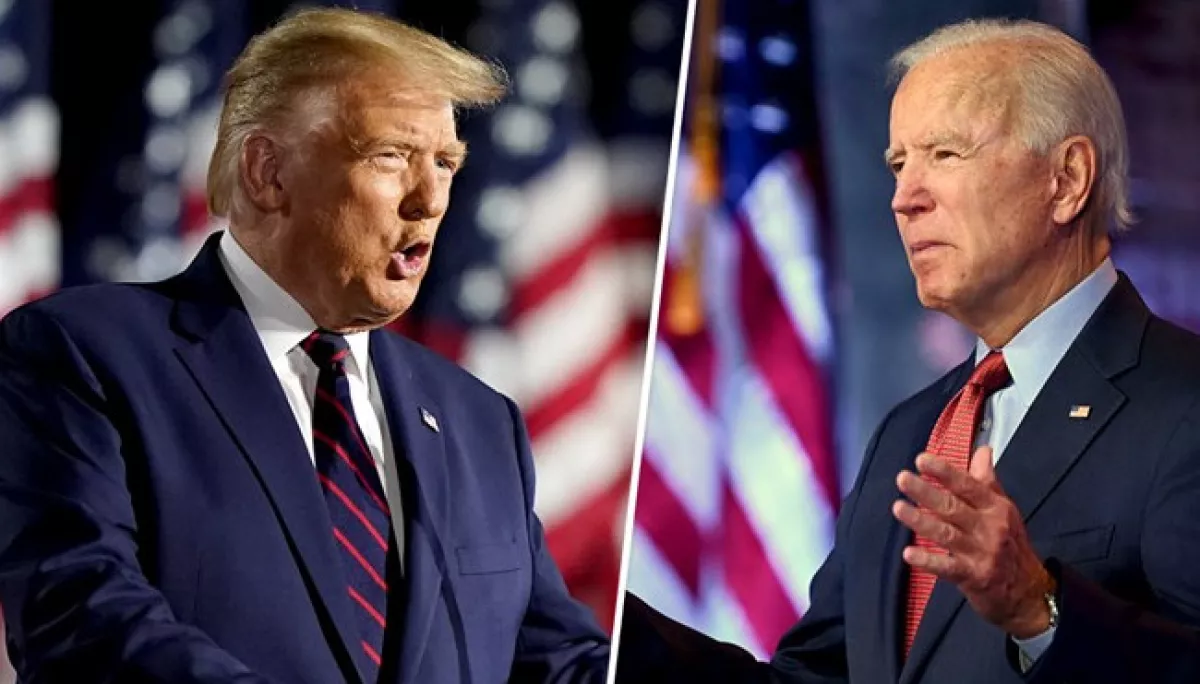
The interview is particularly noteworthy in that a significant portion of it was devoted to internal political struggle. More sensitive observers would likely have lost count of the number of disparaging epithets Trump directed at Democrats and at Joe Biden personally. Devine herself displayed an unusually high — even by Trump’s standards — degree of praise for the president, to the point where at times she effectively reinforced his arguments, and the conversation occasionally resembled a political manifesto rather than a journalistic interview.
The focus on domestic issues is not accidental — it reflects Trump’s and his inner circle’s concern about the upcoming midterm elections. The loss of Republican control of even one chamber could seriously complicate the implementation of the White House’s current agenda. This is precisely why Trump is once again returning to themes that remain central to his electorate: the economy, migration, and the electoral system.
Donald Trump has once again reiterated the claim of the “stolen 2020 election,” arguing that Democrats are deliberately opposing voter ID cards and citizenship verification solely to enable manipulation of election results.
Almost all of his arguments are reduced to the assertion that the United States under Biden was in a state of decline, and is now experiencing a return to strength and prosperity. Trump consistently highlights record stock market performance, industrial investment, factory construction, and especially the development of the automotive sector. At the same time, he seeks to downplay concerns over inflation and rising energy prices, attributing these issues exclusively to the Iranian crisis. The president effectively argues that Americans must “endure” higher gasoline prices, since the alternative would be Iran acquiring nuclear weapons.
Iran, in general, is the only external issue discussed in detail during the conversation, likely due to its direct impact on the domestic US agenda. Trump adopts an extremely hardline stance, while simultaneously attempting to present himself as someone who prefers negotiation over war. His position is built on the claim that Iran has already effectively lost both militarily and economically and is now being forced to make concessions.
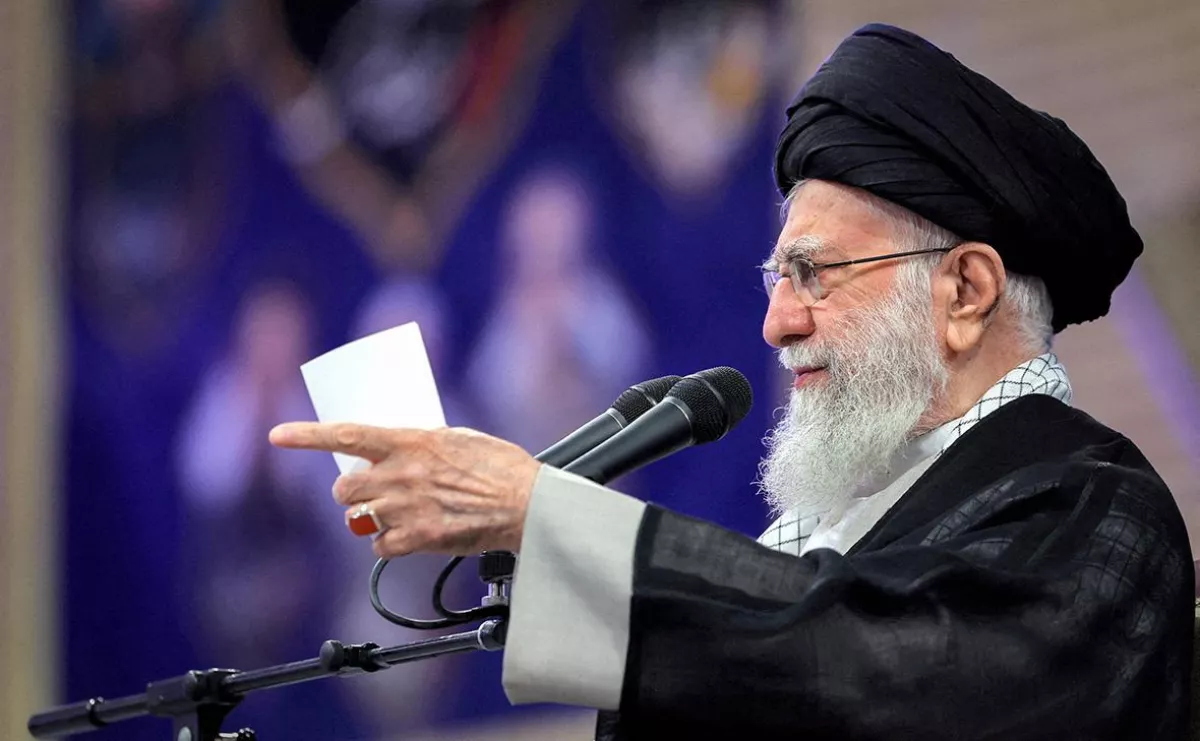
It is interesting that the US president stated that during negotiations, the Iranians agreed they would not possess nuclear weapons. However, there is an inherent contradiction here, as Iran has officially always denied any intention to develop an atomic bomb. Moreover, the late Supreme Leader of Iran, Ayatollah Ali Khamenei, issued a fatwa in the early 2000s prohibiting the production, stockpiling, and use of nuclear weapons. Western suspicions regarding the military dimension of Iran’s nuclear programme have in fact been based on assumptions about hidden, unofficial aspects of this activity. This raises a natural question: how can one publicly renounce something that has never been formally acknowledged?
Most likely, what is meant here are only concrete practical steps — for example, agreeing to the removal of enriched uranium, limiting enrichment levels, or accepting international monitoring of facilities. It is possible that this is what Trump refers to when speaking about Iran’s willingness to make concessions. However, so far there has been no clear confirmation from Tehran itself, and thus the US president is effectively asking the audience to take his word for it, adding the caveat: “now they can change their mind.”
At the same time, Trump clearly signals that in the event of failed negotiations he is prepared for further escalation. The White House appears to be trying to combine pressure, limited use of force, and negotiations, while avoiding a full-scale war involving a ground operation — the latter, notably, was also separately mentioned by Trump.
However, the interview also reveals a certain sense of fatigue in the American president. He continues to speak in the language of a confident leader, yet the American public still does not hear a clear answer to the key question: how exactly and when the current confrontation over Iran will be brought to an end.
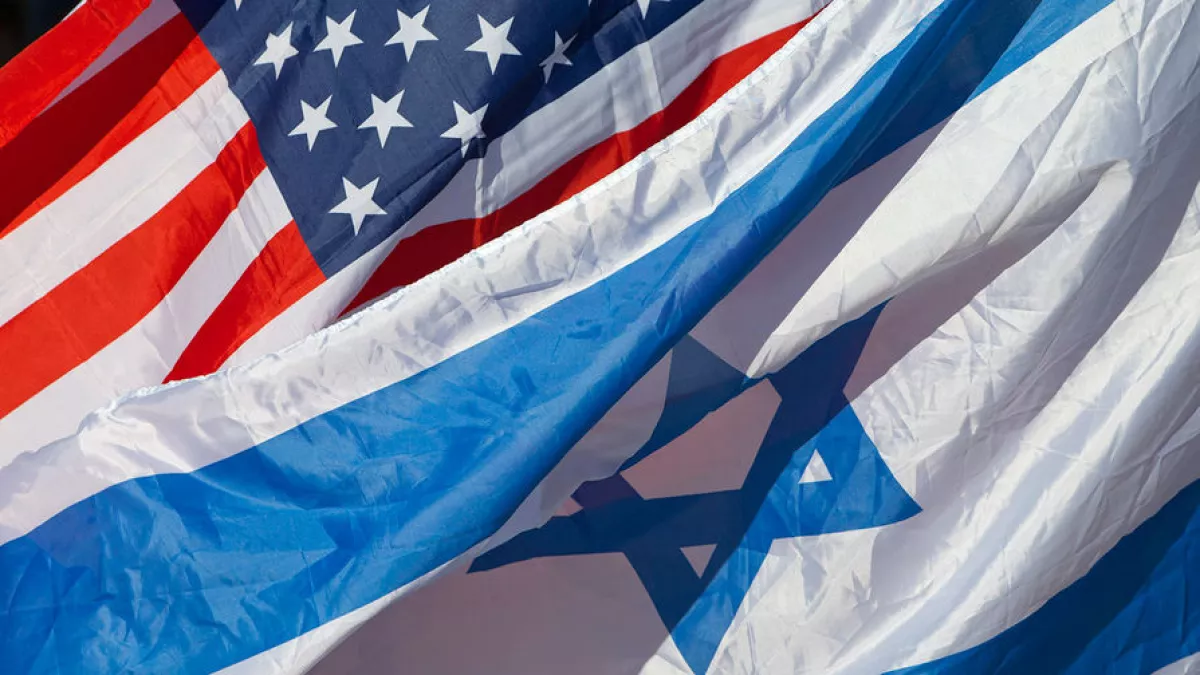
It is also interesting to note Trump’s stance toward Israel. On the one hand, he emphasises support for Benjamin Netanyahu and Israel as a whole; on the other, he acknowledges that he was irritated by the Israeli prime minister’s actions and even described him as “crazy” over the escalation in Lebanon. According to commentators, this reflects growing tensions between the White House and the Israeli government. For Trump, a prolonged conflict becomes politically dangerous, as it could negatively affect the US economy and complicate the position of Republicans ahead of the elections.
The Russia–Ukraine war is mentioned only in passing in the interview — more as an additional pretext to accuse the Biden administration of weakness and incompetence. Trump continues to argue that such a war “wouldn’t have happened” under his presidency, but he offers virtually no discussion of a long-term US strategy on Ukraine. In this way, the Ukrainian issue is gradually being pushed out of the American public discourse.
Trump continues to try to maintain the image of a leader fully in control of the situation. Yet between the lines, another reality is visible: the White House has found itself in a difficult position where external geopolitical confrontation — namely the standoff with Iran — is beginning to directly affect domestic stability and the president’s approval ratings.
The White House is betting that Iran will be the first to make concessions under the pressure of sanctions and military threats. Otherwise, the administration risks facing a choice between a prolonged crisis and a military scenario whose consequences would be difficult to predict even for the United States itself.







 editor@caliber.az
 +994 55 444-88-98
 Азербайджан, Баку, ул. Низами, 203, Af Business House, 5-й этаж