










Beyond the infighting: what the crisis inside Belarus’s opposition reveals Analysis by Limansky
Processes of disintegration are gaining momentum within the ranks of the Belarusian political opposition in exile. As recent events demonstrate, the movement has already crossed the line from the infighting and disputes typical of such circles to threats of a terrorist nature.
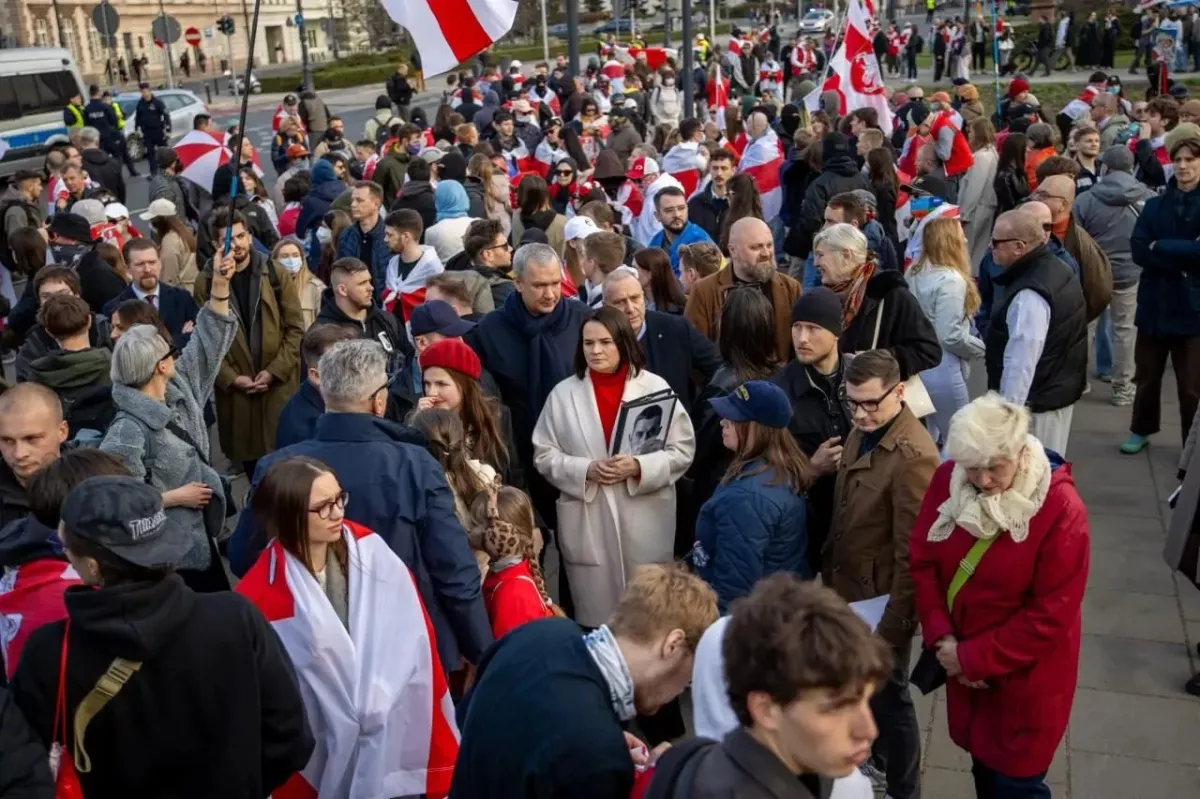
Children should not be held responsible for their parents
On July 23, Poland's Chargé d'Affaires in Belarus, Krzysztof Ożanna, was summoned to the Belarusian Ministry of Foreign Affairs, where he was warned that one of the Belarusian opposition figures was preparing a terrorist attack on Polish territory. According to Minsk, the intended victims could have been the children of prominent opposition leader Sviatlana Tsikhanouskaya. Belarus also expressed its readiness to provide additional information obtained by its law enforcement agencies.
Later, Polish Foreign Minister Radosław Sikorski and Jacek Dobrzyński, spokesperson for the minister-coordinator of Poland's special services, said the Polish authorities had taken the warning seriously. At the same time, they stressed that no further details could be disclosed "for security reasons."
It later emerged that the individual in question was Denis Dashkevich, a former opposition journalist who had been stripped of his refugee status in Poland. He reportedly declared his intention to kill the son and daughter of the "democratic leader," Sviatlana Tsikhanouskaya, who live with her in Warsaw.
Tsikhanouskaya herself has not publicly commented on the incident. However, her office described the situation as a "provocation," stating that it had not maintained contact with Dashkevich and that its legal team had never received any requests or appeals from him.
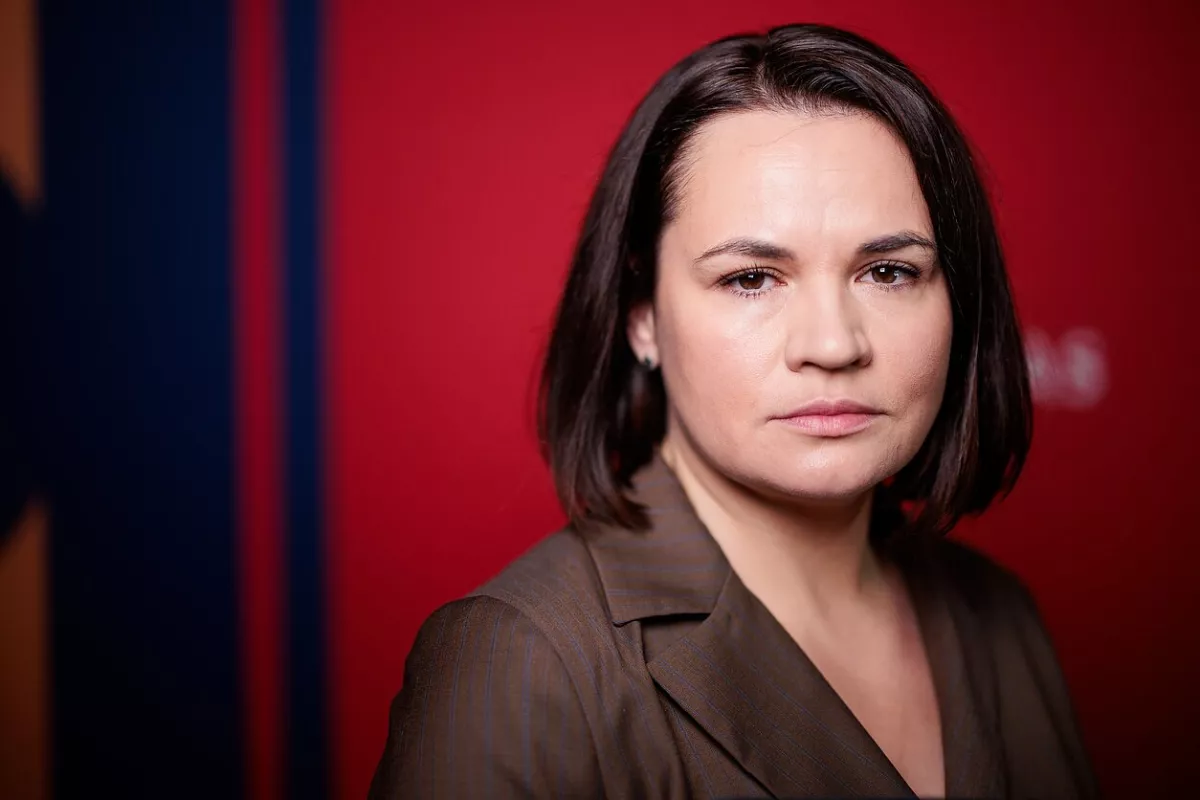
Denis Dashkevich was detained by the Polish police but was later released. He admitted that, after being stripped of his refugee status in Poland, he had written in several online groups and to a number of individuals about his intention to kill Tsikhanouskaya's children. However, he insisted that he had never actually intended to carry out the attack: "I was emotional and did write to several human rights activists something along the lines of: 'What, should I kill Tsikhanouskaya's children so that someone finally pays attention to my problem?' I admit that. But I took no further action: I never looked for her, never contacted her, and never expressed such intentions publicly."
However, journalist Roman Protasevich, who previously worked with the Belarusian opposition but now lives and works in Belarus, published copies of Dashkevich's Telegram correspondence. In the messages, Dashkevich outlined both his motives and a detailed plan for the attack.
"I'm facing deportation," Dashkevich wrote. "So I've decided to end my life voluntarily."
Before doing so, he planned to kill the children of former presidential candidate Sviatlana Tsikhanouskaya. "Let the bitch experience what we've been through. This is payback for the deception of 2020," he wrote, before going on to describe aspects of the planned crime. According to the published messages, Dashkevich claimed he knew which school Tsikhanouskaya's children attended and intended to enter it disguised as a courier. He also admitted that he was personally incapable of killing a child and said he planned to involve Ukrainians instead.
After carrying out the killings, Dashkevich planned to take his own life by ingesting a lethal dose of narcotics. He also claimed that he was hiding from the Polish authorities, saying he had taken a number of precautionary measures to avoid detection, including disposing of his SIM card and mobile phones. According to the published messages, he intended to carry out the attack at the start of the new school year, describing it as a way to make for "a memorable September 1."
Left to fend for themselves
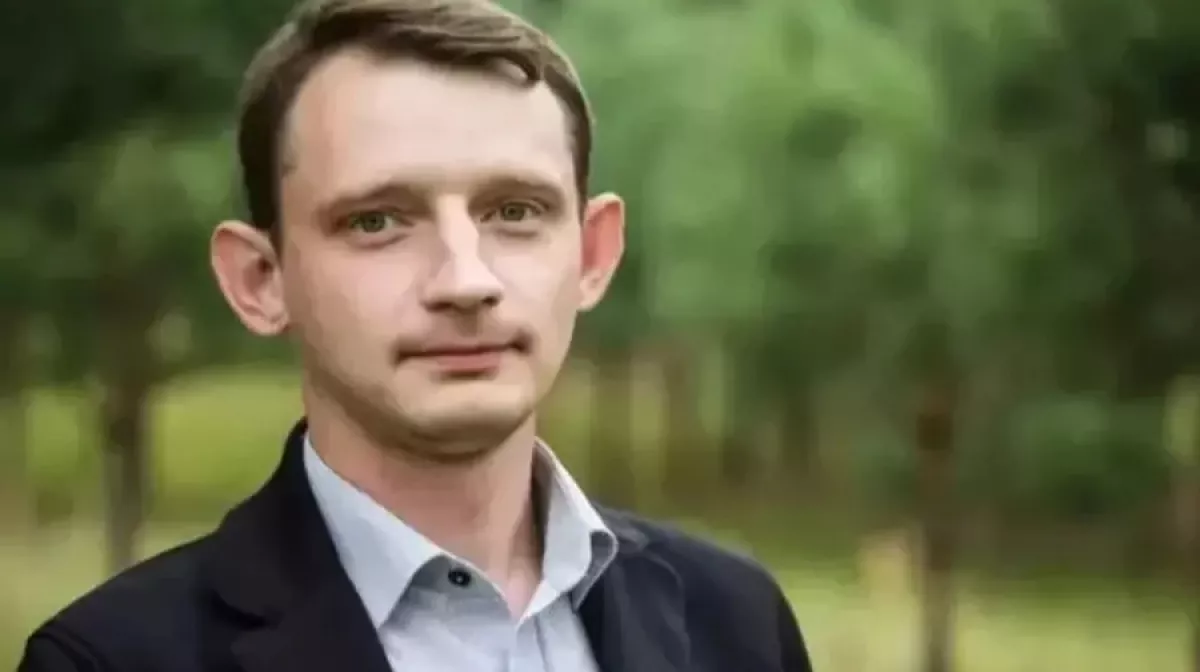
Denis Dashkevich, 41, is a native of Gomel and a graduate of the Belarusian State University of Culture and Arts, where he studied cultural studies and socio-cultural activities through a distance-learning program. He is the founder of the Rogachev Online news platform, which has been designated as an extremist resource in Belarus.
Dashkevich is known for his national-conservative views and previously maintained ties with the Young Christian Democrats organisation. In 2022, he left Belarus and settled in Poland. A year later, a Belarusian court imposed an administrative fine on him in absentia for distributing materials classified as extremist. That same year, Dashkevich announced that he had submitted an application to the Belarusian Ministry of Foreign Affairs to renounce his Belarusian citizenship. However, his life in exile in Poland failed to unfold as he had hoped.
In May 2026, the Office for Foreigners launched proceedings against Dashkevich, following a request from Poland’s Internal Security Agency (ABW), to revoke his refugee status. The official reason given was doubts as to whether “the circumstances on the basis of which refugee status was granted still exist.”
Dashkevich was given seven days to provide written answers to questions regarding where he had lived and what he had done after receiving refugee status in Poland, as well as information about any criminal convictions in Poland and other EU countries, among other details. He was also required to explain why his refugee status should not be revoked.
Apparently, his responses failed to convince Poland’s migration authorities, and Dashkevich was stripped of his refugee status.
It is possible to imagine the state of mind of an opposition activist who had fled to Warsaw — a person who believed he had suffered for taking part in an attempt to change the government in Belarus in the interests of the West. While in Poland, Dashkevich had openly praised the Polish authorities on his social media accounts, while directing insults and criticism at Belarusian leadership. And in the end, he received what he perceived as such “gratitude” from the Polish security services.

It is hardly surprising that the potential target of the attack was the Tsikhanouskaya family. Her office serves as the main channel through which much of the funding allocated by Western foundations to support the Belarusian opposition is distributed, spending these resources at its own discretion and, as is often the case among grant recipients, allocating them among people within its own circle.
Ordinary activists without the necessary connections are increasingly finding themselves pushed to the sidelines. Moreover, hostility toward Tsikhanouskaya and her office has been fueled by other would-be leaders and nationalist groups that have found themselves excluded from influence.
There is also another important factor to consider: if the United States is indeed reducing, or planning to reduce, financial support for the Belarusian opposition, conflicts within the émigré community are likely to intensify further.
At the same time, one cannot ignore the fact that for many ordinary participants in the 2020 protests, Tsikhanouskaya and her team are seen as figures who encouraged them to take part in what they view as a political gamble, disrupted their lives, and then abandoned them to their fate.
Against this backdrop, it is quite possible that former journalist Dashkevich, who was also confronted by Polish authorities, experienced a severe emotional crisis. What he might have done while feeling trapped and in complete despair is something only God knows.
However, Poland’s reaction to Minsk’s assistance in preventing a possible terrorist attack was rather peculiar — as such cooperation does not fit into the highly negative image of Belarus promoted among Poles by Western and Polish media narratives.
For example, Polish Foreign Ministry spokesperson Maciej Wewiór described the warning as an “unprecedented practice,” yet still categorised it as a form of “propaganda.” At the same time, neither he nor anyone else has been able to disprove the accuracy of the information provided to Warsaw. Polish media have also largely avoided covering the episode, and when they do mention it, they tend to frame it through interpretations critical of Belarus.
Nevertheless, by warning the Polish authorities about a possible terrorist attack, Belarus has once again demonstrated the sincerity of its peaceful intentions. Minsk continues to present itself as committed to international law and unwilling to allow acts of vigilante violence against even those considered criminals under Belarusian law — and especially not against their innocent underage children.
Despite the highly complicated nature of relations with Warsaw, the Belarusian leadership maintains that it seeks to establish constructive cooperation based on mutual interests, stability, and security for all neighbouring countries.







 editor@caliber.az
 +994 55 444-88-98
 Азербайджан, Баку, ул. Низами, 203, Af Business House, 5-й этаж