










America’s diplomatic retreat: Washington scales back its global presence Article by Matanat Nasibova
During the first months of Trump’s administration, the State Department began preparing a sweeping reform of the US diplomatic network, including the closure of nearly a dozen overseas missions as part of a broader effort to cut government spending and reduce US involvement in the affairs of other countries.
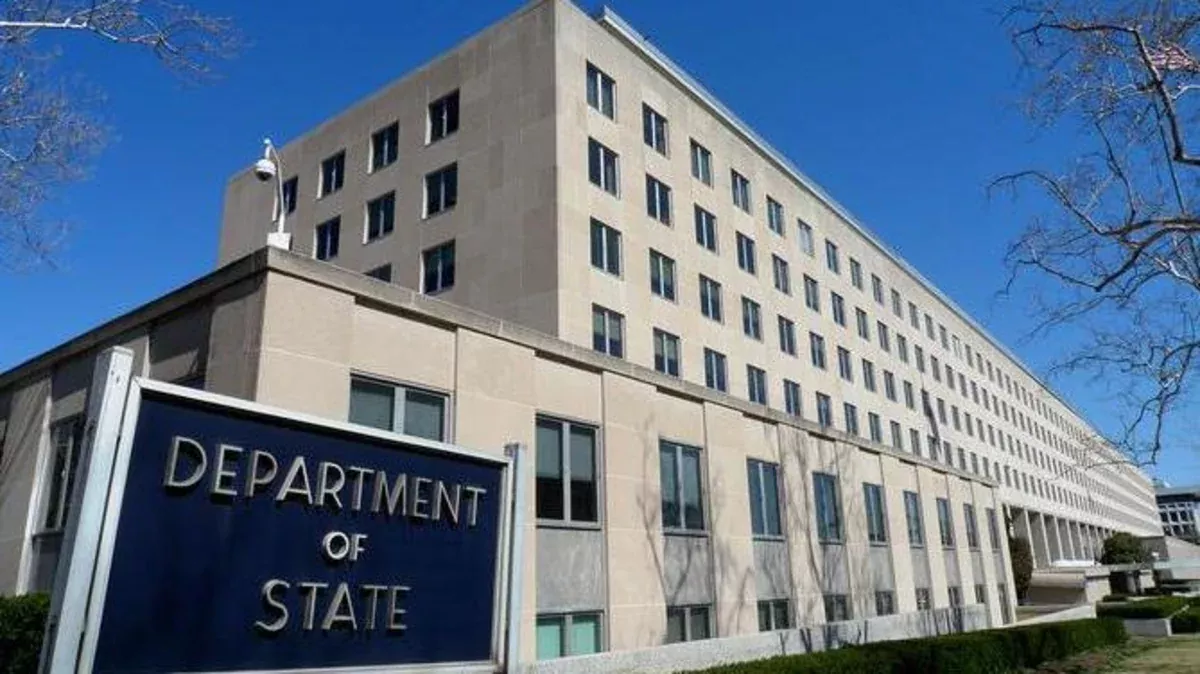
Moreover, the Office of Management and Budget (OMB) advocated an even more extensive optimisation plan that could have affected up to 30 diplomatic missions. At the time, administration officials argued that some smaller missions had lost their practical effectiveness and no longer justified the costs of maintaining them.
Recently, the State Department notified Congress of plans to close five diplomatic posts as part of efforts to reduce America’s diplomatic footprint. The facilities in question are consulates in Nagoya (Japan), Medan (Indonesia), Winnipeg (Canada), Douala (Cameroon), and St. George’s (Grenada). If this information is ultimately confirmed, it will become another indication of Washington’s shifting foreign policy priorities.
This noteworthy development requires a substantive analysis, primarily through the lens of the United States’ emerging strategy, which envisions reducing America’s global presence and concentrating resources on domestic priorities. In this context, the economic dimension comes to the forefront, as the Trump administration continues to pursue a policy of cutting federal spending abroad.
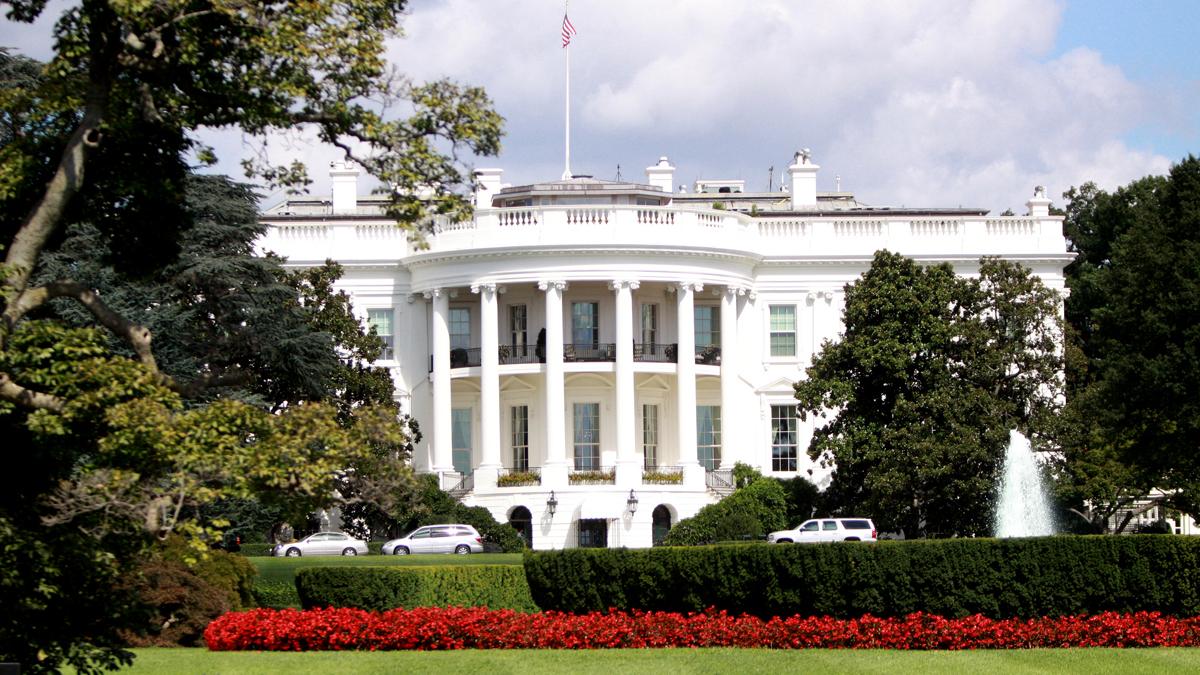
Put simply, while Washington traditionally expanded its network of embassies and consulates in previous decades, using them as instruments of influence to advance its geopolitical objectives, the current approach places greater emphasis on economic efficiency. In other words, the United States seeks to abandon the maintenance of facilities that are not considered critical to the country’s national security and economic interests, and will likely focus its attention on key strategic regions such as the Middle East, the Arctic, and Eastern Europe.
However, this approach also has a downside: the vacated spheres of influence could be filled by Washington’s geopolitical rivals — Russia and China. This concern has been repeatedly raised by several retired US diplomats, who warn that excessive reductions in the diplomatic network could weaken America’s position in the long term.
For instance, concerns on this issue have been voiced by David Kostelancik, who spent 36 years in diplomatic service, former Ambassador John Bass, and former National Security Advisor Susan Rice. They supported collective appeals signed by more than 100 retired American diplomats opposing excessive cuts to the United States’ overseas presence.
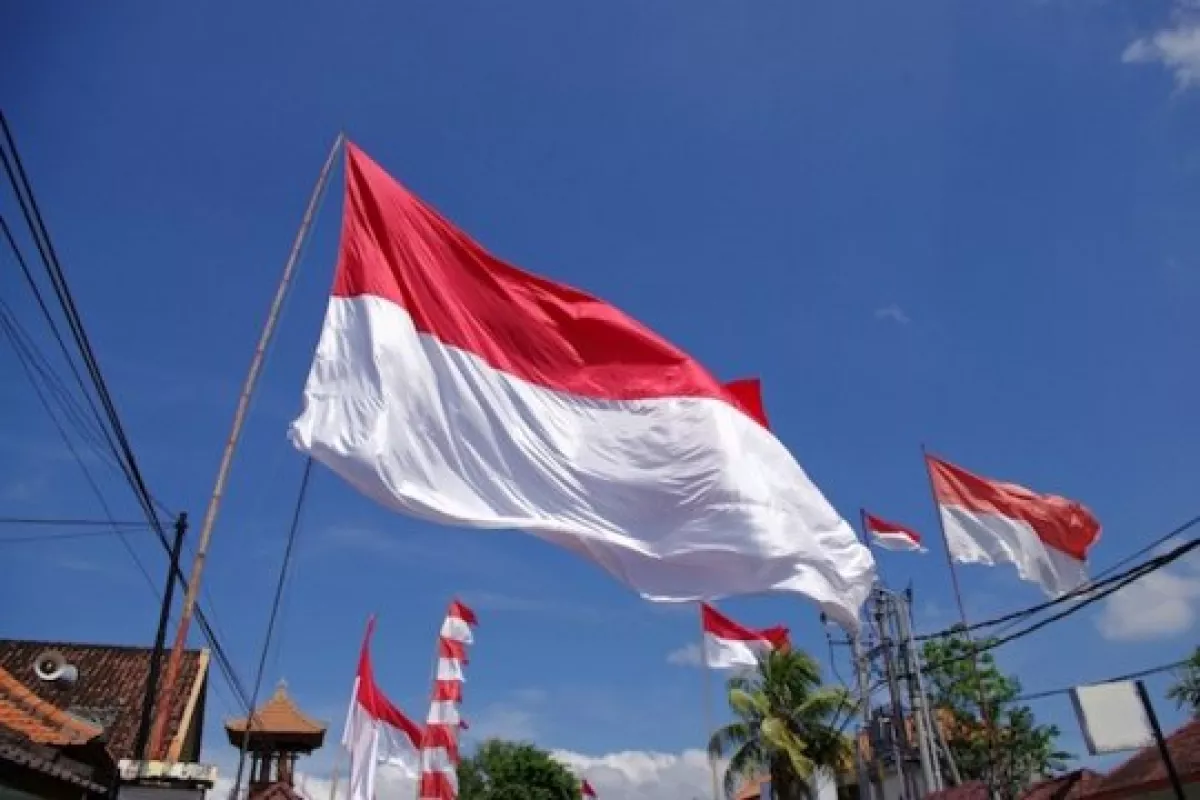
It is difficult to disagree with such a forecast, and for a more convincing illustration, it is worth examining this scenario through the example of Indonesia. Moscow views Jakarta as one of its key partners in Southeast Asia, actively developing trade, transport logistics, and humanitarian cooperation with the country. Russian companies have also expressed interest in working with major Indonesian ports, including Tanjung Perak.
At the same time, bilateral ties are based on a strategic partnership declaration and Indonesia’s pragmatic foreign policy approach aimed at maintaining “friendship with all.” In this regard, the statement by Coordinating Minister for Economic Affairs Airlangga Hartarto is particularly noteworthy, as he emphasised that partnership with Russia is critically important for Indonesia’s economic transformation and industrialisation efforts.
In addition, Moscow has actively supported Indonesia’s process of full accession to BRICS and has promoted joint naval exercises with the Indonesian side in the Java Sea.

As for China, its cooperation with Indonesia is among the largest, most pragmatic, and fastest-growing partnerships in the Asia-Pacific region. Bilateral trade reached a record $167.4 billion, while Chinese companies have invested billions of dollars in the construction of Indonesian smelters. Jakarta is also actively attracting Chinese capital and technologies for the production of semiconductors, fibre-optic networks, cloud data centres, and the development of 5G infrastructure.
From a military and political perspective, it is worth highlighting the “2+2” dialogue format, which brings together foreign and defence ministers to coordinate regional security issues. At the same time, unlike many of its neighbours in the South China Sea, Indonesia avoids harsh anti-China rhetoric, preferring to resolve territorial disputes through diplomacy. Beijing, for its part, provides Jakarta with diplomatic support through this channel, consistently strengthening its position in Southeast Asia.
Thus, from an objective perspective, the weakening of the American presence in Indonesia clearly creates favourable conditions for expanding the “soft power” of both Moscow and Beijing, increasing their engagement with Indonesian elites, and strengthening their political influence. Overall, the Indonesian example clearly demonstrates that while the decision to close overseas consulates aligns with the “America First” approach, it also opens a “window of opportunity” for Washington’s geopolitical rivals — an opportunity they are certain to exploit.







 editor@caliber.az
 +994 55 444-88-98
 Азербайджан, Баку, ул. Низами, 203, Af Business House, 5-й этаж