










Asymmetry of conscience: when philosophy fails its own test Kirlikovali challenges Taleb’s moral calculus on Azerbaijan
When a person who has spent his entire life dealing with precise calculations begins to speak about the principles of morality and justice, the conversation inevitably becomes grounded in substance. Ergun Kirlikovali is a figure who can hardly be classified as a political commentator. Born in Izmir in 1952, he earned a bachelor’s degree in chemistry from Boğaziçi University and a master’s degree in polymer science from the University of Manchester. In 1985, he founded his own California-based company specialising in the development of polymers for the aerospace industry.
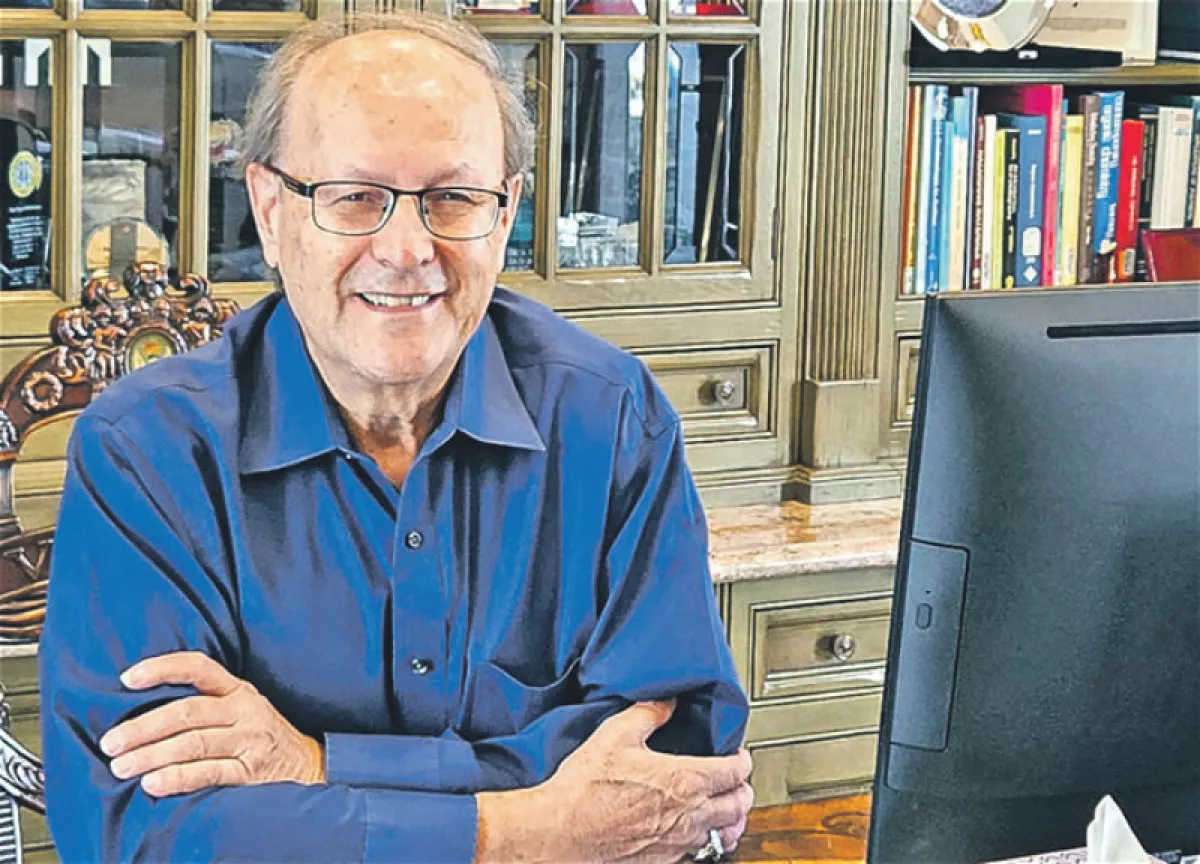
His field of expertise sounds almost symbolic in the context of the current story: Kirlikovali is one of the engineers involved in developing radar-evading materials for military aircraft, a supplier for U.S. programmes such as the B-2 and F-35, and an honorary member of the National Academy of Inventors of the United States. In other words, he is a world-renowned scientist whose profession revolves around working with what remains hidden from view and making the invisible detectable — a background that lends particular weight to his recent public remarks.
Beyond science, Kirlikovali is also known as an active figure within the Turkish-American community. He served as chairman of the Assembly of Turkish American Associations and, for four decades, has sent open letters to Western media challenging the Armenian narrative of the events of 1915. The scientist has consistently argued that the tragedy of that period was not a case of “one-sided annihilation,” but rather a tragedy unfolding amid the collapse of an empire engulfed in war, with the deaths of civilians on both sides, armed Armenian groups turning against the Ottoman state in coordination with the advancing Russian army, and deportations driven by military necessity rather than a plan of extermination.
This position — based on documents and the elementary logic that any conflict has more than one side — has been repeatedly challenged by Armenian advocacy campaigns for decades, which have sought to discredit its proponents by attaching labels to them. Yet it is precisely this background that makes Kirlikovali’s latest intervention particularly notable: a person who has long been accused by his opponents of bias simply for refusing to accept a one-sided account is now addressing an issue where bias is being demonstrated by the opposing side. The matter concerns an open letter he addressed to Nassim Nicholas Taleb.
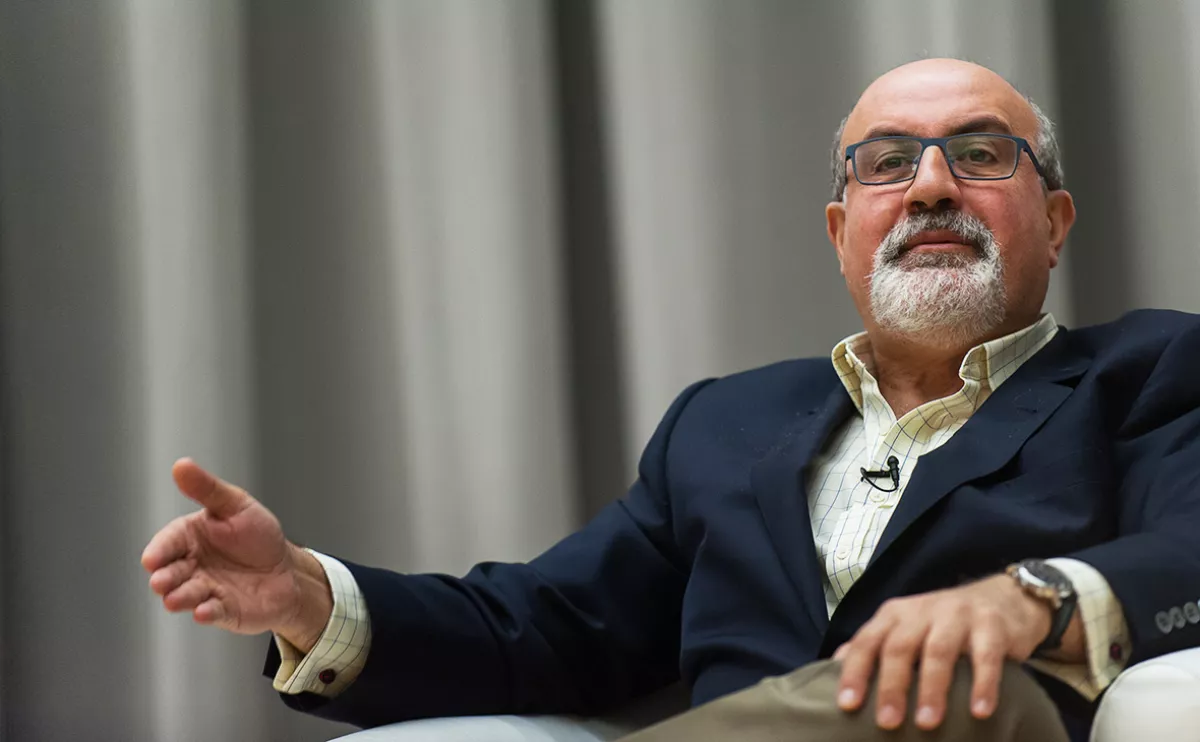
The reason behind the controversy is as follows. On August 2, 2026, Taleb — the Lebanese-American economist and philosopher, author of the global bestsellers The Black Swan and Antifragile, and professor at New York University — publicly refused to travel to Baku to deliver a lecture. He announced his decision in a brief statement on social media: “I will not set foot in Azerbaijan with Reuben Vardanyan jailed there.”
The move was clearly intended to make an impact — and it did. Armenian media immediately portrayed it as an act of principle by a world-renowned intellectual standing up for a “prisoner of conscience.” The problem, however, is that the person for whom Taleb chose to demonstrate his principles does not fit that description at all. Ruben Vardanyan is neither a dissident nor a human rights activist, but the former so-called “state minister” of a separatist entity that illegally existed on Azerbaijani territory.
On February 17, 2026, a Baku court sentenced him to 20 years in prison following an open trial in which he was charged with terrorism financing, involvement in illegal armed formations, and other serious crimes. Vardanyan is not a thinker imprisoned for his beliefs, but a defendant whose guilt was established by a court based on specific evidence and facts. Equating him with individuals unjustly convicted means either misunderstanding the substance of the case or deliberately ignoring it. It was precisely this contradiction that Kirlikovali pointed out to Taleb with the directness of an engineer accustomed to verifying the underlying data.
The logic of the letter revolves around a concept particularly important to Taleb himself — asymmetry, the hidden imbalance that he made one of the central themes of his works. In essence, Kirlikovali turns the philosopher’s own analytical tool back on him. The author of the “skin in the game” concept, which demands that people bear responsibility for their judgments through their own risks and reputation, has, in this case, taken a position that carries no personal cost and offers a free moral advantage: criticising Baku in the Western information space is a risk-free move, applause is virtually guaranteed, and the costs are zero.
The real asymmetry lies elsewhere: why does the philosopher’s selective compassion emerge precisely where it is fashionable and safe, while remaining silent in situations where taking a stand would require going against the prevailing narrative? Taleb has not refused to visit dozens of countries with genuinely serious human rights records; his ethical threshold appeared specifically at Azerbaijan’s doorstep — and for the sake of a person convicted of crimes related to occupation.
Kirlikovali presents Taleb with the part of the history that is often overlooked through a Western lens — the Azerbaijani side of the conflict. For nearly three decades, twenty per cent of Azerbaijan’s territory remained under occupation; hundreds of thousands of people were expelled from their homes and spent decades as internally displaced persons; cities across Karabakh were devastated, cemeteries desecrated, and mosques converted into stables.
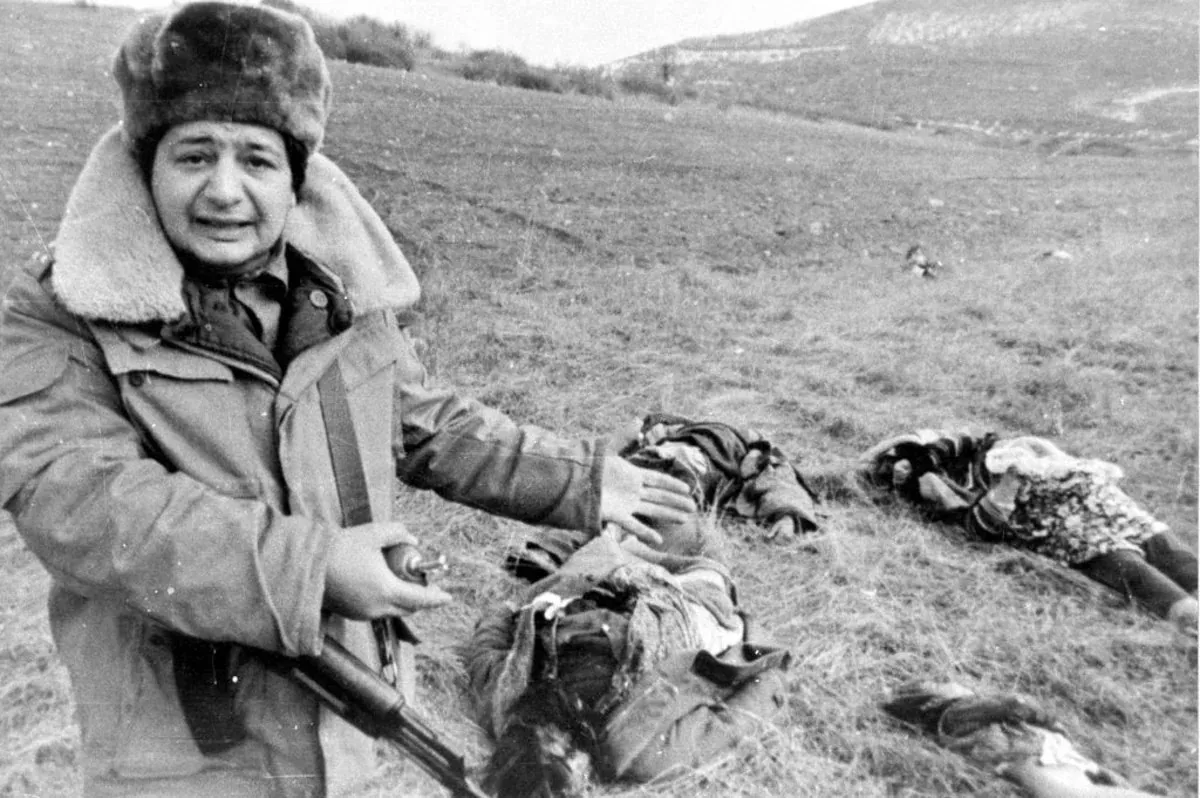
The Khojaly genocide — the killing of civilians in an entire town by Armenian armed formations during one night in February 1992 — is rarely mentioned in Western lecture halls. Kirlikovali asks Taleb where his ethical sensitivity was throughout all these years, and why a philosopher willing to boycott Baku in support of one convicted separatist never raised his voice on behalf of Azerbaijanis deprived of their homes. This is the very asymmetry that a precise mind must recognise — if, of course, it is willing to remain honest with itself.
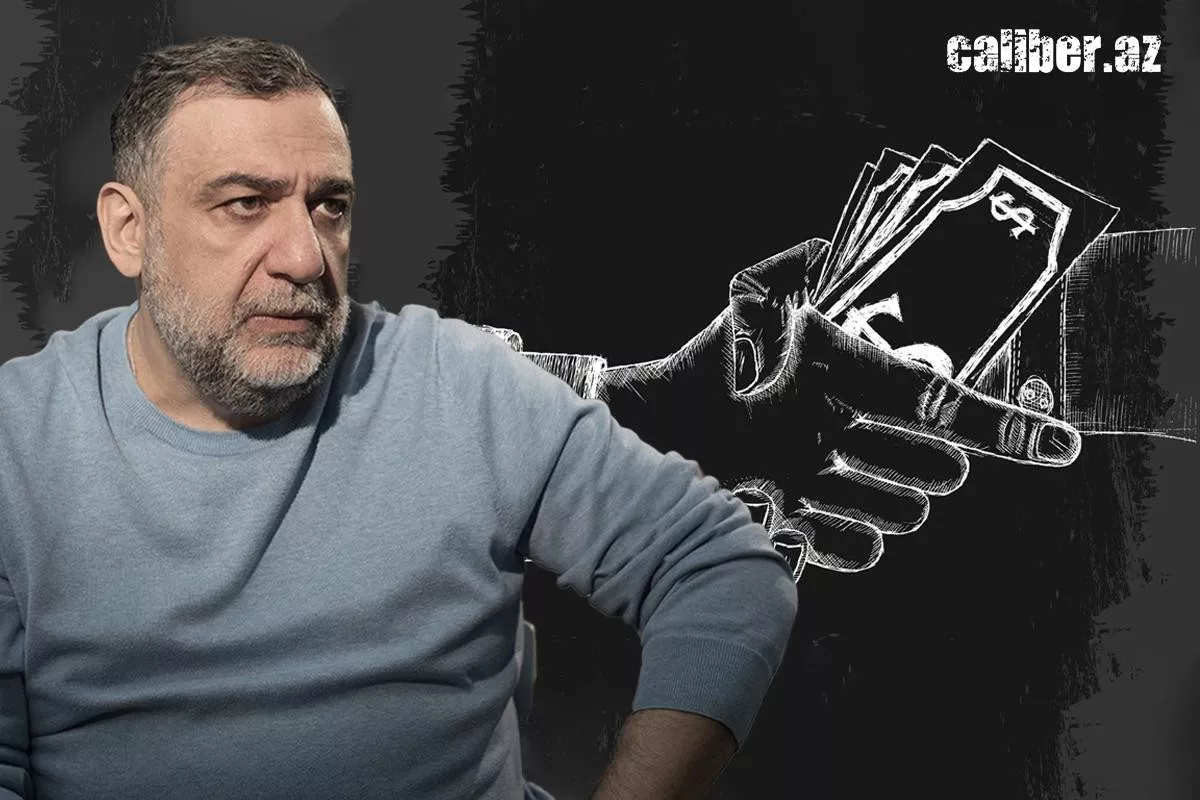
A separate layer of the letter concerns the question of who Vardanyan actually is and why he has received such united support from certain circles. A Russian oligarch who amassed his fortune during the murky 1990s, a figure with close ties to Moscow who moved to Karabakh and headed the separatist administration at a time when doing so aligned with certain geopolitical calculations. His legally imposed sentence has been turned into a banner by segments of the Armenian, Western, and Russian public that find it convenient to portray Azerbaijan as the “aggressor” and separatists as “victims of suffering.”
Taleb, whether intentionally or not, has become part of this campaign, lending it the weight of his name. Kirlikovali points this out without hesitation: an intellectual of such stature must understand whose agenda his symbolic gesture is ultimately serving — and if he fails to see that, then his much-praised insight loses much of its value.
Behind the private episode of a cancelled lecture lies a broader pattern — one that made the issue worthy of public debate. Western moral consciousness has long been accustomed to selectivity: some people are deemed worthy of compassion and make headlines, while others remain mere statistics because their stories do not fit a convenient narrative. Azerbaijanis belonged to the latter category for three decades, and it took considerable effort for their experiences to begin receiving attention.
Kirlikovali’s letter is part of those efforts: it is the voice of a person whose own life story has given him a deep understanding of what it means when one’s truth is refused a hearing. Taleb will likely choose not to respond — because responding would mean acknowledging the legitimacy of uncomfortable questions. Yet those questions have already been raised, and they have been articulated in the very language of asymmetries and hidden risks upon which the addressee’s own philosophy is built.
Sometimes the best way to test a thinker is to confront him with his own theory — applied to the very issue he would prefer to leave unaddressed.







 editor@caliber.az
 +994 55 444-88-98
 Азербайджан, Баку, ул. Низами, 203, Af Business House, 5-й этаж