










Rubio’s Armenian rendezvous and Trump’s Hormuz deadlock Caliber.Az weekly review
The Caliber.Az editorial team presents a new edition of the programme “Events” with Murad Abiyev.
Azerbaijan – Armenia
On Independence Day, May 28, the President of Azerbaijan, Ilham Aliyev, made another visit to Karabakh. This time, the destinations included the cities of Khankendi and Khojaly, as well as the village of Boyuk Galaderesi in the Shusha district, where the president met with residents. Among the sites visited by the head of state were the reconstructed Cultural Centre in Khankendi, fully renovated private houses for employees of the Ministry of Defence, as well as the limited liability company (LLC) “Garabagh Textile House” in Khojaly.
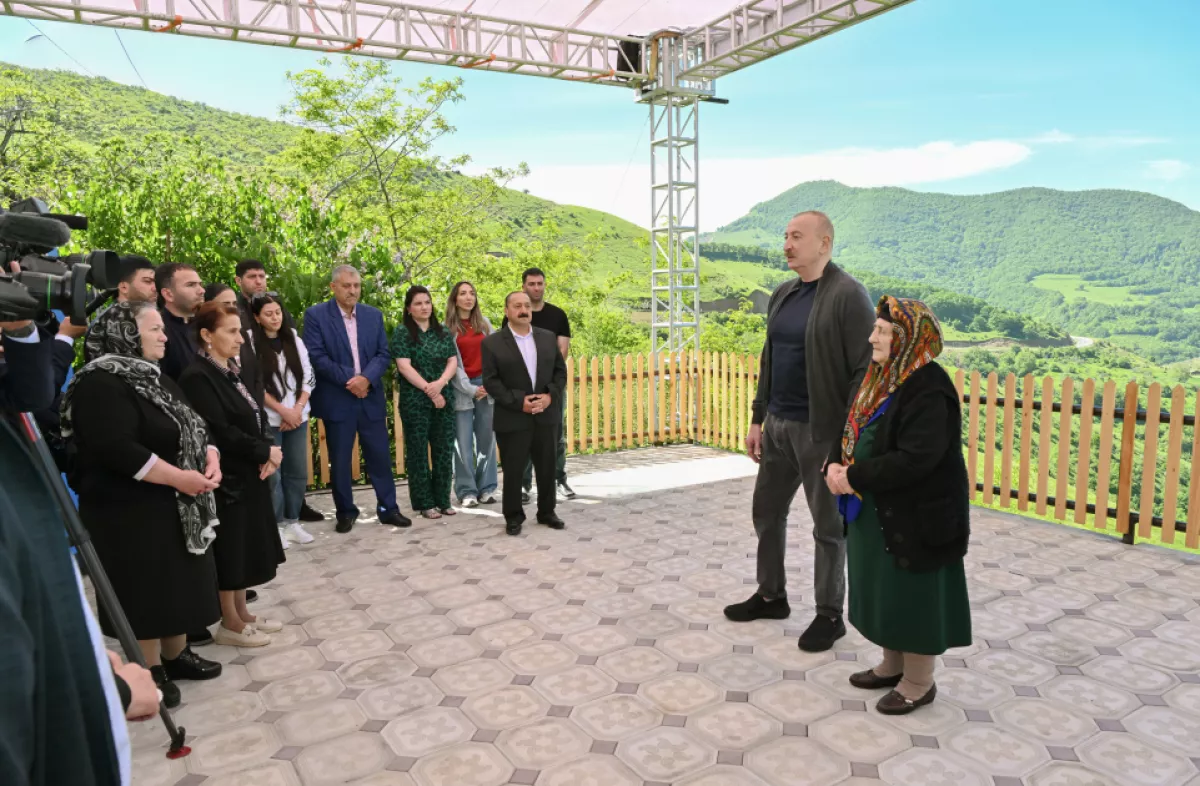
Thus, contrary to the bitter comments of critics, the revival of Karabakh is in full swing, and President Aliyev’s latest visit to the region is a vivid confirmation of this.
Meanwhile, the pre-election race in Armenia is experiencing strong pressure from external forces. Thus, over the past week, Russia has taken a number of economic measures against Armenia, including a ban on the import of various Armenian products—fruits, vegetables, and beverages.
President of Russia Vladimir Putin, following the EAEU summit in Astana, also outlined the risks Armenia would face in the event of leaving the Eurasian Union—from the suspension of Russian gas sales to Armenia on preferential terms to the requirement for Armenian citizens to obtain work permits (patents) to work in Russia.
Although it had previously seemed that the struggle was unfolding between Moscow and Brussels, the United States has unexpectedly entered the arena. U.S. President Donald Trump expressed full political support for Nikol Pashinyan on his social network Truth Social. Meanwhile, Secretary of State Marco Rubio, on his return journey from India to the United States, made a stop in Yerevan.
Rubio, who spent about an hour in the Armenian capital without leaving Zvartnots Airport, signed a memorandum of understanding on critical minerals and a charter on strategic partnership between the two countries with Armenian Foreign Minister Ararat Mirzoyan. The sides also initialled a framework agreement on the “Trump Route for International Peace and Prosperity” (TRIPP).
The Charter on Comprehensive Strategic Partnership outlines intentions to develop cooperation in energy, artificial intelligence, the space sector, agriculture, and defence. The security section is particularly noteworthy. It states the expansion of military cooperation, the supply of American weapons to Armenia, and the enhancement of operational compatibility between the Armenian army and the U.S. military.

In addition, the United States intends to assist Armenian security structures in assuming “ full responsibility for Armenia's borders.” These provisions can be interpreted as the displacement of Russian border guards from the Armenian-Turkish and Armenian-Iranian sections of the border.
Unlike the European Union, which has largely confined itself to declarative statements, the United States is actively consolidating its position in Armenia and gradually pulling it out from under Russian influence—albeit, most likely, only to the extent that is institutionally feasible. It cannot be excluded that, in this case, Moscow and Washington are acting in parallel in Armenia, effectively against the European Union.
In this context, it is noteworthy that the memorandum on the “Trump Route” envisages the construction of new energy and telecommunications corridors, and consequently, the potential revival of the Gyumri–Kars railway line. It is known that this section, like Armenia’s entire railway infrastructure, is under concession management of the Russian state company Russian Railways (RZD) until 2038, with the possibility of a further 10-year extension. At the same time, according to the Armenian side, Yerevan is engaged in complex negotiations over the sale of concession rights to a third, “friendly to both states” party. It is quite possible that this description of a “friendly to both states party” reflects not hypocrisy or betrayal, but a genuine agreement.
It also appears logical that, by signing the above-mentioned documents with Armenia—particularly those related to the Trump Route—Washington is signalling that the deadlock observed in the war against Iran does not affect the United States’ determination to implement the TRIPP project and, accordingly, to maintain its strategic presence in the region.
For Azerbaijan, these developments are relevant only insofar as they may affect national interests, primarily security. Therefore, Baku will be closely monitoring the situation, especially developments in Armenia’s military cooperation with external actors.
US – Iran
The situation around Iran and the Strait of Hormuz remains complex. Over the past week, the world has been flooded with reports both of a preliminary agreement on a framework deal to resolve the conflict and of renewed exchanges of strikes.
According to Axios, by May 26 the terms of the agreement had been largely finalised, but both sides still needed approval from their respective political leaderships. However, U.S. President Donald Trump has not yet given his consent, American sources reported. Judging by the fact that instead of approving the deal the United States struck an Iranian facility in Bandar Abbas, it appears that Trump disagreed with certain key provisions of the agreement and opted, so to speak, to strengthen the negotiating position.
In response, Iran struck an unnamed American base, which was later identified as being located in Kuwait.
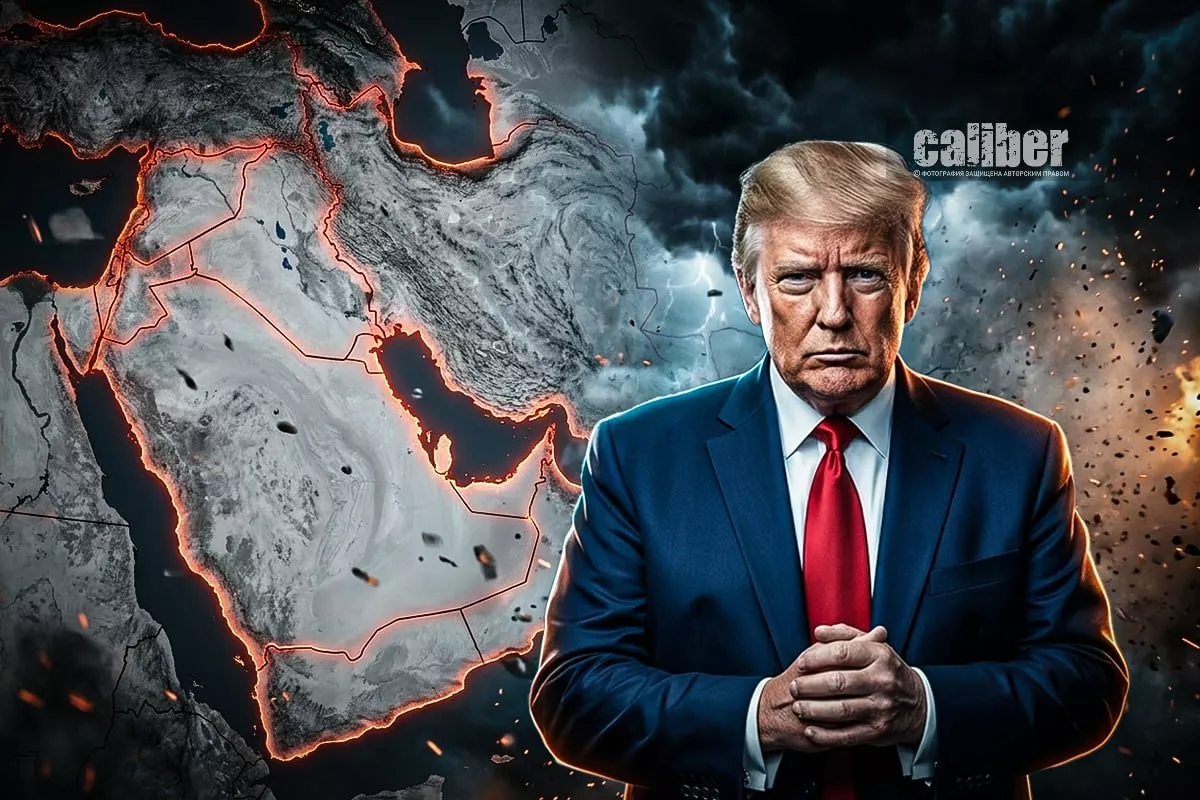
Thus, despite periodic reports of progress in negotiations, the situation resembles a stalemate rather than a breakthrough. Iran’s retaliatory strike on Kuwait signalled that parity has been established in the talks and that neither side is prepared to make concessions that the other considers essential for a ceasefire.
Despite the strong informational focus on enriched uranium and nuclear waste, it appears that the central issue for both sides is, in fact, the regime governing maritime navigation in the Strait of Hormuz. It seems that the United States and Iran are clashing over control of this strategic maritime artery, behind which the world’s second superpower—the People’s Republic of China—can be clearly discerned.
It can be assumed that the Strait of Hormuz is turning into the theatre of a long-term crisis between two superpowers. For the world, this implies prolonged economic consequences, and for China, a delay in the further extension of American hegemony directly towards its shores and, arguably, the most critical node in Beijing’s global logistics chain—the Strait of Malacca.







 editor@caliber.az
 +994 55 444-88-98
 Азербайджан, Баку, ул. Низами, 203, Af Business House, 5-й этаж