










When hospitality outweighs memory Moscow greets moral outlaws with bread and salt
On June 2, at Moscow’s airport, Andrew Tate and his brother Tristan were welcomed with bread and salt. A folk ensemble, the song “Motherland,” embroidered rushnyk towels, and loaves of bread held on outstretched hands — a full set of ceremonial hospitality rituals that Russia usually reserves for heads of state and honourable delegations. The guests for whom all this was arranged have, since December 2022, been defendants in Romania in a case involving human trafficking, trafficking of minors, rape, the creation of an organised criminal group, and money laundering; parallel proceedings are also underway in the United Kingdom.
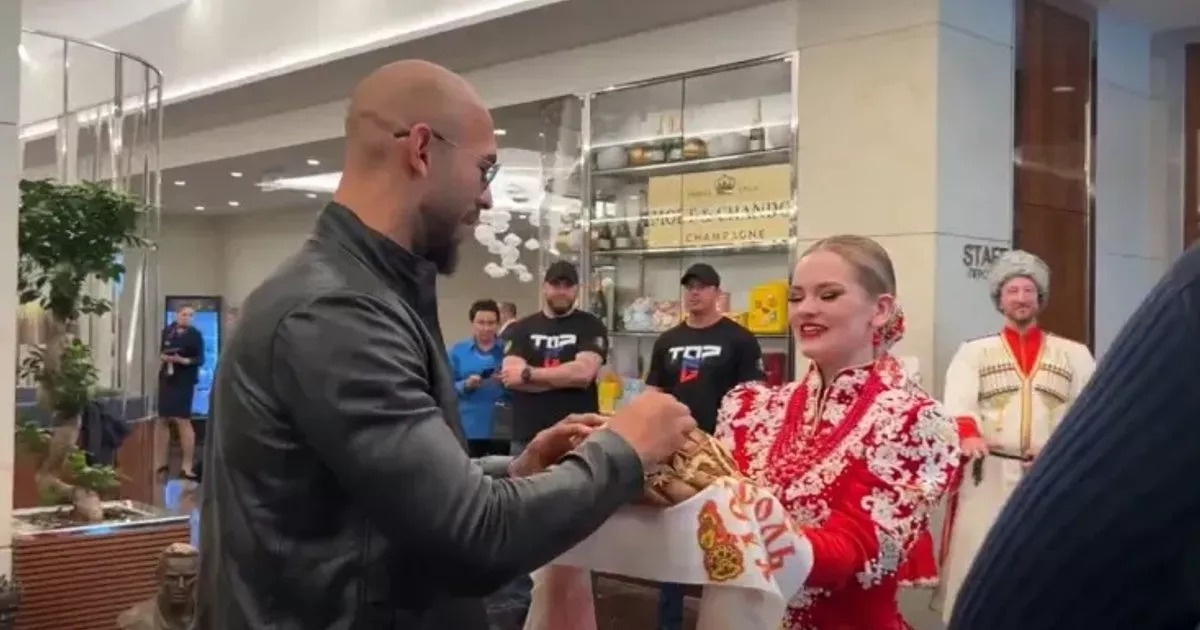
The video with the karavai was posted by Tate himself, accompanied by a Russian proverb about old and new friends. He arrived at the time of the St. Petersburg International Economic Forum, whose slogan is tied to the theme, already presented at last year’s session, of shared values as the basis for growth in a multipolar world. It is hard to imagine a more precise illustration of the gap between what Russia says about itself and how it actually behaves.
This gap is not an accidental episode. It is the very foundation of Russia’s attitude toward the West — a logic that has been continuously reproduced since the era of Peter the Great and was not erased either by the Soviet period or the post-Soviet one. The formula is simple yet internally contradictory: Russia presents itself as an independent civilisation, the antithesis of the West, a bearer of special spirituality and traditions, and at the same time measures its own success exclusively through a Western lens — through recognition from the other side, attention from there, and the presence on its platforms of figures with recognisable Western names.
Modern Russia — “a stronghold holding the world back from chaos,” “the last bastion of normality” against a “decaying liberal West” — this narrative works precisely until someone with a Western passport lands in Moscow. At that point, the entire machinery of hospitality is set in motion, reproducing the true hierarchy of values. Recognition is sought where, according to its own rhetoric, it supposedly should not matter at all.
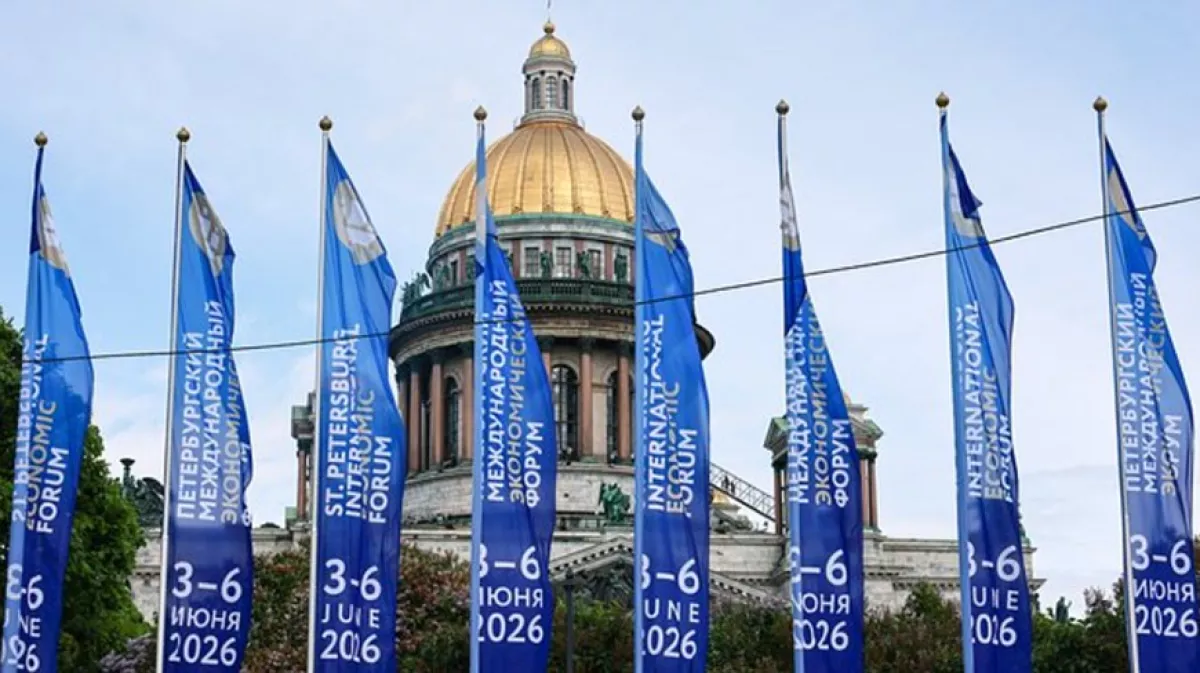
To assess the episode with the Tates, one has to look at who exactly Moscow is capable of bringing in today. The St. Petersburg Forum was once conceived as Russia’s Davos — a platform where people came for investment, where the top tier of global business signed contracts, and the presence of a major Western name in itself served as a sign of Russia’s integration into the global economy.
After 2022, this function has effectively died out. The top tier of the West — serious corporations, sitting politicians, and reputation-bearing intellectuals — now avoids it, because the cost of appearing on the St. Petersburg stage has become too high. What remains is what remains: former German Chancellor Gerhard Schröder, long since turned into a lobbyist for Russian energy interests and having lost credibility in his own country; and American right-wing activist Candace Owens, scheduled to take part in a session on family values.
And at the same time, during the event taking place in the northern capital, the Tate brothers arrive in Moscow — figures whose notoriety is rooted in aggressive misogyny and criminal cases across multiple jurisdictions. Their image fits neatly into Russia’s propagandistic framework: here is the “real man,” a man of tradition, a victim of the very liberal West against which Moscow defines itself.
The Tates can be presented to a domestic audience as proof — look, we are supported on Western shores, and even “their best people” are on our side. They can be presented to younger audiences as well, for whom the brothers remain influential internet personalities, and through them drawn into an anti-Western narrative. From the standpoint of propaganda mechanics, they are ideal guests. The irony is that this mechanism undermines itself when its supposed validation comes from individuals accused of human trafficking. But the matter does not end there.
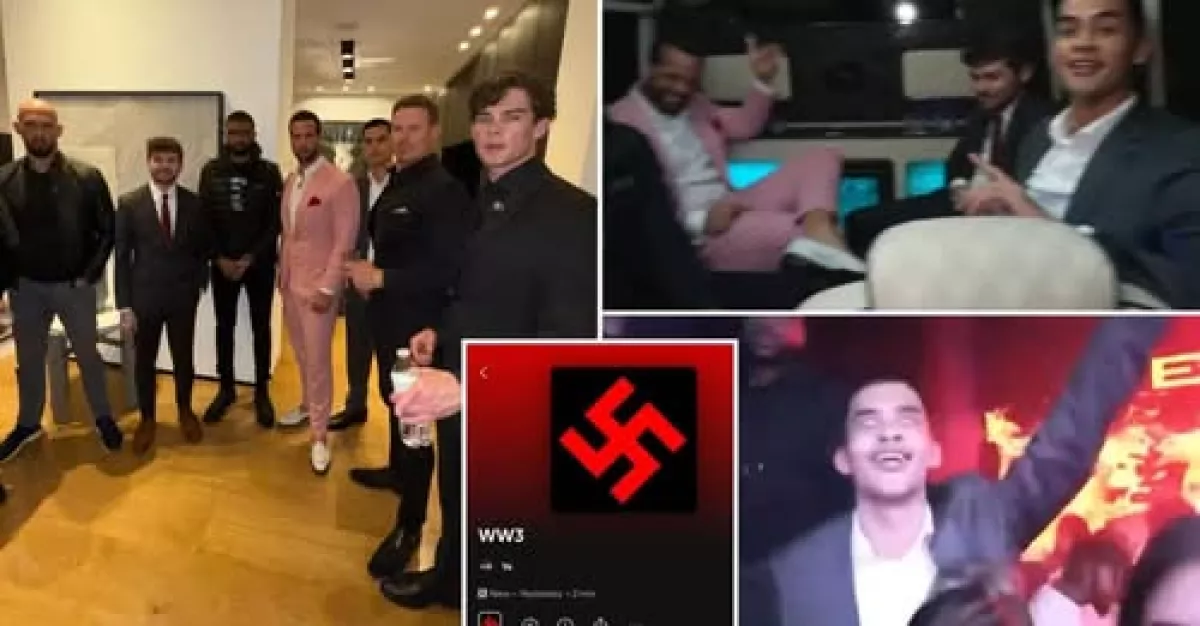
Moscow greeted with bread and salt those who, in January 2026, together with a group of other far-right internet personalities led by American neo-Nazi Nick Fuentes, appeared in a controversial video from a Miami club: the entire group was seen joyfully singing along to Kanye West’s track “Heil Hitler,” which had been banned for inciting hatred, while some participants were giving Nazi salutes.
Fuentes, whom human rights organisations ranging from the Southern Poverty Law Center (SPLC) to the Anti-Defamation League describe as a white nationalist and Holocaust denier, was present as a friend, alongside the Nazi salute performed to the anthem of the Führer — this is the public background of the guests for whom, a few months later, Moscow laid out ceremonial hospitality. And here the gap between declaration and practice is no longer a matter of taste, but one that touches the very core of what Russian ideology claims as its most sacred values.
Victory in the Great Patriotic War is declared in Russia to be an absolute and inviolable value; one of the country’s main state holidays is dedicated to it, and a war against a neighbouring state has been justified in its name — “denazification.” In 2022, a crowd of 200,000 people was gathered at the Luzhniki Stadium under the slogan “For a world without Nazism.”
And yet the same system for which the fight against Nazism is a foundational principle warmly receives those who, quite recently, were seen glorifying Hitler in the company of Holocaust deniers. It is impossible to simultaneously declare victory over Nazism the highest value of the nation and at the same time honour those who circulate Nazi salutes across the internet.
Either the sanctity of memory is a fiction, or hospitality outweighs memory — the two cannot coexist at once.
The historical depth of the reception given to the brothers is greater than it may seem. For decades, the Soviet Union practised much the same approach — bringing in and cultivating Western radicals, disillusioned intellectuals, anyone willing to say the “right” words into a microphone about the superiority of the Soviet system. The logic was the same: if someone from the West praises us, then our rightness has received external validation.
This detail exposes the essence of the underlying neurosis. A truly self-sufficient civilisation does not need its greatness to be certified by foreigners, especially those of dubious standing. The need for such reassurance speaks not of strength, but of hidden dependence: the more loudly it is denied, the more clearly it reveals itself.







 editor@caliber.az
 +994 55 444-88-98
 Азербайджан, Баку, ул. Низами, 203, Af Business House, 5-й этаж