










Aghdam: Anatomy of destruction Evidence published in a scientific journal
The American diplomat Carey Cavanaugh, who toured the line of contact in Karabakh in the early 2000s, found a shocking comparison for what he saw: Aghdam, he said, resembled “the largest Home Depot on the planet.” In a city where tens of thousands of people had lived just a short time earlier, Armenians spent years dismantling houses—tearing out window frames, stripping roofing sheets, extracting rebar and metal from the walls, all of which was taken to markets in Armenia and Iran. The city was slowly stripped apart, piece by piece.
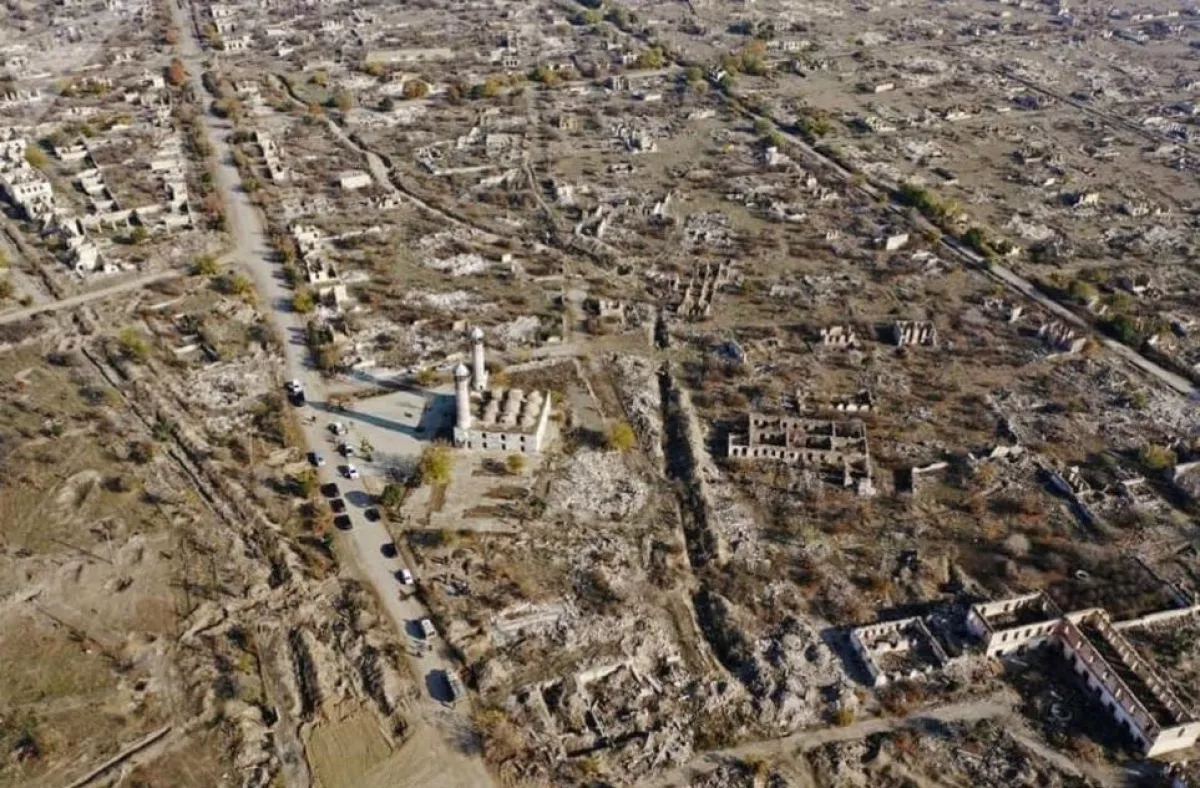
After the 44-day war of autumn 2020, foreign journalists who visited the city called it the “Hiroshima of the Caucasus.” This epithet captures both the scale of destruction and a bitter truth: no battlefield looks like this; this is what a place looks like when it has been deliberately and coldly destroyed long after the initial gunfire of the early 1990s had fallen silent.
In the influential Journal of Urban Affairs, published by Routledge and with a long-standing reputation in its field, an article was published in May of this year titled “Urbicide in Eastern Europe and the Middle East: Grozny, Aleppo, and Aghdam in comparative analysis”. Three cities, three wars… And among them, the authors place Aghdam at the centre—as the most underexamined and, in their view, the most illustrative case.
To understand why this matters, it is worth first considering the platform itself.
Journal of Urban Affairs is an academic publication in the truest sense. It is not a propaganda outlet affiliated with Baku, nor a venue for geopolitical manifestos. It publishes work by urbanists, geographers, and specialists in urban policy, and every article undergoes peer review by fellow experts in the field. Getting a Karabakh-related topic into its pages is an achievement in itself, and the reason for this extends far beyond a single publication.
The authors write about something that has long been discussed in Baku: the destruction carried out by Armenians during the period of occupation is barely reflected in Western scholarship. The reason, they argue, lies in a habitual way of viewing the conflict through an orientalist lens, where the Armenian side is automatically assigned the role of victim, while the Azerbaijani side is pre-judged with suspicion.
This is compounded by the fact that the Armenian “miatsum” project of seizing Azerbaijani territories existed for decades in a highly favourable international environment. As a result, studying what Armenians did in the Azerbaijani territories under occupation was, to put it mildly, not in vogue in Western academia.
What makes this development all the more significant is that a breach in this silence has been opened from within the Western academic field itself, in its own language and by its own standards. Here it is worth addressing an objection that will inevitably arise. All three authors are Azerbaijani, and critics in the West or among opposing parties may accuse them of bias. However, journals of this calibre simply do not publish unsupported propaganda. Such publications value reputations built over decades, and every submission is filtered through a strict peer-review process.
As for the authors themselves: the first is Farid Shafiyev, head of the Center of Analysis of International Relations in Baku, a lecturer at ADA University, a graduate of Harvard Kennedy School and Carleton University, a former diplomat with twenty years of experience, and the author of a book published by a Canadian university press. The two co-authors are Araz Rahmanov from the University of Cologne and Zeytuna Sultanzada from the London School of Economics.
Before turning to Aghdam itself, it is necessary to understand the central concept around which the article is built.
The word “urbicide” is modelled on “genocide”: if genocide is the deliberate and systematic destruction (in whole or in part) of a national, ethnic, racial, or religious group, then urbicide is the analogous destruction of a city. Not damage as a collateral result of warfare, but the conscious killing of a city as such—and, above all, of the buildings that preserve memory and national identity.
The theatre, the mosque, the museum, the library, historical monuments, the cemetery—all of those elements that make a place what it is, and its inhabitants what they are. When such objects are deliberately and methodically targeted, what is at stake is no longer war in the conventional sense but the erasure of uniqueness, character, and identity.
The term “urbicide” emerged in the 1960s and was initially used to describe the crisis of American cities during a period of mass deindustrialisation, social segregation, and the construction of low-cost housing projects, which together contributed to the degradation and destruction of historic urban environments.
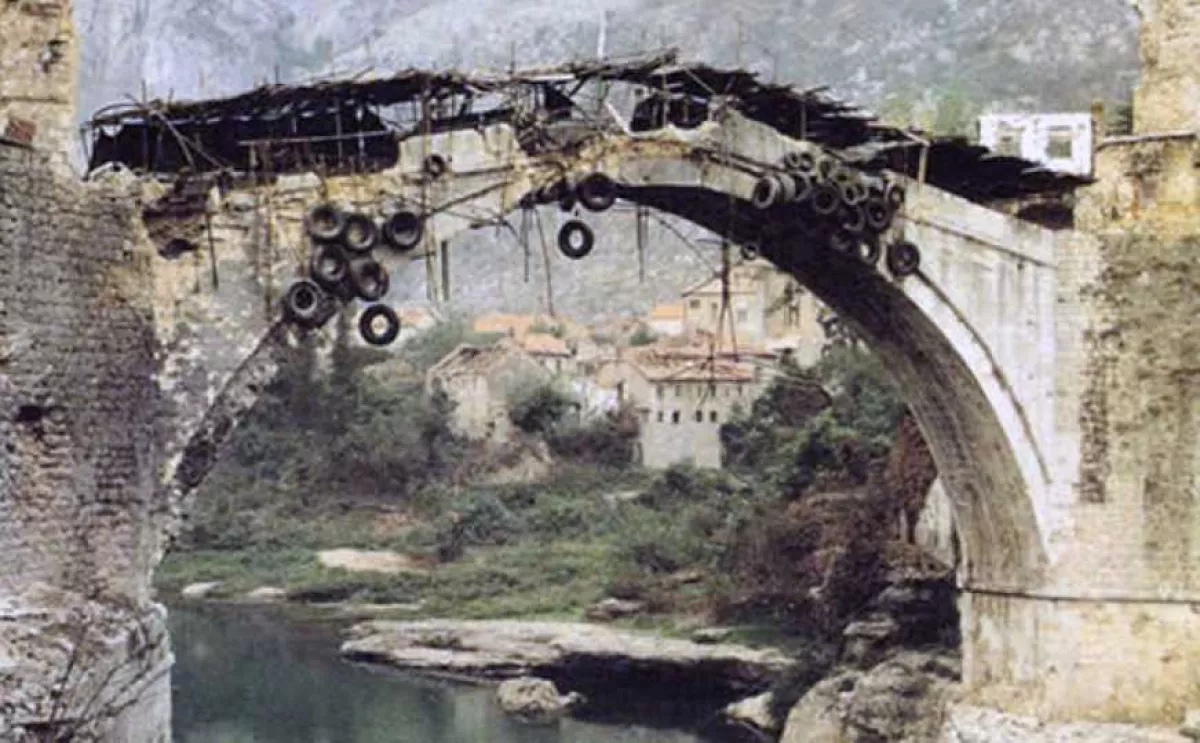
It acquired a more political and darker meaning during the Balkan wars, when in 1993, in the Bosnian city of Mostar, the Stari Most (Old Bridge), which had for over four centuries connected both banks and communities, was destroyed. The bridge was not a military target; it was a symbol of the possibility that people of different cultures and religions could live together. Its destruction was a message in itself—that such coexistence would no longer be possible.
British scholar Martin Coward, whose work the authors draw upon, defined urbicide as an attack on the very possibility of diverse communities sharing a common urban space. Among the various approaches examined in the article, the concept that best fits Aghdam is that of “slow urbicide,” introduced by Eyal Weizman: the gradual, prolonged destruction of the urban fabric over time. Not a single devastating blow, but a sustained process of erosion—year after year, house after house.
That is precisely how Aghdam died.
The authors identify three defining characteristics of urbicide, and in Aghdam all three converge. First, the destruction must be intentional. Second, it must be accompanied by the displacement or expulsion of the population. Third, it must erase cultural memory. These three criteria are worth keeping in mind, because throughout the article, the authors apply them systematically to all three cities under examination.
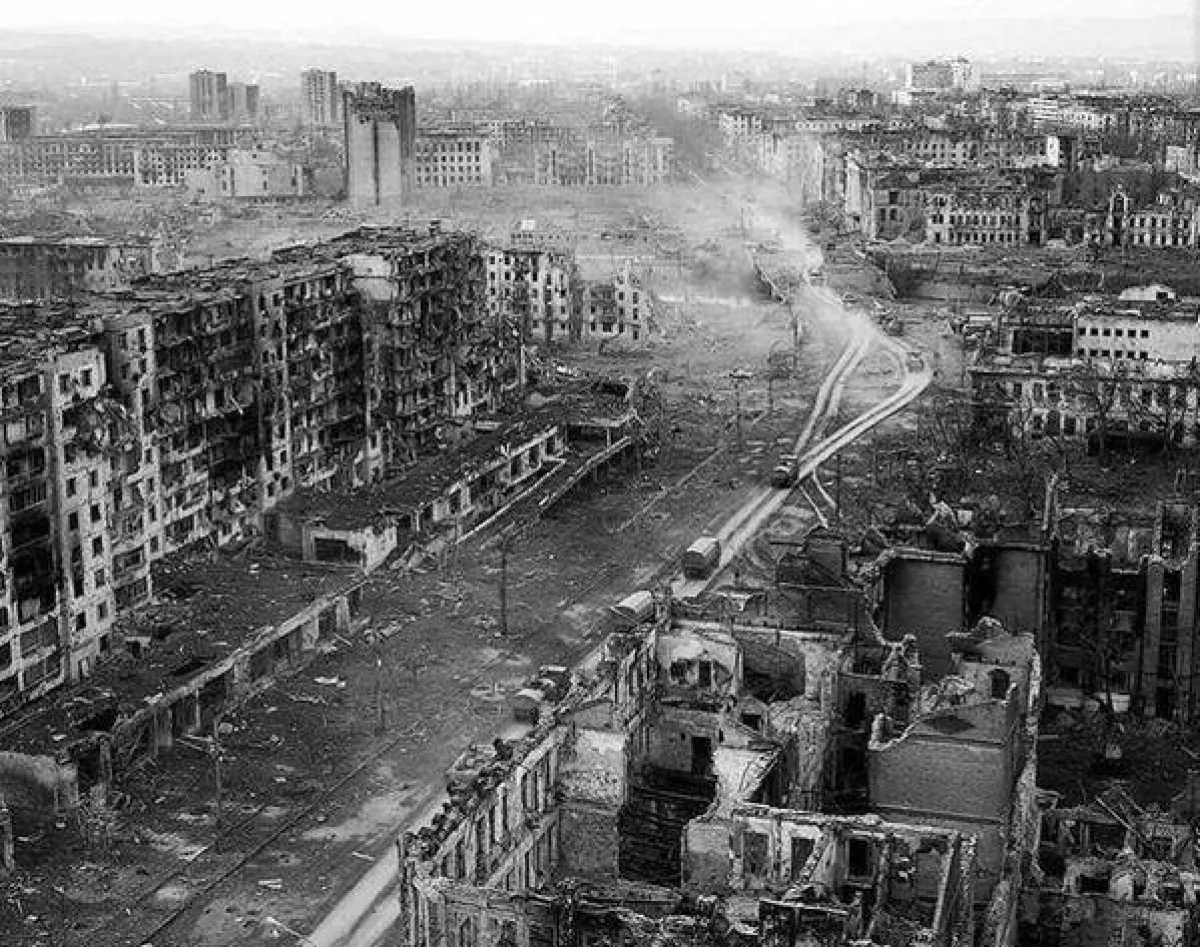
The first case examined is the Chechen capital. After the collapse of the Soviet Union, Chechnya declared independence, and Moscow responded with war, placing Grozny at the centre of the conflict. The first assault in 1994 ended in a crushing setback for the Russian army: armoured columns that entered the city were ambushed and destroyed in its narrow streets. The response was to rely on overwhelming destruction—through air strikes and artillery bombardment, with little regard for the consequences.
The second assault, at the turn of 1999–2000, followed a scorched-earth strategy: entire districts were levelled before ground forces moved in.
Among the structures destroyed were the mosque in Alkhan-Kala, the Chechen Drama Theatre, a concert hall, and sixty schools. In 2003, the United Nations described Grozny as the most devastated city on Earth.
Yet the Grozny case possesses a characteristic that explains why the authors included it in their comparison.
Moscow destroyed the city during the fighting, but subsequently rebuilt it. A loyal leadership was installed in the republic, vast financial resources were invested, and the population eventually returned to nearly its pre-war level. Grozny was devastated in order to crush resistance, but not to permanently deprive the Chechen people of their city.
This was destruction carried out in the course of war—and that distinction is worth keeping in mind when contrasting Grozny with Aghdam.
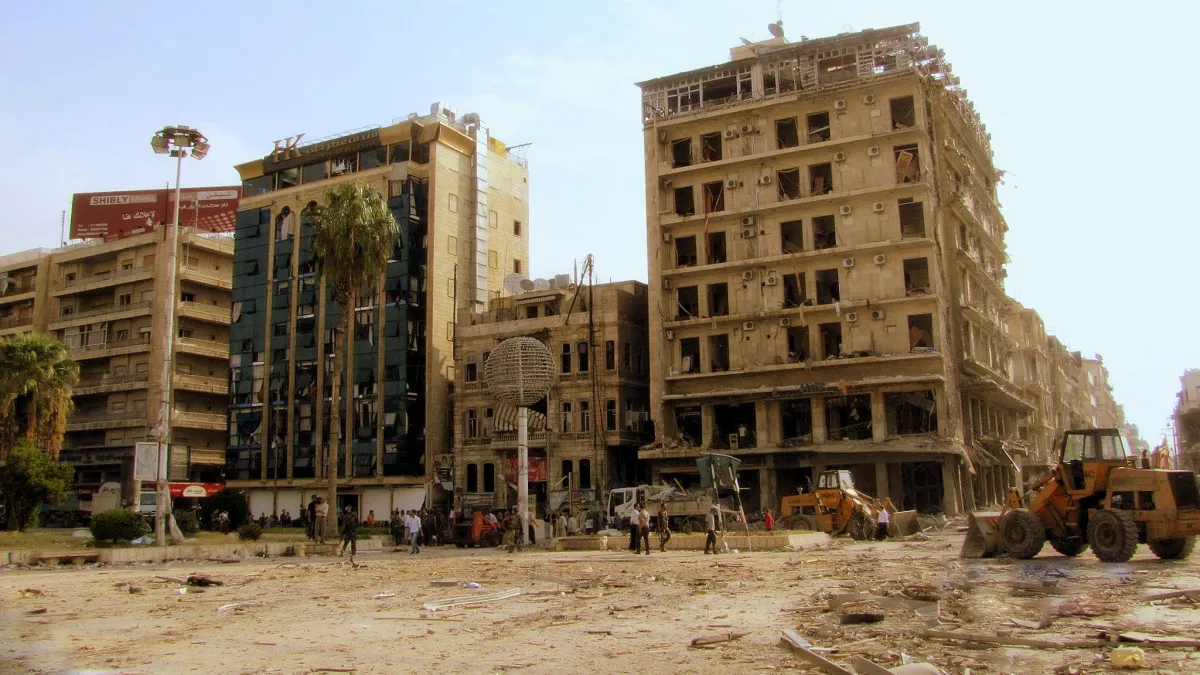
The second case is Aleppo, one of the world’s oldest continuously inhabited cities and a UNESCO World Heritage site. During the Syrian civil war, the city was divided between the government-controlled west and the rebel-held east, and the struggle for its control reduced much of its historic centre to ruins.
With the support of Russia and Iran, government forces carried out intensive bombardments of districts held by the opposition. Among the sites affected were the ancient citadel, the Great Umayyad Mosque of Aleppo, medieval madrasas, and the city’s famous covered markets. Priceless manuscripts were looted, and the cultural heritage accumulated over centuries suffered devastating losses.
Human Rights Watch characterised aspects of what occurred as war crimes, while Russia blocked a related resolution on Aleppo in the United Nations Security Council.
And here, once again, we encounter the defining characteristic seen in Grozny. Aleppo was destroyed in the course of active combat, as part of an effort to defeat and punish a resisting adversary. The city itself became a battlefield, and its devastation—however tragic—remains embedded within the logic of war.
With these two cases established, the third appears fundamentally different. It is precisely this difference that forms the central argument of the article.
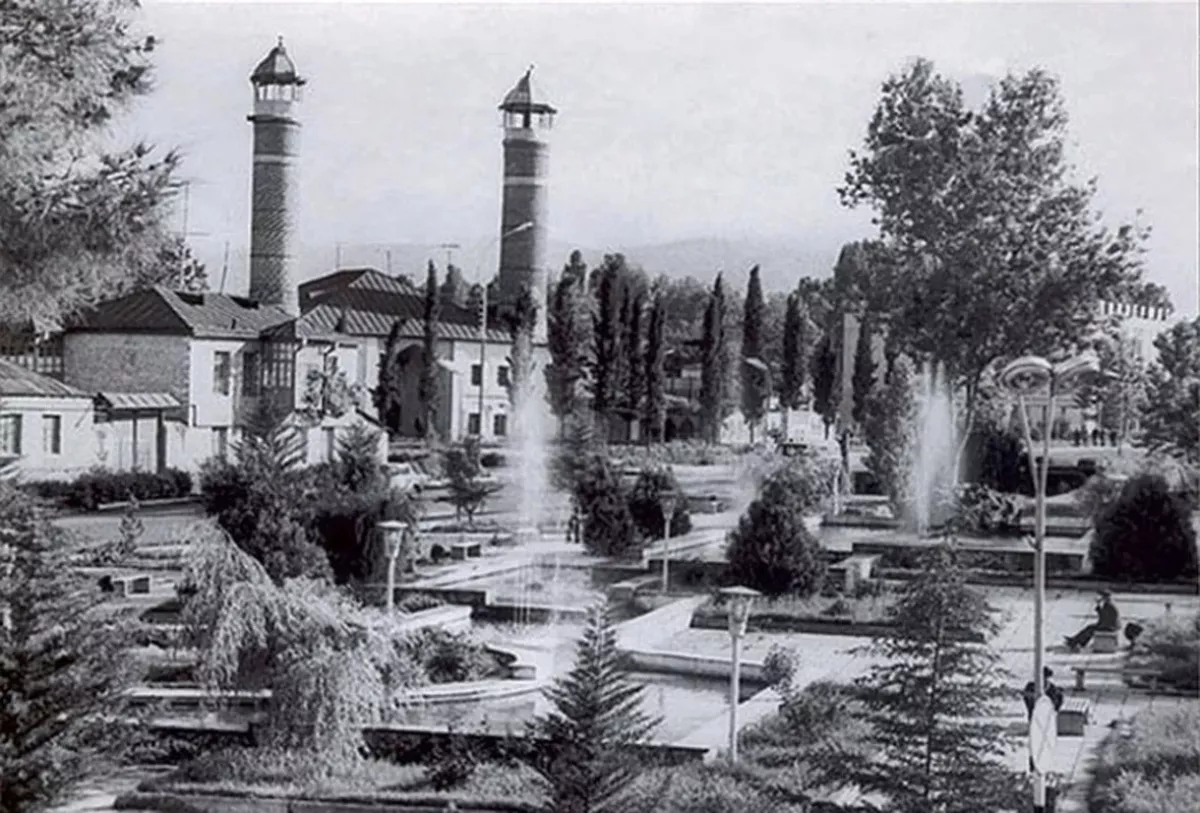
Before its destruction, Aghdam was a vibrant and prosperous city—an economic and cultural centre of the region and a custodian of the legacy of Panah Ali Khan, the founder of the Karabakh Khanate. According to official statistics, the Aghdam district had 74 schools, 105 medical facilities, 271 cultural institutions, and 67 administrative buildings.
The city fell with remarkable speed. Aghdam, along with Fuzuli and Jabrayil, came under Armenian control in the summer of 1993, a process that took just two months. At the time, Azerbaijan was being torn apart by internal turmoil, political instability, and coup attempts, leaving it with little capacity to hold the front line.
That same year, the United Nations Security Council adopted resolutions affirming Azerbaijan’s sovereignty over the occupied territories and demanding the immediate withdrawal of Armenian forces. Yet those international documents remained largely unenforced.
The war created hundreds of thousands of internally displaced persons and, unlike in Chechnya or Syria, the overwhelming majority remained within their own country. This produced a humanitarian crisis in a republic whose economy was stagnating and which had not yet begun to benefit from revenues generated by its hydrocarbon resources.
This is the central point around which the entire article is constructed.
Grozny and Aleppo were devastated in battle. Aghdam, by contrast, was systematically destroyed year after year after the guns had fallen silent. It was not the fighting that reduced the city to ruins; rather, the city was deliberately erased during the years of occupation. Houses were dismantled for construction materials and scrap metal—hence the description of Aghdam as “the largest Home Depot on the planet.”
Of the city’s major landmarks, little remained. The principal exception was the Aghdam Juma Mosque, which survived largely because it was reportedly used by Armenian forces as a military observation post.
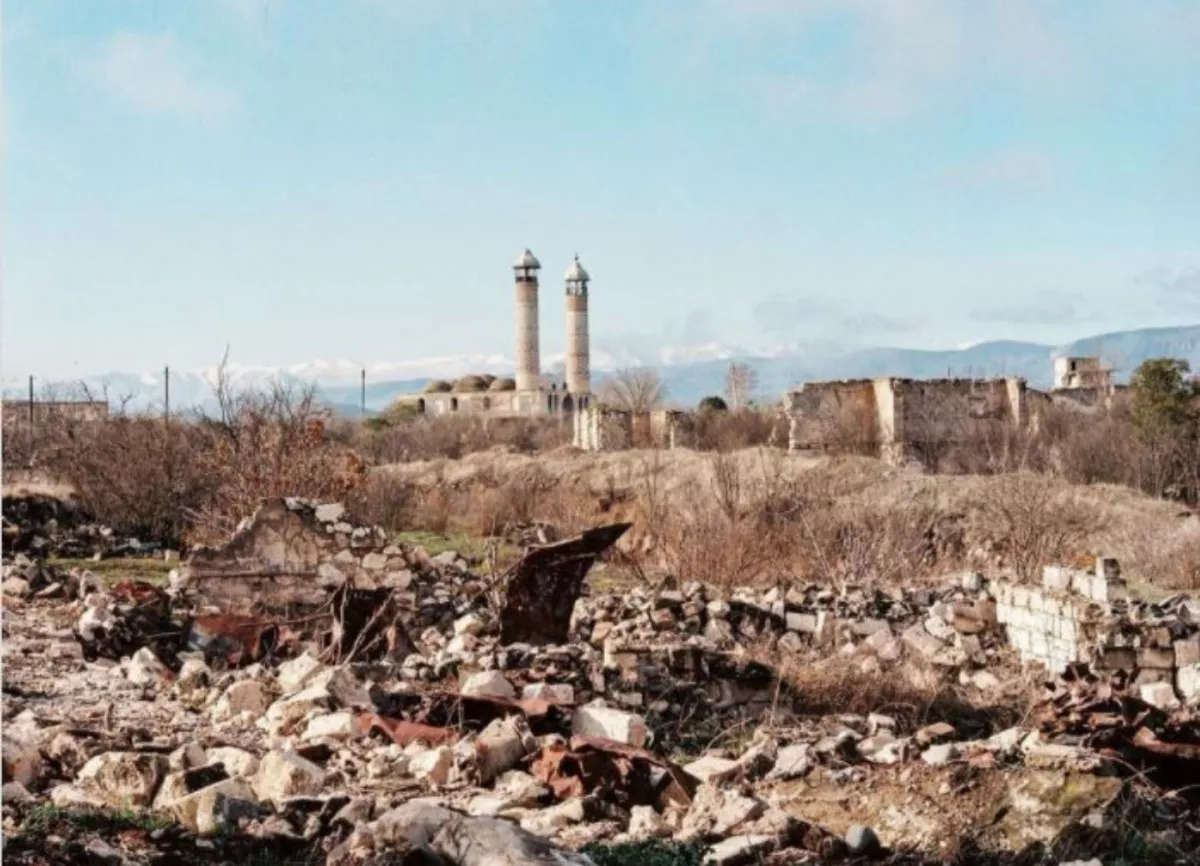
The Organisation for Security and Co-operation in Europe fact-finding mission that visited the occupied territories in 2005 recorded in its report that Aghdam was “completely destroyed and is void of almost all life.” The same mission described neighbouring Jabrayil as uninhabited and lying in ruins.
The authors state the purpose of this destruction plainly: to ensure that Azerbaijanis would have nowhere to return. A scorched and dismantled landscape was intended to function as a “buffer zone.”
The article then breaks this broader picture down into the three defining characteristics of urbicide discussed earlier.
The first is ethnic cleansing. The 1979 Soviet census leaves little room for ambiguity: Azerbaijanis constituted between 95 and 99 per cent of the population in the surrounding districts, and 99 per cent in the Aghdam district itself. After the war, none remained. The entire Azerbaijani population was displaced.
The depopulated town was later renamed “Akna,” declared to be “ancestral Armenian land,” and incorporated into the self-proclaimed territory referred to as “Artsakh.”
The second criterion is the erasure of cultural memory—what, in post-siege scholarship on Sarajevo, came to be known as “memoricide.”
The figures compiled by the authors are staggering. Museums were destroyed or looted, including the famous Bread Museum; libraries holding collections of 4.6 million books; cultural institutions; cemeteries; the “Imarat” mausoleum complex of the Karabakh khans; and numerous other historical monuments, as well as the city stadium and mosques.
To physical destruction was added distortion: surviving Azerbaijani monuments were at times misrepresented by the Armenian side as Persian heritage.
The Czech photographer Stepan Lohr, who visited Aghdam in 2011, personally saw inside the Juma Mosque a plaque in English and Armenian describing it as a “Persian” structure dating from 1868–1870.
In parallel, a fabricated “ancient Armenian” past was being constructed: chapels were erected, and so-called “archaeological” excavations were carried out, allegedly proving an indigenous Armenian presence in the area.
Coward described such tactics as a direct “'washing out' of identity embodied in architecture and public spaces.” Buildings with no military significance were destroyed or reinterpreted precisely because they contained the memory of the land’s actual historical communities—and it was this memory that became the target.

The same logic—ensuring there would be nowhere to return—was also evident in the final days of the occupation. After Azerbaijan’s victory in the 2020 Patriotic War, as Armenian forces withdrew from Lachin and Kalbajar, houses were burned and remaining artefacts were taken away.
The fires were not a military necessity—by that point, the fighting had already ended. Rather, they served as a final message to returning Azerbaijanis: what would remain for you is only ashes. The objective remained the same as in previous years—to instil a sense of despair and the impossibility of returning to normal life.
To demonstrate that the Aghdam case is not an isolated anomaly but a recognisable pattern, the authors situate it within two broader frames—historical and contemporary—and both are telling.
The historical parallel is Warsaw. The Nazis systematically demolished the Polish capital during the occupation through official decrees, in what was intended, in the words of Heinrich Himmler, to “close the Polish question” for future generations. Surviving Poles were then expelled. The destruction of Warsaw was a policy aimed at eliminating identity itself—precisely the same model as in Aghdam, only separated by time and geography.
The contemporary parallel is more troubling because it is unfolding in real time: today, Mariupol is often cited as reflecting the same Aghdam-like pattern. In this sense, Aghdam is no longer only an Azerbaijani wound from the 1990s; it becomes a warning—an early symptom of urbicide that the world must learn to recognise in advance, before it repeats elsewhere. A case that now has a name and a scholarly framework is easier to identify at its earliest stages.
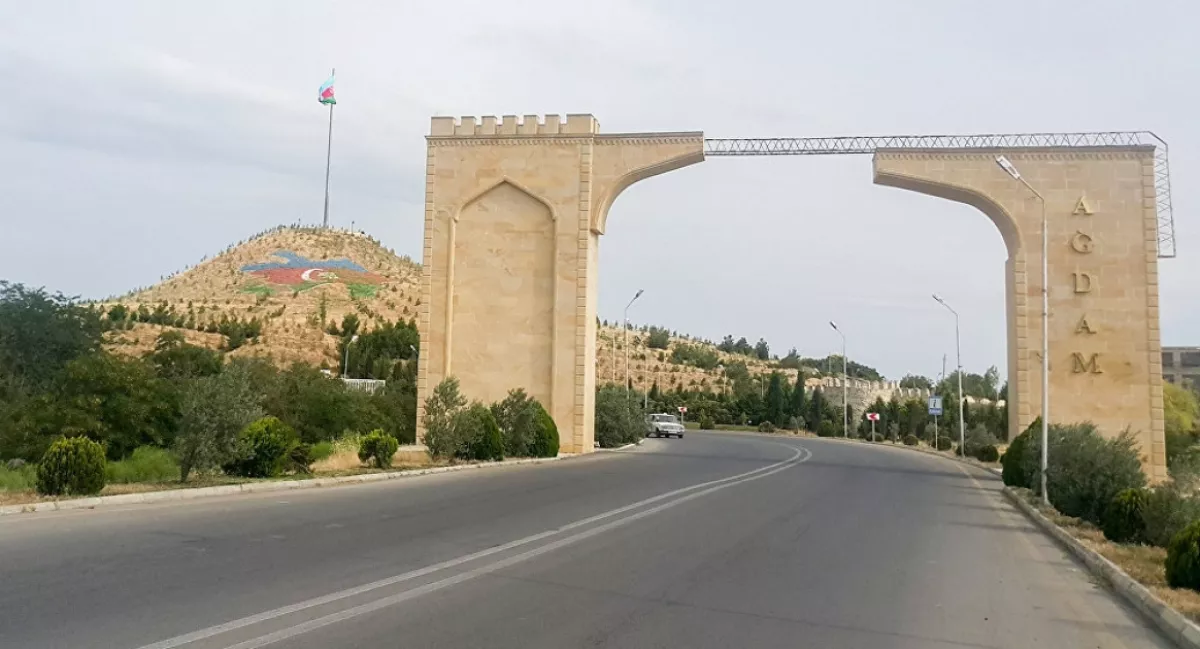
After 2020, Azerbaijan began reconstructing Aghdam according to a master plan—envisioning a “smart city,” a green belt, and new housing. What was once intended by the Armenian side to remain permanent ruins and a material testament to victory is now being transformed, in real time, into evidence of Azerbaijani return. A city once dismantled for scrap metal to prevent its revival is being rebuilt before the world’s eyes.
Yet alongside the construction sites, there is another, less visible outcome. For decades, the destruction of Aghdam was often overlooked, as Western academic discourse tended to view the Karabakh conflict through external frames. The article in the Journal of Urban Affairs seeks to correct this imbalance. The case of urbicide is given a name, an evidentiary foundation, and a place in academic literature alongside Grozny, Aleppo, and Warsaw.
And the truth about it is now being read in the very circles that once preferred not to hear it. Whether conclusions will follow remains an open question.







 editor@caliber.az
 +994 55 444-88-98
 Азербайджан, Баку, ул. Низами, 203, Af Business House, 5-й этаж