










Energy realism: President Aliyev’s formula At the opening of Baku Energy Week
Azerbaijani President Ilham Aliyev’s speech at the opening ceremony of Baku Energy Week went far beyond the traditional discussion of oil, gas, and energy markets.
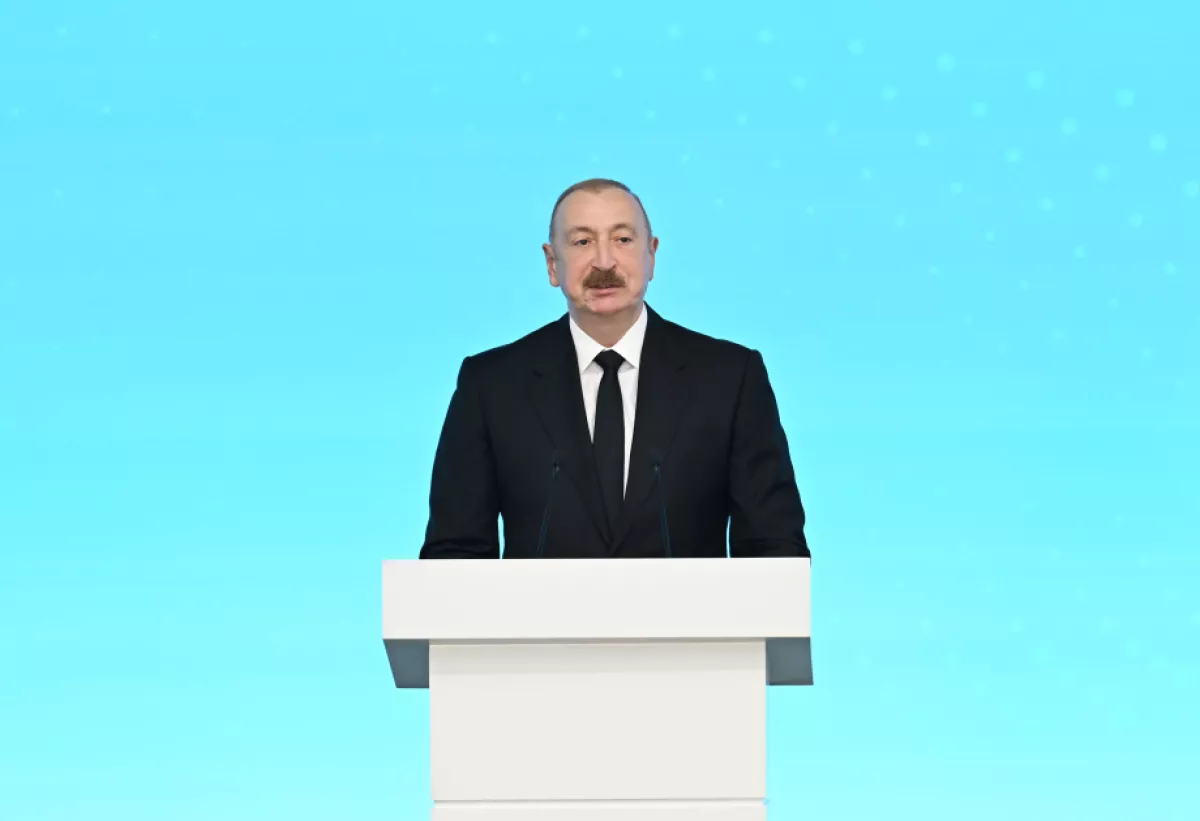
The political leitmotif of the speech was extremely clear: natural resources in themselves are neither a curse nor a privilege — what matters is a state’s ability to transform them into an instrument of sovereignty, security, and strategic resilience.
Aliyev in effect proposed his own formula of modern statehood. In his interpretation, oil and gas are not merely export commodities or sources of revenue. They are the foundation of political independence, military stability, diplomatic influence, and international agency.
The Azerbaijani president recalled an important episode in the country’s history: in the early 1990s, Azerbaijan was economically disorganised and politically unstable, part of its territory was under occupation, and natural resources became the only chance to preserve independence. Thus, energy policy in his speech is elevated into a matter of national survival.
It is particularly telling that Aliyev directly links Azerbaijan’s success in restoring its territorial integrity to the effective management of resources. He emphasises that victory in war is a matter of spirit, but at the same time acknowledges that without oil and gas revenues, it would not have been possible to build a modern army.
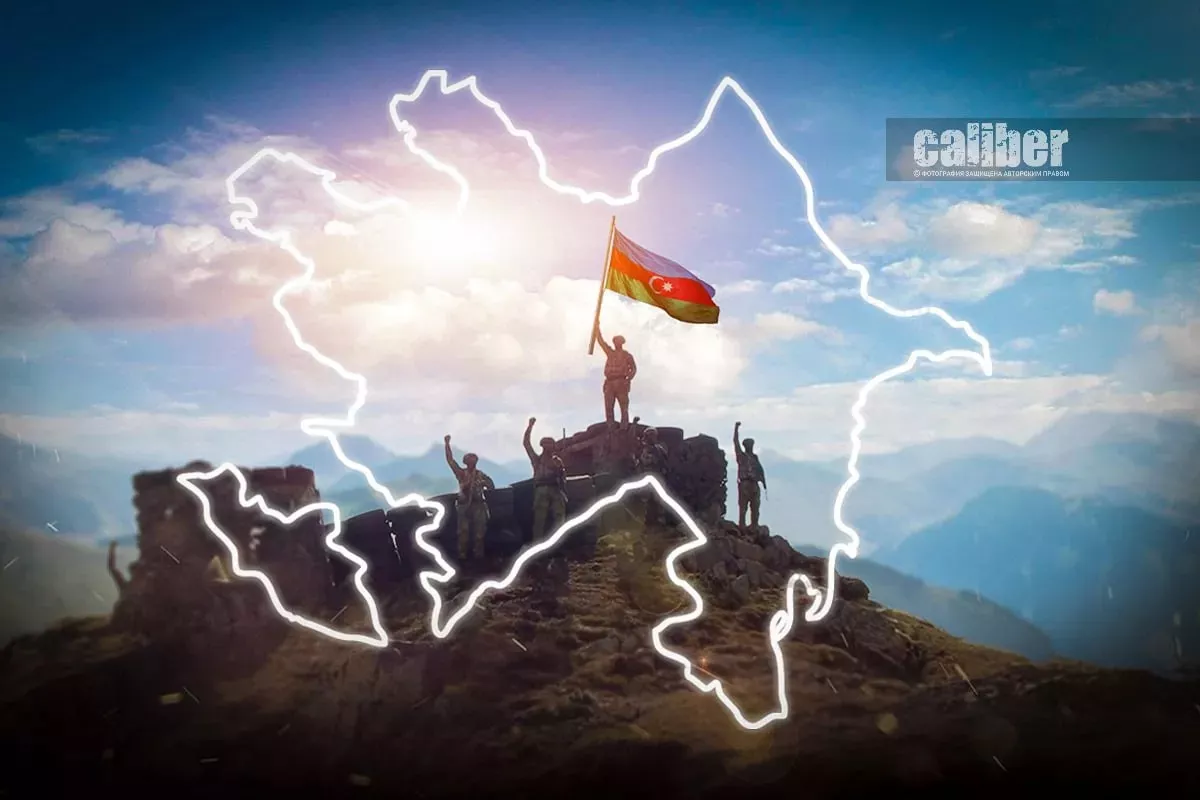
“[...] if we had not had the funds to build the army, we would probably still be under occupation today. So the development of Azerbaijan—whether social, economic, military, or in foreign policy—demonstrates that natural resources, when properly used, can generate many advantages,” he stressed.
This is one of the key political messages of the speech. In the Azerbaijani interpretation, natural resources become not a symbol of dependence, but a source of state strengthening and the restoration of control over its own territory.
Another important emphasis in Aliyev’s speech is a rejection of externally imposed moral judgments on oil and gas-producing countries. The president speaks quite sharply against the global trend of recent years, in which hydrocarbon production has increasingly been portrayed as politically toxic. It is no coincidence that Ilham Aliyev expressed gratitude to Donald Trump for “bringing the energy trend back to normality.”
“President Trump changed that trend, and that was a really remarkable event because we all know that some of the big oil companies even changed their names to be in line with so-called modern trends. But the reality is absolutely different. The world cannot live without fossil fuels,” the Azerbaijani leader stated.
Here, the argument is in favour of a pragmatic approach in global politics. Aliyev effectively contrasts ideologised climate rhetoric with a concept of energy realism: the world still needs oil and gas, and therefore states that possess these resources should not be subjected to political pressure.
At the same time, it is important that Azerbaijan does not position itself as an opponent of “green” energy. On the contrary, the leader consistently emphasises investments in renewable energy sources, the development of solar and wind projects, the creation of transregional energy cables, and the export of “green” electricity. Yet even here, a characteristic pragmatism is evident: it is unacceptable to abandon traditional energy sources in favour of populist ideas.
“We all want to have a better climate and save the planet. We all want to live in a better environment. But today we must be very pragmatic and, based on realism, plan our future with respect to energy security while also investing in renewables. I think this is the way to move forward,” he stated.
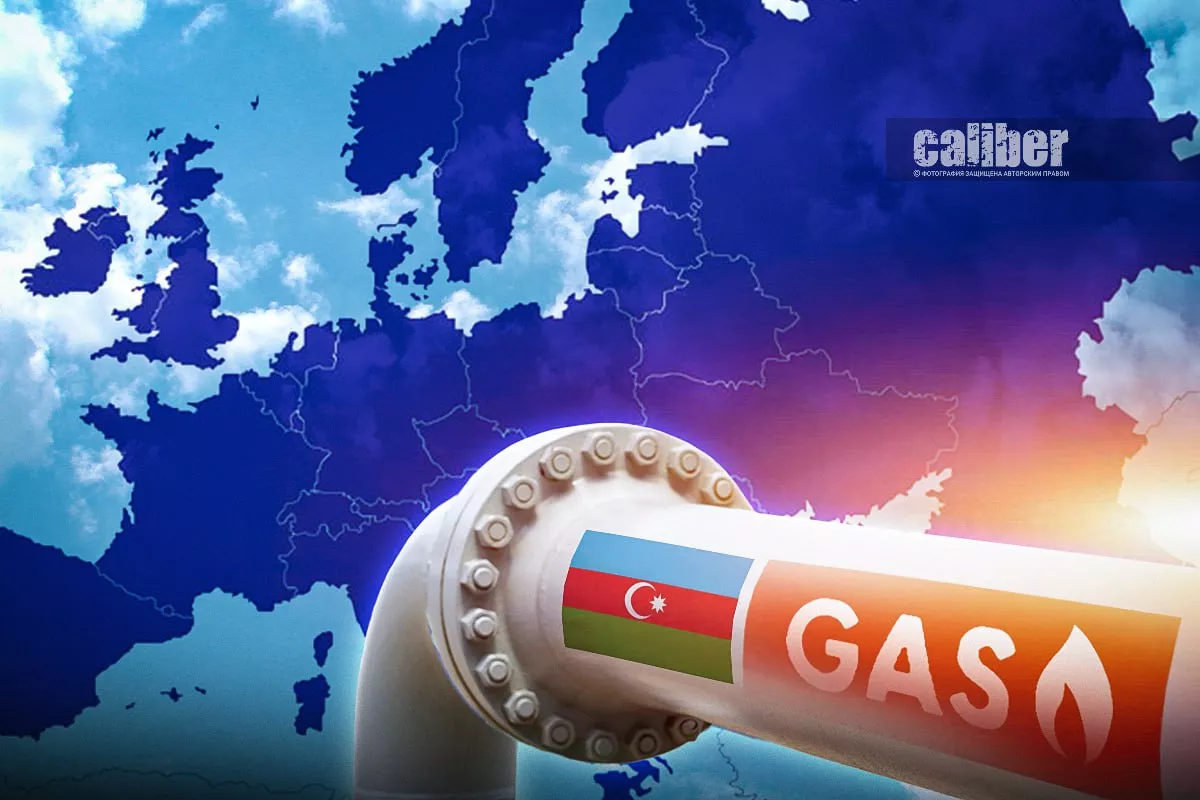
A separate layer of the speech deserves attention — the geopolitical dimension. Ilham Aliyev consistently presents Azerbaijan as a central hub of a vast Eurasian space. The Southern Gas Corridor, including its branches such as TANAP and TAP, hydrocarbon supplies to Europe, the Black Sea energy cable project, East–West transport routes, and the Zangezur corridor — in the speech, all of these elements come together into a single picture in which Azerbaijan acts as a state linking regions, markets, and political spaces.
This is a new form of influence. If previously a country’s geopolitical role was defined purely by military power or the size of its economy, Baku now relies on infrastructural indispensability. Azerbaijan is effectively becoming a state without which it is impossible to fully ensure either Europe’s energy security or transit between Asia and the West.
Another notable point is the diplomatic dimension. Aliyev emphasises that a landlocked state has managed to build relations with all its neighbours and even with “the neighbors of your neighbors.” This is not merely a figure of speech. The president is effectively explaining the success of Azerbaijan’s energy strategy through its ability to create stable regional coalitions around its own projects.
“Today, as I said, 16 countries receive gas from Azerbaijan through the Southern Gas Corridor and its extensions. So with all of these countries, we have had negotiations, agreements, disagreements, and signing ceremonies. This has created a very broad regional cooperation format—in the broadest sense of the word. And Azerbaijan, once again, was the driving force. It was our resources. It was our initiatives. It was mainly our investments that created this very broad cooperation format,” the president of Azerbaijan stressed.
Overall, Ilham Aliyev’s speech can be seen as a presentation of Azerbaijan’s development model for an era of global crises. Its key elements are quite clear: national interests take precedence over external pressure, resources must serve the strengthening of the state, energy is directly linked to security, and international cooperation is built around mutual benefit and infrastructural interdependence.
Summing up the above and reiterating the idea introduced at the beginning of the article, it should be noted that Aliyev’s speech was not only about oil and gas, but to a much greater extent about Azerbaijan’s place and its resilience within the new global architecture.







 editor@caliber.az
 +994 55 444-88-98
 Азербайджан, Баку, ул. Низами, 203, Af Business House, 5-й этаж