










A benefactor from the Jurassic Era? Samvel Karapetyan’s bid for political power in Armenia
“I was engaged in charity work when Pashinyan had not even been born yet,” said Samvel Karapetyan, the leader of the “Strong Armenia” party who is currently under house arrest, in a conversation with journalists. The statement naturally prompted a quick check of the dates. Nikol Pashinyan was born in 1975, while Karapetyan was born in 1965. Taken literally, this would mean that the future oligarch began his philanthropic activities before he had even reached his teenage years.
Of course, the statement was not meant as a factual claim, but rather as a rhetorical device intended to emphasise his own life experience while simultaneously belittling his political rival.
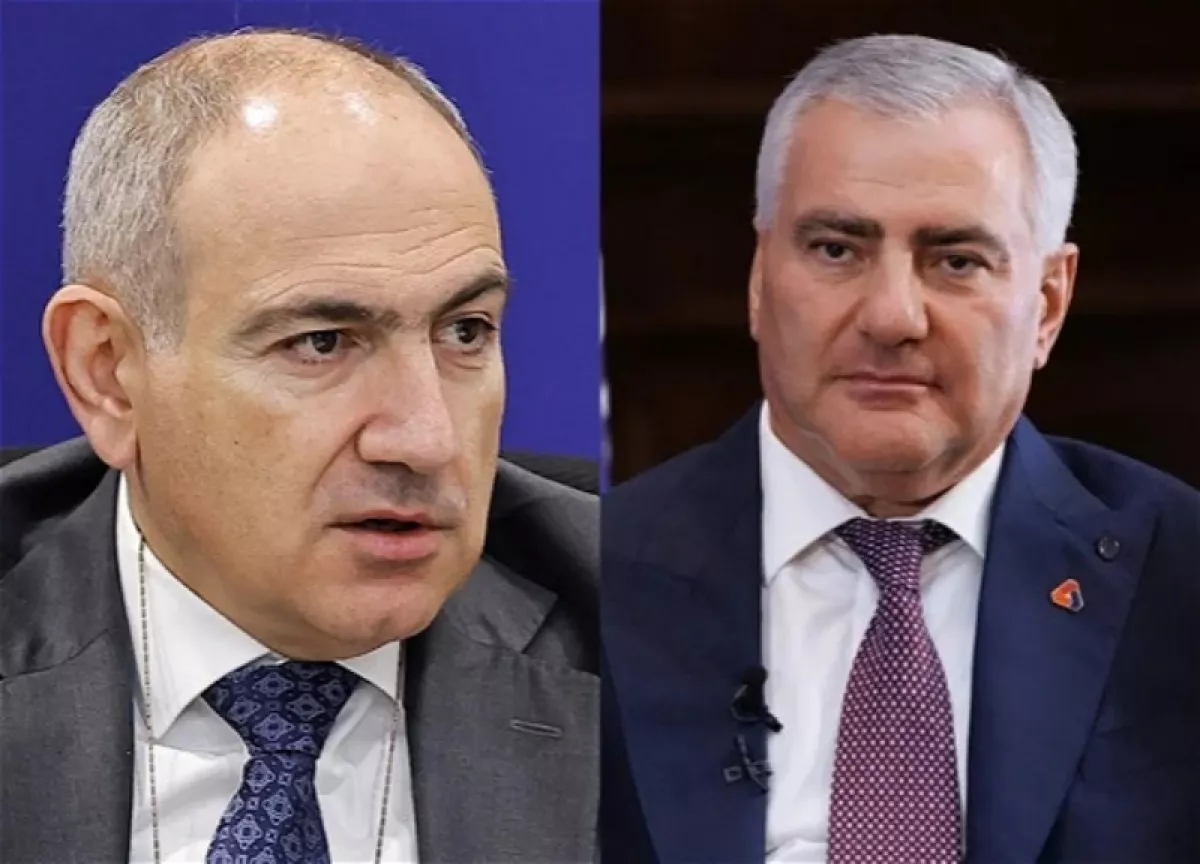
This slip of the tongue would hardly deserve attention on its own if it did not reflect a broader problem. Instead of offering substantive criticism of the current authorities, Karapetyan increasingly resorts to emotional statements. By emphasising his charitable activities, he seeks to portray himself as someone who has served his country for many years and therefore possesses a special moral right to claim leadership.
Moreover, he appeals to the patriarchal mindset of a segment of Armenian society, where age is still automatically associated with experience, wisdom and, consequently, the right to lead others.
However, while such rhetoric remains purely emotional and does not even attempt to disguise itself as rational judgment, the next claim is something that can, so to speak, be tested against facts. Karapetyan argues that under the current authorities, not a single foreign investor has invested in Armenia. Here, a look at publicly available statistics is enough to reveal a different picture. According to data from Armenia’s Ministry of Economy, the structure of foreign direct investment in the country changed significantly between 2018 and 2026. In 2025 alone, total foreign investment reached $2.23 billion, compared with $1.18 billion a year earlier, while net foreign direct investment inflows amounted to a record $605.1 million…
However, even without turning to official statistics, Karapetyan’s claim appears highly implausible. In the modern world, it is virtually impossible to find a state that has not received foreign investment over the course of several years. Even the most closed economies attract foreign capital, albeit in limited amounts. Therefore, such a categorical statement looks more like a toothless political slogan than a statement of fact.
Equally revealing is his description of the current Armenian authorities. According to Karapetyan, they represent a mechanism that “was created by serious unfriendly countries in order to lead Armenia to destruction.” At the same time, he specifically emphasises that he is not referring only to Azerbaijan.
Such formulations are difficult to analyse from a political perspective, as they contain neither specific facts, names, nor evidence. They are a typical example of an opinion-based judgment that can be neither proven nor disproven.
Speaking about his own role in the political struggle, Karapetyan further raises the level of his self-confidence, claiming that it is impossible to defeat the current authorities without his involvement. “Our votes were stolen. Wait, there is a resource,” he said, expressing confidence that the country is heading toward a serious political battle. Between the lines, however, one can detect an appeal to Moscow — it is difficult to interpret this ominous phrase, “there is a resource,” in any other way when it comes from a Russian oligarch.
The issue of Armenian-Russian relations was addressed separately as well. Referring to Russian restrictions (apparently meaning the restrictive measures imposed on certain Armenian goods — ed.), Karapetyan argued that they objectively play into Pashinyan’s hands. In his view, the more difficult the economic situation of the population becomes, the easier it is to control them. At the same time, he claims that the prime minister could discuss this issue with the Russian president at any time but chooses not to do so. He contrasts himself with the current authorities, saying that if he were prime minister, he would certainly resolve the matter, but that he cannot do so now while under house arrest.
Notably, such rhetoric serves two purposes simultaneously. On the one hand, Karapetyan seeks to distance himself from accusations of excessive dependence on Moscow by demonstrating a willingness to criticise Russian policy. On the other hand, he continues to construct the image of a politician whose ability to act is allegedly being blocked solely by external circumstances.
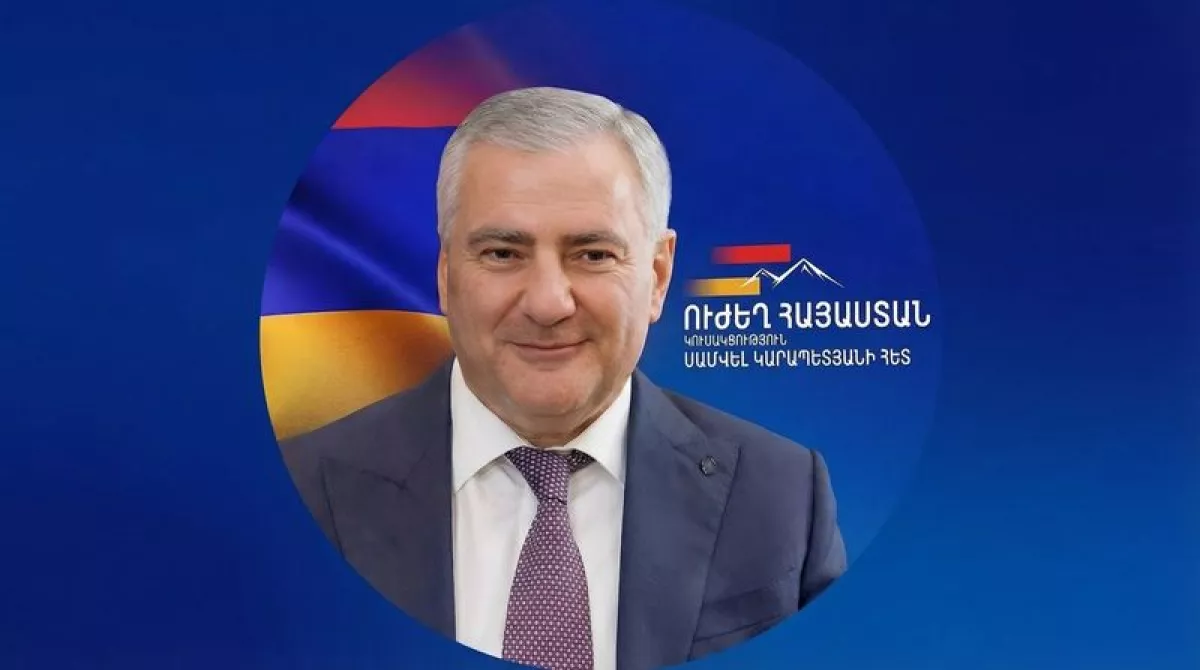
The most intriguing statement concerns his allies and opponents within the opposition itself: “On the issue of removing the authorities, we cooperate with those who are sincere in their struggle, but there are forces presenting themselves as the opposition while in reality being proxy forces.”
Formally, these words can be interpreted as a jab at spoiler parties — groups that were created or became active ahead of the elections with the aim of fragmenting the protest electorate and preventing major opposition forces, primarily “Strong Armenia” and the “Armenia” bloc, from consolidating votes. However, the elections have already taken place, which makes such a strong focus on former spoilers appear somewhat belated.
Here lies another indication of the inability of a person aspiring to lead the state to recognise a more serious threat facing the opposition movement — the risk of the collapse of his own political force.
“Strong Armenia” largely represents the interests of big business, and this category of politicians has traditionally been the most vulnerable to administrative and economic pressure. The history of Gagik Tsarukyan and his “Prosperous Armenia” party, which faced tough government actions, including the loss of control over the major “Araratcement” enterprise, served as a clear warning signal for Armenian entrepreneurs.
For many of them, preserving their businesses may prove more important than maintaining a consistent political confrontation. Therefore, it cannot be ruled out that some lawmakers closely linked to business interests may choose a strategy of cautious distancing from the most confrontational initiatives of their own party or may even move toward cooperation with the authorities.
The situation is further complicated by the fact that the “Strong Armenia” list was not initially formed solely from Karapetyan’s committed supporters. It included former officials, experts, and public figures representing various political groups. Such heterogeneity always increases the likelihood of internal divisions.
Moreover, the ruling “Civil Contract” party has already demonstrated its ability to gradually weaken the opposition through political agreements, offers of positions, and individual engagement with specific lawmakers.
Under these circumstances, Karapetyan’s statements paint the image of an inert leader who is unable to formulate a new and genuinely relevant opposition narrative.







 editor@caliber.az
 +994 55 444-88-98
 Азербайджан, Баку, ул. Низами, 203, Af Business House, 5-й этаж