










Economy of adaptation Azerbaijan strengthens its non-oil sector
During the first third of the current year, most countries around the world recorded a slowdown in GDP growth due to pressure from tariff wars and trade barriers. At the same time, amid the energy crisis caused by the war in the Middle East, high volatility in the oil and gas market persists. This external negative environment is also felt in Azerbaijan, where in the first quarter of 2026 an economic slowdown was observed, and pressure from imported inflation factors has increased.
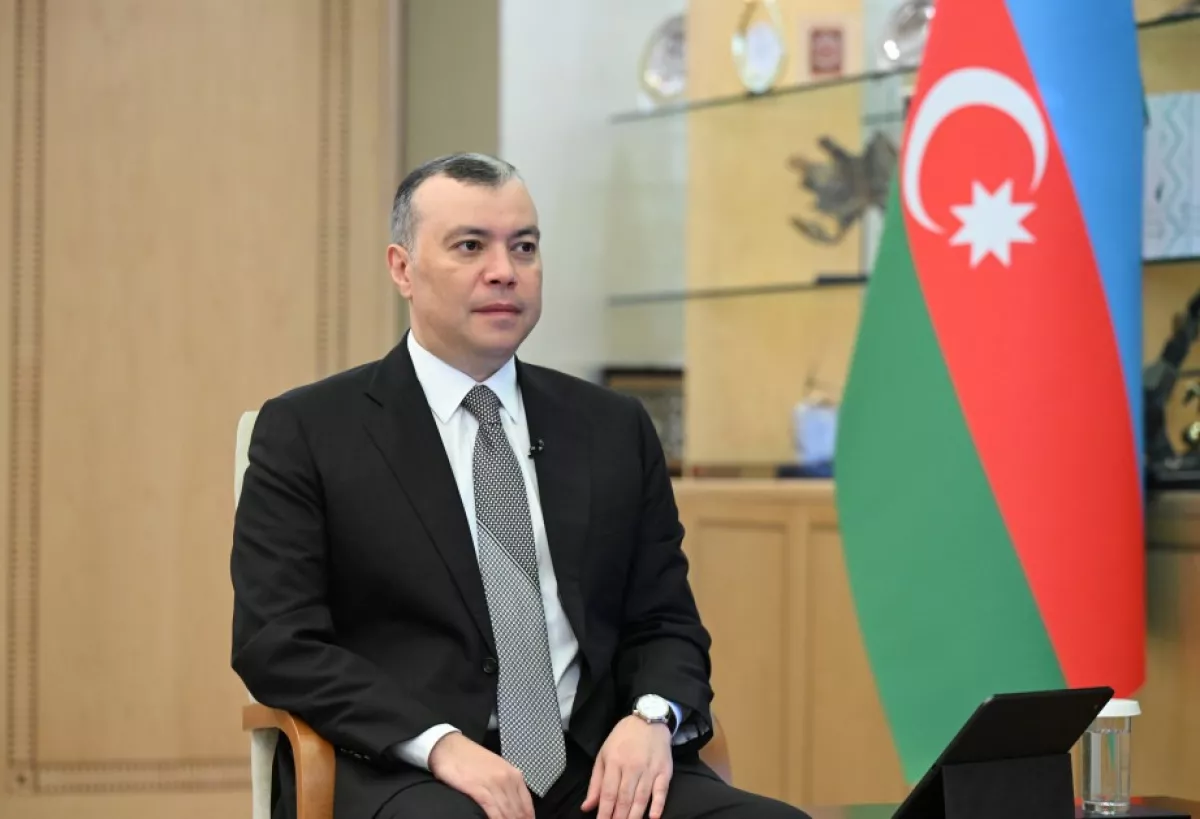
Nevertheless, as noted in an interview with AZTV and AZERTAC by Azerbaijan’s Minister of Finance Sahil Babayev, in January–April 2026 the country exceeded budget revenue forecasts, the non-oil structural deficit of the consolidated budget decreased, foreign exchange reserves increased, and a growth in the share of the non-oil sector in GDP has begun to emerge.
The reforms being implemented in Azerbaijan in recent years are largely associated with a shift in the country’s economic development trajectory. The still-dominant extractive and raw-material sectors in foreign trade are expected to gradually give way to an export-oriented non-oil sector. This objective is reflected in the long-term document developed in early 2021 — “Azerbaijan 2030: National Priorities for Socio-Economic Development.” Similar goals are also set out in the government’s draft of the new “Socio-Economic Development Strategy of Azerbaijan for 2027–2030,” which is based on ensuring healthy, balanced, and externally resilient economic growth.
One of the key directions of fiscal policy is also the increase in the share of non-oil revenues. “We have submitted a framework programme to the Milli Majlis for 2026 and the following three years, and one of the main goals set for us is the annual increase in non-oil revenues in Azerbaijan’s state budget, with the aim of meeting the growing expenditure needs precisely through revenues from our non-oil economy. Because this is our stability, this is our future development, and this is the preservation of oil resources and reserves of the Oil Fund for future generations,” the Minister of Finance stated.

In this regard, the results of the first four months of the current year are quite encouraging: non-oil budget revenues exceeded the forecast by approximately 77 million manats ($45.3 million), which is 5% higher than the corresponding figure for the previous year. It is also noteworthy that in January–April 2026, the non-oil structural deficit of Azerbaijan’s consolidated budget stood at 17.6%, about two percentage points lower compared to the same period last year. This is one of the strongest indicators of the ongoing policy aimed at strengthening the economy and reducing fiscal dependence on the oil factor, as a declining deficit implies a reduced reliance of the state budget, macro-fiscal policy, and overall macroeconomic framework on the oil sector.
As Babayev emphasised: “As we increase the level of coverage of our expenditures with non-oil revenues, we reduce our dependence on oil or gas prices on international markets. We are already generating our income from the non-oil sector, adapting our expenditures to it, and within this framework we are fully able to ensure our financial stability for the next period.”
However, in the long term, serious work still lies ahead to further gradually reduce the dependence of Azerbaijan’s state budget on the oil factor. “If in 2025 the share of oil in the state budget was 48%, we expect this share to decline to 42–43% this year (the forecast stands at 42.6%). By 2030, we plan for this figure to reach just 30%: this is a very significant change in the state budget, as within only five years the indicator declines from 48 to 30 percent, and subsequently 70% of the state budget will be covered by non-oil revenues,” the minister noted.
At the same time, alongside efforts to increase the share of non-raw material sectors in the economy and in budget revenues, the country faces an equally important task — the full and effective fulfilment of budgetary obligations. “Both the State Tax Service and the State Customs Committee (SCC) are recording growth in revenues and an overperformance of forecast indicators. This is a very positive trend,” said Sahil Babayev, noting that over the four months of the current year budget revenues amounted to 13.6 billion manats ($8 billion), approximately 100 million manats higher than in the same period last year.
Meanwhile, Azerbaijan’s GDP reached nearly 40 billion manats ($23.5 billion), while the dynamics of non-oil GDP in real terms grew by 0.7%. Thus, today the country’s macroeconomic and macro-fiscal stability, as well as its resilience, are fully ensured.
Moreover, the positive assessment of the Ministry of Finance regarding the country’s key macroeconomic indicators is also confirmed by data from the State Customs Committee and the Central Bank of Azerbaijan (CBA), which report that favourable external sector indicators are being maintained in the Republic.
Thus, according to State Customs Committee statistics, in the first quarter of 2026 the positive trade balance amounted to $1.4 billion, which is 93.3% higher than the figure recorded in January–March of the previous year. The Central Bank of Azerbaijan has also revised upward its forecast for the country’s current account surplus: in 2026, this indicator is expected to reach $5.5 billion. For comparison, it stood at $3.5 billion at the end of last year.

At the same time, as noted in the April report of the international credit rating agency Fitch Ratings, the increase in oil and gas prices amid the conflict in the Middle East is having a positive impact on Azerbaijan’s external and public finances and may contribute to faster economic growth in 2026, strengthening the country’s twin surpluses. The agency’s analysts forecast that this year the current account surplus will remain at 4.5% of GDP, while the consolidated budget surplus will reach 2.1% of GDP.
For his part, Sahil Babayev noted that “in January–April of the current year, the average price of one barrel of Azeri Light crude oil was approximately $91.5, while the state budget was based on a weighted average oil price of $65.”
He also emphasised that higher average global prices for Azerbaijani oil increase the revenues of the State Oil Fund of Azerbaijan (SOFAZ), as do gas prices when they exceed budgeted levels. All of this has a positive impact on budget revenues.
The current situation also benefits from a favourable trend in Azerbaijan’s strategic foreign exchange reserves: in January–April they increased by $2.9 billion, rising by 3.4%, and in total reached $88 billion. Additional revenues from high global oil prices are being accumulated in the reserves of the State Oil Fund of Azerbaijan (SOFAZ). At the same time, these funds help to optimise budget revenue management and minimise additional borrowing during the current year.
“Overall, Azerbaijan is among the countries with the best borrowing policy indicators in the world: our total public debt will stand at around 20% of GDP by the end of the year, while our current figure is lower, and by the end of the year we will carry out some limited borrowing to fully ensure budget expenditures,” the finance minister noted.
As for Azerbaijan’s external debt, it stands at around 6.3% of GDP. This is one of the best indicators globally, and compared to last year, as of May 1, 2026, the country’s external debt has decreased by approximately 8%.







 editor@caliber.az
 +994 55 444-88-98
 Азербайджан, Баку, ул. Низами, 203, Af Business House, 5-й этаж