










The Brussels cheque: Hungary’s new deal with the EU Analysis by Matanat Nasibova
Judging by recent developments, the new Hungarian Prime Minister’s course toward the full restoration of relations with Brussels is already delivering tangible results. Thus, after many years of disagreements and conflicts between Budapest and EU institutions, one of the most pressing financial issues has been resolved: Péter Magyar has reached an agreement with the European Commission (EC) on the unfreezing of almost all EU funds, which will allow the Hungarian government to access the full €16.4 billion that had been blocked under Viktor Orbán.
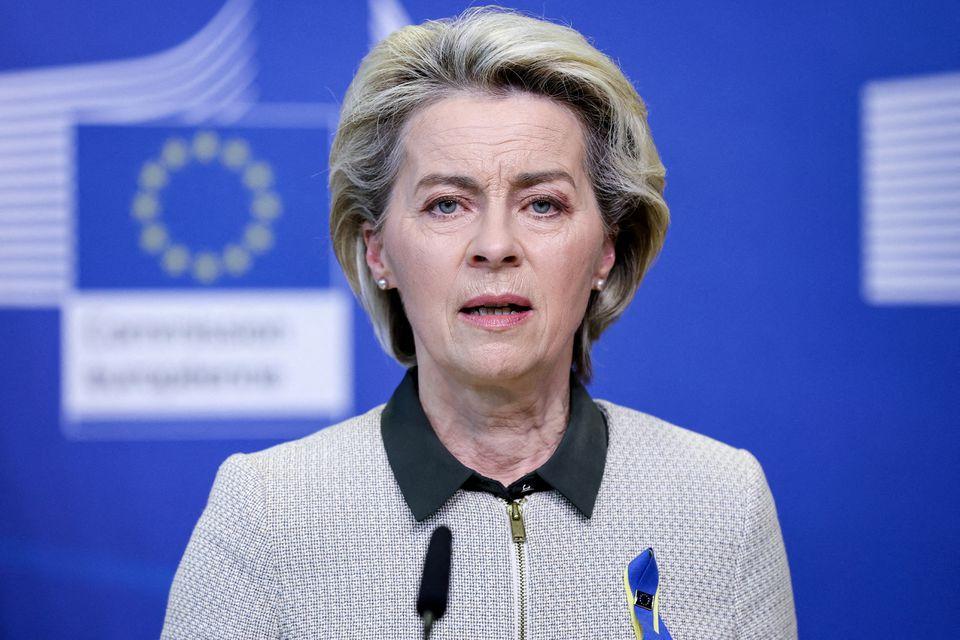
Specifically, European Commission President Ursula von der Leyen stated at a joint press conference with Magyar that €10 billion from the EU Recovery Fund after the pandemic will be unfrozen for Hungary, alongside the release of €4.2 billion from the Cohesion Fund and a further €2.2 billion from a separate tranche within the same package. She also praised the Hungarian leader for having formed a government in “record time” and advanced long-overdue reforms within just a few weeks.
In turn, the Hungarian Prime Minister outlined several priority areas for which funds equivalent to 13% of the country’s GDP will be allocated: these include the modernisation of the energy system, railways, and the rental housing market. The government plans to direct €4.2 billion to transport infrastructure, healthcare, and support for small and medium-sized businesses, €2.2 billion to education, and €1.5 billion to upgrading electricity grids.
However, as expected, there are caveats: in order to receive the full amount, Hungary must fulfil 27 conditions, the so-called super-milestones; otherwise, Budapest risks losing part of the financing. In simple terms, this is a deal between the Hungarian state and the European Union that includes a set of economic and political requirements from the EU side. And this naturally raises the question of where all this may ultimately lead.
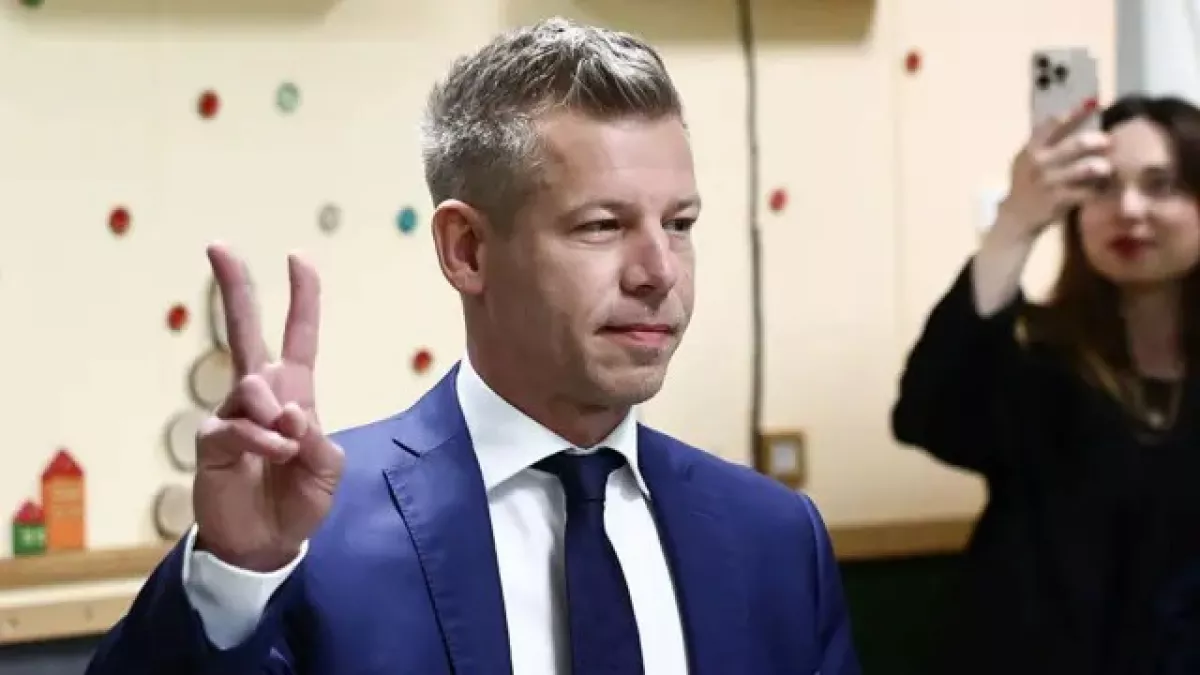
First, Magyar’s government has agreed to carry out reforms in the areas of the rule of law, anti-corruption efforts, and the country’s judicial system — precisely the steps that Viktor Orbán’s cabinet categorically refused to take, which became the main reason for the freezing of the multi-billion-euro tranche. Now, Magyar’s government has applied to join the European Public Prosecutor’s Office, a significant signal to the European Union regarding oversight of how funds are spent.
Second, the new prime minister is demonstrating to Brussels through various means that Budapest has fully abandoned its confrontational policy and has made a clear choice in favour of compromise and dialogue. From a political standpoint, such a position and level of compliance will undoubtedly bring significant benefits to Hungary. However, there is also a downside: Hungary will not only have to fulfil the stated requirements but also regularly report to EU institutions on how and where the funds are being allocated, as well as take steps to maintain constructive dialogue with the European Commission across a broad range of ongoing issues.
The third aspect entirely depends on how capable Péter Magyar is of maintaining a balance between the European Union and his domestic audience, especially given that part of Hungarian society remains wary of Brussels. It can be assumed that in order to achieve this balance, the prime minister will have to demonstrate with concrete results the benefits of cooperation with the European Union to the domestic public. In other words, voters must clearly see that the unfrozen funds are indeed being directed toward supporting business, healthcare, and other key sectors. In addition, Magyar will need to convince the public that the EU-driven reforms serve Hungary’s national interests and are necessary for improving the efficiency of public administration.
In this context, the new prime minister currently has only one asset on his balance sheet — his statement that Budapest, in exchange for supporting Ukraine’s EU accession, expects guarantees regarding the rights of Hungarians as a national minority in that country. This implies the restoration of the legal status of Hungarian-language schools, the possibility of taking graduation exams in Hungarian, and the unrestricted use of the Hungarian language in higher education, culture, public administration, and public life. He also emphasised this position at a recent press conference, stating that “there was absolutely no link between the unfreezing of funds and the opening of the first chapter of negotiations with Ukraine.”
“I very much hope that we will be able to agree on 11 points (which outline issues related to the rights of Hungarians in Ukraine — ed.) in the near future, and that the Ukrainian side will be able to guarantee that within a few months they will be incorporated into their legislation,” he said, noting that technical consultations between the two countries are ongoing.
Thus, the Hungarian prime minister has simultaneously sent a message to two audiences — domestic voters and the EU — that Hungary’s national interests remain the priority of state policy, regardless of who is in power. Whether this ideological stance aligns with the EU’s vision, and whether it could become a delayed fault line in Magyar’s strategy for building a constructive partnership between Budapest and Brussels, remains to be seen.







 editor@caliber.az
 +994 55 444-88-98
 Азербайджан, Баку, ул. Низами, 203, Af Business House, 5-й этаж