










The industry of conflict revival Inside the new geopolitical game around Karabakh
Four days before Armenia’s parliamentary elections, David Ishkhanyan—the former “speaker” of the “parliament” of the never-recognised separatist entity that vanished into oblivion following the Azerbaijani Army’s anti-terror operation in September 2023, and who is currently serving a life sentence under the verdict of the Baku Military Court—sent a message through his family for public dissemination.
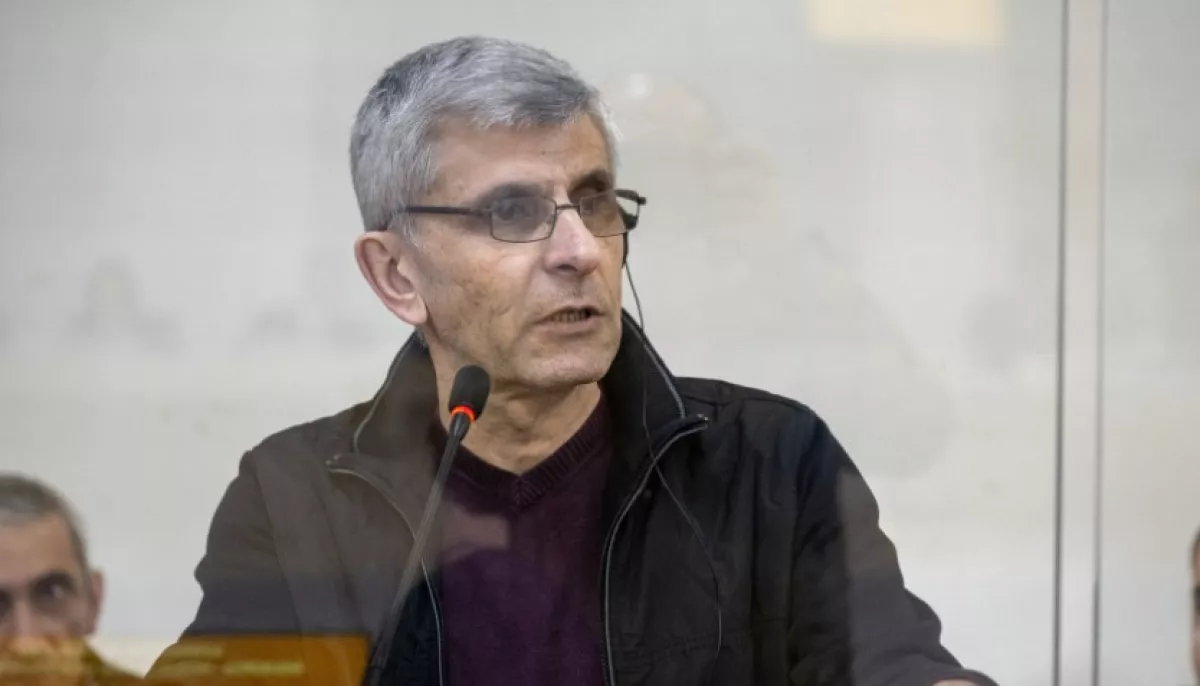
Its essence was as follows: at the beginning of 2024, Azerbaijani officials allegedly made it clear to the former separatist “leaders” being held in pre-trial detention in Baku that they would “remain here for as long as the authorities of Armenia want.” “How could our own authorities not want us to return home?” Ishkhanyan recalled asking himself at the time; now, he claims, the answer has become obvious.
In essence, this statement reflects the mindset of a prisoner embittered with the world around him. What is truly noteworthy, however, is the timing of its appearance and the precision with which it fitted into Armenia’s election schedule. This “bullseye” was far from accidental—it was part of a broader mechanism that revealed itself along three separate vectors during May.
First, the verdicts themselves, because they provide the legal framework for everything that followed.
On February 5, 2026, the Baku Military Court handed down sentences to the former leaders of the separatist junta. Arayik Harutyunyan, David Ishkhanyan, David Babayan, Levon Mnatsakanyan, and Davit Manukyan received life sentences on charges of war crimes. Arkadi Ghukasyan and Bako Sahakyan were sentenced to twenty years in prison, solely owing to the humanitarian provisions of Azerbaijani law, under which life imprisonment cannot be imposed on individuals over the age of 65. In a separate ruling on February 17, Ruben Vardanyan was sentenced to twenty years’ imprisonment, although the prosecution had sought a life sentence.
At the end of May, the Baku Court of Appeal accepted the convicts’ appeals for consideration, and hearings began on June 2.
Throughout this period, Azerbaijan’s position has remained unchanged: the individuals brought before the court were defendants accused of specific crimes; the proceedings were conducted in accordance with the laws and legal principles of the Republic of Azerbaijan, with full observance of due process, and the appeals process is an integral part of those procedures. It is precisely this legal clarity that all three developments seen in May seek to blur—each in its own way.
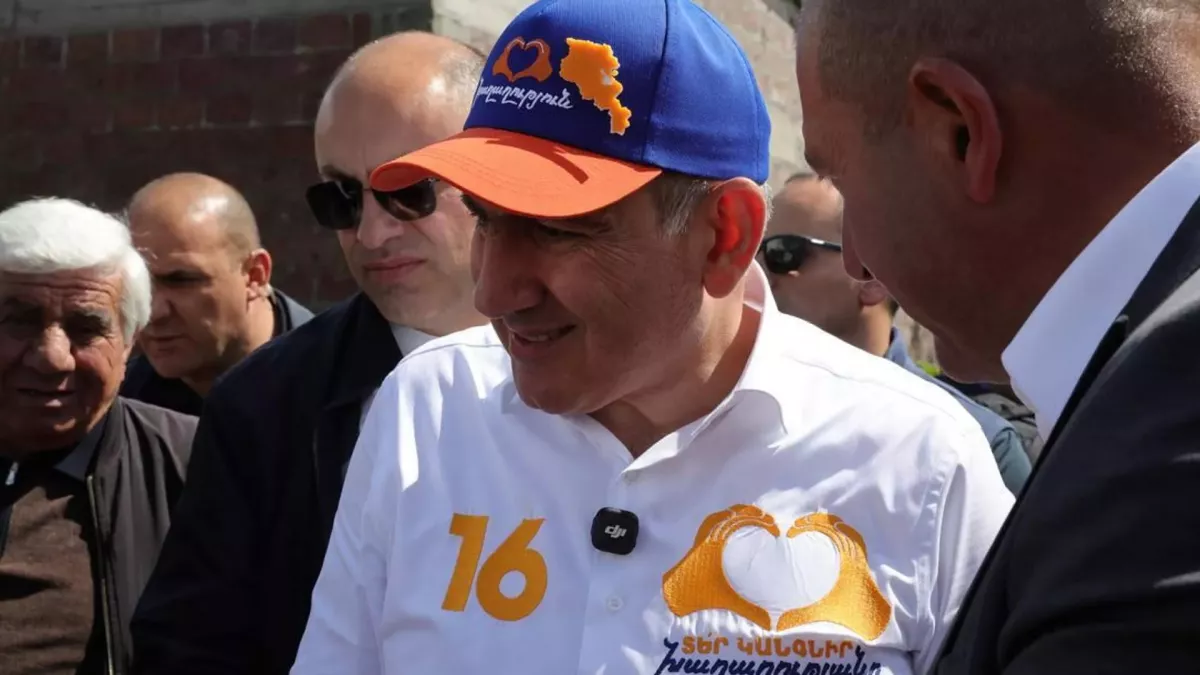
Ishkhanyan’s statement serves a domestic electoral purpose within Armenia. Prime Minister Nikol Pashinyan is contesting the election on the basis of his “Real Armenia” concept, under which peace with Azerbaijan and Türkiye is presented as a conscious strategic choice.
The issue of those convicted and imprisoned in Baku remains one of the few sensitive points on which the opposition can challenge the Prime Minister not from a political, but from a moral standpoint: there are people in prison, families deprived of fathers, and the authorities, critics claim, are doing nothing to secure their return. When a prisoner himself publicly identifies Yerevan as the factor determining his fate, he effectively places a potent political weapon in the hands of Pashinyan’s opponents. It is difficult to believe that David Ishkhanyan does not understand the precise timing of his message or the audience it is intended to reach. The statement is addressed neither to Baku nor to some abstract notion of justice; its real recipient is the Armenian voter on the eve of the election.
The second development is broader in scope and potentially more consequential in its design. At the end of April, a delegation from the “parliament” of the separatists in exile, led by acting “speaker” Ashot Danielyan, held meetings in Bern with members of the Swiss Parliament. The initiative involves the organisation Christian Solidarity International and the so-called “Committee for the Protection of the Fundamental Rights of the People of Artsakh,” headed by former Armenian Foreign Minister Vartan Oskanian.
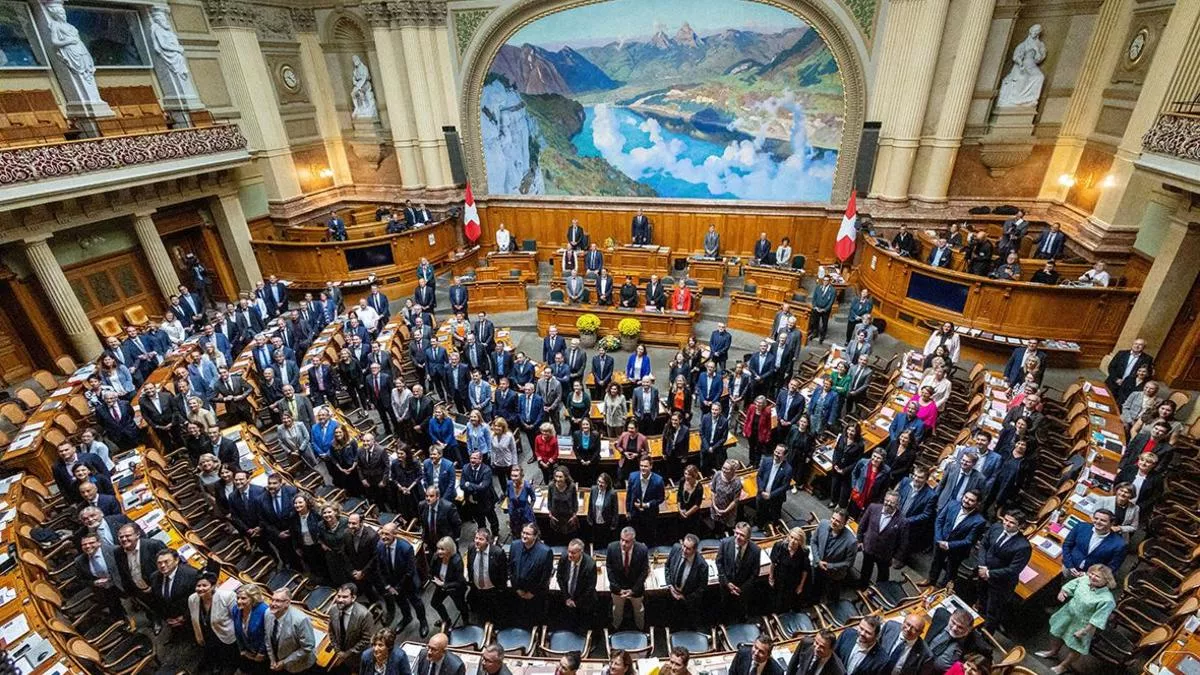
This refers to the so-called “peace initiative” of Swiss parliamentarians. The project envisages the creation of a separate dialogue platform between Baku and Armenians who voluntarily left Karabakh. In 2025, the Swiss Parliament adopted the relevant resolution—Motion 24.4259—and a cross-party committee of nineteen deputies was formed. It is presented as humanitarian diplomacy. In reality, it represents an attempt to revive precisely the mechanism whose dismantling was one of the conditions for peace.
To fully assess this initiative, one must recall a detail that its authors do not hide, but rather emphasise. The OSCE Minsk Group—a format that for thirty years simulated negotiations on settlement while in practice legitimising the status quo of occupation—was dissolved following a joint appeal by the Foreign Ministers of the Republic of Azerbaijan and the Republic of Armenia to the OSCE Chairperson-in-Office regarding the termination of the OSCE Minsk Process and its related structures on August 8, 2025. The authors of the Swiss project take this dissolution as their starting point: in their logic, with its “demise,” the international platform on Karabakh disappeared, and the resulting vacuum should be filled by a new forum under Bern’s auspices.
This line of reasoning, however, distorts cause and effect. The Minsk Group was not lost due to oversight—it was deliberately dismantled as a condition for transitioning to direct bilateral settlement without external mediators. Proposing to replace it with a new format means restoring precisely the structure that both sides consciously agreed to abandon.
To this is added the call to activate the so-called Moscow Mechanism of the OSCE—a 1991 procedure allowing a group of participating states to dispatch an expert mission to investigate human rights violations on the territory of another state, even without its consent. In diplomatic language, this translates into launching an international investigation against Azerbaijan conducted by third countries.
This is not an addition to the peace process. It is a subversive alternative to it, constructed by those for whom the closure of the conflict would mean the loss of their own role within it.
The most remarkable aspect of the Swiss initiative is its relationship with the Armenian state itself. In October 2022, Yerevan officially recognised Karabakh as part of Azerbaijan; this is a documented position of the Armenian government on which the entire current peace track is based. The Government of Armenia even sent an official letter to the Swiss Ministry of Foreign Affairs stating that the announced “Swiss Peace Initiative” was undesirable for Yerevan.
And yet, civil and parliamentary structures in Bern continue to engage with the so-called “government in exile” as if it were a fully legitimate political actor—thereby endorsing a construct that the Armenian state itself has publicly abandoned. In effect, foreign advocates of the “rights of the long-suffering” are promoting a framework that Armenia has already relinquished, and they are doing so in clear contradiction to Yerevan’s stated position.
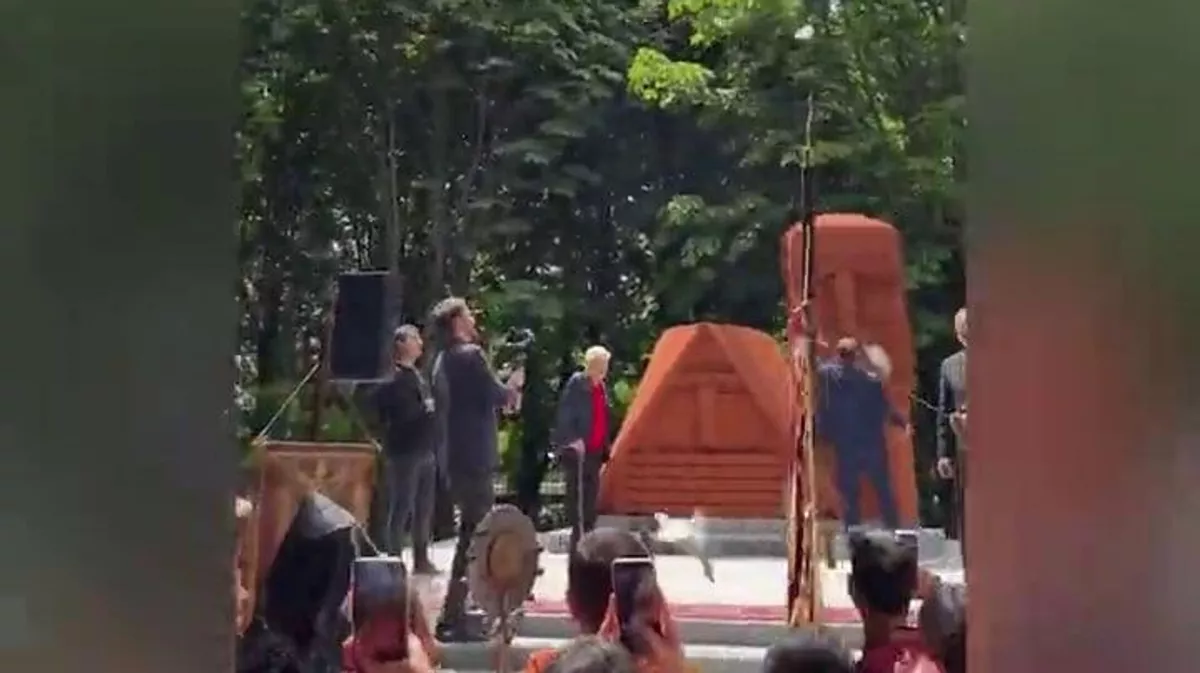
The third episode is purely symbolic, yet no less revealing for that. In Yessentuki, on the grounds of an Armenian church, a scaled-down replica of the monument “We Are Our Mountains” was installed. This is the very monument erected in 1967 near Khankendi, which for decades served as the main visual symbol of Karabakh separatism. Colloquially known as “Tatik-Papik” (“Grandfather and Grandmother”), it stood during the years of occupation at the entrance to the city as a manifesto of the status quo’s supposed irreversibility. Its reproduction in the North Caucasus is a clear attempt to keep the symbolism of a concluded conflict artificially alive—this time in a region where such gestures, given the high political sensitivity, appear overtly provocative.
The logic behind this gesture mirrors that of the Swiss resolution: an effort to prevent the conflict from being recognised as definitively closed. Three episodes, different in form and actors, but bound together by a common foundation—the industry of conflict revival.
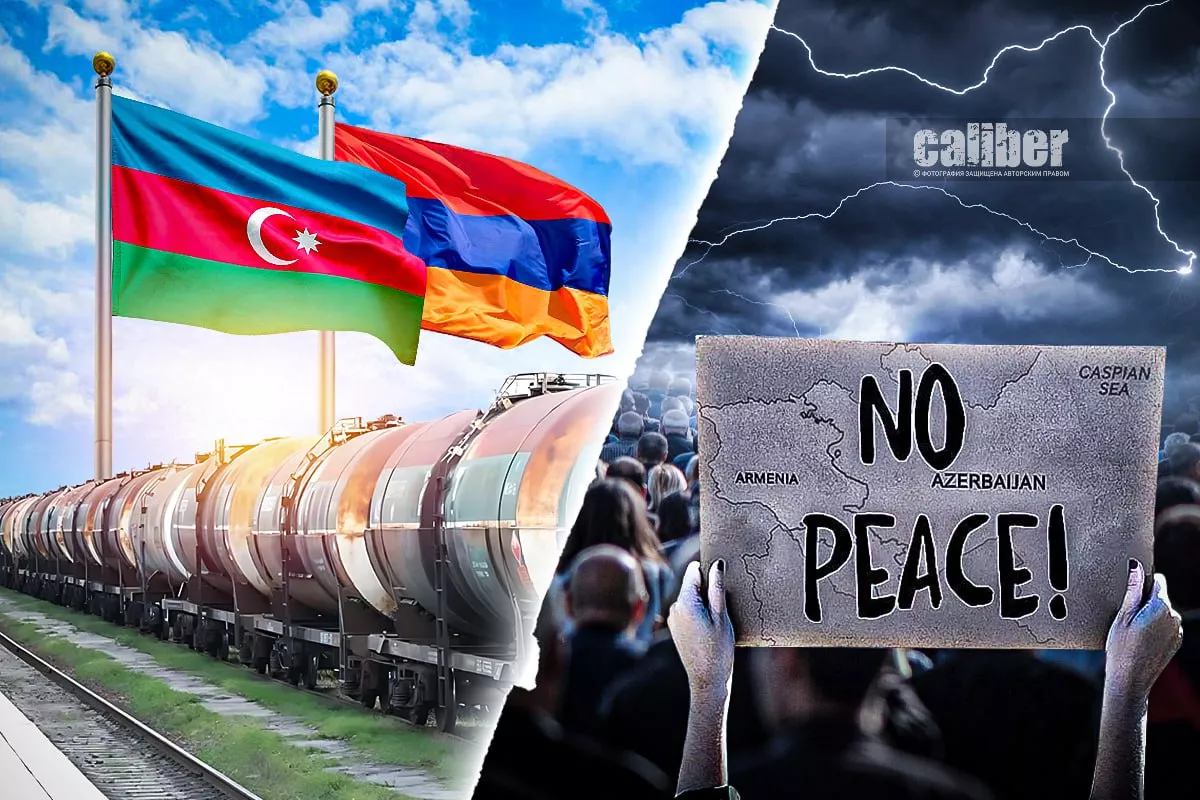
Armenia is heading into elections with a prime minister who has staked his position on peace. Azerbaijan is advancing trade and economic ties and promoting an agenda under which peace in the region is already established de facto. The space for reviving the conflict is objectively shrinking, and precisely for that reason the number of those interested in resurrecting it is increasing.
Each actor has its own stake: for separatists in prison, it is the hope of returning from incarceration to the political arena; for Swiss structures, it is an institutional role and the budget that comes with it; for those relocating symbolic monuments, it is the preservation of leverage over a region that has largely slipped beyond their control. An unresolved conflict is an asset that generates dividends—and that alone is sufficient to explain why activity around the “Karabakh issue” does not subside.







 editor@caliber.az
 +994 55 444-88-98
 Азербайджан, Баку, ул. Низами, 203, Af Business House, 5-й этаж