










The Yerevan testing ground A foreign game on Armenian soil
“Complete and total endorsement” — with these words, Donald Trump on May 28 effectively closed a question that in a sovereign republic is decided by voters, not foreign presidents.
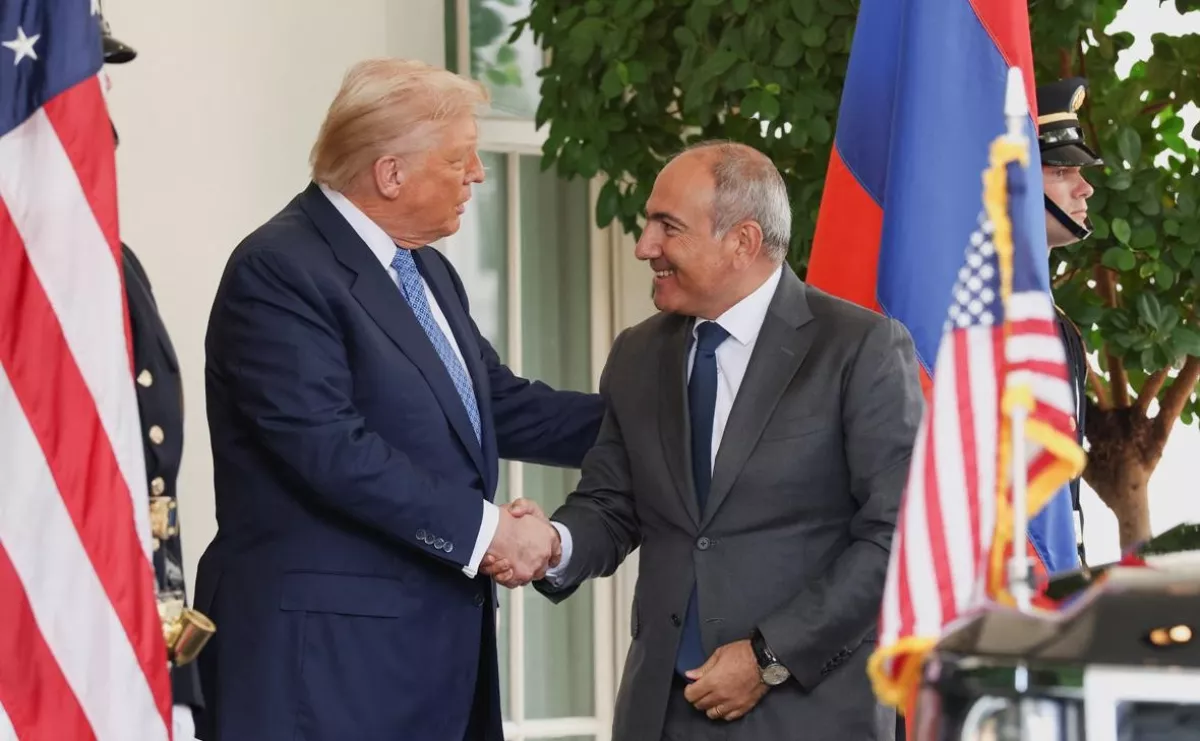
In a post on the Truth Social platform, the White House chief blessed Nikol Pashinyan ahead of the parliamentary elections scheduled for June 7, calling him a great friend and promising to work with him to bring Armenia, the South Caucasus, and Central Asia to unprecedented heights.
A few days earlier, Marco Rubio visited Yerevan — the first U.S. Secretary of State to set foot on Armenian soil since 2012 — and managed to sign with Foreign Minister Ararat Mirzoyan a Charter on Comprehensive Strategic Partnership, a Framework Agreement on TRIPP (The Trump Route for International Peace and Prosperity), and a document on rare earth metals and critical minerals. When elections in a country of just over three million people receive the personal attention of the leader of a superpower like the United States, along with an urgent visit from one of its senior officials, the issue is not its weight — but the fact that its domestic politics are, in reality, not domestic at all.
As a result, in formal terms, an Armenian vote is scheduled to take place on June 7. In substance, however, these elections are about Armenia’s geopolitical alignment, conducted on Armenian soil but decided far beyond its borders.
On one pole stands the West, which has placed its bet on Pashinyan and his course of breaking with Moscow. On the other is Russia, which for the first time in thirty years risks losing Armenia entirely. And between them, there is almost no space left for an actual Armenian platform — one that would grow out of Armenia’s own national interest rather than an externally driven project.
This is perhaps the key symptom. A country debating under whose patronage it should live has already lost the argument over its own sovereignty.
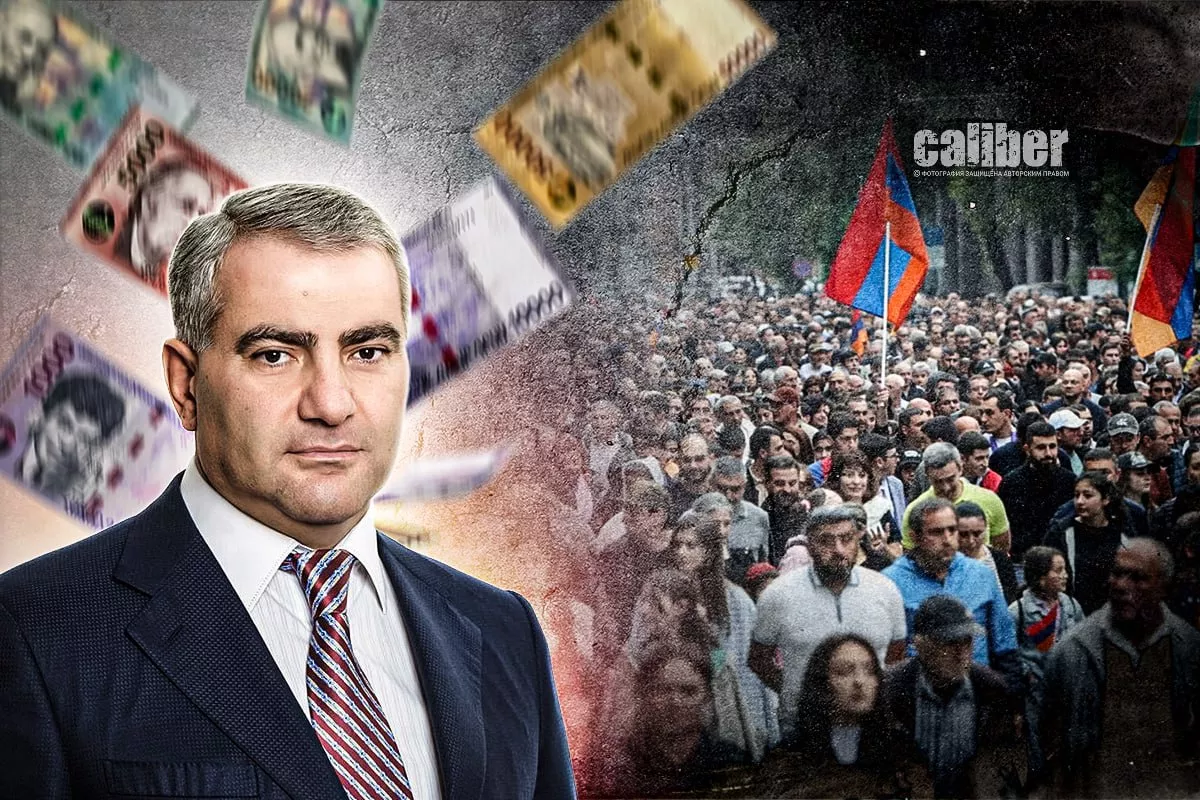
The clearest illustration of this loss can be seen in the figure Moscow has placed on the Yerevan stage. Samvel Karapetyan — an oligarch who built his fortune in Russia, the owner of the Tashir Group, which includes “Electric Networks of Armenia,” a company he has now effectively lost control over. An ethnic Armenian, he remained for decades a Russian businessman, and only acquired political capital in Yerevan when the Kremlin felt the need for a controllable foothold.
In June 2025, Karapetyan gave an interview in defence of the Armenian Church, which Pashinyan was already confronting at the time, and was almost immediately arrested on charges of incitement to seize power, later supplemented by accusations of tax evasion, money laundering, and embezzlement. While under criminal prosecution, he founded the “Strong Armenia” party and declared himself a candidate for prime minister, despite not even being legally eligible to run.
In Yerevan, there is a sardonic observation that it would have been more honest to call this party “Strong Russian Armenia”: its programme is reduced to an economy based on Russian capital and a complete return under Moscow’s patronage.
Karapetyan has a predecessor, and the comparison is quite appropriate here: Ruben Vardanyan — the founder of Troika Dialog — also an oligarch who made his fortune in Russia.
In 2022, he moved to Karabakh, symbolically renounced his Russian citizenship, and took up the post of so-called “state minister” of a de facto entity that was not recognized by anyone. It was an attempt to implant a Kremlin-scale figure into Karabakh separatism and then steer it towards the overthrow of Pashinyan.
The project collapsed: Baku restored sovereignty over its territory, and in February 2026 the Baku Military Court sentenced Vardanyan to twenty years in prison on various charges ranging from terrorism to crimes against humanity.
The lesson is simple: an external implant does not take root where there is a state with a strong will. Karapetyan is the same kind of implant, only this time transplanted not into Karabakh, but into the Armenian body itself — and the only question is whether the host organism will prove as resilient as Azerbaijan did.
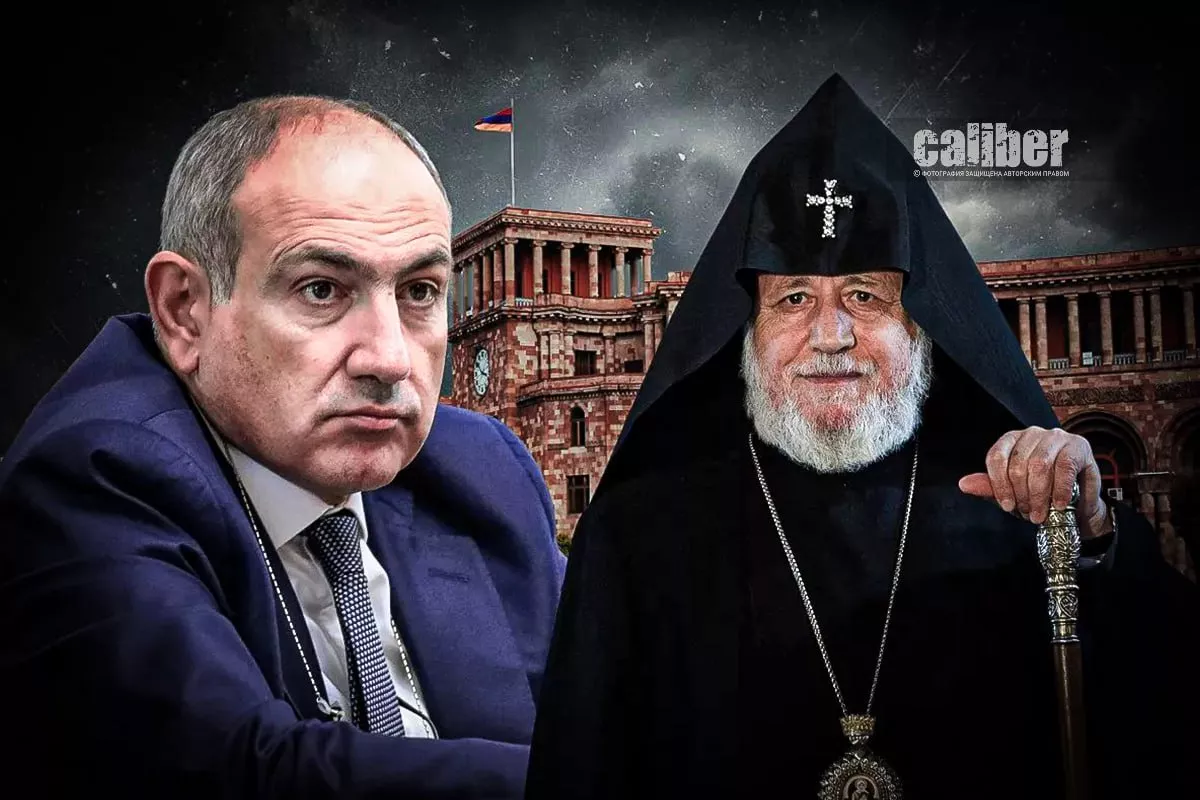
The second instrument of Moscow is Etchmiadzin. The conflict between Pashinyan and Garegin II — which an outside observer might easily dismiss as a curious dispute between the prime minister and the head of the Armenian Church over the vow of celibacy — in reality strikes at Russia’s internal foothold within Armenian society.
The sitting prime minister has stated directly that he does not need a catholicos who is subordinate to a “senior lieutenant of a foreign intelligence service.” In turn, Armenia’s National Security Service of Armenia — the successor to the Armenian KGB — released a document alleging that the brother of Garegin II, Archbishop Ezras, head of the Russian diocese of the Church, had been recruited by the Soviet Committee for State Security and continues to cooperate with foreign intelligence services to this day.
At the same time, in autumn 2022, the President of the Russian Federation signed a decree awarding Garegin II the Order of Honour, which was presented to the Catholicos of All Armenians on January 10, 2023 by the Russian ambassador to Armenia. Ezras himself, in 2023, blessed the “ArBat” battalion fighting against Ukraine — and in November 2025, Russian President Vladimir Putin awarded the head of the Armenian Church in Russia the Order of Alexander Nevsky.
The Etchmiadzin side denies much of this. However, even setting aside the conspiratorial layer, one point remains clear: for decades, the Armenian Church has been embedded in the Russian vertical of influence more deeply than any secular party — and precisely for that reason it has become a battlefield.
Moscow’s irritation is understandable. For thirty years, it financed Armenia’s dependence. Armenia was not an ally but a ward — and suddenly that ward is turning towards another patron, while the former is bogged down on the Ukrainian front and can no longer, as before, put it back in place.
Hence the increasingly nervous and discordant messaging. Dmitry Peskov still maintains a measured tone, reminding that Nikol Pashinyan had promised Vladimir Putin to preserve membership in the Eurasian Economic Union (EAEU), while also dropping hints about a “two-way street.”
Sergei Shoigu is already sharper: according to him, Armenia’s leadership has taken steps that “do not correspond to the spirit of allied relations,” and the invitation extended to Volodymyr Zelenskyy to a May European summit in Yerevan was interpreted as an insult to Armenian memory.
Dmitry Medvedev has gone further still, abandoning diplomatic restraint entirely — calling Pashinyan a political placeholder and a fraud who “thinks we are fools,” and warning Armenians about Russian gas priced at triple European rates and the loss of access to the entire EAEU market.
This is how a creditor behaves when a pledged asset is being taken away: the fewer leverage points remain, the louder the reminders of past investments — and the thinner the veneer of diplomacy.
Against this backdrop, the West is acting more subtly and more confidently. The “Trump Route,” approved in Washington in August 2025 as part of a peace settlement with Azerbaijan, provides the United States with a corridor and access to resources, while giving Nikol Pashinyan the image of one of the architects of a breakthrough from thirty years of isolation.
However, an irony lies beneath this narrative, one that Yerevan’s official rhetoric conveniently ignores: Pashinyan is entering elections under the banner of independence that is publicly endorsed by the U.S. president and underpinned by a European summit. Switching patrons is not the same as achieving self-sufficiency.
Armenia is changing its orbit, not creating its own — and it is calling that a sovereign choice.
It is precisely here that the Armenian narrative converges with the Ukrainian one. Before 2022, Ukraine was exactly such a frontier space — a land where the West and Russia settled their scores through indirect means, while domestic politics gradually split into “pro-Russian” and “pro-Western” camps, until almost nothing of a third option remained.
It is well known how such trajectories end: a territory that outsources its politics to foreign capitals eventually pays for it with itself. Armenia is walking the same path, albeit without war. For now, without war…
Under the banner of independence, Yerevan is merely replacing one patron with another, and the deepest paradox of June 7 is that the question put to the ballot is no longer Armenian in essence. When a country is left to choose only whose it will be, the outcome of elections becomes secondary: what is already lost is not the vote itself, but the very right to decide for oneself.







 editor@caliber.az
 +994 55 444-88-98
 Азербайджан, Баку, ул. Низами, 203, Af Business House, 5-й этаж