










Pacific trilemma: Moscow–Pyongyang axis and re-arming of Japan Article by Matanat Nasibova
Political instability has become a permanent addition to the climate cataclysms of the Asia-Pacific region. Yet while the natural elements here are seasonal and largely unpredictable, political storms, it appears, are increasingly turning into a routine feature of the regional landscape.

Pyongyang has provided the latest reason to anticipate a potential surge in Asia-Pacific tensions. This time, the signal was delivered directly by Kim Yo Jong — sister to North Korean leader Kim Jong Un and one of the most influential figures in the DPRK’s leadership. Her rhetoric targeting Japan demonstrated once again just how far the complex array of friction between the two nations remains from a final resolution. These rivalries date back to the founding of North Korea in 1948 and are starkly highlighted by the fact that the two countries have never established formal diplomatic relations.
The most acute phase of the crisis unfolded against a backdrop of historical grievances and a series of abductions of Japanese citizens by North Korean intelligence services throughout the 1970s and 1980s, when public outcry in the Land of the Rising Sun triggered the imposition of harsh unilateral sanctions. Subsequently, between 1993 and 1999, the first nuclear crisis erupted: driven by deep anxieties over Pyongyang’s development of weapons of mass destruction, Tokyo engaged in serious discussions with Washington for the first time regarding joint military response measures and the defence of its territory. By 2017, unprecedented missile launches by North Korea that flew directly over Japanese territory pushed the threat level to a critical threshold, prompting the Japanese government to characterise the risks as the most severe since the end of the Second World War.
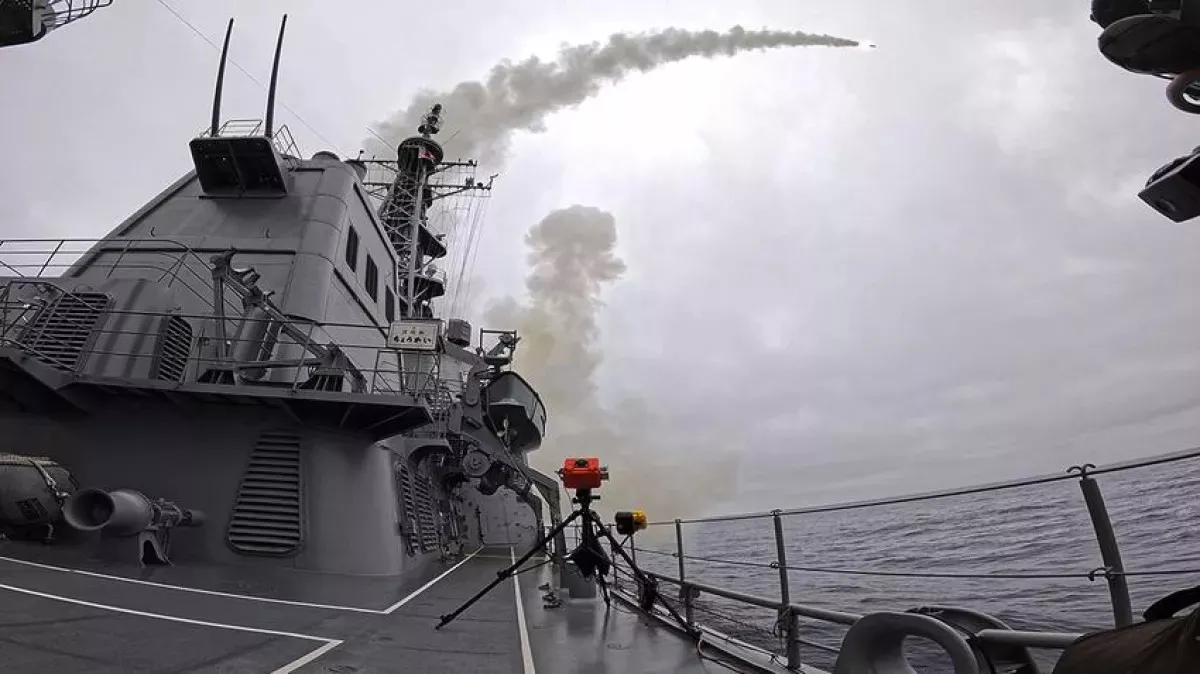
And just days ago, Kim Yo Jong declared that Pyongyang would consider "additional military options," accusing Japanese authorities of transforming Japan from a state committed to a defensive posture into a country prepared to launch preemptive strikes. She asserted: "A few days ago, the Japanese side conducted a test launch in the Pacific Ocean of long-range Tomahawk cruise missiles mounted on the Aegis destroyer 'Chokai' of the Navy 'Self-Defence Forces' of Japan. It is also deploying extended-range anti-ship guided missiles, developing unmanned submarines, and purchasing cruise missiles for F-35A fighters. In such a situation, the character of Japan's Self-Defense Forces is taking on the attributes of formations intended for preemptive strikes and operations beyond its borders."
Upon closer examination, however, this test launch appears to serve as merely a formal pretext. The underlying catalyst for the harsh rhetoric from the North Korean establishment is far more likely the Japanese defence report, the "White Paper," published on August 4, which the DPRK Foreign Ministry labelled a "military scenario." The document emphasises that the international security environment is experiencing its most complex period since the end of the Second World War, stating that the world is entering a new era of crises accompanied by shifts in the global balance of power, intensifying inter-state competition, and the rapid evolution of technologies that are fundamentally altering the nature of modern armed conflicts.
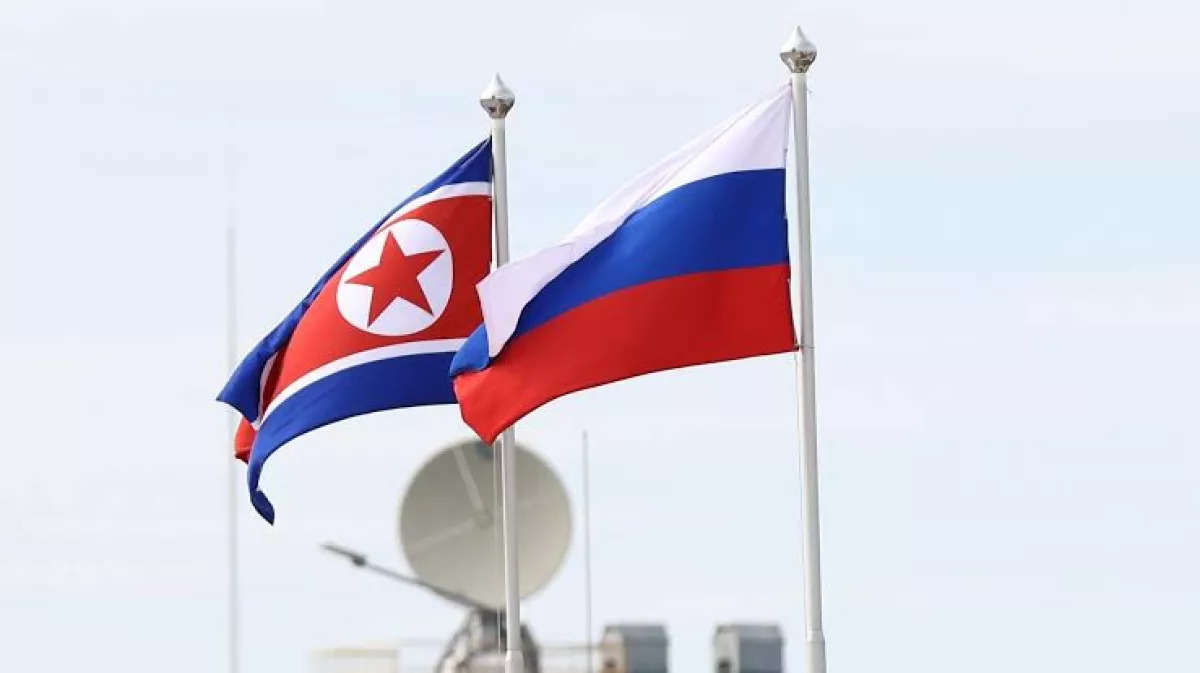
In addition, the Japanese defence ministry officially stated that military cooperation between North Korea and Russia poses severe security risks to the country. Tokyo harbours deep concerns that, with Moscow’s support, the capabilities of the DPRK Armed Forces could be substantially bolstered over the medium and long term. Looking at these dynamics through the lens of parity, military cooperation between Moscow and Pyongyang has indeed evolved into a full-fledged strategic alliance, grounded in the Comprehensive Strategic Partnership Treaty signed in June 2024. This agreement provides for large-scale deliveries of ammunition and missiles to the Russian Federation, as well as the deployment of North Korean military specialists and units to the country.
In return, Russia supplies North Korea with oil and petroleum products, flour, grain, soybeans, and vegetable oil — enabling the regime in Pyongyang to offset international sanctions and cover the basic energy and food requirements of its economy. Beyond the Russian factor, the document highlights that North Korea has conducted six nuclear tests and possesses the technical capability to miniaturise and fit nuclear warheads onto its ballistic missiles, whose operational range encompasses the entire Japanese archipelago.
For Pyongyang — firmly convinced that Tokyo is determined to abandon the strictly defence-oriented strategy enshrined in its post-World War II constitution — these conclusions by the Ministry of Defence of the Land of the Rising Sun, combined with the recent missile tests, served as the primary trigger for its fiery retaliation. This represents the first major driver of the current escalation.
Second, Kim Yo Jong’s threatening rhetoric serves as a direct message to the United States that any strengthening of Washington’s regional allies is perceived by the DPRK as an inherent American military threat—a stance fully aligned with Pyongyang’s long-standing strategic vision. In this context, a key dynamic must be highlighted: Pyongyang is particularly alarmed by the consolidation of a unified US–Japan–South Korea trilateral bloc. Consequently, the North Korean leadership is exerting maximum effort to demonstrate that such cooperation does not enhance regional security, but rather increases the risk of open conflict.
Third, the declarations by Kim Yo Jong, like those of other top DPRK officials, are carefully calibrated for a domestic audience. They aim to reassure the North Korean public that official Pyongyang is capable of withstanding any external threat, while simultaneously laying an explanatory foundation to justify the country’s continued militarisation, with a primary emphasis on expanding its nuclear capability.
Based on the foregoing, it can be concluded that while all parties remain determined to continue this aggressive show of force, the probability of an actual armed confrontation today appears extremely low. Both sides fully recognise that full-scale hostilities in the Asia-Pacific region would lead to catastrophic consequences on a truly global scale.







 editor@caliber.az
 +994 55 444-88-98
 Азербайджан, Баку, ул. Низами, 203, Af Business House, 5-й этаж