










Kazakhstan turns to Azerbaijan to secure oil export lifeline REVIEW BY KHAZAR AKHUNDOV
Political and security volatility has increasingly rivalled natural elements in disrupting the trade and energy corridors connecting Central Asia to Europe. But while Black Sea storms are seasonal and predictable, the collateral damage from the ongoing Russo-Ukrainian war has turned into a chronic operational hazard for regional energy exports. Kazakhstan has felt this friction acutely. Recurring drone strikes targeting the Novorossiysk oil terminal have repeatedly disrupted the stable flow of crude through the Caspian Pipeline Consortium (CPC) —a critical artery for Kazakh oil. Although the United States recently brokered an agreement with Ukraine to halt attacks on CPC infrastructure and non-Russian tankers bound for the terminal, market observers remain sceptical that these assurances will survive any fresh escalation in the Black Sea. Facing persistent uncertainty along its northern route, Astana is accelerating efforts to bypass Russia altogether. Reflecting this strategic pivot, Kazakhstan's Ministry of Energy recently announced plans to boost raw material transit through the Baku–Tbilisi–Ceyhan (BTC) pipeline by nearly a third in 2026.
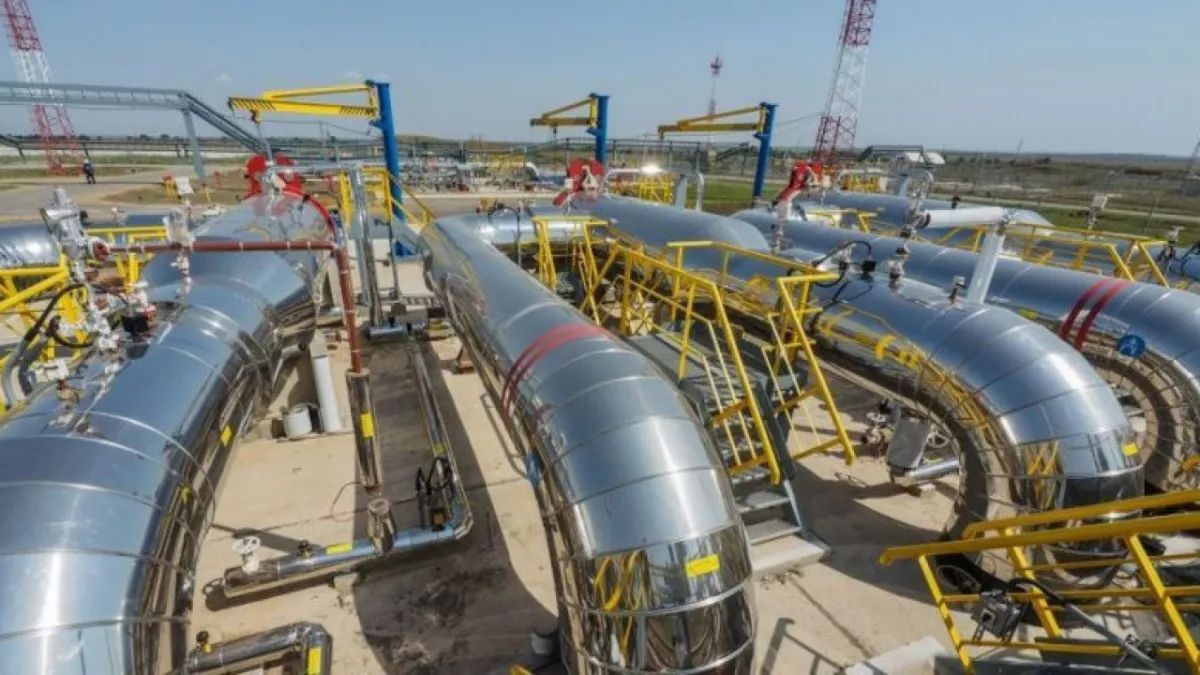
Historically, Kazakhstan’s oil sector has relied heavily on transit operations through the Caspian Pipeline Consortium (CPC) — a 1,511-kilometre artery winding across Russian territory with an annual capacity of 82.5 million metric tons. Its critical weight is underscored by the fact that, until recently, the pipeline carried roughly 80% of all oil exported from Kazakhstan’s flagship Tengiz, Kashagan, and Karachaganak fields, accounting for more than 1% of total global oil supply.
However, since the onset of the Russo-Ukrainian war, Moscow has repeatedly halted operations along the line under the guise of prolonged maintenance work, particularly at the Novorossiysk terminal—the system's final destination. In subsequent years, the terminal has faced recurring strikes from Ukrainian aerial and naval drones, which have damaged single point moorings, storage facilities, and pipeline infrastructure. By the summer of 2026, these attacks escalated to target the oil tankers actively loading crude at the port. The resulting transit disruptions sparked a sharp rise in shipping and insurance costs, eating directly into the profitability of Kazakh oil exports.
This has created a deeply paradoxical dynamic surrounding the CPC route: while supporting Ukraine in the war, the collective West simultaneously backs Kazakhstan's efforts to expand oil shipments through Novorossiysk. Ensuring this flow has become particularly crucial given the protracted conflict in the Middle East, which continues to disrupt global energy markets. The West's interest is also driven by ownership—the CPC remains the last operational pipeline on Russian soil where global majors, including Chevron Caspian Pipeline Consortium Company, alongside smaller stakeholders like Shell, Eni, and ExxonMobil, hold equity alongside Russian and Kazakh state firms.
Given these competing stakes, Washington actively lobbied Kyiv to cease attacks against CPC facilities and non-Russian tankers. According to Bloomberg, the deal brokered on August 8 comes with strict caveats: third-country vessels must neither carry Russian cargo nor be owned by Russian entities or citizens. Yet recent history offers reason for caution. Multiple attempts to establish safe navigation rules in the Black Sea have collapsed as both Ukrainian and Russian ports — and the civilian ships within them — continued to fall victim to ballistic missile and drone strikes. Should military escalation in the Black Sea surge again, this latest agreement could easily suffer the same fate.
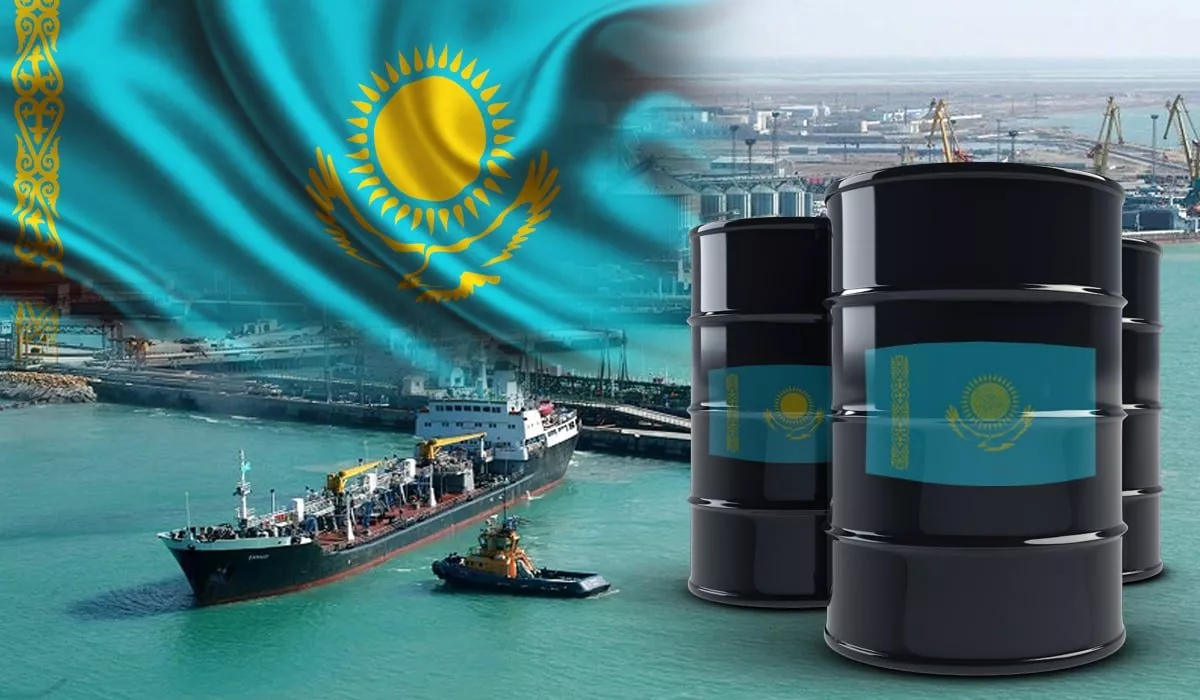
Given the sheer volume of its output, the Caspian Pipeline Consortium remains indispensable for Kazakhstan. Yet according to Reuters, loading volumes via the CPC plummeted by over 20% in July alone — a drop of roughly 400,000 barrels per day. The agency also reported a 14% monthly decline in Kazakhstan's total crude production due to mounting bottlenecks across its export infrastructure.
Faced with these vulnerabilities, Astana is accelerating efforts to hedge its risks and diversify export corridors. The government is ramping up transit through the Atyrau–Samara pipeline — leveraging other segments of Russia's network — while simultaneously boosting shipments toward China. Preparations are also underway for a feasibility study to expand the Kazakhstan–China oil pipeline capacity.
Simultaneously, Azerbaijan has emerged as one of the most promising alternatives for Kazakh oil transit. Following a landmark agreement between KazMunayGas and SOCAR, Kazakh crude began flowing through the Baku–Tbilisi–Ceyhan (BTC) system in 2023. Since then, more than 3.4 million metric tons of Kazakh oil have reached global markets via this route, with shipments hitting 1.3 million tons last year. As Asylbek Dzhakiyev, head of the PetroCouncil oil and gas association, recently noted, constraints on the northern route are likely to persist for the next 5 to 10 years, dramatically raising the strategic weight of trans-Caspian transit.
The momentum is building. Speaking at the Baku Energy Week, Kazakhstan’s Deputy Energy Minister Yerlan Akkenzhenov reaffirmed Astana's readiness to expand trans-Caspian flows, noting that transit via BTC could reach 2.2 million tons annually under existing protocols—and potentially grow higher over time. Furthermore, during the joint Azerbaijan–Kazakhstan Intergovernmental Commission meeting in Baku, officials outlined an even more ambitious target: raising Kazakh oil transit through Azerbaijan toward 7 million tons per year by 2027–2028. Realizing this vision, however, will hinge on expanding the Caspian tanker fleet, upgrading port terminals, and expanding pipeline intake capacities on both sides of the sea.
As Askhat Khasenov, Chairman of the Management Board of KazMunayGas, emphasised during a meeting of the Samruk-Kazyna Public Council, developing the transport corridor via Azerbaijan remains a top priority in Kazakhstan’s export diversification efforts: “A crucial route is the Atyrau–Aktau direction and further onward through Azerbaijan; a feasibility study for this project is currently underway.”
At the same time, tapping the potential of the Baku–Supsa pipeline remains an open question, with no official negotiations regarding deliveries along this route held so far. Nevertheless, relevant authorities in Astana and Baku are evaluating the option, already discussing pricing mechanisms—specifically transit tariffs—as well as the rising costs of logistics, such as tanker freight and insurance premiums driven by the tense security situation in the Black Sea.
Overall, Kazakhstan views both the BTC pipeline and the potential Baku–Supsa route as complementary Trans-Caspian channels via Azerbaijan to hedge against the chronic instability of the CPC line. In this context, the Interfax-Kazakhstan news agency recently cited energy ministry data indicating that KazMunayGas plans to boost oil exports via the BTC pipeline by 31% in 2026 compared to 2025 levels, bringing total throughput to 1.7 million metric tons.
Whether Astana can hit these targets remains to be seen. In the first half of this year, Kazakh crude shipments from the port of Aktau toward the Baku–Tbilisi–Ceyhan pipeline reached 704,000 tons. The coming months will reveal whether logistics operators can handle the additional one million tons required to meet the target in the second half of the year.







 editor@caliber.az
 +994 55 444-88-98
 Азербайджан, Баку, ул. Низами, 203, Af Business House, 5-й этаж