










The sound of a door closing Baku breaks with the European Parliament
The decision of the Milli Majlis of Azerbaijan to end any form of cooperation with the European Parliament is, in essence, a statement of a fact that has long since materialised: there have been no real contacts for quite some time.
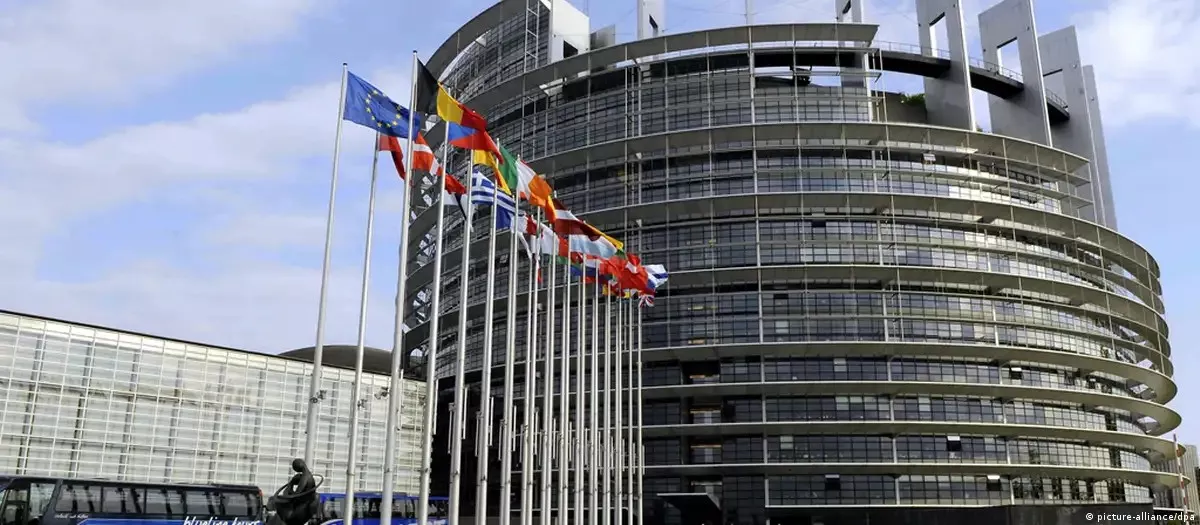
There were resolutions drafted in Brussels and Strasbourg, rushed to a vote—sometimes on Fridays, at the end of a session, when only a handful of MEPs from the relevant groups remained in the chamber—and adopted with the kind of enthusiasm typically shown by judges delivering a verdict on someone outside their jurisdiction anyway.
Baku responded to the spectacle known as yet another “paper from the European Parliament” with tactical silence, fully aware of its value. But, as the saying goes, everything has its limits, and at some point, silence stops being a strategy and becomes condescension. It is precisely this moment that has now been recorded in the decision of the Azerbaijani parliament.
To understand the inevitability and necessity of such a step, it is enough to count the resolutions adopted in Strasbourg after Azerbaijan achieved victory in the Second Karabakh War in autumn 2020, liberating its lands from Armenian occupation, and later, in September 2023, fully restoring its territorial integrity and sovereignty. There were thirteen of them, each written according to the same script. First came the obligatory preamble expressing “deep concern”, followed by a set of allegations ranging from A to Z, and then recommendations addressed to the Council of the EU and the European Commission.
In 2021–2022, the European Parliament focused on the so-called “Armenian cultural heritage in Karabakh” — a category it had itself constructed, since, strictly speaking, what was involved was Armenian falsification of the heritage of Caucasian Albania, which the EP conveniently turned a blind eye to. In 2023, when the Azerbaijani Army, during a one-day counter-terrorism operation, eliminated the remnants of the separatist regime in Karabakh, the focus shifted: the European Parliament began sounding alarms about a “humanitarian crisis and the protection of the rights of the Armenian population,” calling for the imposition of sanctions.
In 2024–2025, the focus of the “resolutions” shifted to the agenda of human rights and the climate conference: the aim was either to deprive Azerbaijan of the right to host COP29 or to compromise our country. The first objective was not achieved, so attention turned to the second, but in the end, the MEPs also came away empty-handed.
This sequence is interesting not in itself, but in what it reveals about the method. The European Parliament operates in bursts. It does not have a vision — it has a biased attitude towards Azerbaijan, which it reiterates with a regularity that is independent of developments in the South Caucasus and with a persistence that would be more productively used elsewhere. In other words, if a given event can be fitted into a predetermined framework, it is used; if nothing suitable exists, it is invented.
At various times, the European Parliament’s resolutions have included references to “cultural heritage,” “political prisoners,” “torture,” “environmental crimes,” and “violations of journalists’ rights.” This range of themes strikingly coincides with the agenda that Armenian diaspora structures in Brussels and Paris have been promoting for years, and this coincidence is by no means accidental. It is explained by the fact that a significant part of the resolutions concerning Azerbaijan is, in the most direct sense, the product of lobbying efforts.
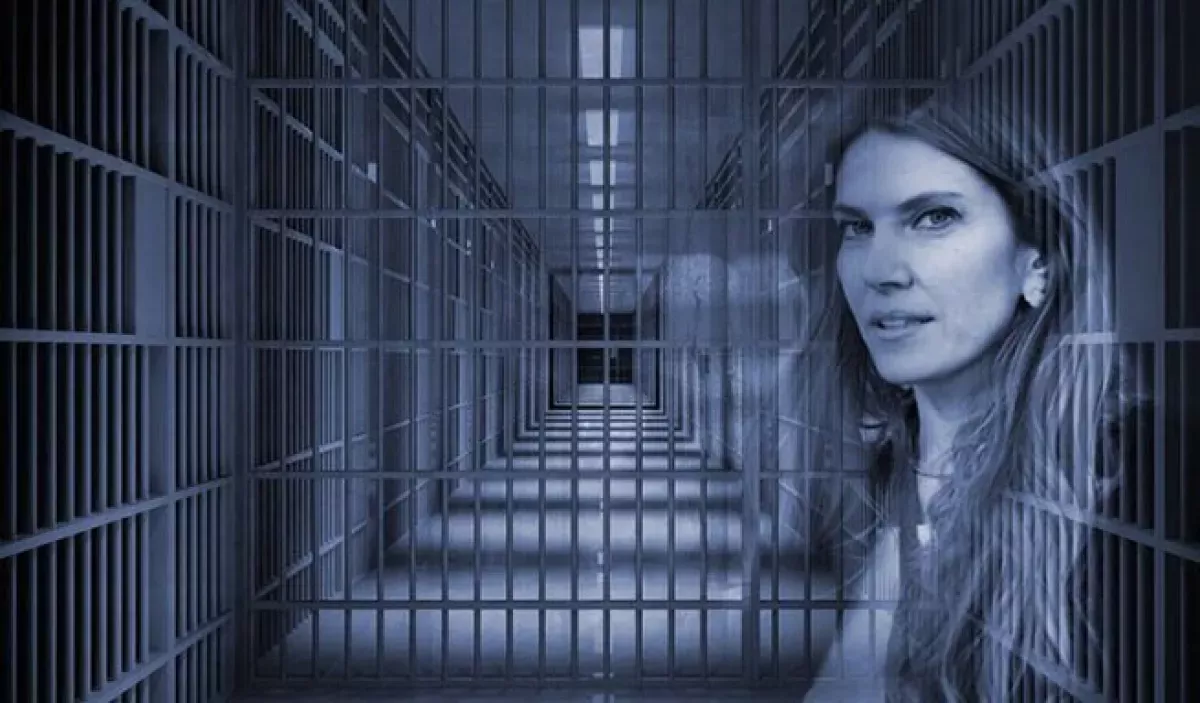
And this is where it is necessary to speak plainly: in its current state, the European Parliament has ceased to be an institution whose opinions can be taken at face value without factoring in its reputation — especially since that reputation now has a clear media shorthand: “Qatargate.”
This 2022 scandal, in which the Vice-President of the European Parliament, Greek MEP Eva Kaili, was detained on suspicion of bribery, and her father, Alexandros Kaili, was found in possession of a suitcase filled with cash, was not merely an isolated episode. It became a defining marker. The investigation uncovered extensive networks of influence, and after the first wave of arrests, a second followed — this time linked to a China lobbying case centred on the relations of certain MEPs with Huawei.
In parallel, the European press, which can hardly be accused of either a lack of scrutiny or objectivity, began publishing reports on the sustained ties of several political groups with Russian capital — the most prominent example being the case of the “Identity and Democracy” group.
Against this backdrop, the Armenian network appears almost academic in nature: it operates more slowly, leverages cultural and religious narratives, and draws historical analogies — yet it is precisely this network that is behind the bulk of anti-Azerbaijani resolutions in Strasbourg.
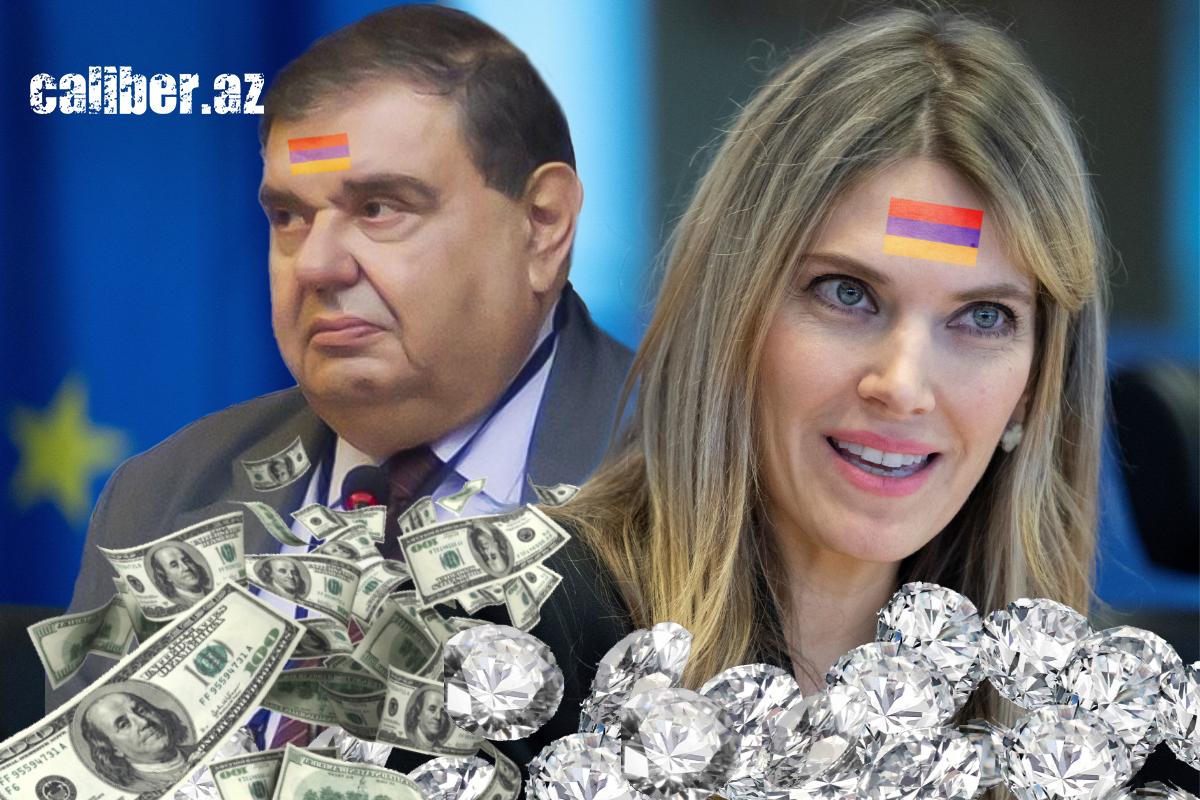
It creates a strange construct. An institution which, by virtue of its status, is expected to command international respect has voluntarily turned itself into a platform where the very vices it claims to combat as a global benchmark are most visibly on display.
Members of the European Parliament speak about corruption in other countries while lacking the ability to clean up their own house; they criticise Islamophobia, while language heard within their own corridors is often indistinguishable from that which prevailed in right-wing tabloids two decades ago; they speak about press freedom, while suppressing any attempt at criticism through procedural rules.
But the most troubling aspect of the European Parliament is not even hypocrisy itself, but the fact that within its walls it has become institutionalised and professionalised — as if it were an official credential rather than a political failing.
In the European Parliament, well-paid positions for “ceremonial figures” are widespread: salaries, allowances, travel expenses, payments for “general operational costs” that are not subject to mandatory reporting, a full staff of assistants, flights between Brussels and Strasbourg — all of this costs the European taxpayer a considerable sum, long since the subject of critical investigations by the European Court of Auditors and quality journalism.
This is an institution that spends a lot, can do little, and justifies its existence through activity in areas where its real powers are minimal: human rights rhetoric, symbolic resolutions, awards for “freedom of thought,” and parliamentary hearings with a pre-determined set of witnesses.
Within this logic, Azerbaijan becomes a convenient target. It is far away, it is Muslim, it is wealthy, and it does not belong to any bloc that would automatically defend it. Therefore, resolutions against it can be voted for without consequences.
“Without consequences” — until today. The decision of the Milli Majlis has effectively overturned this long-standing assumption within the European Parliament. Work within the EU–Azerbaijan Parliamentary Cooperation Committee, which remained the last formal channel of contact, has been discontinued. A procedure has also been launched for the official withdrawal from the Euronest Parliamentary Assembly, in which the Azerbaijani delegation had, in any case, been absent from key meetings for several years.
EU Ambassador Marijana Kujundžić was summoned to the Ministry of Foreign Affairs, where a formal note was handed over. This is a separate step, as it clearly distinguishes the European Parliament from the European Union as a whole. Baku is speaking the language of diplomacy: it will no longer engage with a parliament that presents itself as the voice of Europe; however, it continues to work with the structures that actually shape EU policy. This distinction is fundamental and has been drawn with surgical precision. And it is far more painful for Strasbourg.
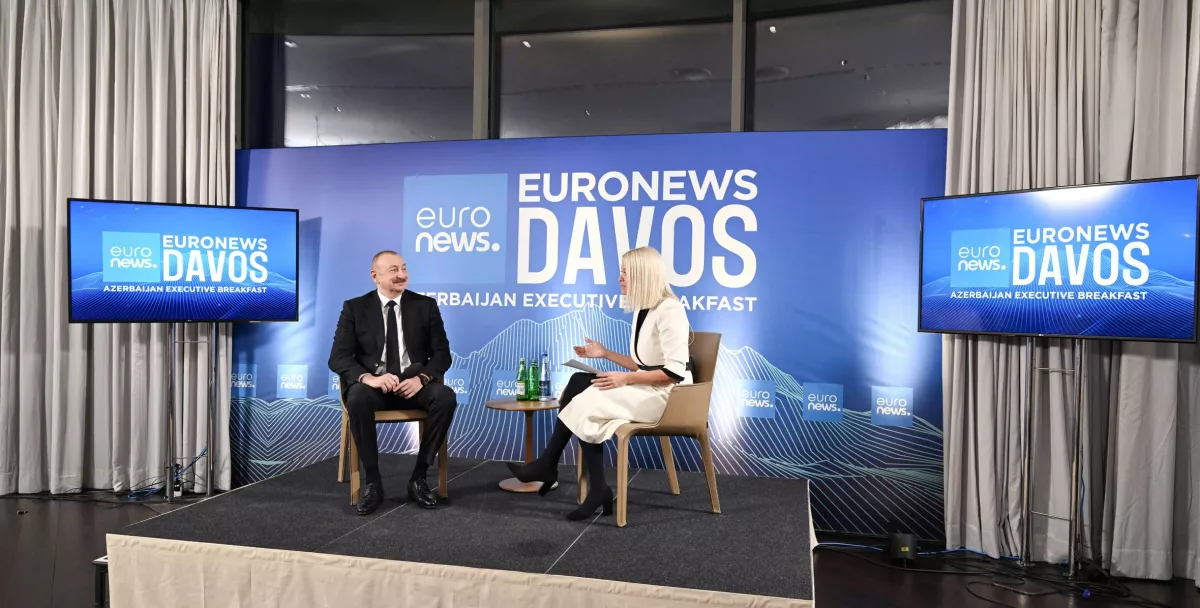
In a January 2026 interview with the Euronews television channel, President Ilham Aliyev formulated the essence of the European Parliament’s attitude towards Azerbaijan in a single sentence: “This biased situation towards Azerbaijan is generated by special lobbying groups, by special forces that cannot digest Azerbaijan's independent policy.” There is not a trace of diplomatic embellishment in this formulation. It is stated plainly: the problem is not Azerbaijan and not Europe’s position. The problem lies in the capture of a specific institution by specific interest groups. And since the institution is either unable or unwilling to restore its own agency, engaging in dialogue with it makes little sense.
Here it is worth recalling that Azerbaijan is not the first country to reach such a conclusion. Türkiye has long refused to take European Parliament reports on its internal affairs seriously. Serbia ignores its declarations on Kosovo. Georgia, which until recently demonstrated exemplary readiness to respond to every remark from Brussels and Strasbourg, has in recent years learned to respond sharply and loudly. Israel, whose position in European diplomacy is unique, does not react to EP resolutions at all, treating them as background noise. The list could go on.
The overall trend is easy to read: states that possess at least a degree of strategic autonomy tend to shift their relations with the European Parliament into a mode of polite disregard. Azerbaijan has taken a further step—formalising this disregard institutionally.
It is also worth noting another aspect of the matter that usually receives less attention. The European Parliament is, to a significant extent, defined by the biographies of the people working within it. MEPs typically arrive there through two paths: either as veterans of national politics at the end of their careers, or as party apparatus functionaries for whom Strasbourg represents a stepping stone. In both cases, the main capital of a parliamentarian is not legislative output—since their vote changes relatively little—but visibility. Public exposure. Media recognition. This shapes a motivation not to work, but to speak; not to draft, but to sign; not to propose, but to condemn.
Naturally, topics such as “human rights in Azerbaijan,” “cultural genocide in Karabakh,” or “dictatorship in Baku” become a convenient career elevator: drafting a resolution is easier than achieving a legislative breakthrough. This is not even a matter of ill intent. It is an institutional norm in which diligence has become less rewarding than activism.
What does Azerbaijan gain from this rupture in practical terms? Both little and a great deal.
Little — because even prior to the Milli Majlis decision, Baku was not dependent on the European Parliament in any of its key areas: neither trade, nor energy, nor diplomacy, nor security. The Southern Gas Corridor contract, the strategic partnership agreement with the European Commission, and individual formats of engagement with Berlin, Paris, Rome, Budapest, and Prague — all of this bypassed Strasbourg and did not depend on its platform.
A great deal — because the break clears the rhetorical field. Any future anti-Azerbaijani resolution will now effectively be speaking into a void: there will be no formal recipient required to respond. This deprives such resolutions of their main political effect — the ability to use the addressee’s response as part of its own communication strategy. Without a response, the resolution is reduced to a press release, read primarily by those who ordered it in the first place.
There is another aspect here, and arguably the most important for understanding what is happening. Baku’s decision is not only a signal to Strasbourg, but also to those EU structures that in recent years have tried, through parliamentary rhetoric, to constrain the movement of European countries towards Azerbaijan.
Europe’s dependence on Russian gas after 2022 placed EU member states in a position where the Azerbaijani route became not an option, but a necessity. This irritated those who were accustomed to viewing EU foreign policy as an extension of value-based rhetoric. In this context, the parliamentary platform was used as a brake: each resolution became an attempt to prevent the Commission and the Council from fully shifting relations with Baku into a pragmatic partnership.
That brake has now been dismantled. Formally—by the Azerbaijani side’s decision. In practice—because it had long ceased to function effectively.
In conclusion, a simple statement of fact: an institution that loses the capacity to produce consequences also loses the right to be listened to.
In this round, the European Parliament has lost not only to Azerbaijan but also to itself. By allowing itself to be turned into a platform for ethnic lobby groups, corrupt intermediaries, and functionaries building careers on anti-Azerbaijani rhetoric, the EP has agreed to become an instrument in the hands of others.
And when Baku finally said what should have been said long ago, Strasbourg did not immediately understand what kind of sound it was. Yet it was, in fact, the sound of a door closing.







 editor@caliber.az
 +994 55 444-88-98
 Азербайджан, Баку, ул. Низами, 203, Af Business House, 5-й этаж