










Cold signal to Europe What is Rubio bringing to Sweden?
Developments in the international political arena clearly suggest that the United States’ foreign policy priorities are undergoing a major shift, with Washington’s focus increasingly moving away from its traditional emphasis on Europe.
Apparently, Washington is increasingly guided by a military doctrine rooted in President Donald Trump’s “America First” concept, which is based on the premise that the United States is under no obligation to bear the burden of guaranteeing the security of European states. This narrative is further reinforced by concrete steps taken by the White House.
Trump first spoke about reducing the number of U.S. troops stationed in Europe back in 2020, citing rising costs as the main reason. At the time, it was announced that approximately 12,000 American service members would be withdrawn from Germany. However, Joe Biden, who later came to power, removed the issue from the agenda.
Following his return to the White House, Trump revived the issue, and last year Washington demanded that its NATO allies increase defence spending to 5 per cent of GDP by 2035. The proposal shocked many member states and sparked intense debate over both the scale of the financial commitments and the distribution of the burden among allies.
Following the outbreak of war in the Middle East, relations between NATO allies and the United States sharply deteriorated, as European countries refused to support Washington’s actions, declining to deploy troops or grant access to their bases and airspace. In response, the American president publicly criticised U.S. partners, expressed his intention to reduce the military presence in Europe, and stated that Washington would primarily defend those allies contributing the most to defence spending.
As expected, the White House moved from rhetoric to action. It was announced that the number of U.S. armoured brigade combat teams stationed in Europe would be reduced from four to three — with each brigade capable of including up to 6,000 troops. Pentagon spokesperson Sean Parnell stated on X: “This decision was the result of a comprehensive, multilayered process focused on U.S. force posture in Europe. This is resulting in a temporary delay of the deployment of U.S. forces to Poland, which is a model U.S. ally.”
In addition, Reuters, citing sources familiar with the matter, reported that the Trump administration intends to inform its allies this week about planned reductions in U.S. military capabilities available to assist European NATO members in the event of a major crisis.
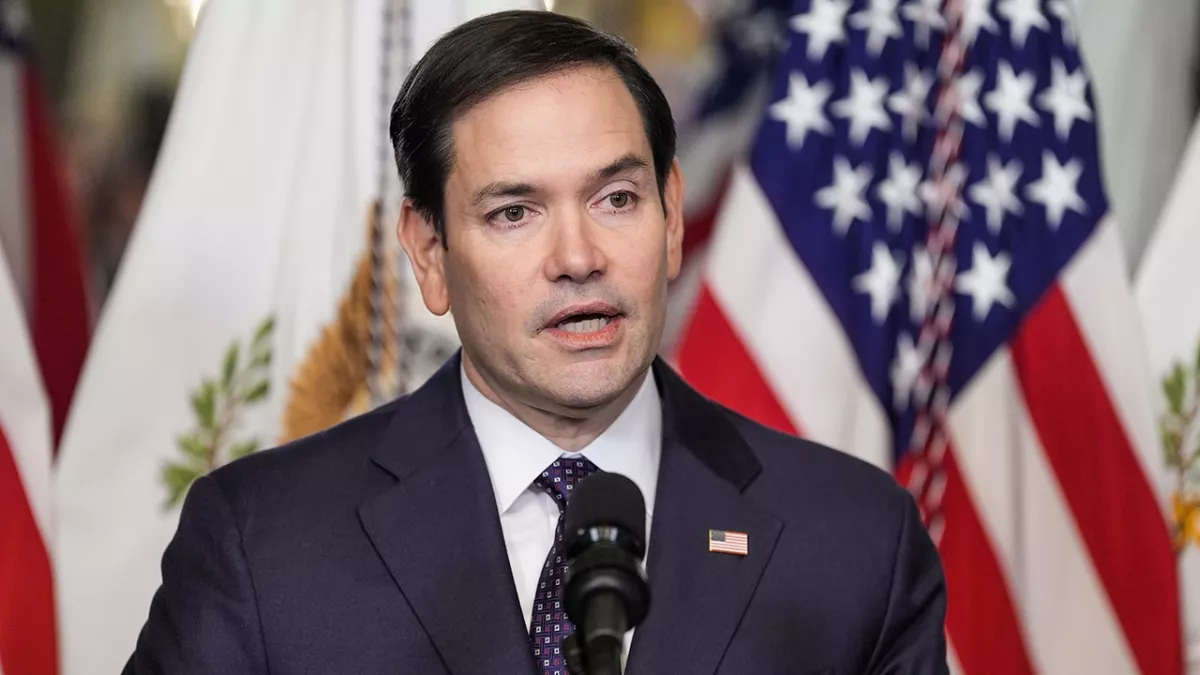
Against this backdrop, the planned meeting on May 22 between U.S. Secretary of State Marco Rubio and the foreign ministers of NATO member states in the Swedish city of Helsingborg appears far from coincidental. According to a statement from the U.S. Department of State, the main topics will include “the need for increased defense investment and greater burden sharing in the Alliance.” In addition, he is also expected to meet with Swedish Prime Minister Ulf Kristersson and NATO Secretary General Mark Rutte.
Thus, in light of recent developments on the U.S.–NATO track, it is worth examining the potential consequences of Washington’s actions for both Europe and the United States itself. To begin with, France is likely to become one of the main beneficiaries of a significant reduction in the U.S. military presence, as such a shift would clearly accelerate Europe’s political and defence autonomy — a long-standing ambition of President Emmanuel Macron.

As is well known, the French leader has been actively promoting the idea of creating a common European defence force — a unified EU army capable of acting independently of NATO when necessary.
At the same time, the establishment of the Fifth Republic argues that in a changing global order, alliance relations with the United States should not exclude Europe’s right to make independent geopolitical decisions. It also relies on the argument that France, as a nuclear power with the strongest military in the European Union, is capable of ensuring the security of other European states that do not possess comparable capabilities.
This idea finds some support within the leadership of major EU countries such as Germany, as well as among several high-ranking European Union officials. For instance, European Commission President Ursula von der Leyen stated in 2023, speaking at a forum organised by the German broadcaster WDR, that “many European Union countries are members of NATO, but the bloc cannot be everywhere. There are scenarios in which the demand is placed on the European Union.”

However, in the context of the current geopolitical turbulence, this French-led concept faces opposition from countries in Eastern and Northern Europe, which prefer to rely on the traditional security umbrella of the NATO Alliance and the United States.
However, Washington’s steps toward reducing U.S. security guarantees for European countries could lead them to reconsider their position and move closer to supporting Macron’s ideas, thereby significantly strengthening the French president’s standing on the European stage. Such a development would hardly be welcomed by Donald Trump, who has repeatedly expressed his disapproval of the French leader.
Secondly, the presence of military bases in Europe has allowed the United States to maintain close oversight of both the European continent as a whole and the specific countries where those forces were stationed. In other words, it enabled Washington to influence domestic political agendas, lobby economic interests, and monitor resource allocation, among other things. As a result, their withdrawal would inevitably deprive the United States of a number of important levers of influence over political processes in Eurasia.
Thus, as follows from the above, the situation surrounding the reduction of the American military presence in Europe is far from straightforward. Nevertheless, Washington is unlikely to deviate from its planned course. Against this backdrop, Secretary of State Marco Rubio is expected to insist during upcoming meetings in Helsingborg — particularly in discussions with the NATO Secretary General Mark Rutte — on the core principles of U.S. military doctrine: increasing defence investment and a fairer distribution of the burden within the Alliance.
However, the senior U.S. official’s attention will likely be primarily focused on meetings with representatives of Denmark, Iceland, Canada, Norway, Finland, and Sweden, where discussions are expected to centre on shared economic and security interests in the Arctic, as well as strengthening presence in a region that lies, as the saying goes, within arm’s reach of the United States.







 editor@caliber.az
 +994 55 444-88-98
 Азербайджан, Баку, ул. Низами, 203, Af Business House, 5-й этаж