










Hungary between Brussels and billions Magyar’s high-stakes balancing act
As is known, relations between Budapest and Brussels have long remained at a “below average” level. With the victory of the pro-European Tisza Party led by Péter Magyar in the parliamentary elections in April this year, a chance emerged for a thaw in Hungary–EU relations. However, recent statements by the new prime minister suggest that tensions not only persist but may even intensify over time.

Thus, recently, Magyar, after the first meeting of the Cabinet of Ministers in Ópusztaszer, told journalists about specific disputes related to EU funds blocked for the Hungarian state.
Brief overview: In total, Hungary currently has no access to more than €17 billion in EU funds, including around €10.4 billion under the Recovery and Resilience Facility (RRF) and approximately €7–7.6 billion from the Cohesion Fund. In addition, Budapest has yet to receive approval for up to €16 billion in loans under the EU’s Security Action for Europe (SAFE) defence programme, and remains excluded from funding under Erasmus+ and Horizon Europe.
At the same time, the country is paying a penalty of around €1 million per day, imposed by the Court of Justice of the European Union for violations of EU migration rules.
The urgency is further increased by the RRF timeline. According to the European Commission, all key reforms and milestones must be completed by the end of August this year, while the first payment requests are expected in the coming months. To access the funds, Hungary must meet 27 so-called “super milestones” set out in the 2022 Council decision. These primarily concern guarantees for the protection of the EU’s financial interests and strengthening the independence of the judiciary.
In this context, what is particularly noteworthy is that, despite the rather difficult situation, Péter Magyar, in his speech in Ópusztaszer, placed the main emphasis on those “red lines” which his cabinet is not prepared to cross in negotiations over funding.
“The European Commission expects the government to gradually abolish certain special taxes. Obviously, this is also in the interest of the Hungarian economy, but given the current budgetary situation, the Hungarian government, of course, cannot do this,” he said, adding that he would send a letter to European Commission President Ursula von der Leyen in which he would outline “where we can show some flexibility, what is acceptable from the perspective of the Hungarian economy and the Hungarian people, and where the limits are.”
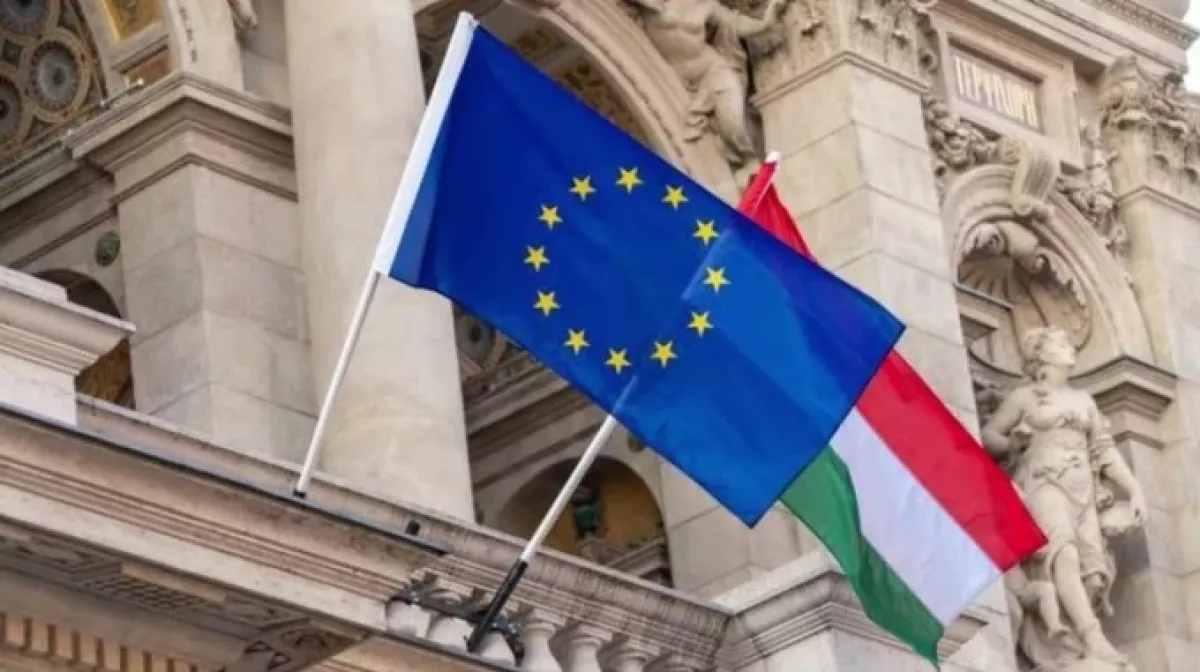
Thus, as follows from this rather firm statement by the prime minister, despite his pro-EU stance, he does not intend to unconditionally follow all directives from Brussels. In other words, Magyar is sending a political signal to the European Union that the bloc will have to negotiate with Budapest regardless of who is in power, and that he himself intends to strengthen his country’s position within the organisation, preserving Hungary as a force that must be taken into account. This is the first point.
Secondly, it can be assumed that Magyar’s statement is also aimed at the domestic audience and serves as a message that the new government may be no less resolute in defending national interests than Viktor Orbán’s cabinet. Such an approach will undoubtedly have a positive impact on his approval ratings among the population.
In this context, it is also worth noting that Magyar, like his predecessor, takes a firm position on support for Kyiv. In order to approve negotiations on Ukraine’s accession to the EU, the new prime minister is demanding that the rights of Hungarians in that country as a national minority be guaranteed. This implies the restoration of the legal status of Hungarian-language schools and the possibility of taking final exams in Hungarian; the unrestricted use of the Hungarian language in higher education, culture, public administration, and public life.
This is a rather pragmatic move aimed at advancing national interests beyond Hungary’s borders, which is likely to bring Magyar additional political dividends in the eyes of the Hungarian electorate.
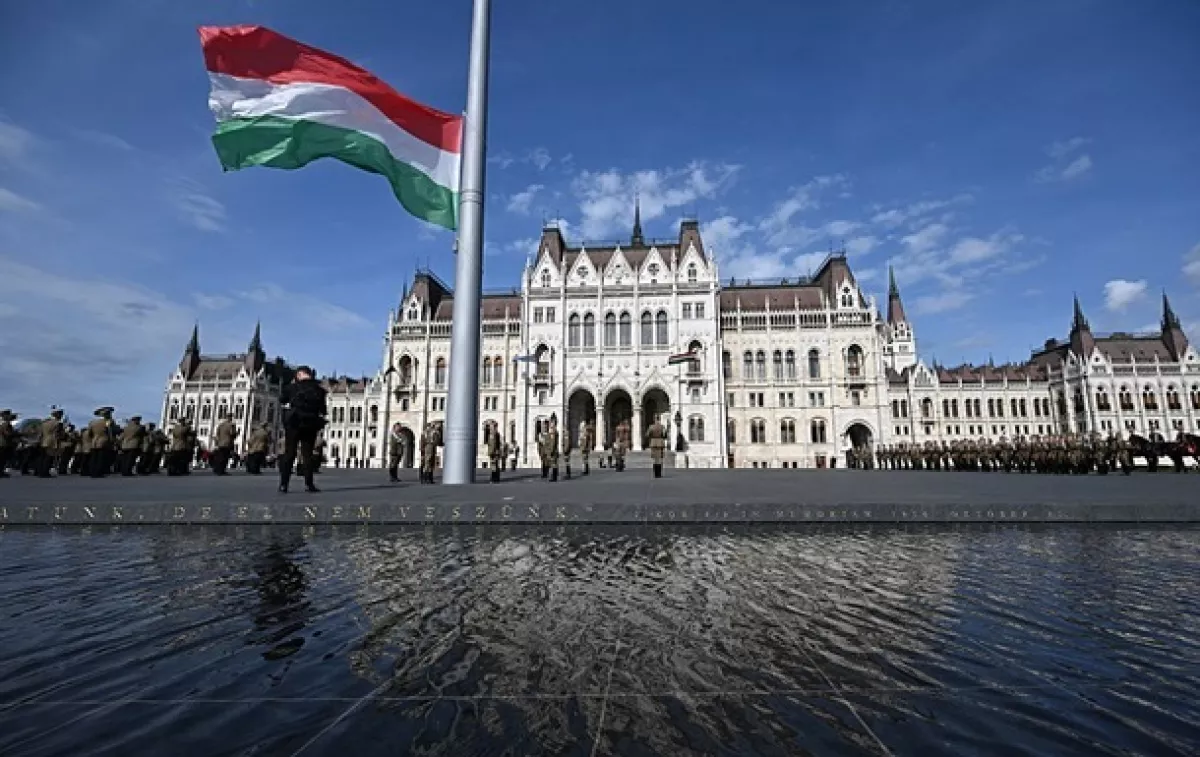
On the other hand, it should not be overlooked that Hungary is currently quite dependent on the EU financially, not least because the country’s business environment is largely oriented towards the European market. There is little doubt that Magyar also takes this fact into account, which is why he speaks about fulfilling a number of EU requirements in order to unlock the funding package.
“The most important issues are project-related matters, such as the recapitalisation of the Hungarian Development Bank, the establishment of a special project company, and how we can structure investments in transport, railways, and suburban transport in a way that makes them acceptable,” he said in his speech in Ópusztaszer, also noting that his team is working on housing rental schemes and energy efficiency programmes, while revising the national development concept drafted by the previous government, which will be submitted to the European Commission by the end of May.
Thus, to summarize, it can be stated that Péter Magyar and his cabinet face two extremely dilemmas: first, finding the perfect balance whereby the country's national interests and pan-European values converge in a golden ratio; second, convincing the European Union, which is wary of countries promoting independent policies, and its most recalcitrant body, the European Commission, in particular, that Hungary is committed to EU principles, and securing the release of the aforementioned funds. Whether the new Hungarian prime minister can cope with such a multifaceted task remains to be seen.







 editor@caliber.az
 +994 55 444-88-98
 Азербайджан, Баку, ул. Низами, 203, Af Business House, 5-й этаж