










Minsk’s nuclear signal: Belarus conducts strategic drills Analysis by Lyimansky
The Belarusian Defence Ministry has announced drills involving the use of modern means of destruction, including special munitions.
Response to the challenge
On May 18, training exercises began for military units involved in the operational use of nuclear weapons and nuclear support. The activities are aimed at improving the level of personnel training, as well as testing the readiness of weapons, military, and special equipment to carry out combat tasks.
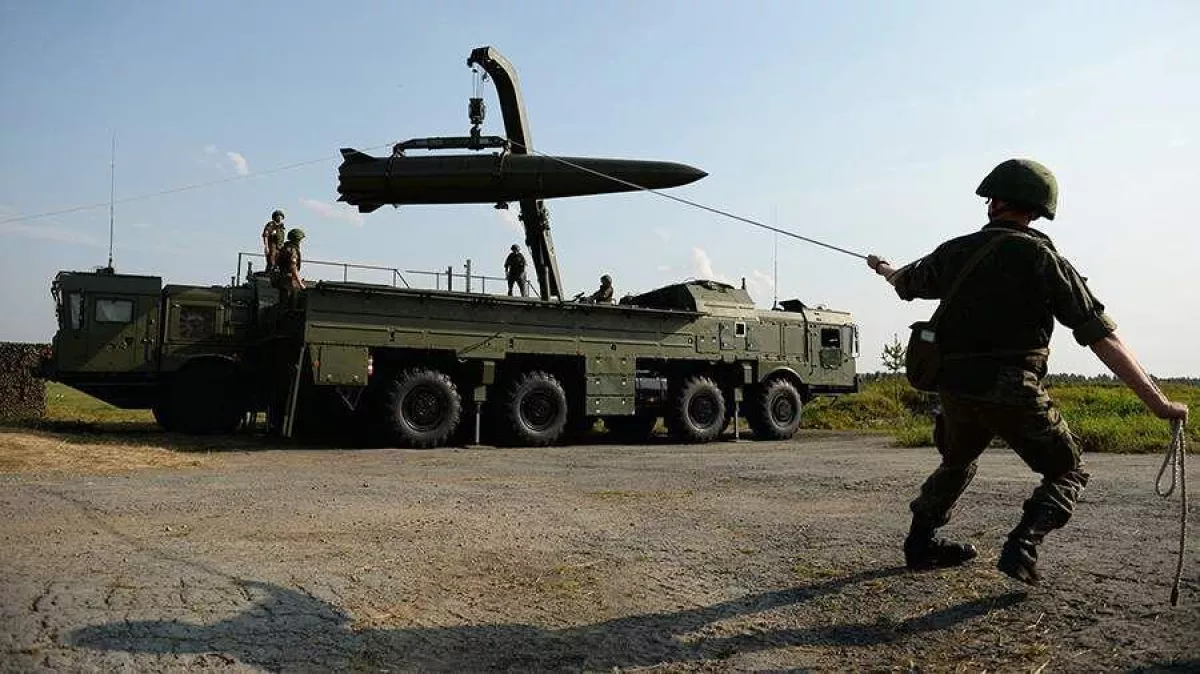
Military units of the missile forces and aviation are taking part in the exercises. In cooperation with the Russian side, the delivery of nuclear munitions and preparation for their use will be practised.
On May 19, exercises involving the use of nuclear munitions began on the territory of the Russian Federation. They involve 64,000 military personnel and 7,800 units of military equipment.
The last time such activities could have taken place in Belarus was during the Soviet era. At that time, formations of the Strategic Rocket Forces (RVSN) of the USSR, which possessed nuclear weapons, were stationed on the territory of the Belarusian Military District. Four RVSN divisions were deployed in the district: the 31st Guards Division (headquarters — Pruzhany, Brest Region), the 32nd Guards Division (Postavy, Vitebsk Region), the 33rd Guards Division (Mozyr, Gomel Region), and the 49th Guards RVSN Division (Lida, Grodno Region).
Strategic region
Belarus was a strategically important area for the deployment of nuclear weapons, located as close as possible to targets in the western direction. Initially, it was planned to transfer some RVSN units from Belarus to East Germany (GDR), closer to NATO borders. However, after the adoption in 1961 of the R-14 medium-range ballistic missile with a range of up to 4,500 km, this need disappeared. RVSN formations were generally located in forested areas, and missile launches were intended to be carried out both from mobile launchers and silo-based systems.
It was in the 396th missile regiment (Petrikov, Gomel Region) of the 33rd Guards Svir Division that, in 1976, the mobile ground-based missile system “Pioneer” (RSD-10M, NATO designation SS-20, “Euromissile”) was put on combat duty for the first time in the USSR. It had a range of up to 5,500 km. In the late 1980s, the “Pioneer” systems in Belarus were replaced by intercontinental ballistic missiles “Topol,” with a range of up to 11,000 km.
In the 1990s, RVSN units, along with their weapons, were withdrawn from the territory of independent Belarus and disbanded.
Special long-range deterrence systems
Recently, in connection with the unprecedented buildup of NATO forces near Belarusian borders and hostile statements by the leaders of some neighbouring states, the republic has been taking all necessary measures to strengthen its defence capability. Among other steps, an agreement was reached on the transfer of tactical nuclear weapons to Belarus.
In December 2022, the Armed Forces of Belarus received the 9K720 “Iskander” mobile short-range ballistic missile system, which can be equipped with tactical nuclear weapons.
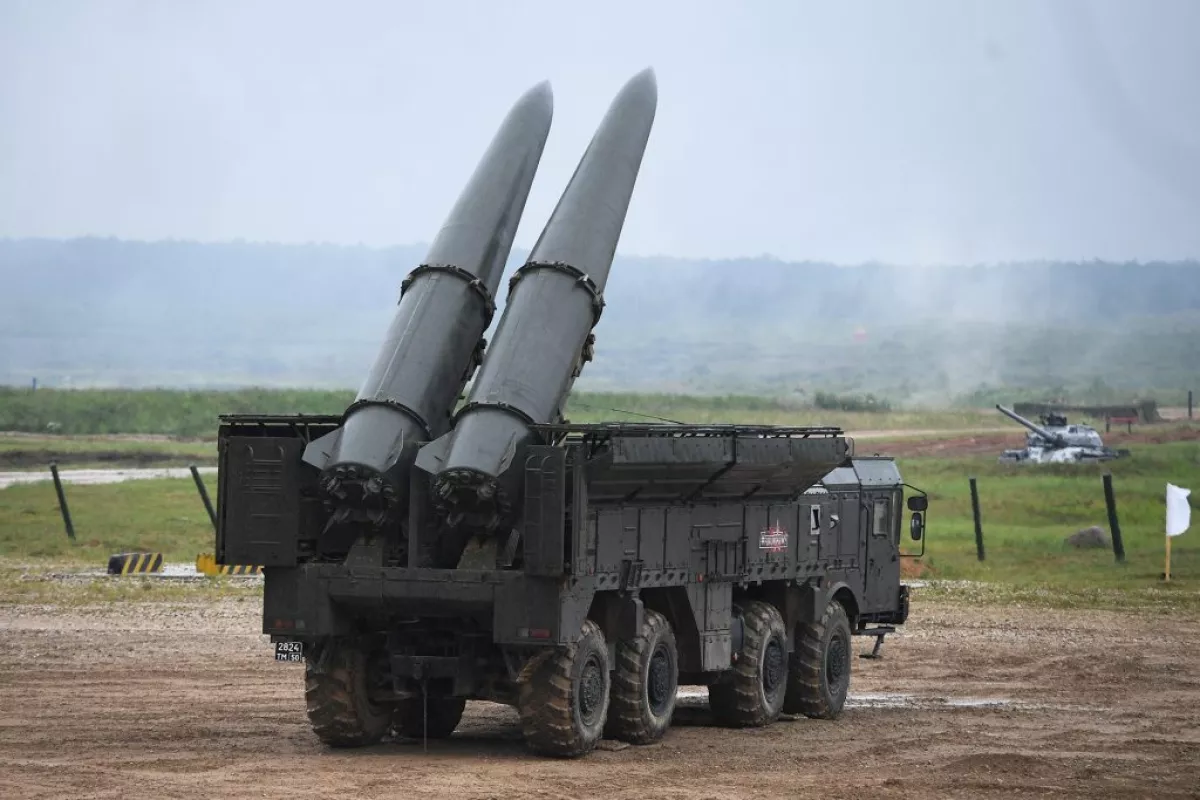
The Iskander operational-tactical missile system is capable of striking targets at distances of up to 500 km using various types of quasi-ballistic missiles, as well as cruise missiles. Iskander-M missiles are guided throughout the entire flight, and target changes during flight are possible.
In the initial and terminal phases of flight, they are capable of performing evasive manoeuvres to avoid missile defence systems, as well as deploying decoy targets. The nuclear warhead yield for the Iskander-M is estimated at 5 to 50 kilotons in TNT equivalent.
The Iskander OTRK is in service with the 465th Missile and Artillery Brigade (Osipovichi). Its crews are formed exclusively of officers, warrant officers, and contract military personnel. Training of the crews was conducted in Russia, and they continue practical exercises at the Osipovichi training range in Belarus.
Another potential carrier of nuclear weapons is aviation, which is also involved in this training. In particular, Belarusian Su-25 attack aircraft have already undergone relevant modernisation. The Su-30SM2 multirole fighters in service with Belarus’ Air Force can also carry tactical nuclear weapons. As of today, the Belarusian Air Force operates 16 fourth-generation-plus aircraft.

In August 2025, State Secretary of the Security Council Alexander Volfovich stated that Belarusian-made Polonez-M multiple launch rocket systems could be upgraded for the use of tactical nuclear weapons. The Polonez-M has a firing range of up to 300 km. The emerging “Oreshnik” missile system, which is entering service in Belarus, could also theoretically be equipped with nuclear warheads.
Decisive defence
The main objective of this training on the use of special munitions was to test readiness to carry out combat tasks from unprepared positions across the entire territory of Belarus. Concealed dispersal, high mobility, and long-distance redeployment are intended to ensure the inevitability of delivering a devastating retaliatory strike in the event of an attack on the republic. At the same time, the Belarusian Defence Ministry specifically noted that the exercise is routine, is not directed against third countries, and does not pose a threat to regional security.

However, with the start of the training, the “democratic leader in exile” Sviatlana Tsikhanouskaya stated that Belarus is “once again becoming a nuclear threat and a target.” The country, however, has long been under the sights of aggressive “hawks” in the West and is a target of their unchecked expansion. Other Belarusian nationalist politicians also made similar critical statements. The Ukrainian Ministry of Foreign Affairs also issued a negative statement. In the days leading up to and during the exercises, other sharp comments were made by Ukrainian officials as well.
However, Belarusian opposition figures, Western politicians, and their allies consider the unprecedented buildup of NATO strike forces near Belarus’s borders to be entirely normal. This comes despite the fact that Minsk, over recent years, has tried to act as restrained as possible and did not respond to provocations and threats. Unlike Poland, which has tripled its armed forces, Belarus has not formed a single new military unit.
But by Western logic, the creation of EU nuclear capabilities, the deployment of nuclear-capable platforms — such as French Rafale fighter jets in Poland — and the stationing of a German tank brigade in Lithuania are seen as something entirely different?
And if NATO and its allies are intensifying militarisation in the region, practising the deployment of weapons of mass destruction, and building up forces along Belarus’ borders — is that considered acceptable?
Yet if the Belarusian armed forces prepare to respond to a potential threat, is that regarded as unacceptable?
Belarus continues to consistently advocate a peaceful resolution of the current crisis and remains ready to deliver the most resolute response to any attempts on its sovereignty and security…







 editor@caliber.az
 +994 55 444-88-98
 Азербайджан, Баку, ул. Низами, 203, Af Business House, 5-й этаж