










Germany against the Chancellor Review by Teymur Atayev
Recently, Reuters published interesting information: “his case for reforming health and pensions, the latter a straightforward question of ‘demographics and mathematics’, was greeted with periodic heckling, whistles and laughter, while some in the audience held thumbs-down signs.” Politico likewise noted: “ [he] faced a hostile reception at a major trade union congress in Berlin on Tuesday, with delegates repeatedly heckling and booing him as he defended painful economic reforms.”
Those who closely analyse the evolving situation in Europe fully understand what and who is being referred to: Chancellor Friedrich Merz, who spoke at the congress of the German Trade Union Confederation.
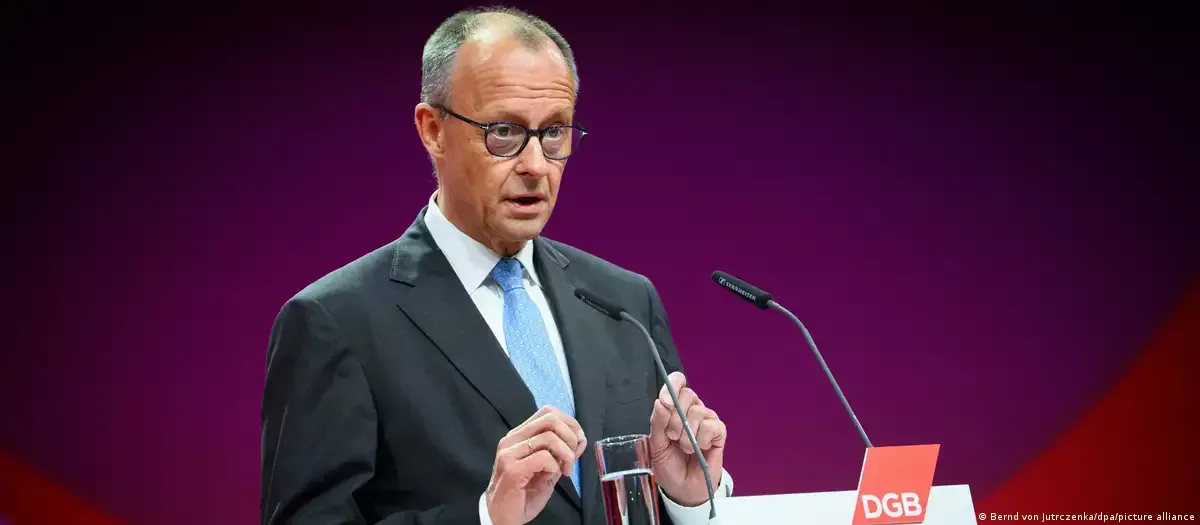
These Western media reports clearly demonstrated how rapidly the position of Friedrich Merz is weakening, even within his own country. Merz is losing not only popularity but also his significance as a figure expected to set the direction of Germany’s domestic agenda. And this is hardly surprising if the leader of a state that has traditionally been at the epicentre of global political and economic life resorts, in meetings with a serious audience, to remarks that are now known even to primary school pupils.
Thus, Merz loudly declared a reshaping of the world, which, according to him, is happening suddenly, “at a frightening speed and in a highly unsettled manner.”
This is paradoxical, to put it mildly. Did the German chancellor only notice these trends in recent days? If so, does this amount to a public admission of his own political helplessness, which may also have been one of the reasons for the booing of his speech at a national-level trade union forum?
It is quite possible that the congress participants simply could not understand why Merz, who has already been in office as chancellor for a year, while acknowledging the clash of geopolitical and geo-economic shocks with accumulated structural problems that are putting pressure on political, social, and business circles and creating real difficulties for many Germans, offers no concrete way out of the current situation.
More precisely, he does outline a solution, but first acknowledges that the state is unable to “protect citizens and businesses from all the shocks we are currently experiencing,” except for a number of previously adopted institutional measures. He then emphasises that, for Germany’s long-term prosperity, “we must all change.” But how?
Here, Merz suggests that everyone should “pull themselves together.” A fine proposal, one might say. However, what does this phrase actually mean in practice? It turns out it is merely an acknowledgement that “entrepreneurial activity and initiative are necessary conditions for the prosperity of Germany’s market economy.”
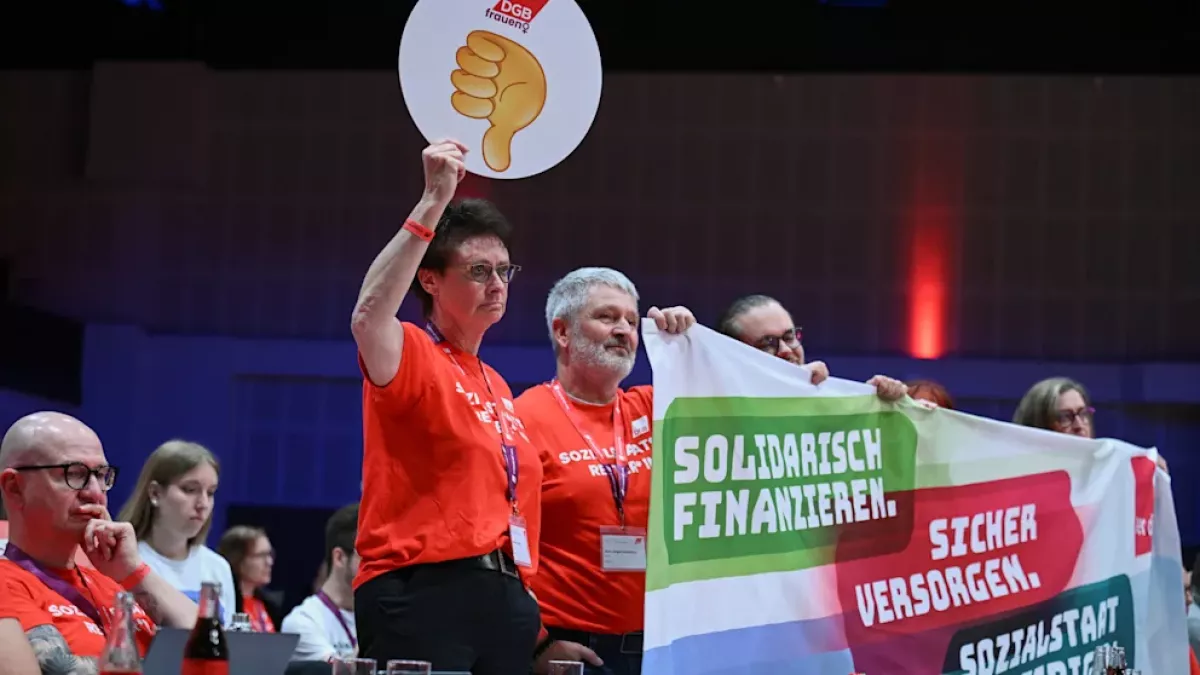
The question arises: could a serious audience at a trade union congress have received such words without jeering, if the chancellor presented as an ultimate truth something long contained in all German textbooks?
The chancellor then identified the continuation of reforms as the main path to strengthening Germany’s economic power, including measures to reduce costs in the statutory health insurance system and changes to the pension system. According to Merz, in remarks that went viral, the necessity of these steps is dictated solely by “demographics and mathematics.”
The final phrase certainly sounded effective, but it served only as a prelude to Merz’s main message. The Chancellor emphasised that the implementation of reforms is only possible if new relationships are established between “three powerful pillars: the state, the professional sector, and the private sector,” which together will shape the overall level of pension provision.
Only in this way, he argued, can Germany as a welfare state “be made fit for the future.”
Thus, behind Merz’s elaborate wording, the core idea of his speech becomes clearly visible — to secure the support of German business, since, in his view, the tasks facing the state can only be achieved through “unity based on compromise.”
Such social partnership, Merz believes, would preserve for future generations of Germany the ability to build their lives in conditions of freedom, peace, and prosperity.
Without a doubt, the Chancellor’s speech quite clearly explains the reasons for the audience’s negative reaction. Yes, Merz referred to historical precedents for the formation of an internal triad of the state, business, and trade unions; however, during his time in office, experts have still been unable to identify any landmark steps by the government toward overcoming the country’s economic problems.
Neither on the international nor on the domestic stage has Merz achieved significant success. According to a survey by the INSA polling institute conducted on the eve of the trade union congress, Merz ranked last among German politicians: 62 per cent of respondents gave him a negative assessment. Even among voters of the CDU/CSU bloc, he dropped from third to sixth place.
Therefore, the analytical interpretation of what happened at the trade union forum does not appear coincidental: the sceptical reception from delegates representing workers in industry, the public sector, and services reflected a broader domestic political struggle in Germany over the pace of change at a time when traditional parties are losing votes to the increasingly popular far-right Alternative for Germany party.
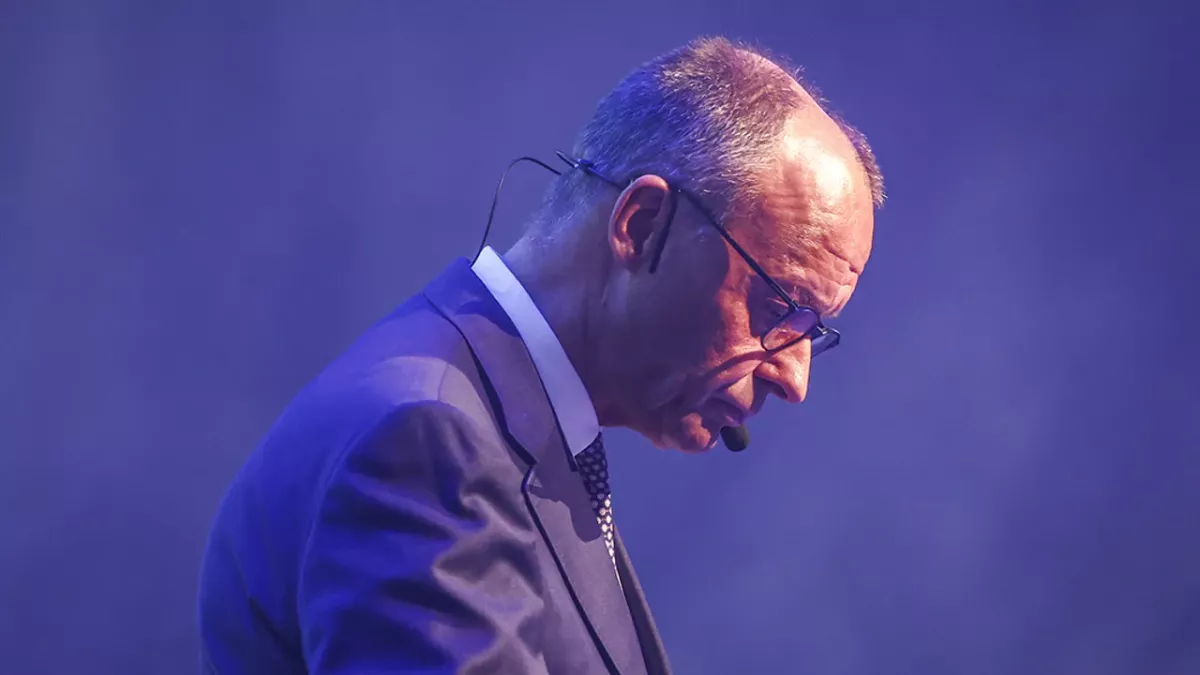
Developments in this direction will, of course, not contribute to an improvement in Merz’s approval rating. But the question remains: does he have time to correct the situation, especially given that Germany’s geopolitical position is also noticeably weakening on the international stage?







 editor@caliber.az
 +994 55 444-88-98
 Азербайджан, Баку, ул. Низами, 203, Af Business House, 5-й этаж