










Berlin’s pivot: Germany moves closer to Ankara and Baku amid EU crisis Analysis by Serhey Bohdan
The harsh reality overturns the dogmatic constructs of Western liberal-democratic regimes. This week, Germany finally revised its ideologised policy of opposing Türkiye within European structures. Against the backdrop of fresh anti-Turkish outbursts from Paris and Brussels, the Germans have relaunched a strategic dialogue with Ankara and will cooperate with it on military projects. All this is primarily the result of Türkiye’s strengthening over the past couple of decades, as well as its success in developing allied relations with countries in the South Caucasus and Central Asia.
Reality will force and teach
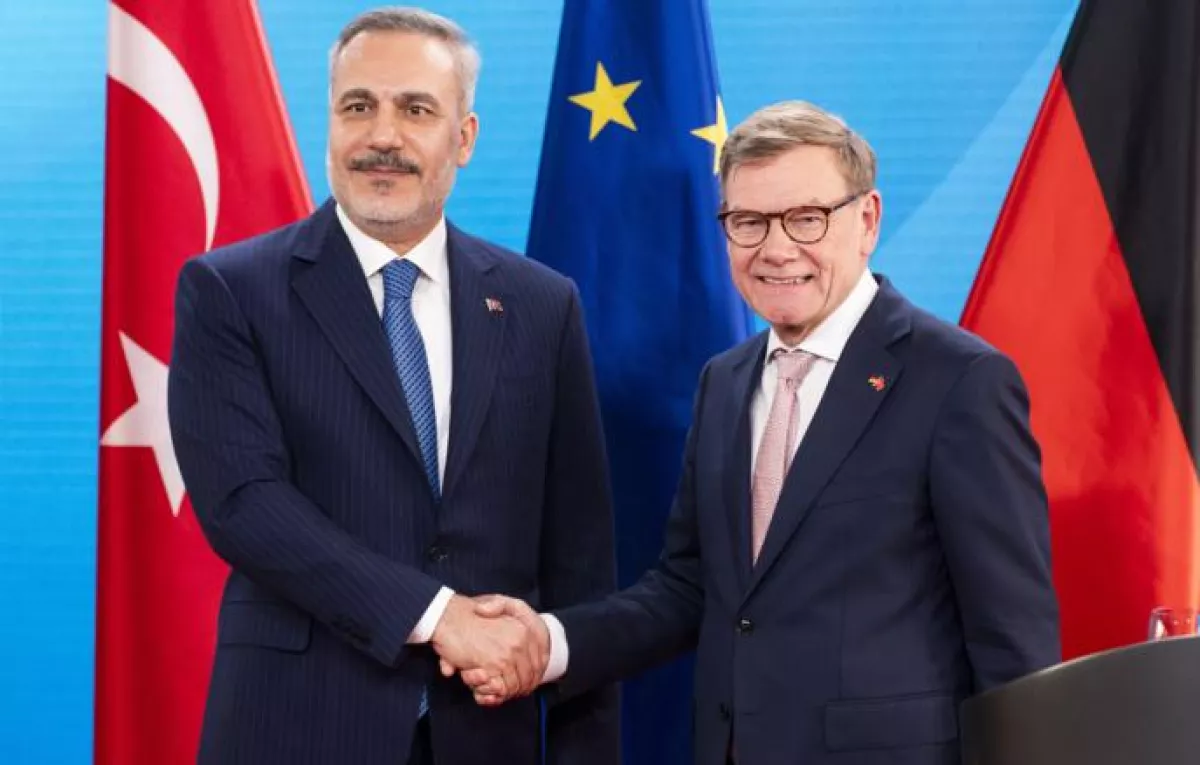
On Monday, Turkish Foreign Minister Hakan Fidan and his German counterpart Johann Wadephul discussed a strategic partnership between their countries for the first time since the early 2010s. From the German side, this represents a 180-degree turn. The previous German government continued its long-standing policy of provoking Türkiye.
The German establishment was, until recently, praising former Foreign Minister Annalena Baerbock, who “does not hold back from any criticism of Türkiye.” A strange compliment, if we are talking about a diplomat. However, Baerbock was far from that ideal. Remember how, during a joint press conference with Mevlüt Çavuşoğlu, she staged a scandal, lecturing her Turkish hosts on Türkiye’s domestic politics? And no one in Berlin called her out for it. As a result, relations with Ankara were effectively put on the back burner — dogmatism and geopolitical projects were more important for Euro-liberals.
All the more notable is the current revival of the strategic partnership mechanism. It was originally created to overcome the stagnation in relations that emerged in the 2000s, but it stalled in 2014 after just two meetings. The reason was the ideologised policy of pseudo-liberal elites in Germany and the EU, as well as their geopolitical hegemonism — the attempt to “put Ankara in its place” and dictate terms to the Turks.
Within this approach, European governments at the time engaged with a range of questionable partners. These included not only Gülenist conspirators, but also structures linked to the PKK and implicated in terrorism in Syria and within the EU. There were also Armenian revanchists, to whose benefit political decisions were taken regarding interpretations of historical events from the final years of the Ottoman Empire. In addition, Berlin blocked negotiations on Türkiye’s accession to the European Union and, in the early 2020s, supported the Greek–French coalition in its attempts to pressure Türkiye and restrict its access to the Mediterranean.
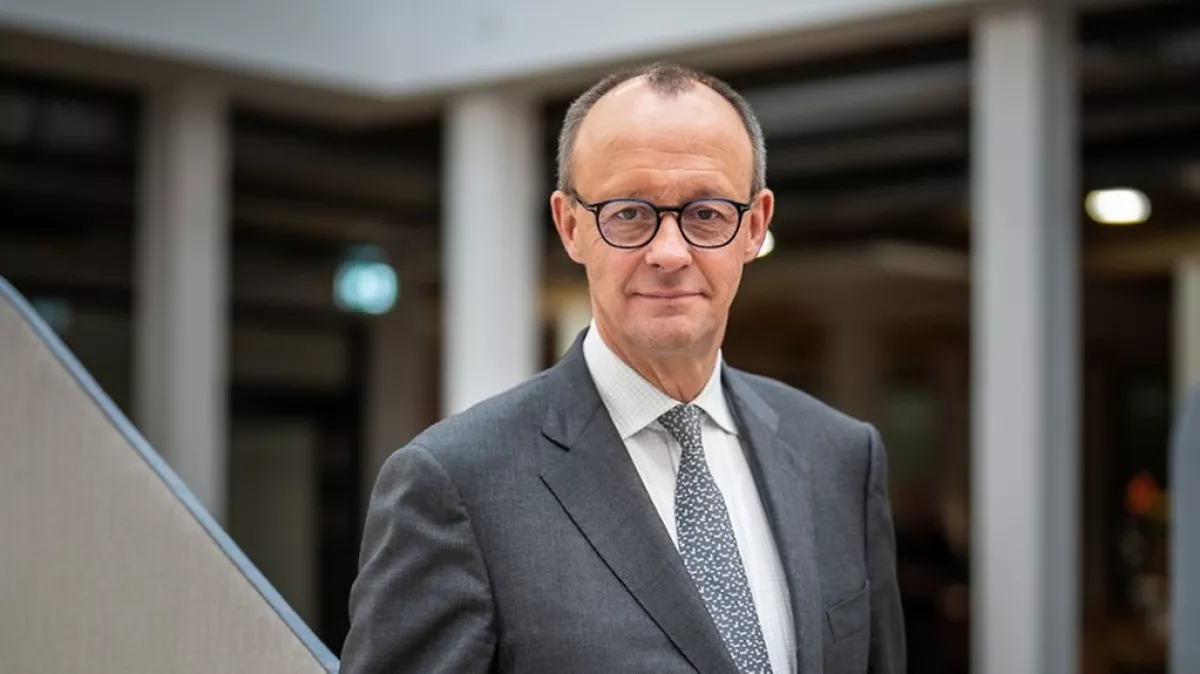
The simplest explanation for the current shift in Germany’s course would be to point to the change of government in Berlin: the Social Democratic Chancellor Scholz has been replaced by the Christian Democratic Merz. However, this is a misleading interpretation. Relations with Türkiye were already damaged under the Christian Democratic Chancellor Merkel.
Moreover, German Christian Democrats in general are not known for their sympathy toward Turks — quite the opposite — and nothing has changed in this regard in recent years. The party comrades of the current Chancellor, who effectively steer the European Union — European Commission President Ursula von der Leyen and leader of the largest faction in the European Parliament Manfred Weber — are a case in point. Neither conceals their negative attitude toward Türkiye.
A more convincing explanation is that Berlin has revised its Türkiye policy due to problems in relations with the United States. Indeed, Euro-liberal elites place considerable hopes on Erdoğan precisely in this context, sometimes even the same circles that for decades criticised him and his party. In particular, Euro-liberal leaders hope that he will help them engage with Trump at the NATO summit in Ankara on July 7–8 this year, at least without a major scandal.

In fact, it was precisely for this purpose that NATO Secretary General Rutte visited Türkiye in April — to partially compensate for the United States’ withdrawal from NATO. There are also discussions about restoring cooperation with Ankara, which commands NATO’s second-strongest army and a significant defence industry.
These factors do indeed matter, but Germany’s decision to move closer to Türkiye preceded the latest tensions between Europe and America. It appears that as early as last summer (if not in spring), Berlin made a decisive shift. It lifted the two-year-long veto on the sale of Eurofighter fighter jets to Türkiye, produced jointly by the United Kingdom, Germany, Italy, and Spain. The first contract was signed in July — at a time when tensions between Washington and European capitals were nowhere near their current level.
Ignoring it is impossible: more than missiles are needed
The roots of the current reassessment of Türkiye lie within Türkiye itself — in its strengthening over recent decades through economic and technological growth and a successful foreign policy. Yes, like any major country, Türkiye faces serious challenges, but its economy continues to grow. Unlike EU countries, even in the post-COVID 2020s, its growth rates have not fallen below 3 per cent.
Data for 2025 remain preliminary, but GDP growth is expected to be around 3.6% again. Thus, over the past twenty years — since 2003 — Türkiye’s economy has risen from 18th to 12th place in the world.
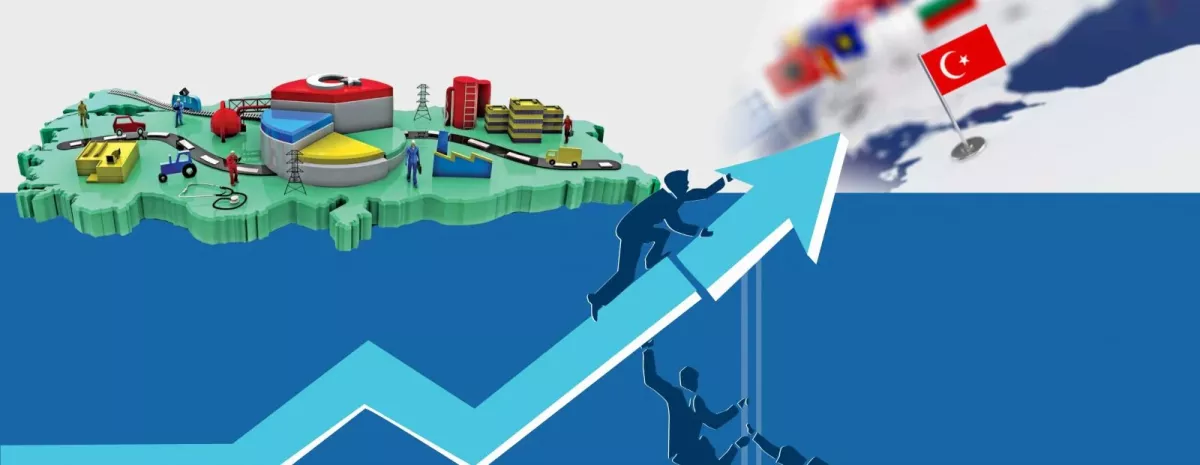
The bulk of this growth has been driven by the technological rise of Turkish industry and healthy economic development, rather than by the monetisation of previously free services or by unsustainable lending and subsidies (as seen in some Eastern EU member states). This also applies to the defence sector.
The advancement of Turkish technologies is recognised even in the West. During his April visit, the NATO Secretary General expressed admiration for Türkiye’s “defence industry revolution.” And just last week, it emerged that Berlin, having been left without the promised American long-range Tomahawk missiles, is looking to replace them with… Turkish systems “Yıldırımhan” and “Tayfun”! Yes, they are not as long-range, but they are operational — unlike top-tier European missiles that remain on paper or in prototype form.
Add to this Türkiye’s foreign policy, which carries minimal ideological baggage, no matter how much Erdoğan is accused of “neo-Ottomanism.” The current leadership in Ankara refuses to enter into conflicts with others for ideological reasons or in the service of global powers. As a result, Türkiye is not only developing relations with key global players such as the United States, Russia, and China, as well as neighbouring Iran, but has also become one of the few bridges between different parts of a fragmented Eurasian continent.
Today, Türkiye is increasingly becoming a new Switzerland — thanks to its maximally pragmatic neutrality and level of development. Through it, it is often easiest to resolve logistics or trade issues, conduct transit, or simply operate in a secure and relatively welcoming environment where people are not subjected to absurd demands or hostility merely because of their “wrong” citizenship, language, or similar factors.
Of course, all of this became possible thanks to the resolution — during the tenure of the country’s current leadership — of a wide range of foreign policy challenges. Faced with Europe’s racially driven rejection of integration, the Turks turned toward and built relations with dynamic Middle Eastern neighbours. At the same time, they were forced to use, and successfully used, forceful means to address long-standing problems on their borders — for example, neutralising the Ba’athist dictatorship in Syria, which had, in essence, nurtured many of those who spread terror in Türkiye, including ASALA.
In parallel, a belt of allied cooperation was being constructed with the South Caucasus and Central Asia.
In other words, Türkiye has achieved a level of strategic autonomy that Euro-liberal leaders can only dream of. This is what has driven the revision of German policy. It has become increasingly impossible to ignore a powerful regional state that continues to rise.
Berlin has been forced to accept as a given the results of years of Turkish effort and its consistent refusal to fall out with China, the United States, Russia, or anyone else in order to satisfy Western pseudo-liberal elites who, after their accidental triumph in the Cold War, began to see themselves not merely as victors, but as architects — if not deities, then certainly tutors and rulers of the planet.
The return of German–French strategic rivalry
The shift in Germany’s foreign policy and the warming of its relations with Türkiye should not be linked solely to disputes between European liberal regimes and the United States. This reflects a broader change of historical phases. In light of Berlin’s recent moves, questions also arise about trends in continental European politics, particularly in German–French relations. These tensions are likely to surface sooner or later.
Take, for example, the concrete issue of missile procurement, which Germany is urgently seeking in order to continue its strategic confrontation with Russia in the East. Berlin has already realised that it will not be able to use funds from the EU’s SAFE defence programme for such purchases. Liberal media also note that arms acquisitions from Türkiye would be blocked by Greece and the Cypriot government of Greek Cyprus.
What is less openly stated is the key role of France in this matter. Berlin is considering two possible ways out of this situation.
The first is a bilateral agreement with Türkiye. However, for Germany, this is not an optimal solution due to the resulting higher procurement costs and the complications of adopting systems that are not in service with its closest allies.
Therefore, most likely, the second option will be attempted — the creation, within NATO and the EU, of a coalition of countries led by Germany that would participate in financing and ensure more effective military coordination through the use of the same systems.
France would not be part of this coalition, and the structure itself has a chance of becoming the framework for a regional bloc around a militarily rising Germany, as NATO and the EU gradually weaken.
Here too, the polarisation between Berlin and Paris is becoming increasingly visible — a development fuelled by the ambitions of French President Macron. He has pursued an anti-Türkiye line for many years, and reaffirmed it during his recent visit to Athens. Given Macron’s apparent ambitions to move into a high-ranking post within the Brussels EU establishment after leaving office (a realistic prospect, considering how many compromised liberal politicians later end up in Brussels positions), one can imagine what kind of policy he would promote together with the already established circle of Türkiye-sceptic officials.
In any case, some steps have already been taken. In last year’s EU “White Paper” on security, Readiness 2030, Türkiye was removed from the list of potential partners for defence cooperation in the field of armaments.

The context of recent attacks on Türkiye by Macron and his Euro-bureaucratic allies should not be forgotten when assessing this week’s developments. In essence, German Chancellor Merz is overturning the anti-Türkiye line promoted by Paris and its Brussels allies.
The decision to restore the strategic dialogue was taken during talks in Ankara in October between Erdoğan and Merz. The latter spoke of deepening the partnership with Türkiye as an “urgent imperative of reason”, described Türkiye as a country standing “very close to the European Union”, and expressed his desire to “continue paving the way to Europe” for it. In other words, this is an openly strategic move. Its emergence was known in Western European capitals, and if viewed in this light, some recent events begin to look quite different — including the anti-Türkiye gestures of Macron and von der Leyen.
Official German rhetoric avoids acknowledging any divergence in political course between Germany and France, preferring instead to reduce everything to disputes with Trump.

For example, on the eve of the visit, Germany’s ambassador to the EU, Thomas Ossowski, used a characteristically nuanced formulation to describe the situation: “While our American partners are excessively occupied in the Middle East and we need to rearm ourselves and our allies, Türkiye should become a preferred partner.”
Germany’s pivot toward Türkiye cannot be described as a replacement for the United States; there is no need to elaborate on the absurdity of such reasoning. It is more appropriate to view it as links in a single chain of strategic decisions by the German government — a government that is rearming and shedding the last remaining constraints imposed on Germans after the two devastations of the European continent carried out by the German army in the twentieth century.
At the same time, Berlin is revising its approach not only to its historical sphere of influence in Eastern Europe, but also to neighbouring France, which has always been Germany’s main rival in the struggle for European hegemony. And a likely change of government in Germany will only accelerate this process.
However, it can be stated with confidence that the pragmatic policy of the Turkish leadership will not allow the country to be drawn into geopolitical adventures. A recent think tank affiliated with the ruling German party noted that Türkiye consistently and successfully refuses to participate in the economic war against Russia, Iran, China, and, more broadly, against anyone at all. For example, it “does not intend to join any potential new EU legislative acts in the gas sector, to fully sever ties with suppliers of Russian gas and oil, or to assume any additional obligations — beyond established practice — regarding gas origin certification.”
This was written with gritted teeth, reflecting the frustration of Western liberal elites who have led their countries into ideological and geopolitical dead ends. At present, Türkiye is more needed by Euro-Atlantic actors than the other way around — Berlin, in particular, has found it very difficult to offer Ankara anything substantial.
In liberal media, attempts were made to portray the deployment of a German Patriot air defence battery in southeastern Türkiye as some kind of “gift” to the Turks. In reality, it is a scheduled six-month rotation replacing an American battery, carried out within the framework of security arrangements amid the US–Iran confrontation.
In Berlin, the weakness of its position is well understood, which is why efforts were made to stage a ceremonially enhanced reception for the Turkish foreign minister, including the formal relaunch of the strategic dialogue mechanism.
In other words, Europeans are currently unable to dictate terms to Türkiye or draw it into questionable geopolitical ventures. Türkiye will continue to pursue its own course, which, through neutrality and a focus on constructive engagement, virtually guarantees a peaceful rise and an eventual transformation into one of the poles of stability and development at the crossroads of Europe and Asia in the future.
A new geopolitical configuration in Eurasia is already taking shape. The EU–NATO bloc as a whole, and its European members in particular, are visibly weakening. Meanwhile, the influence of countries on Europe’s borders with Asia is growing. These states — above all Türkiye — have taken on the role of connecting Europe with vast neighbouring regions. In doing so, while Europe becomes increasingly absorbed in an ever more intractable confrontation with Russia and the United States, these countries not only help Europe to remain functional but are effectively reshaping its contours.
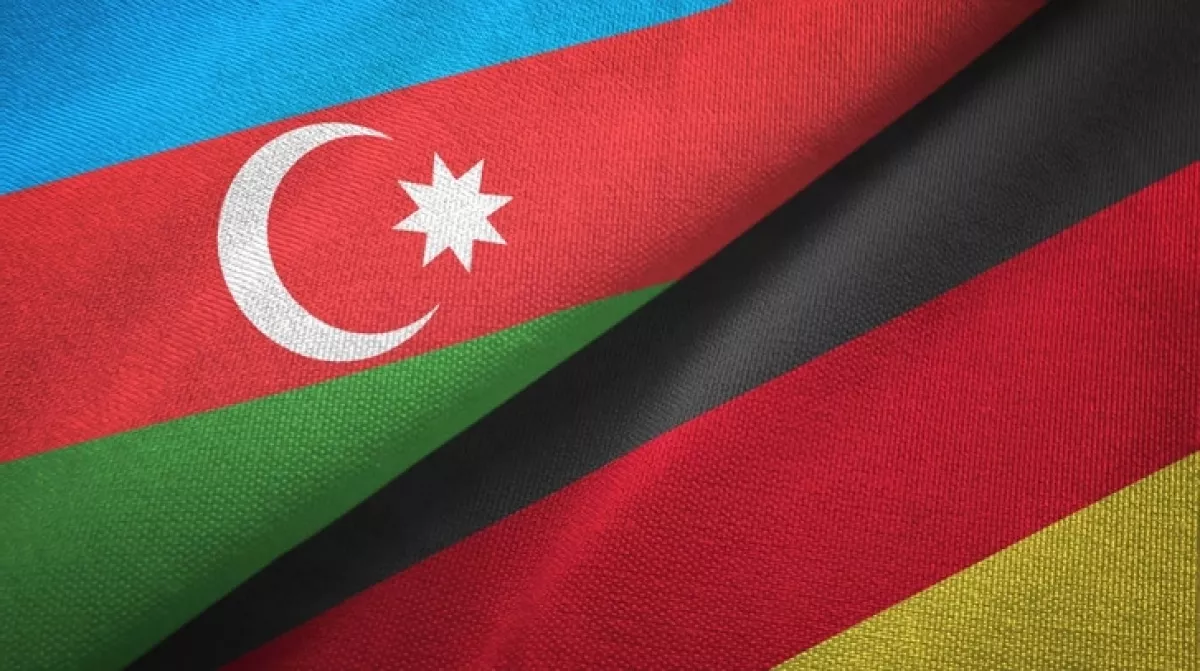
Azerbaijan’s position in this sense is very similar to that of Türkiye. Recent changes in the policies of a number of European leaders, including German Chancellor Merz, towards Azerbaijan follow roughly the same logic.
Finally, given the close ties between Azerbaijan and Türkiye, as well as their strong relations with Georgia, it is already possible to speak not only of the formation of a dynamic new alliance stretching from Istanbul to Tbilisi and Baku, but also of the gradual recognition of a new status for these countries within the international system by at least part of the Western establishment. This is reflected in the respectful attitude towards them on the part of both US President Donald Trump and German Chancellor Friedrich Merz. This, in turn, means that the policies pursued by the leadership of these countries, despite decades of criticism from the West, have proven effective.
The restoration of strategic cooperation between Germany and Türkiye is therefore not merely a matter of bilateral relations, but rather one that consolidates the reconfiguration of several regions, including the South Caucasus.







 editor@caliber.az
 +994 55 444-88-98
 Азербайджан, Баку, ул. Низами, 203, Af Business House, 5-й этаж