










Heavyweight politics Why did Usyk fly to meet Trump?
The visit of world heavyweight boxing champion Oleksandr Usyk to the United States and his meeting with U.S. President Donald Trump in the Oval Office of the White House on June 12 became events that instantly moved beyond the realm of sports.
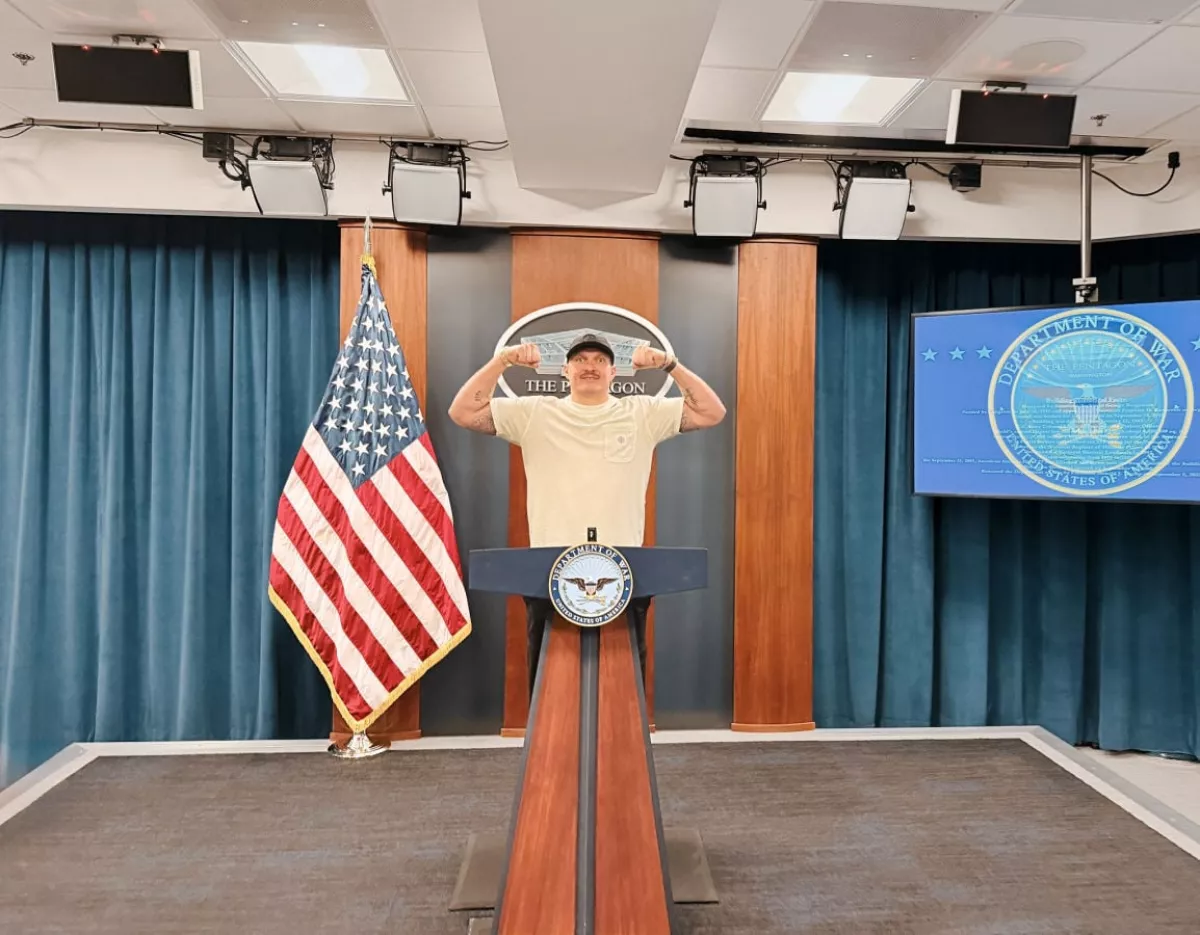
In Ukrainian political reality, such episodes are rarely coincidental. This is especially true when it involves a figure who has already announced future political ambitions: in March this year, Usyk declared that after ending his sporting career he would enter high politics and intends to become the head of the Ukrainian state.
Media outlets suggested that the boxer arrived in the United States as a guest of the UFC Freedom 250 tournament, but on the eve of his meeting with Trump, the world champion posted photographs on his Instagram page showing his visit to the Pentagon. This has fueled speculation that the trip to the United States was part of preparations for a potential presidential bid in Ukraine.
In this context, it is worth recalling that Ukrainian history already has an example of popularity outside politics becoming a springboard to power. This refers to Volodymyr Zelenskyy, who in 2019 won a decisive victory in the presidential elections. His path showed that in the country’s political system, a high level of public recognition and trust can compensate for a lack of political experience.
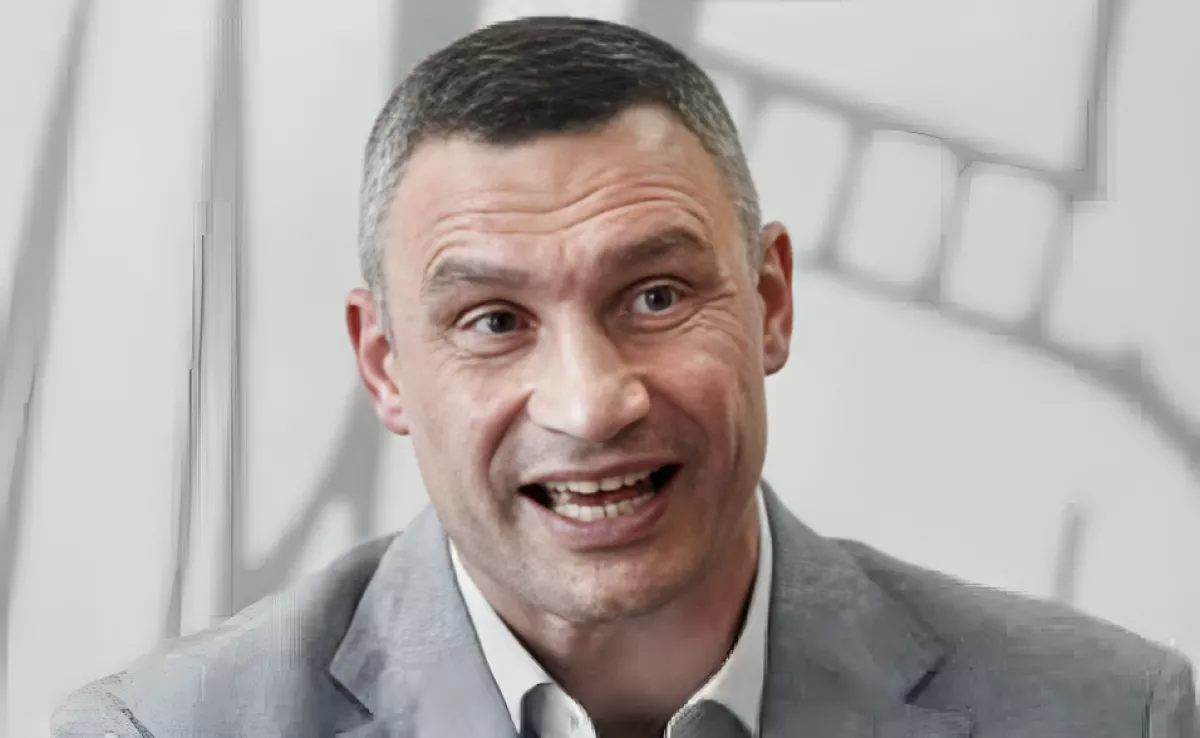
However, even before Zelenskyy there was another example — Vitali Klitschko. The multiple-time world boxing champion ran for parliament three times — in 2006, 2008, and 2012 — and in 2014 was elected mayor of Kyiv. However, his presidential ambitions were never realised. A key episode in this story was the April meeting in Vienna between Klitschko and Poroshenko with businessman Dmytro Firtash on the eve of the 2014 presidential election.
It was there, according to numerous accounts, that a decision was made to support Poroshenko as a joint candidate of part of the political elite. As a result, Klitschko withdrew from the presidential race and focused on the election for mayor of the Ukrainian capital. This episode became a clear illustration of how, in Ukrainian politics, key decisions are often made not only in the public sphere but also through behind-the-scenes negotiations between influential groups.
Returning to the present day, sociological data also cannot be ignored. In early June, the results of a survey by the Kyiv International Institute of Sociology — one of the most reputable research organisations in Ukraine — were published. According to these data, the highest level of trust is held by former Commander-in-Chief of the Armed Forces of Ukraine and current ambassador to the United Kingdom, Valerii Zaluzhnyi (73%), followed by incumbent President Volodymyr Zelenskyy at 61%. Usyk, however, did not feature in this survey at all.
A different picture emerged in a study by the international company Ipsos conducted in February 2026. At that time, Valerii Zaluzhnyi ranked first with 63%, while Usyk came in second with 56% — ahead not only of Zelenskyy (49%) but also Kyrylo Budanov (55%).
These figures say a great deal, including that Usyk already has serious electoral potential — not hypothetical, but confirmed by sociological data. In this context, his visit to the United States and meeting with Donald Trump can be seen as elements in the construction of his international image, since for a future politician such contacts play an important role: they demonstrate the ability to engage in dialogue at the global level.
However, here too, as in many other matters, there is another side to the coin. It is widely known that Ukrainian politics has traditionally remained an arena of competition between various financial-industrial alliances, and virtually no major political project is implemented without the support of one or another influential group.
Against this backdrop, it is quite logical to assume that a potential presidential bid by Usyk would not be solely his personal initiative. More likely, it would be backed by a specific interest group that sees him as a convenient and promising figure. In such a scenario, we could witness a classic pattern: one segment of the elite promotes “its” candidate, while another advances an alternative, turning elections into not only a contest of ideas but also a struggle of resources and influence.
The experience of 2019 shows that Ukrainian voters are willing to support new faces, even those without a political background. As a result, a potential candidacy by Oleksandr Usyk — and even a victory — does not appear to be something out of the realm of fantasy.







 editor@caliber.az
 +994 55 444-88-98
 Азербайджан, Баку, ул. Низами, 203, Af Business House, 5-й этаж