










The year that undid 34 years A milestone anniversary
A year ago, on August 8, Ilham Aliyev and Nikol Pashinyan signed a joint declaration at the White House in the presence of Donald Trump, while the two foreign ministers initialled the text of a peace agreement and, at the same time, appealed to the OSCE Chairperson-in-Office to wind down the Minsk Group — a decades-old diplomatic construction project that had long outlived its original purpose.
What that day changed for the region, Caliber.Az examined yesterday. This time, the focus is on something else: what happened over the following year between Baku and Washington — two capitals that, for three decades, had been forced to conduct their relationship under the shadow of a political “law of punishment.”
A line in someone else’s law
In 1992, the US Congress adopted the Freedom Support Act, a programme designed to assist the newly independent states of the former Soviet Union. Most were eligible for US assistance. One country, however, was singled out by a separate provision that imposed a ban.
That provision was Section 907 — introduced at a time when Azerbaijan was facing war, territorial losses and economic collapse.
Starting in January 2002, successive US presidents issued annual waivers to Section 907. After 9/11, Washington increasingly recognised Azerbaijan’s strategic importance: its airspace and territory became vital to US and allied operations, while Azerbaijani peacekeepers later served alongside international forces in Afghanistan and Iraq until the final stages of those missions.
But a waiver is, by its very nature, an exemption rather than equality. It means being allowed to do something others are permitted to do as a matter of course — and having that permission renewed year after year.
Following the Washington summit, the Trump administration suspended the application of Section 907 and lifted restrictions on military cooperation with Azerbaijan. A barrier that had stood between Baku and Washington for more than three decades was no longer functioning.
On July 13, 2026, opening the Fourth Global Media Forum in Shusha, Ilham Aliyev put the issue bluntly: the amendment is “completely outdated and should be repealed.” The provision was written around the alleged Azerbaijani “blockade” of Armenia. There is no blockade — there is Azerbaijani fuel in Armenian tanks, Kazakh grain reaching Armenia through its territory, and Russian wheat arriving there by rail via Azerbaijan for the first time in more than three decades. Since October last year, more than 34,000 tonnes have travelled along this route.
A bill introduced by Anna Paulina Luna to lift restrictions on assistance to Azerbaijan is now before Congress, with Republicans joining the effort one after another — Celeste Maloy, Pete Sessions, Abraham Hamadeh, Burgess Owens, Randy Fine and Derrick Van Orden. This is no longer merely a matter of procedure. For a sizeable part of Congress, Section 907 has ceased to be a legal provision and become a bargaining chip in dealings with the Armenian lobby. How does one explain the purpose of a provision written for a “blockade” that no longer exists?
In the summer of 2024, when much of the Western establishment was almost unanimously backing the Democratic candidate over the Republican nominee, Ilham Aliyev noted at the Shusha Global Media Forum that it would be American voters who decided the election — but that its outcome would matter far beyond the United States.
Baku officially congratulated Donald Trump after his victory, followed soon afterwards by a phone call in which Trump thanked Aliyev for the congratulations. In March 2025 came a Novruz message invoking the long history of cooperation between the two countries and expressing hope for further joint steps. In May, in a letter marking Azerbaijan’s Independence Day, Trump specifically highlighted energy security and expressed hope of deepening the partnership in the years ahead.
The Washington meeting, however, was still three months away.
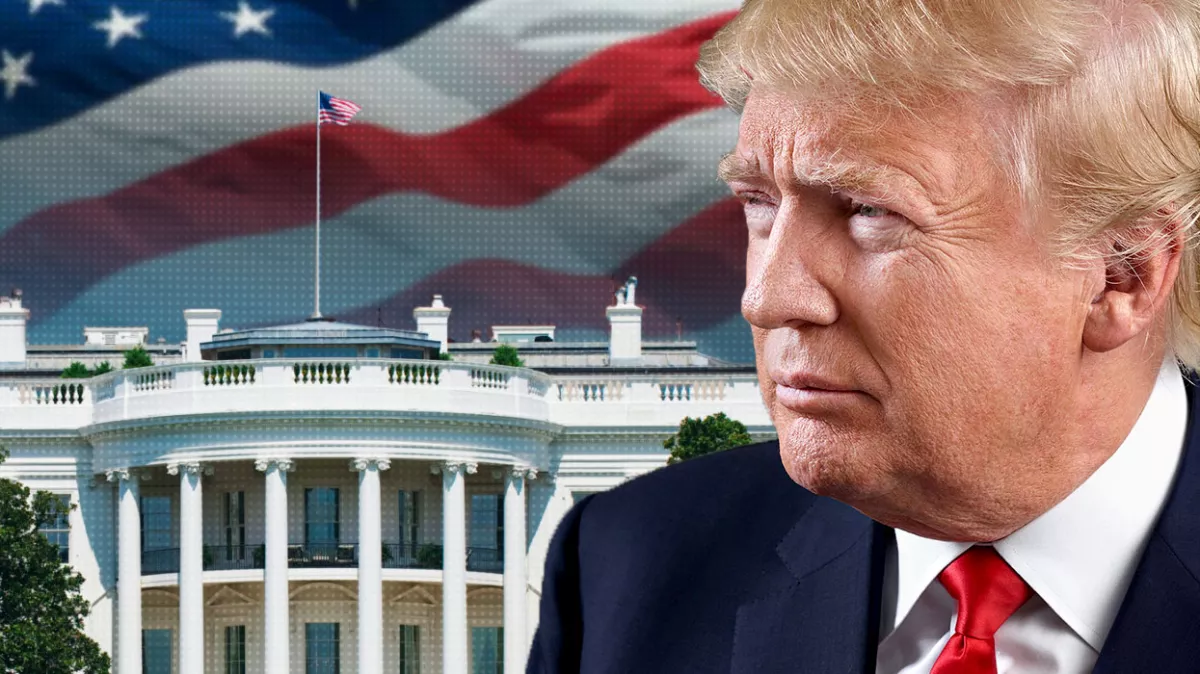
The next task was to turn personal trust into institutional ties. On August 8, the White House hosted the signing of a memorandum on preparing a Charter on Strategic Partnership. Exactly six months later, on February 10, 2026, JD Vance arrived in Baku — the first-ever visit by a sitting US vice president to Azerbaijan. The Charter was signed that same day.
Later, in a birthday message to Trump on his 80th birthday, Aliyev summed up the significance of the document. Initiated at the historic White House meeting and completed six months later, he said, it had elevated Azerbaijani-American relations “to a qualitatively new level.”
The Charter covers energy security, trade, digital technologies, cybersecurity and defence. It enshrines mutual recognition of territorial integrity and provides for working groups and road maps for specific projects. A separate chapter focuses on the digital sphere, including data centres, artificial intelligence and direct access to US companies. Washington also separately pledged to provide Baku with boats to help protect the Caspian Sea.
Aliyev described the visit as historic, both in substance and symbolism. Vance, for his part, recalled the Azerbaijani troops who served in Afghanistan, saying they had “earned a reputation as being some of the toughest and fiercest troops anywhere in the world.”
What Washington sees on the map
The biggest change of the year came in the way Washington sees the region. Ideology gave way to interests. On this new strategic map, Azerbaijan emerged as the leading state in the South Caucasus; a major supplier and transit hub for energy to Europe; a key link in the Middle Corridor; a partner in transport projects extending well beyond the region; and, above all, a country Washington can rely on.
Hence TRIPP.
In the space of a year, the Trump Route for International Peace and Prosperity moved from a line in a declaration to work on the ground. On January 13, 2026, Marco Rubio and Ararat Mirzoyan unveiled a joint statement setting out the framework for the project. In May, engineers from the US company AECOM arrived to survey the area under a US State Department global infrastructure and investment fund. In early July, they returned to Armenia for a third visit, this time to work on the railway design.
The framework agreement was initialled in Yerevan on May 26, signed in Washington on June 1, and signed again in Yerevan on June 4. In mid-July, the Armenian government approved its ratification and submitted the document to the Constitutional Court.
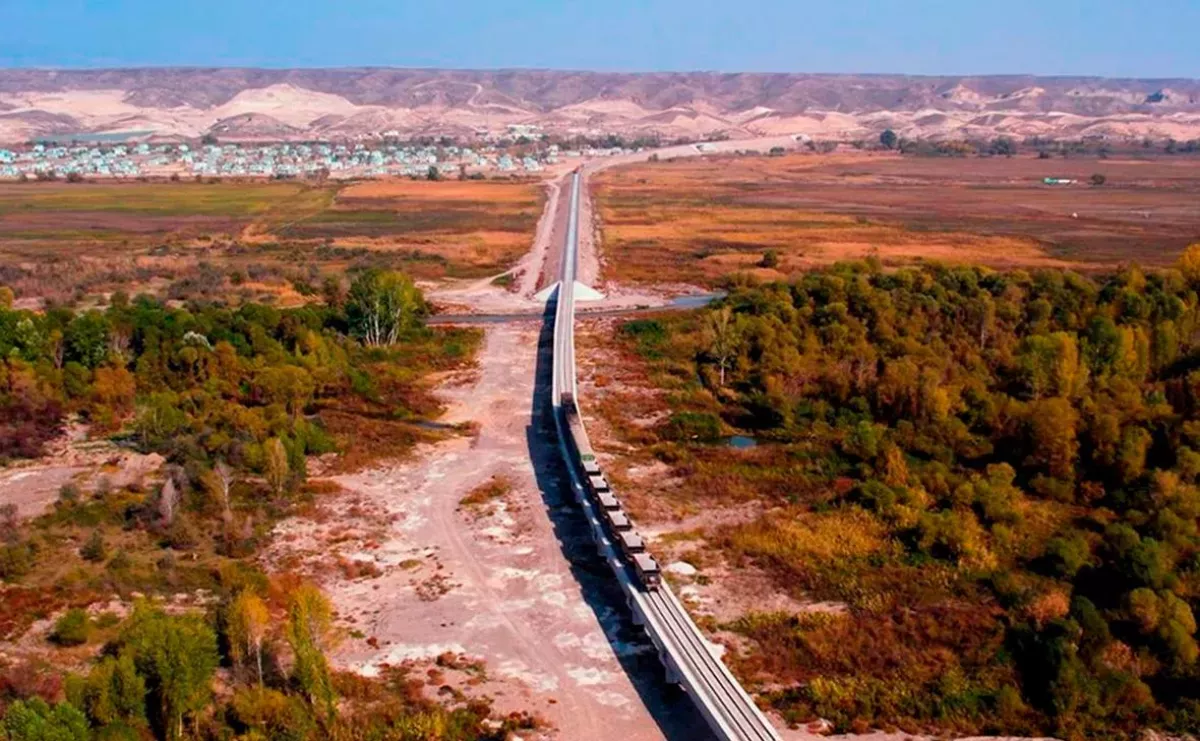
The route will provide unobstructed connectivity between mainland Azerbaijan and Nakhchivan, shorten the East-West transit leg, make the Middle Corridor more competitive and attract investment to the region. Peace built on economic interests is more resilient than peace held together by signatures alone.
A calendar instead of declarations
The year since the Washington meeting is best understood through dates.
February 10 — the Charter. June 2, during Baku Energy Week — the first meeting of the Azerbaijan-US Economic Dialogue, co-chaired by Azerbaijani Economy Minister Mikayil Jabbarov and US Assistant Secretary of State Caleb Orr.
June 13 — a meeting between Azerbaijani Foreign Minister Jeyhun Bayramov and Ben Black, head of the US International Development Finance Corporation. Energy, transit, high technology and investment were on the agenda. July — talks on the Middle Corridor, artificial intelligence, the digital economy and critical minerals.
The most boring item on this list is also the most important. A summit is an event. A working-group meeting is a process. An economic dialogue conducted at the State Department level means one thing: the relationship has moved beyond the realm of moods and into the calendar.
In early June, Trump nominated Alexander Alden to serve as US ambassador to Azerbaijan — a position that had been vacant for almost a year and a half. The confirmation hearings are still ahead, making this the only line in the annual report that, for now, carries the word “pending.”
In 1992, Azerbaijan was a line in someone else’s law. In 2026, it is a party to an agreement that the US vice president flew to Baku to sign.
Thirty-four years were spent travelling from one to the other. The last year of that journey, however, carries more weight than the previous thirty-three.







 editor@caliber.az
 +994 55 444-88-98
 Азербайджан, Баку, ул. Низами, 203, Af Business House, 5-й этаж