










Ukraine’s test of resilience What lies ahead?
The coming weeks could prove critical in the Russia-Ukraine war, amid reports that Russia may be preparing a large-scale strike on Kyiv’s energy infrastructure ahead of August 24. Ukrainian monitoring channels claim that Russia has stockpiled at least 18 Iskander-M ballistic missiles, seven Zircon hypersonic missiles and North Korean-made KN-23/KN-24 ballistic missiles for a possible attack.
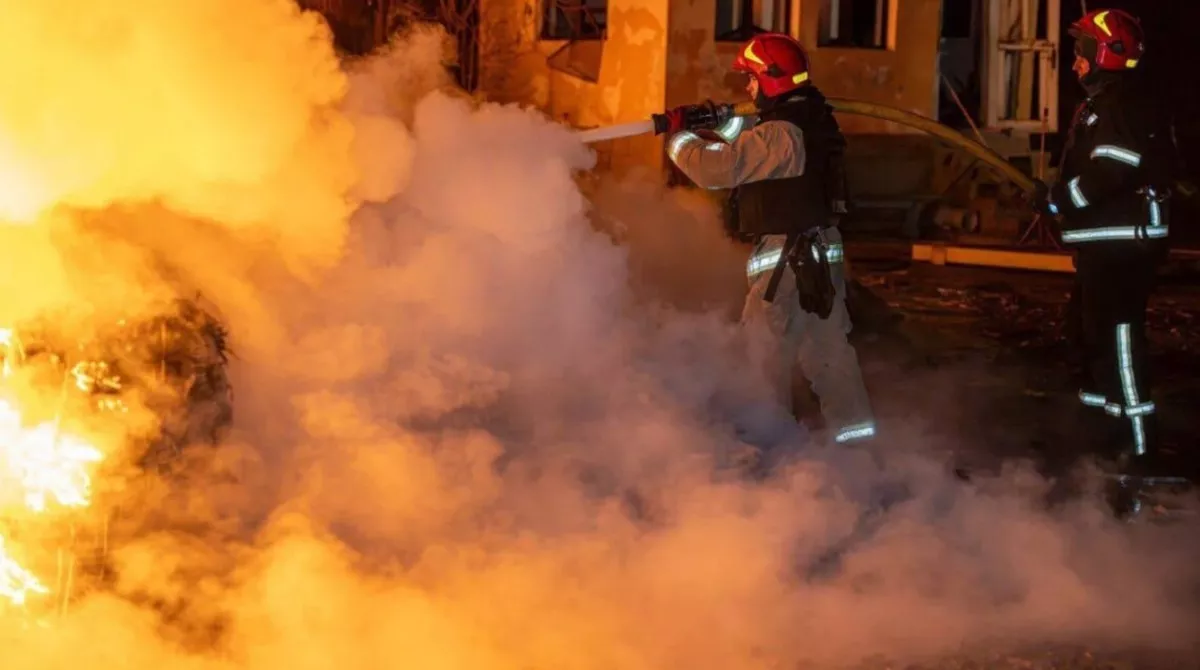
At the same time, there is already a clear trend of increasing Russian ballistic strikes against Ukraine. In July, Russia launched 195 ballistic missiles, of which only 29 were intercepted. The figures for early August are also concerning: none of the ballistic missiles launched in the latest attacks was intercepted.
Meanwhile, on the night of August 9, Russian forces attacked Ukraine’s Odesa region, causing extensive damage to critical infrastructure and leaving hundreds of thousands of households without electricity.
The damage also led to the shutdown of high-voltage power lines, forcing pumping stations to stop operating. As a result, water supplies to customers of Infoxvodokanal were temporarily suspended, except in some residential areas.
Taken together, these developments suggest that Russia is stepping up pressure on some of the most vulnerable parts of Ukraine’s economy. Rather than a series of isolated attacks, the pattern points to a sustained campaign of attrition, as Moscow understands that Kyiv currently has limited effective means of countering ballistic threats.
Under these circumstances, any large-scale attack on the energy infrastructure of Ukrainian cities could become a potential turning point. The power grid is the backbone of any modern state, and attacks on it inevitably affect transportation, water supplies, industry and communications, undermining the resilience of society as a whole — as the latest strikes have demonstrated.
Meanwhile, Russia is also targeting Ukraine’s production and logistics infrastructure. Recent large-scale strikes on Zhytomyr and other cities have damaged key logistics hubs, warehouse complexes and production facilities.
Disruptions to supply chains have forced major retailers and manufacturers to significantly restructure their operations, while increasing business costs and reducing export capacity.
The agricultural sector is facing particularly severe challenges, as it is one of Ukraine’s main sources of foreign-currency earnings. The blockade of Black Sea ports, which once handled up to 90% of the country’s grain exports, has made restoring those export flows extremely difficult.

At the same time, Ukraine is facing a growing set of economic risks. Grain storage facilities are filling up, storage capacity is becoming increasingly scarce, and prices are coming under pressure. Lost export revenues are already running into the billions of dollars, while pressure on the domestic consumer market is also building.
However, this is likely to be only a temporary effect. The economic reality is that businesses will eventually pass their losses and rising costs on to consumers. As a result, higher inflation is likely to be a matter of time.
Under these conditions, consumer behaviour is also changing. Ukrainians are increasingly stocking up on non-perishable food, generators and power inverters — a sign that confidence in the resilience of the system is weakening.
Kyiv’s property market is showing similar signs of strain. Rising supply and falling prices suggest that some residents are choosing to sell assets that have become less attractive amid prolonged instability.
At this point, expectations are growing that Ukraine could face its most difficult winter since the war began. In this situation, the Ukrainian authorities are confronted with a harsh reality: the country currently lacks sufficient resources to counter its key threat — ballistic missiles.
Retaliatory strikes against targets in Russia do not solve the underlying problem either. They cannot restore damaged Ukrainian infrastructure, offset economic losses or reduce the intensity of Russian attacks.

President Volodymyr Zelenskyy can continue to publicly project a tough stance, appeal to Ukraine’s allies, attribute the shortage of missiles needed to counter Russia’s ballistic attacks to a lack of new deliveries, and promise retaliatory strikes. But ultimately, the situation on the ground is shaped not by statements, but by available resources.
The greater the pressure on Ukraine’s infrastructure and economy, the more likely it is that Kyiv will have to make decisions based not on political rhetoric, but on the need to stabilise the situation inside the country.
Under such circumstances, the question of concessions, which Kyiv continues to publicly reject, could ultimately become decisive. At some point, any compromises may be presented as reflecting the “will of the Ukrainian people,” potentially shifting responsibility for difficult decisions from the country’s leadership to the public.
The underlying issue, however, is something else entirely: the Ukrainian state’s ability to sustain the same level of resistance is objectively weakening.







 editor@caliber.az
 +994 55 444-88-98
 Азербайджан, Баку, ул. Низами, 203, Af Business House, 5-й этаж