










Washington Declaration anniversary and Zaluzhnyi’s return to the spotlight Caliber.Az weekly review
The Caliber.Az editorial team presents a new edition of the “Events” programme, hosted by Murad Abiyev, in an analytical review of the key developments of the week.
Azerbaijan
Today marks exactly one year since the historic Washington meeting. On August 8, 2025, Ilham Aliyev and Nikol Pashinyan, with the participation of Donald Trump, signed a declaration in the US capital reaffirming the parties’ commitment to a peace agenda and providing for the launch of the TRIPP route connecting Nakhchivan with mainland Azerbaijan. In addition, the foreign ministers of the two countries initialled the draft peace agreement. Finally, one of the most important outcomes of the meeting was a joint appeal by Azerbaijan and Armenia to the OSCE Chairperson-in-Office calling for the official dissolution of the Minsk Group and all structures associated with it.
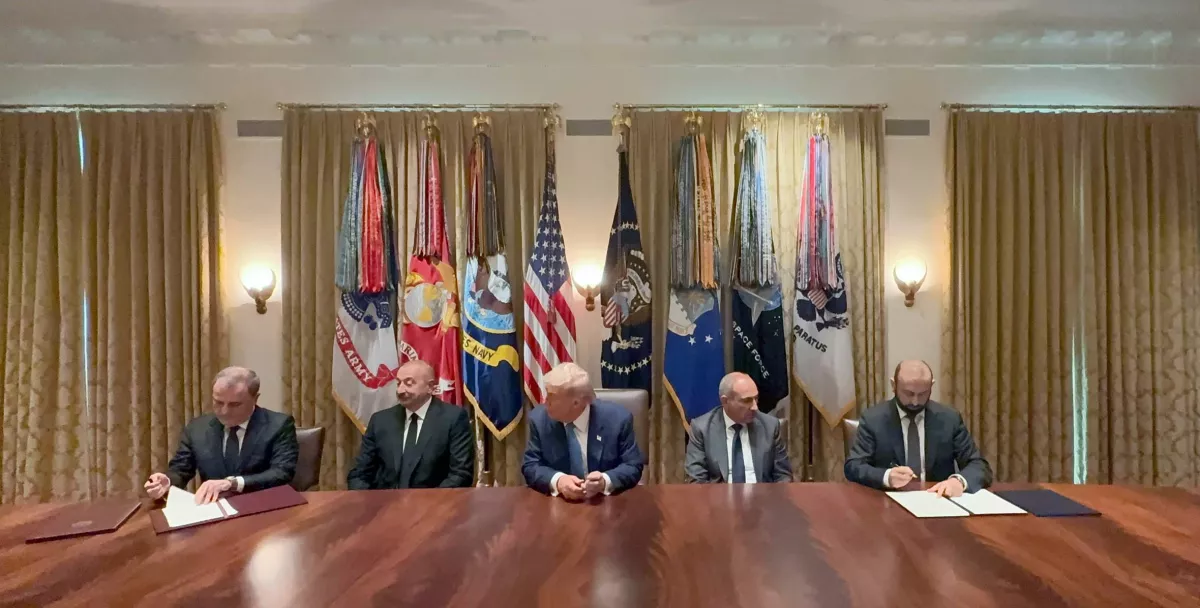
Of course, the parties reached this agreement primarily through their own efforts. Particular attention should be paid to Baku’s consistent and principled policy, which, at the most difficult moments, compelled Yerevan to accept the new reality and gradually abandon hopes of receiving support from external patrons for revanchist ideas. But another point is also telling: none of those patrons, it seems, was ultimately prepared to help the sides put a definitive end to the conflict.
The situation changed dramatically with Donald Trump’s return to the White House. First, he had never been burdened by any particular emotional attachment to the Armenian agenda. Second, he needed a major foreign-policy success in his role as a peacemaker. As a result, the interests of all the participants converged. Trump gained a powerful argument in support of his peacemaking ambitions, while Baku and Yerevan, for the first time, saw a leading global power ready to act as a mediator and use its political authority to confirm that the longest-running conflict in the post-Soviet space had indeed come to an end.
And then, in the autumn, the first trains carrying Russian and Kazakh grain travelled to Armenia through the territories of Azerbaijan and Georgia. Somewhat later, Azerbaijan began supplying Armenia with petroleum products. Isn’t that peace?
For Nikol Pashinyan, the Washington agreements and their practical outcomes became a key element of his election campaign, built around the idea of peace with Azerbaijan. To a large extent, it was the events of August 8 that created the political foundation for his victory in the June 7 elections — and, consequently, for maintaining peace as a key policy priority of the ruling party.
Of course, one crucial step still remains before a full-fledged peace agreement can be signed. Armenia must remove from its Constitution the territorial claims against Azerbaijan. This will not be easy: the Civil Contract party does not have the constitutional majority required to amend the country’s Basic Law. But that does not mean the parties should put negotiations on hold. Peace de facto already exists, and now it must be consistently consolidated.
The fact that the negotiation process did not stop after the June elections is also demonstrated by the sides’ recent contacts. The deputy prime ministers of the two countries have met both in Armenia and Azerbaijan. Just days after the elections, Azerbaijani presidential aide Hikmet Hajiyev visited Armenia, where he met with Secretary of the Security Council Armen Grigoryan.
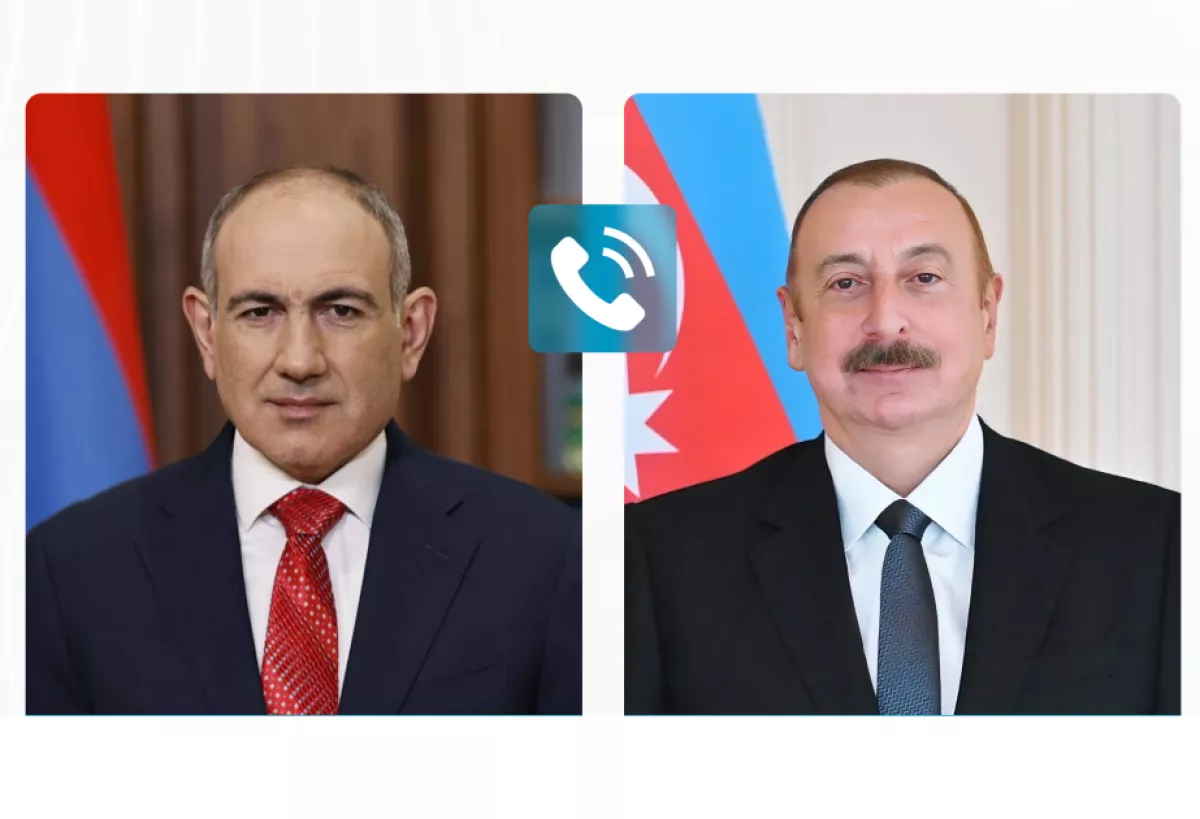
And finally, today (August 8) Nikol Pashinyan called Ilham Aliyev. During the conversation, the two sides exchanged views on the occasion of the first anniversary of the Washington peace summit. Aliyev and Pashinyan particularly emphasized the important role played by President Donald Trump and the government of the United States in advancing the peace process.
The sides also noted, among other things, the progress achieved over the past year in the normalization of relations between Azerbaijan and Armenia.
In a world ravaged by wars and new conflicts, it is especially important for the two countries to preserve the peace achieved at such a high price and transform the South Caucasus from a space of confrontation into one of stability and development.
This week, Azerbaijani Foreign Minister Jeyhun Bayramov paid an official visit to Kyiv. During talks with his Ukrainian counterpart, Andrii Sybiha, the sides discussed the development of the strategic partnership, economic and humanitarian cooperation, as well as regional and international security issues.
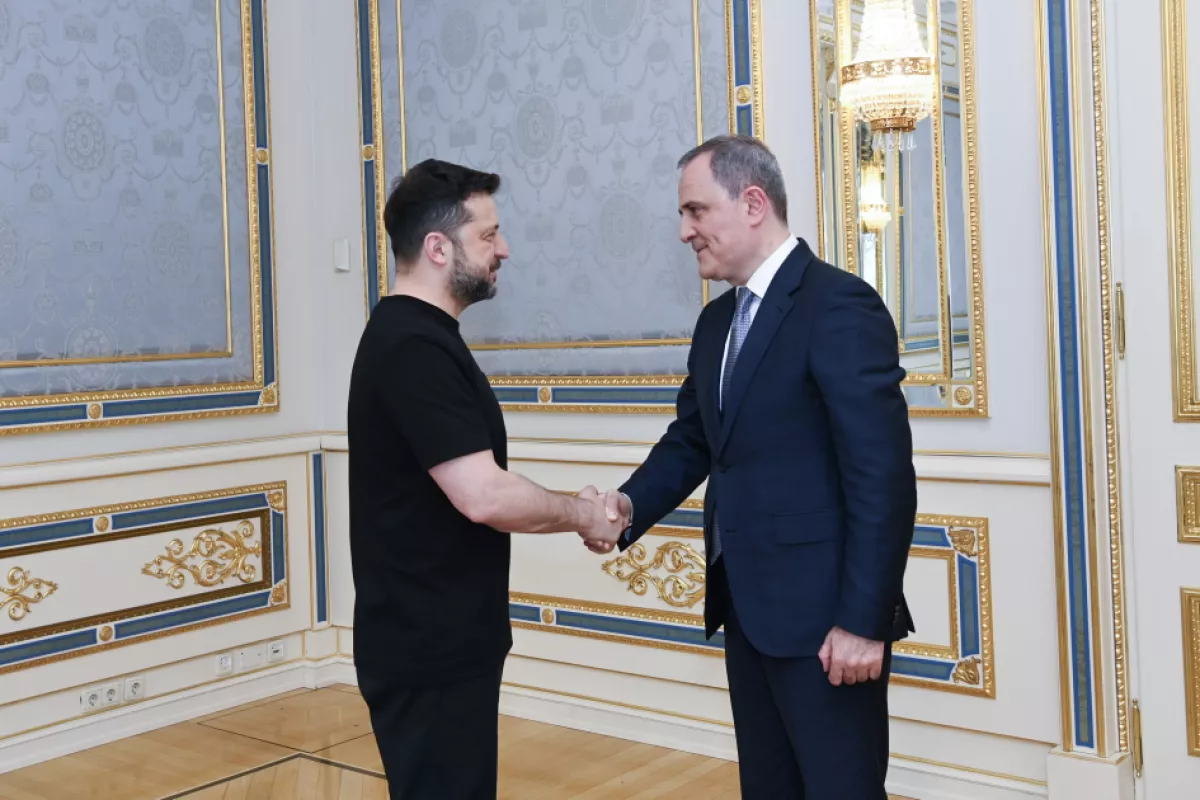
Baku once again reaffirmed its support for Ukraine’s sovereignty and territorial integrity, stressed the need for a diplomatic resolution to the conflict, and announced that Azerbaijan would continue providing humanitarian assistance, including its participation in the reconstruction of Irpin.
In addition, Jeyhun Bayramov met with the head of the Office of the President of Ukraine, Kyrylo Budanov, with the state and prospects of bilateral relations also discussed. The Azerbaijani foreign minister was also received by Ukrainian President Volodymyr Zelenskyy.
The visit once again reaffirmed Azerbaijan’s consistent position: support for Ukraine’s territorial integrity, continued humanitarian assistance, and the conviction that this war must be brought to an end as soon as possible.
Ukraine — Russia
Over the past week, the Russian-Ukrainian conflict was once again marked by a series of powerful missile and drone strikes. In Ukraine, civilian and commercial logistics centers, warehouses belonging to major retailers, as well as transport and energy infrastructure facilities came under attack. Moscow effectively responded in kind to Kyiv’s asymmetric tactics, seemingly accepting the challenge while signaling that it has greater reserves of endurance in this confrontation.
However, these attacks exposed an even more serious problem for Kyiv. While Ukrainian air defenses are still capable of dealing with drones with relative effectiveness, the shortage of missiles for Patriot systems is becoming increasingly critical. It is precisely the lack of interceptor missiles that has allowed Russian ballistic missiles to strike their targets with little resistance.
Against this backdrop, particular attention was drawn to remarks by former Commander-in-Chief of the Armed Forces of Ukraine and current Ukrainian ambassador to the United Kingdom, Valerii Zaluzhnyi, during a meeting of Ukrainian ambassadors in Kyiv.
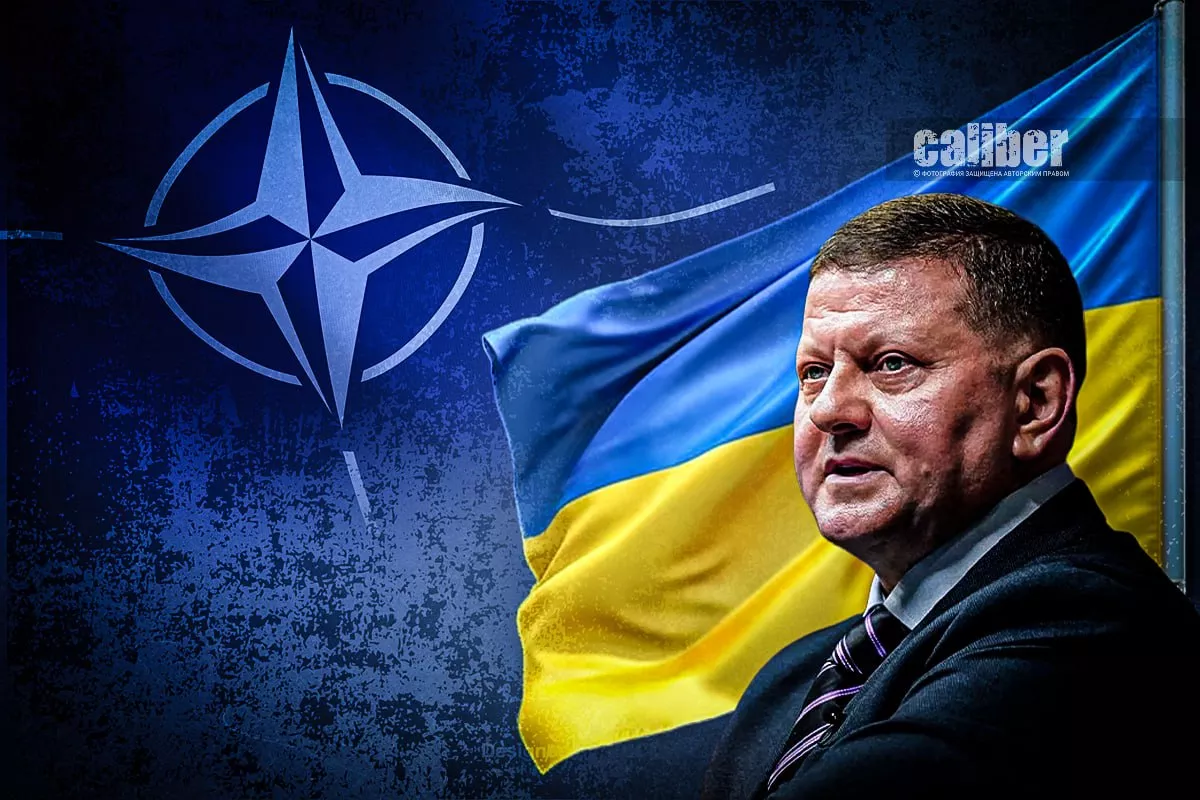
Zaluzhnyi expressed considerable skepticism about Ukraine’s prospects of joining NATO, calling the partners’ years of promises “fairy tales” and stating bluntly that, unfortunately, Ukraine will never become a member of the Alliance.
But his remarks did not stop there. According to the former commander-in-chief, NATO to this day remains, to a significant extent, an organization still thinking in terms of World War II, while modern warfare has long since entered an entirely different technological era.
Zaluzhnyi noted that over the years of war, Ukraine has effectively tested the full range of modern Western weapons, yet Russia has managed to develop countermeasures against virtually all of them. At the same time, he estimated that it would take Ukraine’s defense industry around twelve years to reach even half of the current capabilities of Russia’s defense-industrial sector.
But the most important point of his speech was something else. In effect, Zaluzhnyi proposed abandoning the years-long wait for NATO membership and instead focusing on creating a new European military-technological alliance.
Interestingly, such a structure already exists. We are talking about the Joint Expeditionary Force, or JEF. This framework was established by the United Kingdom in 2014 and brings together ten Northern European countries. Unlike NATO, the JEF was designed as a rapid-response mechanism capable of acting before the cumbersome procedures envisaged under Article 5 of the North Atlantic Treaty are set in motion.
Therefore, Valerii Zaluzhnyi’s statements can reasonably be viewed not simply as criticism of NATO, but as an attempt — likely coordinated with London — to propose an alternative strategy for continued support for Ukraine.
The essence of this strategy lies not so much in supplying weapons as in jointly developing and producing next-generation military technologies. Funding, it is suggested, could come from revenues generated by frozen Russian assets, British defense funds, and private venture capital.
This raises a logical question: does Ukraine have the time for such a strategic shift?
Military analysts believe that despite the difficult situation facing the Ukrainian Armed Forces, there are at least three factors that so far prevent the Russian army from achieving a major strategic breakthrough.
The first is the widespread use of FPV drones equipped with machine-vision capabilities. Even amid shortages of artillery ammunition, millions of relatively inexpensive drones continue to inflict serious damage on Russian armored vehicles.
The second factor is the unprecedented saturation of the frontline with reconnaissance drones and space-based surveillance capabilities. Today, neither Ukraine nor Russia is practically capable of covertly concentrating large strike formations.
Finally, the third factor is that, despite its considerable resources, Russia currently has enough strength mainly to maintain constant pressure and make gradual advances along individual sections of the front. According to many experts, it does not currently have the capacity for a large-scale, rapid offensive advancing hundreds of kilometers. The Russian economy and mobilization potential are substantial, but even they have their limits under the conditions of a prolonged war and sanctions pressure.
It is precisely these circumstances, experts argue, that give Ukraine time to change its military strategy.
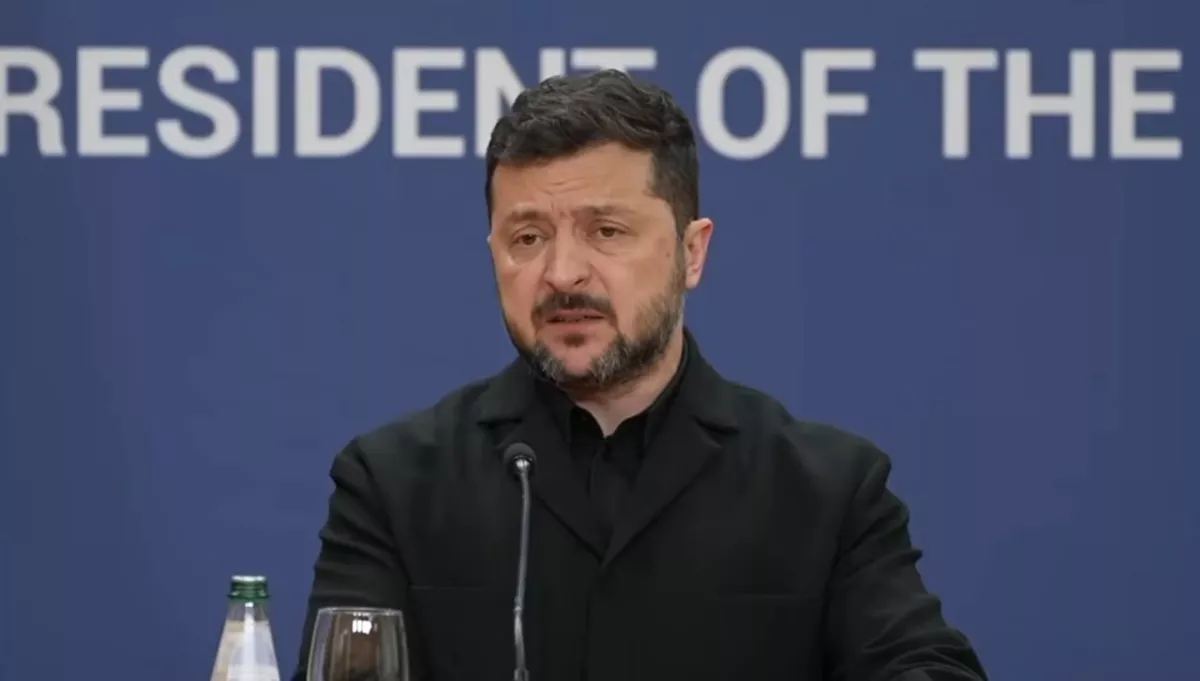
But this raises a political question: how willing is Volodymyr Zelenskyy to listen to his former commander-in-chief?
Especially since Zaluzhnyi’s speech also has an obvious domestic political dimension. He is gradually cultivating the image of an honest and realistic leader, willing to tell society uncomfortable truths, prepare the country for long-term defense and, potentially, difficult negotiations. At the same time, his electoral potential remains extremely high.
This creates a difficult dilemma for the current authorities. Ignoring Zaluzhnyi’s proposals could mean risking the loss of an opportunity for a potentially crucial change in strategy. Accepting them, on the other hand, would effectively acknowledge the former commander-in-chief as the person who proposed a path toward saving the state.
In essence, Zaluzhnyi is already positioning himself as an architect of Ukraine’s future — if not of a future victory, then at least of a favorable ceasefire. And that, in turn, further strengthens his position as one of the leading contenders for the presidency whenever such elections may be held.







 editor@caliber.az
 +994 55 444-88-98
 Азербайджан, Баку, ул. Низами, 203, Af Business House, 5-й этаж