










Historic Washington 2025: Ilham Aliyev’s diplomacy of strategic gains Reflections by Teymur Atayev
March 2026. European Council President António Costa, describing progress in the Azerbaijan-Armenia peace process as “historic,” noted the EU’s recognition of Azerbaijan’s aspiration for a peaceful, stable, interconnected, and prosperous South Caucasus. May 2026. Italian Prime Minister Giorgia Meloni underscored Rome’s full support for the process of normalizing relations between Azerbaijan and Armenia, to which the United States gave fresh impetus.
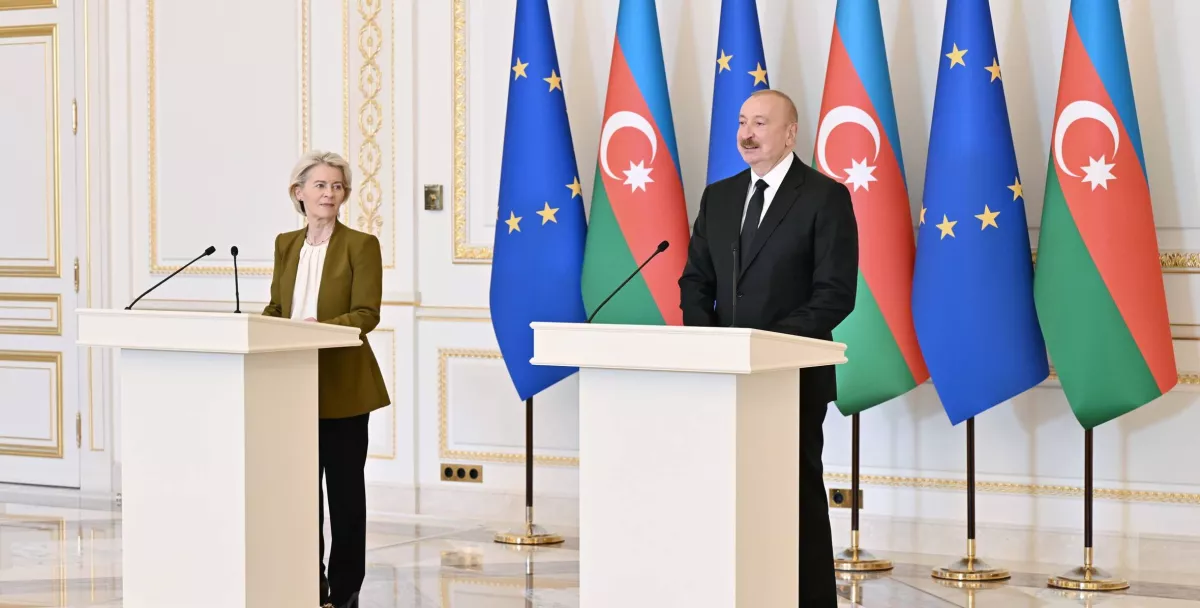
July 2026. European Commission President Ursula von der Leyen highlighted Azerbaijani President Ilham Aliyev’s leadership in promoting cooperation and peace across the region. July 2026. German Chancellor Friedrich Merz described the initialling of the peace agreement between Baku and Yerevan as a “historic agreement,” noting that strengthening stability in the region “creates new opportunities for broad economic cooperation between our countries.”
Let us agree that the statements cited above clearly testify to the high regard in which world leaders hold the historic developments that took place a year ago at the world’s most important office, while simultaneously acknowledging the significant role played by the head of the Azerbaijani state in achieving these results.
And how could it be otherwise, given that as early as the beginning of 2022, Baku proposed five fundamental principles for normalizing relations with Armenia, the first of which was the mutual recognition of each other’s sovereignty, territorial integrity, and the inviolability of international borders. In June of that same year, President Ilham Aliyev, noting that the Armenian government had accepted all five principles, emphasized that Azerbaijan, having achieved victory in a just war, was now speaking of peace. This was “one of the unique cases” on a global scale, driven by Baku’s desire to see stable and sustainable development across the South Caucasus.
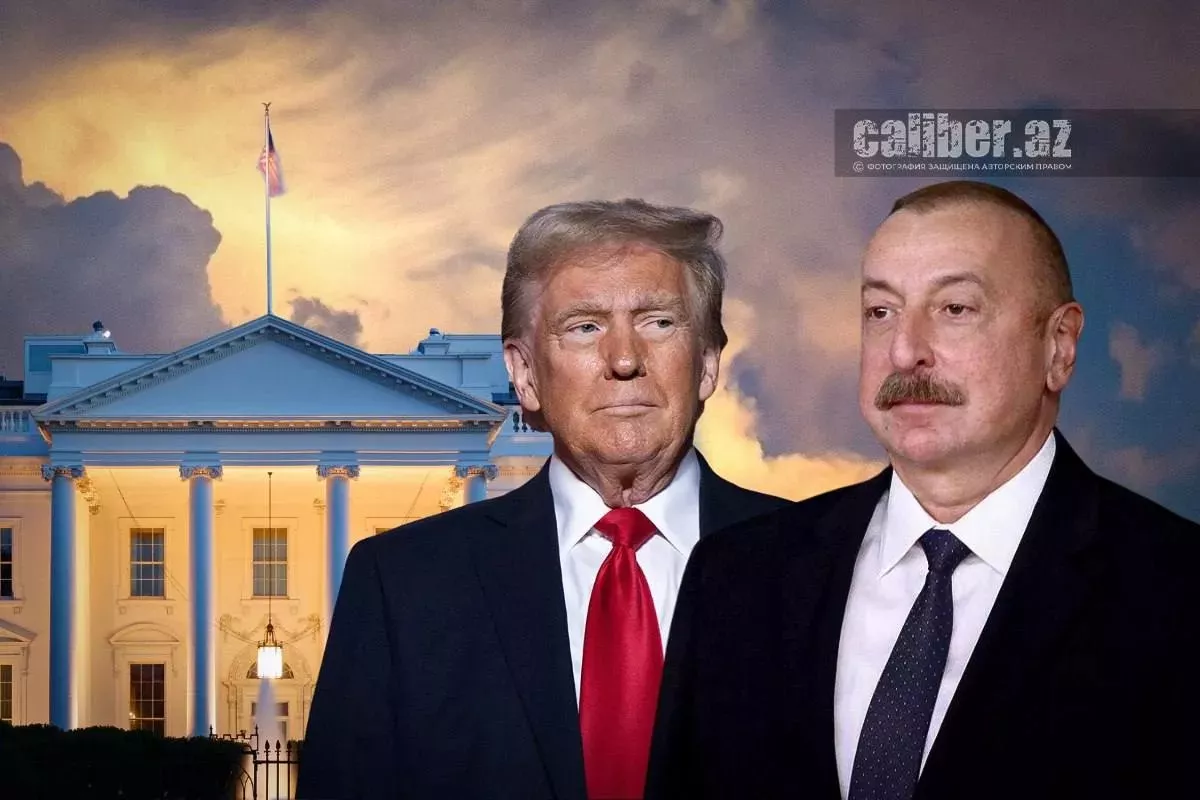
And Baku pursued this course with patience and unwavering confidence in the correctness of its position. Against this backdrop, the significance of Azerbaijan-US relations as a whole, as well as the special understanding between the leaders of the two countries, takes on particular importance. Remarkably, this dimension can also be seen through the prism of the Shusha Global Media Forums.
Before examining this in greater detail, however, let us recall how, during his first presidential term, Donald Trump noted his desire to develop bilateral partnership and recognized Azerbaijan’s contribution to international security, while also expressing appreciation for President Aliyev’s personal involvement in efforts to resolve the confrontation.
At the same time, during the Second Shusha Global Media Forum, the Azerbaijani president candidly stated that during periods when a Republican administration was in power in the United States, “our relations have always been much more productive, fruitful, and result-oriented.” In particular, during Trump’s first presidency, fruitful cooperation was based on mutual respect and support for one another across various areas.
In his congratulatory letter to Donald Trump following his election as president, the Azerbaijani leader likewise expressed confidence that joint efforts would advance a partnership founded on the national interests of the two countries. In turn, Donald Trump expressed hope that the two sides would take joint steps toward great achievements and deepen their partnership in the years ahead.
At this point, we can turn to the Third Shusha Global Media Forum, where President Aliyev noted that if the Biden administration had destroyed US-Azerbaijan relations, then several months of engagement between Baku and the Trump team already made it possible to thank the White House chief for his efforts to help Azerbaijan and Armenia by actively engaging in the process in the South Caucasus. In this context, the Azerbaijani leader stated that “we will have more good news in the future.”
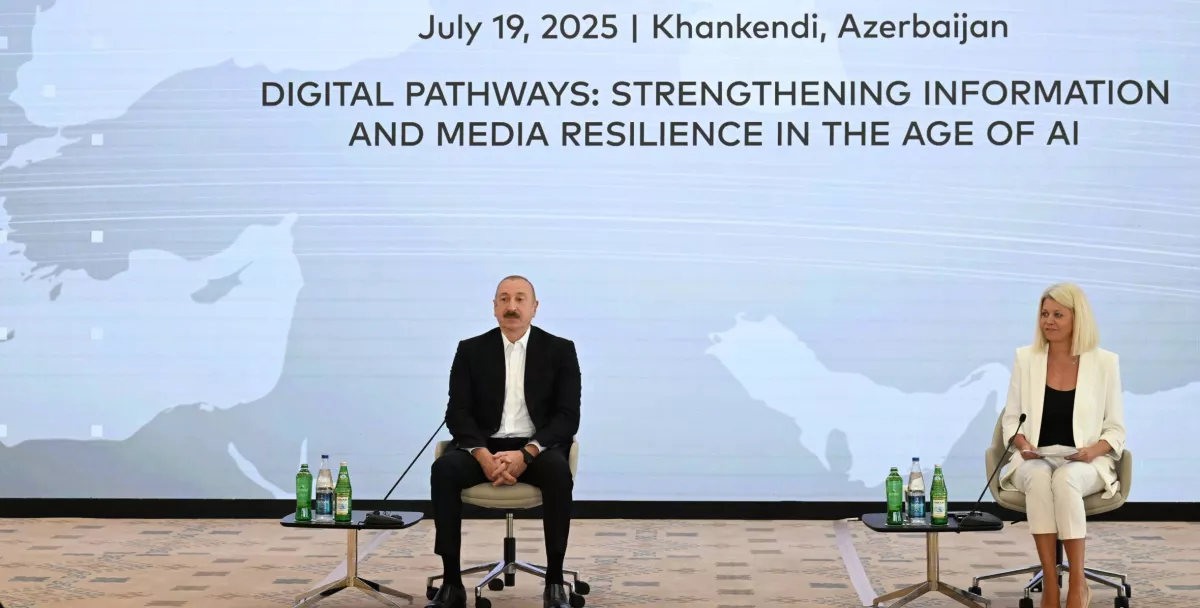
Thus, President Aliyev made yet another remarkably prescient prediction. Less than 20 days later, on August 8, 2025, at the world’s most important office, where Azerbaijan and Armenia initialled a peace agreement, Donald Trump noted that the sides had reaffirmed their commitment to establishing diplomatic relations and declared their respect for each other’s territorial integrity and sovereignty.
In this context, the White House chief said it was a great honor to see the “Trump Route for International Peace and Prosperity” — TRIPP — reflected in the signed documents, enabling Azerbaijan to gain full access to its Nakhchivan region while fully respecting Armenia’s sovereignty.
On the same day, the United States and Azerbaijan signed an agreement to expand cooperation in energy, trade, and technology, while also removing restrictions on cooperation in the defense sphere. In other words, Trump suspended the notorious Section 907.
As President Ilham Aliyev emphasized in this regard, “it’s a day which will be remembered by the people of Azerbaijan with a feeling of pride and gratitude towards President Trump for his attitude towards Azerbaijan [...] We are starting a path towards a strategic partnership.” On August 25, the Azerbaijani leader expressed his gratitude to Trump for supporting a peaceful settlement in the South Caucasus and for a gift: photographs bearing an autograph and words of goodwill. The inscription on the photograph read: “Ilham, You are Great Leader!”
Soon afterward, the Azerbaijani head of state emphasized that he was proud of the US president’s attitude toward him as a friend. A month later, at the official reception marking the 80th session of the UN General Assembly, Donald Trump, in the presence of a large gathering of guests, said of our President: “I'm very proud of you.”
As a result, when summing up 2025, the Azerbaijani president described it as a turning-point year. At the heart of this assessment was the recognition that cooperation with Azerbaijan, a country possessing strong potential and influence in the region, is important for the United States, just as relations with Washington are important for Baku. It was in Washington that Azerbaijan consolidated its brilliant victory achieved on the battlefield in the political sphere, while the opening of the Zangezur Corridor was confirmed by the American president.
At the same time, the beginning of 2026 was marked by the signing of the Charter on Strategic Partnership between the United States and Azerbaijan. This was followed by Ilham Aliyev’s participation in the first meeting of the Board of Peace in Washington, where Trump emphasized in his remarks: “You know, when you go to wars, it costs you 100 times what it costs to make peace. We have a man (President Ilham Aliyev – ed.) at the end, right there. He is smiling. That's finally because you learned that after 30 years of fighting – right, 30 years of fighting – we got it done. I want to thank you very much. It was a great thing you did.”
Surely, even such a brief excursion into the very recent past leaves one unable not to marvel at the subtlety and grandmaster-like precision with which Azerbaijan’s foreign policy has been shaped by its leader, President Ilham Aliyev, thereby securing for the Azerbaijani state the status of the principal architect of the new geopolitical reality.







 editor@caliber.az
 +994 55 444-88-98
 Азербайджан, Баку, ул. Низами, 203, Af Business House, 5-й этаж