










Population growth back in crosshairs of sustainability debate Analysis by Teymur Atayev
The world has now been presented with yet another scientific argument for artificially reducing the global population. This time, the call comes from Sustainable Development, which has published a study by an international group of scientists titled “Achieve Sustainability by Easing Population to 4 Billion by 2200”
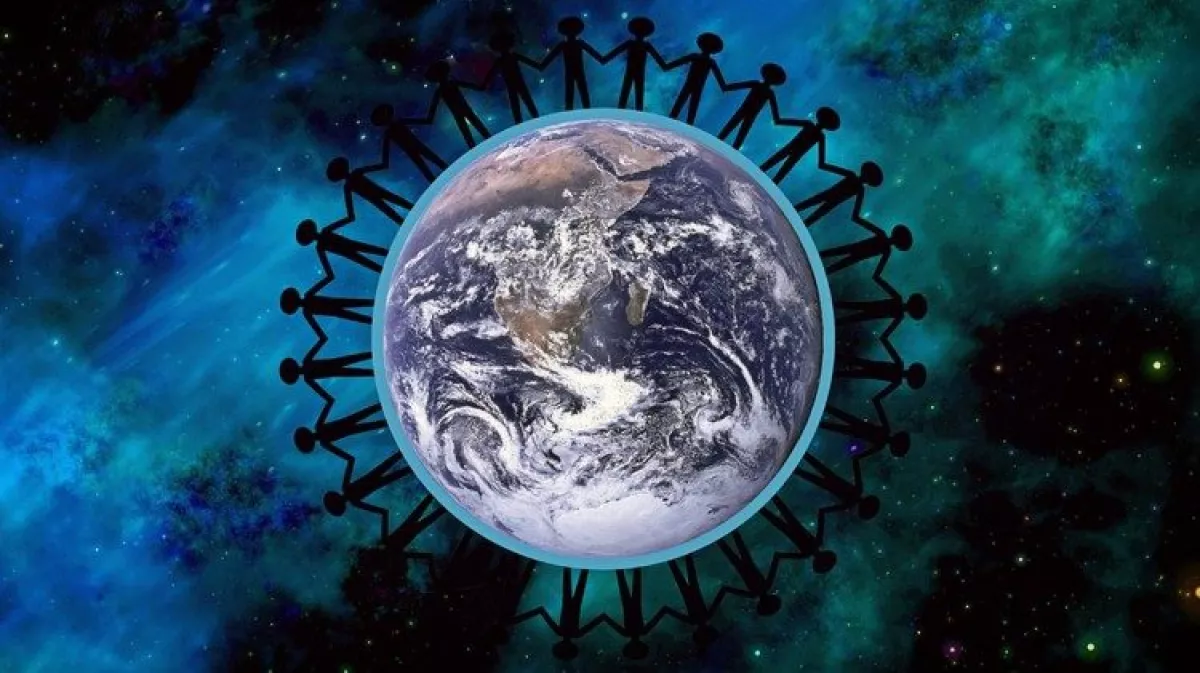
The study’s authors note that the global population has quadrupled over the past century, rising from 2 billion to 8.3 billion, and argue that this growth, combined with increased resource use, has contributed to undesirable environmental consequences. Against this backdrop, they advocate gradually reducing the global population to 4 billion or fewer by 2200.
The researchers stress that they do not propose achieving this goal through coercive or forceful measures. Instead, they support a voluntary approach aimed at reducing birth rates by expanding access to education, contraception and reproductive healthcare.
They describe this approach as a “pro-nature and pro-human strategy,” arguing that it would reduce pressure on natural resources, alleviate poverty in high-fertility regions by reducing family sizes, lower environmental pollution, and help contain conflicts linked to competition over resources and migration.
In this context, one cannot help but note that humanity has heard all this before, albeit under different pretexts. Surely, many readers will immediately think of the economist and demographer Thomas R. Malthus, who as early as 1798 proposed a theory aimed at curbing population growth. He argued that “the power of population is indefinitely greater than the power in the earth to produce subsistence for man.”
This was followed by the argument that preventing “excessive” population growth could, in effect, be achieved through wars or by deeming advances in medical science unnecessary — raising the question of whether epidemics should even be fought. Friedrich Engels, whose views on the matter require little introduction, described this approach as “the crudest, most barbarous theory that ever existed, a system of despair which struck down all those beautiful phrases about philanthropy and world citizenship.”
However, theories of this kind have never disappeared. For example, The Limits to Growth (1972), a report commissioned by the Club of Rome, argued that “if the present growth trends in world population, industrialization, pollution, food production, and resource depletion continue unchanged, the limits to growth on this planet will be reached sometime within the next one hundred years.”
Against this backdrop, the authors revived the idea of introducing what they described as perfect birth control, largely because they viewed population growth as the main obstacle to a more equitable distribution of the world’s resources.
Against this backdrop, the authors revived the idea of introducing “perfect birth control,” primarily because they saw population growth as the main obstacle to achieving a more equitable distribution of the world’s resources.

And now, Sustainable Development has given its pages to promoting this view, suggesting that the idea has by no means disappeared, despite having been repeatedly disavowed in various circles.
One response to what could be described as this anti-human idea is a study published by the Vatican this April, titled Integral Ecology in The Life of The Family. The study begins by noting a tendency within the international community to view population growth as the greatest threat to humanity, contributing to the adoption of sterilization practices in poor countries and the imposition of harsh birth-control measures. In contrast, the publication calls on families to “respect human life from conception to natural death," citing Pope Leo XIV’s remarks on the importance of contemplating creation in order to understand “the Lord’s original design.”
At the same time, the study defines the care of all other living beings, in accordance with the Creator’s design, as a fundamental calling for every individual. It stresses that people cannot “remain indifferent to the devastating and ongoing scenes of destruction, bombings, killings, the use of landmines, abductions and hunger in so many countries,” which it describes as violations of human rights.
Therefore, it argues, the focus of the struggle should not be on population growth, but on achieving “peace that is disarmed and disarming,” under conditions that foster genuinely integral human development and the real well-being of the entire human family in our common home.
Meanwhile, one of the fundamental principles of Islamic faith is that the Creator has provided sufficient resources for all living beings on Earth. In this context, the Quran describes Allah as the “Provider” and warns against killing one’s children out of fear of poverty: “We provide for them and for you” (Quran 51:58; 17:31).
Thus, Islam holds that human progress can be achieved not by controlling population numbers, but through the proper planning and management of human resources.

Against the backdrop of the Vatican’s call for a world without weapons, it is worth looking at some of the developments in this area.
The U.S. defence budget for fiscal year 2026 amounted to just over $900 billion, while in late June, Congress received a request for an additional $87.6 billion in defence funding. Meanwhile, in July, European Commission President Ursula von der Leyen said that the EU had a programme called “ReArm Europe,” which could mobilise up to €800 billion by 2030.
In addition, the EU’s new 2028–2034 budget includes €131 billion for military capabilities and €17 billion for military mobility, including roads, airports and other infrastructure.
Meanwhile, China’s defence budget rose to $275 billion in 2026.
The figures are striking, especially when compared with UN estimates that an additional $267 billion a year in social protection and investment would be needed to eradicate hunger worldwide — an amount equivalent to only about 0.3% of global GDP.
This raises a fundamental question: if the vast sums spent on weapons — spending that ultimately contributes to innocent deaths and forced displacement — were instead directed toward feeding the world’s hungry, would the argument that the planet is supposedly overpopulated because of insufficient resources still hold up?
Perhaps the real issue is not a shortage of resources, but how humanity chooses to use them. And perhaps redirecting even a fraction of global military spending toward meeting basic human needs would go much further toward building the world that, in the words of believers, the Almighty created for all of us.







 editor@caliber.az
 +994 55 444-88-98
 Азербайджан, Баку, ул. Низами, 203, Af Business House, 5-й этаж