










Ghosts of the past: Polish populism as a symptom of a pan-European crisis Analysis by Limansky
Kyiv has compared Poland to Germany under Adolf Hitler, prompting alarm in Brussels as well. So what does modern fascism actually look like, and can Polish populists be classified as fascists?
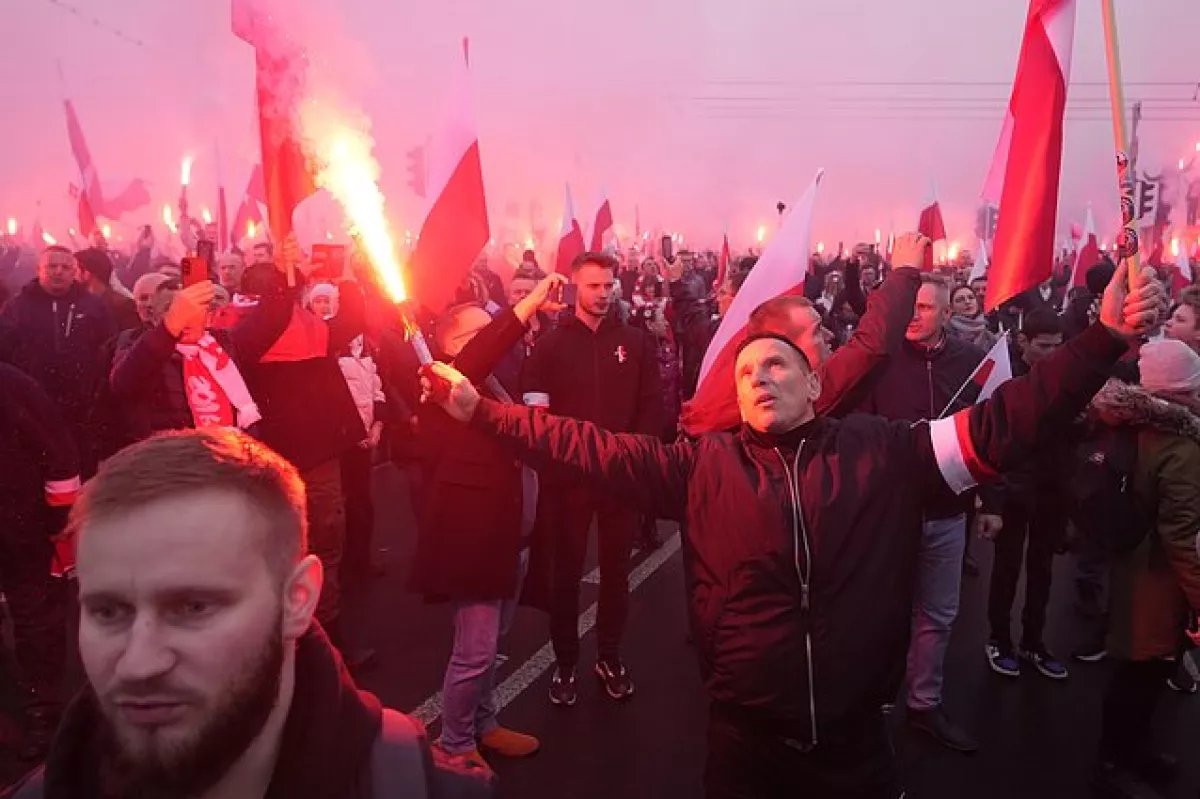
Is Nazism returning to Poland?
Artem Bronzhukov, deputy director of the Ukrainian analytical centre Politika, stated that “seeds of fascism” are visible in Poland, expressing the view that the country is undergoing processes resembling those seen in Germany “after Adolf Hitler came to power.”
Even during the rule of the national-conservative Law and Justice (PiS) party, the well-known former Solidarity trade union leader Lech Wałęsa claimed that it was “indulging fascism.” Following the victory of right-wing populist candidate Karol Nawrocki in Poland’s 2025 presidential election, Europe’s liberal establishment has once again voiced concern.
According to The Guardian, “The victory margin of the nationalist Karol Nawrocki in Poland’s presidential elections may have been wafer-thin, but it marks a huge upheaval in the country’s political landscape whose impact will be felt not just in Warsaw but across the EU.”
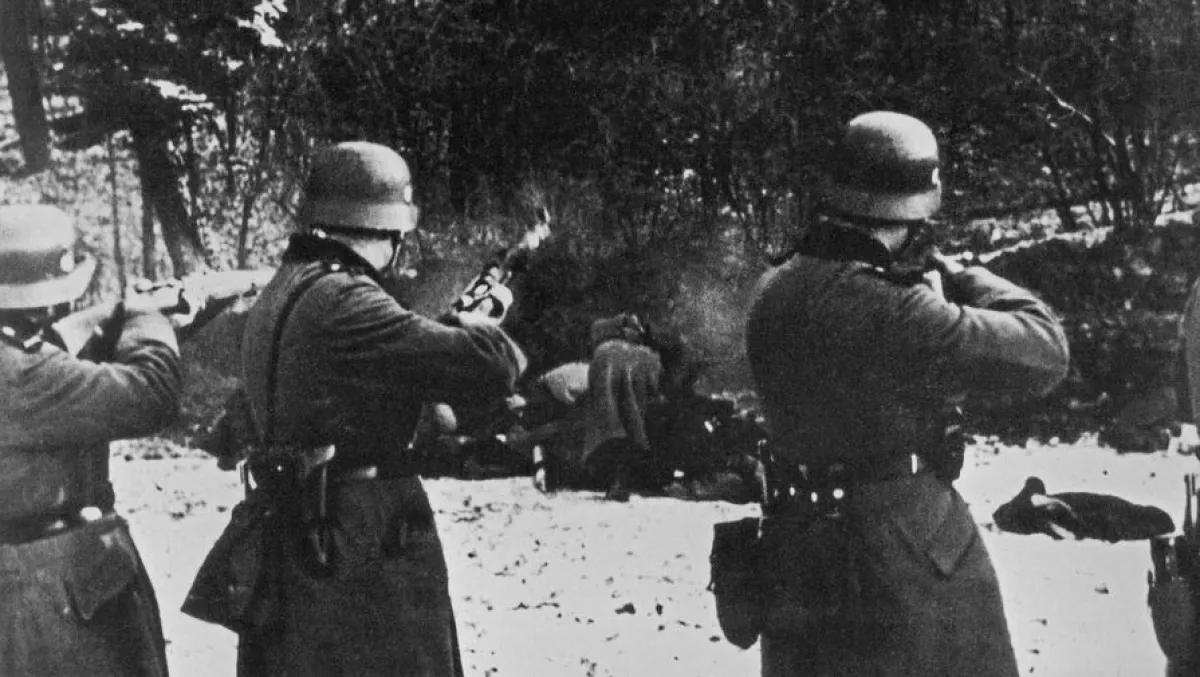
So, is Poland today really almost an equivalent of Germany in the 1930s? No. Comparing contemporary Poland with the German Führer and the circumstances surrounding his rise to power is completely inappropriate. After the Soviet Union, Poland suffered more than any other country at the hands of the Nazis, who killed around six million people there. As a result, Poles have a deeply rooted attitude toward Hitler and Nazism, and this is reflected even in how they perceive present-day Germans from the Federal Republic of Germany.
But some might object that modern fascism can take many forms. Today, with the exception of a few enthusiasts of political cosplay, hardly anyone dresses in brown shirts and harnesses anymore. The de facto heirs of the “Third Reich” now tend to prefer respectable suits and the image of civilized European politicians. More on that later. But if we are talking about the classic manifestations of fascism, have they really become so widespread in the modern Polish Republic?
Civilized extremes
Poland is indeed home to several far-right parties, such as the National Radical Camp (ONR) and the National Rebirth of Poland, as well as underground groups of an openly neo-Nazi nature, including cells of the international racist network Blood & Honour and others.
However, all of them remain marginal for now, while police regularly take appropriate measures against far-right groups prone to street violence. At the same time, far-right organizations exist in almost every country of the “Western” democratic world, as well as in Ukraine, Russia, Armenia and elsewhere. The difference is that in some cases they are forced to operate discreetly and limit their propaganda and activities, while in others, far-right groups have even managed to establish their own legal armed formations.
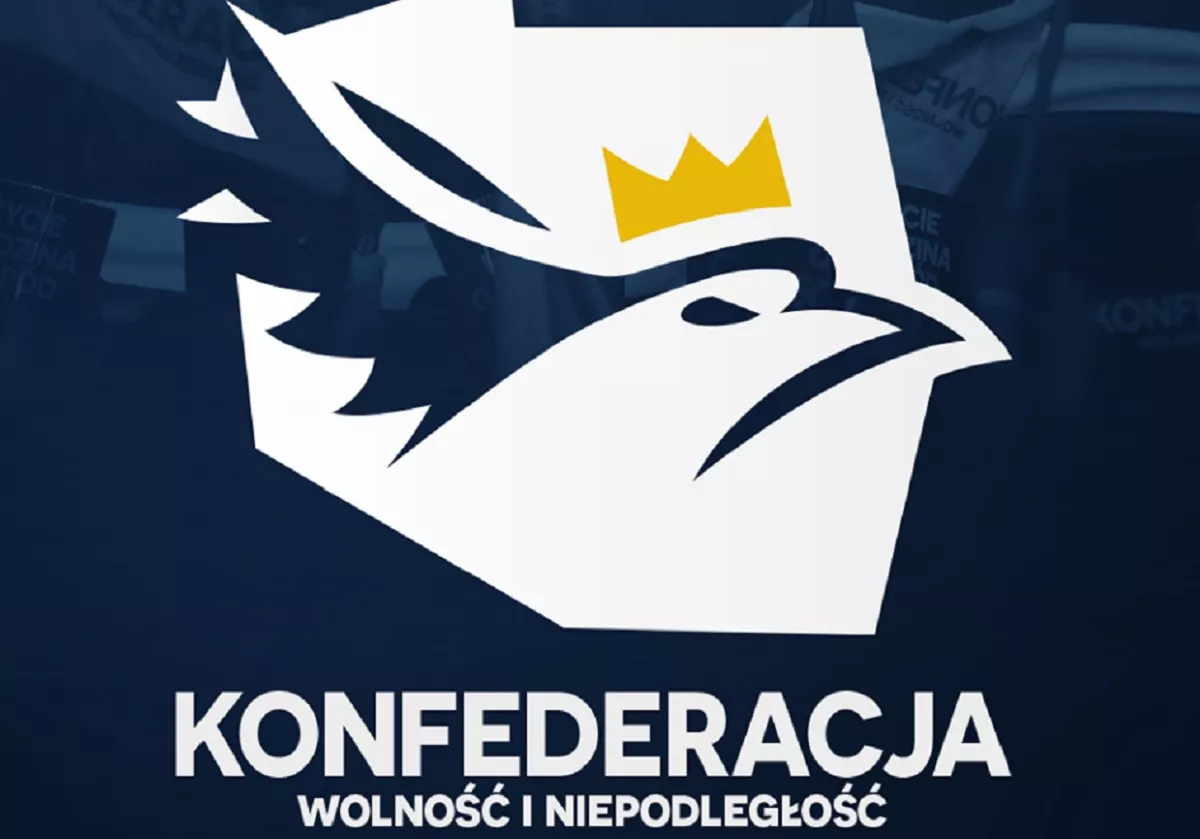
However, Poland is indeed experiencing a dramatic surge in the popularity of parties that are classified as far-right by European political standards, albeit “civilized” and parliamentary ones. And with parliamentary elections due in 2027, this is causing considerable concern among Poland’s liberal camp, as well as among liberal circles across Europe and, as we can see, in Ukraine.
According to polls conducted in July 2026, the far-right Confederation of Liberty and Independence, led by Sławomir Mentzen and Krzysztof Bosak, is now supported by 13.3% of Poles, with its rating rising by 0.8 percentage points in just one summer month.
Another far-right party, Grzegorz Braun’s Confederation of the Polish Crown, has also improved its standing, rising from 8.8% to 11%. Combined, the far right has surpassed the former ruling Law and Justice (PiS) party for the first time in history, whose support has fallen from 25.4% to 23.2%.
PiS itself was previously regarded as a conservative party, but it is increasingly being classified as right-wing populist. Support for the liberal Civic Coalition, currently in government, has also declined, from 30.9% to 29.1%, although it remains in first place. Another 8.4% support the centre-left parties that are the liberals’ coalition partners.
But if the two “Confederations” and PiS were able to reach an agreement, they would be the ones to form the next government. Fortunately for pro-European liberals, however, there is deep hostility between the far-right “Confederations” and the populists of Law and Justice.
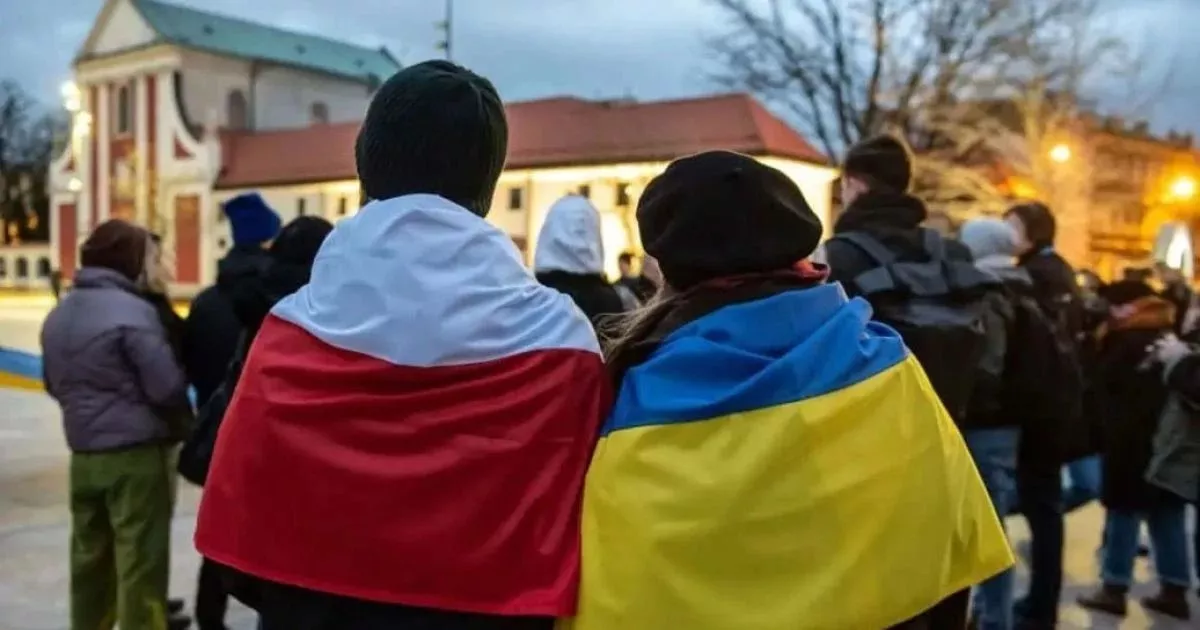
It is no secret that the surge in popularity of far-right nationalist parties in Poland is linked to a sharp rise in anti-Ukrainian sentiment. And who else could right-wing populists exploit politically if not Ukrainians who fled the war and brought with them problems—real or perceived—for Polish society? After all, there are virtually no migrants from other countries in Poland, as they were not allowed in under either conservative or liberal governments.
Now, even the far-right nationalists are competing for the anti-Ukrainian political niche. On August 6, for example, PiS announced that, if it returned to power, it would deport Ukrainian men of conscription age who do not have a legal right to work in Poland.
But Paweł Liskowski of the Polish Thought Club reminded his competitors from Law and Justice that, allegedly, they were the first to launch the “Ukrainization of Poland” and to start referring to Poles as “servants of the Ukrainian nation.”
This is probably what the Ukrainian analytical centre Politika had in mind when referring to the “similarity” between Poland and Germany under Adolf Hitler. However, xenophobia and right-wing populism that capitalizes on it are commonplace in Western democracies. There is no totalitarianism, National Socialism, or threat of a transition toward either in present-day Poland.
Even in the event of a hypothetical victory for right-wing populists in the upcoming Sejm elections, they would be unlikely to form a governing coalition for a number of reasons. Moreover, their political platform is far removed from that of the NSDAP. They are libertarians—in essence, radical liberals—who advocate the utopian idea of completely eliminating the state’s role in the economy.
Unlike Germany in the 1930s, they have no ambitions of global or European hegemony, are skeptical of European integration, and hold a number of other views that set them apart.
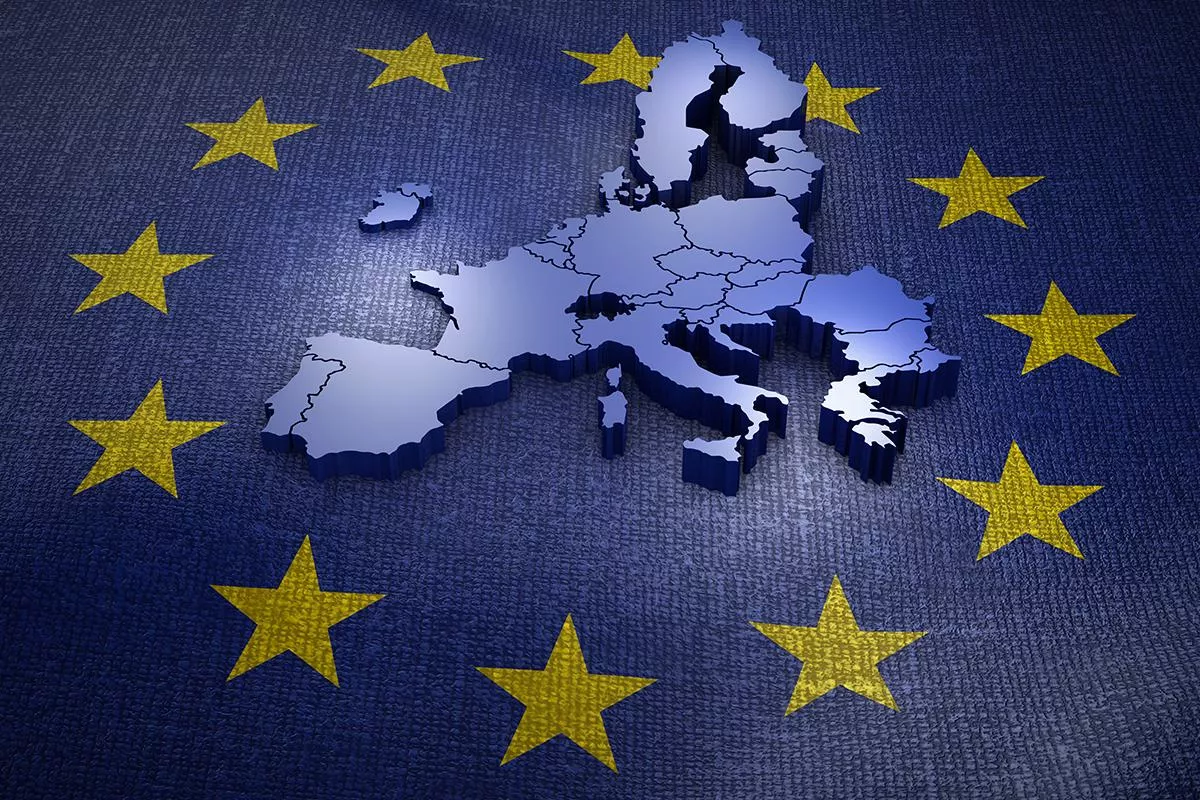
But there is indeed a problem, and it concerns far more than Poland alone. Europe as a whole is rapidly shifting to the right. In both Germany and France, support for far-right parties is reaching record highs, increasingly squeezing out traditional centre-right and centre-left parties. Similar trends are also emerging in a number of countries outside the EU. Islamophobia, extreme nationalism, populist propaganda, incitement to hatred, and reliance on coercive methods are becoming a truly international trend.
And the problem is by no means simply the result of a few “bad” politicians, biased media outlets, or intolerant attitudes among particular social groups, whether members of the elite or those on the margins of society. Rather, the current global order, built on the foundations of neoliberal capitalism, is beginning to crack under pressure. Various radical-populist programmes are emerging as a response to this crisis. Yet their primary objective is not to change the existing system, but to preserve it by using demagogic rhetoric to divert public attention from the real problems.







 editor@caliber.az
 +994 55 444-88-98
 Азербайджан, Баку, ул. Низами, 203, Af Business House, 5-й этаж