










Geopolitics of aviation fuel and the Azerbaijani factor of stability Overview by Khazar Akhundov
Against the backdrop of the conflict in the Middle East, which has led to a shortage of aviation kerosene, the scale of the fuel crisis in civil and cargo aviation is also growing, becoming a subject of discussion. In particular, the current situation in this sector and forecasts for the fuel market were discussed at the 82nd Annual General Meeting of the International Air Transport Association (IATA) and the World Air Transport Summit (WATS), held in Rio de Janeiro, Brazil.

Prior to the conflict between Iran and the US–Israel bloc, countries of the Persian Gulf supplied approximately one quarter of all aviation fuel deliveries to Europe, while more than 33% was directed to African countries. However, for more than three months now, this process has been severely disrupted due to the de facto blockade of the Strait of Hormuz, damage to production infrastructure, and destruction of terminal facilities in the ports of Gulf states. Moreover, facing restrictions on free navigation, regional countries have been forced to limit the volume of petroleum product output—primarily aviation fuel—due to terminal congestion and difficulties in the long-term storage of jet fuel.
The Middle East crisis remains unresolved despite ongoing US–Iran negotiations. In particular, following Iran’s attacks on northern Israel, the Israeli army (IDF) carried out strikes on military targets in the central and western parts of the Islamic Republic. Investors and stock markets reacted immediately to this escalation with a 4.55% rise in August futures for Brent crude oil, which climbed to $97.33 per barrel. Such pressure on the market inevitably translates into rising prices in the fuel segment.
Against this backdrop, the global aviation market had already faced a shortage of jet fuel supply by the end of April. According to the Financial Times (FT), global airlines began reducing the number of seats in their May schedules by around two million passengers amid concerns over fuel availability. However, these measures do not solve the problem, and according to forecasts by the International Energy Agency (IEA), if current trends persist, the global aviation market will inevitably face a large-scale systemic crisis this summer. This is not surprising, as jet fuel reserves in a number of regions worldwide have fallen to critically low levels, threatening disruptions to flight schedules during the peak summer tourist season.
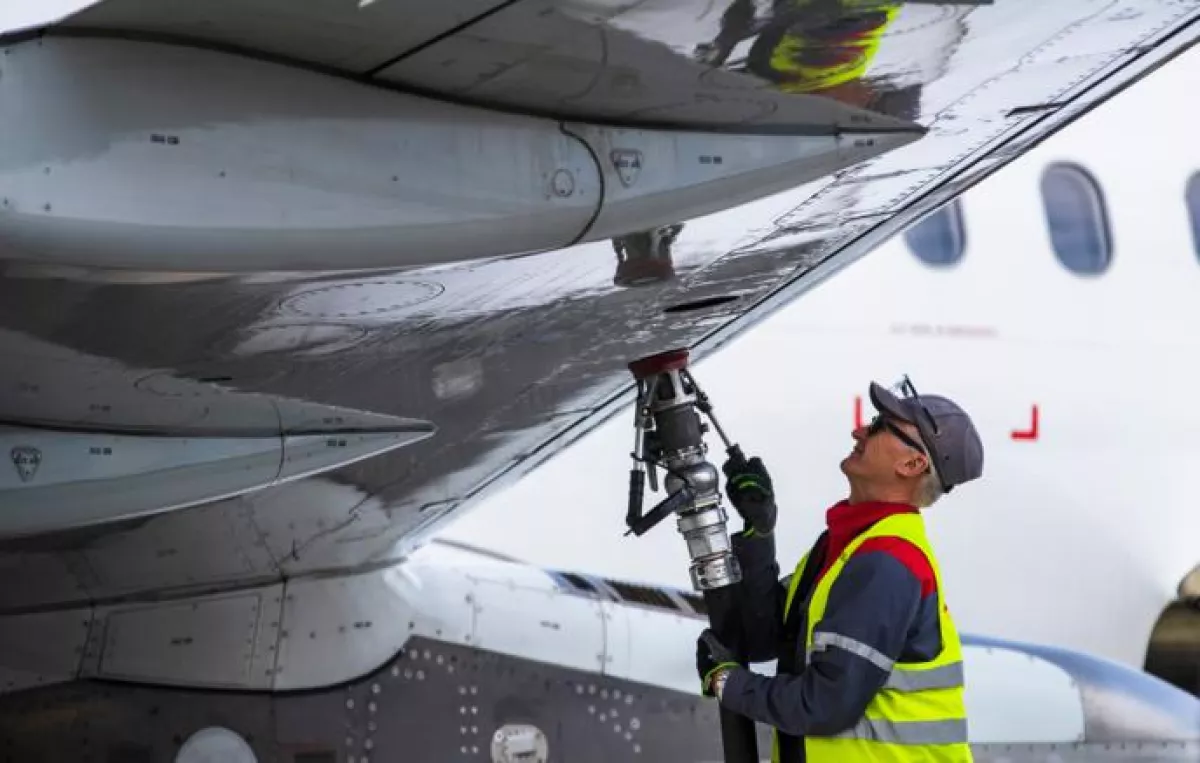
Since the beginning of the Middle East conflict, jet fuel prices have doubled in Southeast Asian countries, while in Europe they have increased by 70%. At the same time, the most affected airlines have been forced to significantly raise ticket prices.
The situation is further complicated by a 13% reduction in aviation kerosene production in Europe compared to pre-COVID levels, while in the United Kingdom the decline has reached 42%.
In June, conditions in the global fuel market did not improve. On the contrary, the aviation industry faced a dual crisis: a rapid increase in the cost of jet fuel and critically insufficient supplies of “green” synthetic aviation fuel. These issues were also discussed during the IATA and WATS meeting in Rio de Janeiro.
According to Marie Owens Thomsen, Senior Vice President for Sustainability and Chief Economist at IATA, speaking at a press conference during the event, “the entire global economy remains dependent on fossil fuels. Today, more than 80% of global energy consumption comes from fossil fuels, while renewable sources account for less than 20%. Therefore, rising prices for oil, which is used in virtually all sectors, push up prices throughout the entire economic chain, which, in turn, slows global economic growth. This relationship can be described as follows: every $10 per barrel increase in the price of Brent can reduce global GDP growth by approximately 0.1 percentage points.”
She also stressed that jet fuel prices are rising significantly faster than crude oil itself. The average price of jet fuel is expected to reach $152 per barrel in 2026, while the average price of Brent crude is projected at $95 per barrel.
The IATA Senior Vice President noted that the financial sector and the oil and gas industry traditionally demonstrate much higher profitability than the aviation industry. According to her, the net margin of the aviation sector has never exceeded 5%, and in this context a 2% net margin corresponds to roughly $23 billion in profit for the entire global aviation industry.
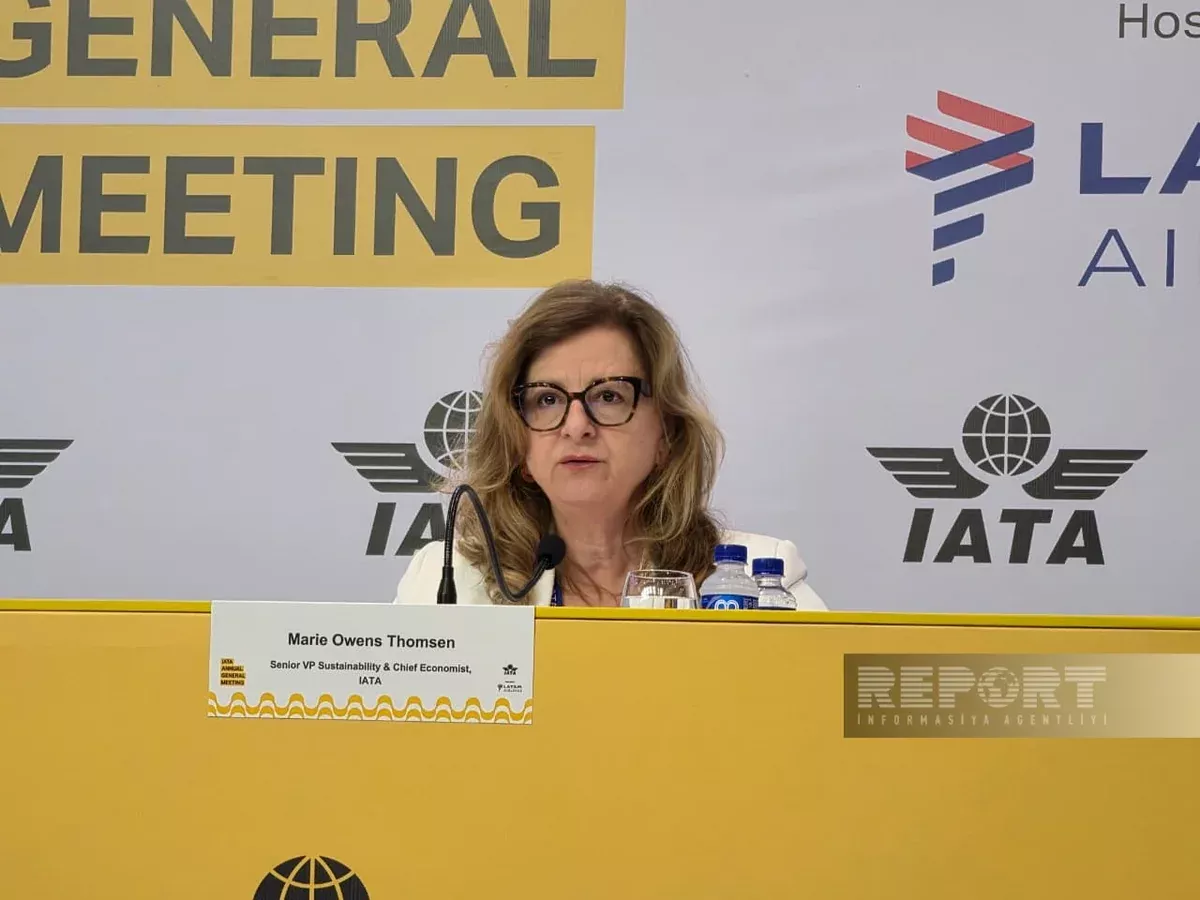
At the same time, Marie Owens Thomsen recalled that IATA had previously estimated fuel costs to account for around 27% of total airline expenditures in 2026. However, this forecast has now been revised upward: “Today we expect the share of fuel costs to reach 31% of total industry expenses, and if you divide the projected global aviation profit of $23 billion by the total number of passengers, it comes out to just $4.5 per person—less than the price of a hot dog at most stadiums during a FIFA World Cup.”
The current situation is further exacerbated by the lack of viable options to partially replace aviation kerosene with alternative fuels, as global efforts to scale up production of sustainable aviation fuel (SAF) have largely fallen short. This environmentally friendly fuel, produced from renewable feedstocks such as vegetable oils, fats, and algae, can reduce CO2 emissions by up to 80% and is used in blends of up to 50% with conventional jet fuel without requiring modifications to aircraft engines.
However, according to IATA data, global SAF production in 2026 reached only 2.4 million tonnes, which represents just 0.8% of total jet fuel consumption.
At the same time, during the annual meeting, Preeti Jain, Head of Research and Programmes for Achieving Net Zero at IATA, told the media that by 2030, the European aviation sector alone would require nearly 600,000 tonnes of synthetic sustainable aviation fuel. To meet projected demand, current SAF production capacity would need to be increased thirtyfold, with around 20 additional commercial plants required.
However, the organisation believes that, given the substantial financial costs, operational complexities, and long implementation timelines of such projects, the “window of opportunity” for launching new plants by 2030 is now effectively closing.
The consequences of the aviation fuel shortage are felt to a much lesser extent in countries with developed oil refining industries, including, without doubt, Azerbaijan. As noted at the event by Rafael Schvartzman, IATA Regional Vice President for Europe, “for Azerbaijan, the current situation is not a serious problem—the country has both sufficient fuel volumes and a well-developed logistics system for its supply.”
The availability of domestic crude oil and the reconstruction of the Heydar Aliyev Oil Refinery have significantly strengthened import substitution capabilities in the domestic fuel market. The refinery produces Euro-5 standard diesel fuel and gasoline, and modernisation work is ongoing on jet fuel production units that meet international standards for turbine engines, including kerosene fractions such as TS-1A.
In the near future, once the Heydar Aliyev Oil Refinery reaches full capacity, jet fuel production is expected to reach 1 million tonnes per year. At the same time, in 2025, output amounted to 690.700 tonnes, representing a 22.9% increase.

In the current crisis situation, the priority is maintaining a balanced fuel supply system, under which export deliveries are made only when there is a domestic surplus. The bulk of jet fuel is used to meet the growing needs of Azerbaijani carriers—AZAL and Silk Way Airlines—which are supplied at specially regulated domestic tariffs, helping to restrain ticket price growth and maintain competitiveness.
Jet fuel is also supplied for transit and other flights of foreign airlines operating in the country. The largest customers in 2024–2025 included Luxembourg (cargo carrier Cargolux Airlines International S.A.), as well as Russia, Türkiye, the United States, and France.
It is also worth noting that Heydar Aliyev International Airport (GYD) uses a differentiated pricing system for jet fuel, linked to international Platts S&P Global Platts benchmarks. This allows the airport to offset costs for different categories of carriers while taking into account global market volatility.
Depending on the category of foreign airlines, there is a standard commercial tariff for core carriers operating under long-term contracts, as well as an index-based rate applied to irregular, charter, and cargo flights.
In terms of fuel pricing levels, the country remains in a significantly more favourable position compared to regional partners. For comparison, in the airports of Tbilisi, Kyiv, and several Eastern European countries, the cost of a tonne of jet fuel reaches $2,000; at Istanbul airports, it exceeded $1,900 in April; and in Pakistan, minimum prices in early June started from $2,100 per tonne.
Thanks to this flexible mechanism, local airlines are under no circumstances exposed to fuel shortages, while competitive kerosene pricing for foreign carriers is maintained. This enhances the attractiveness of Heydar Aliyev International Airport as a leading Eurasian aviation hub and supports the development of other international airports across the country’s regions.







 editor@caliber.az
 +994 55 444-88-98
 Азербайджан, Баку, ул. Низами, 203, Af Business House, 5-й этаж