










Georgia and Kyrgyzstan: from Soviet periphery to heart of Eurasia Article by Vladimir Tskhvediani
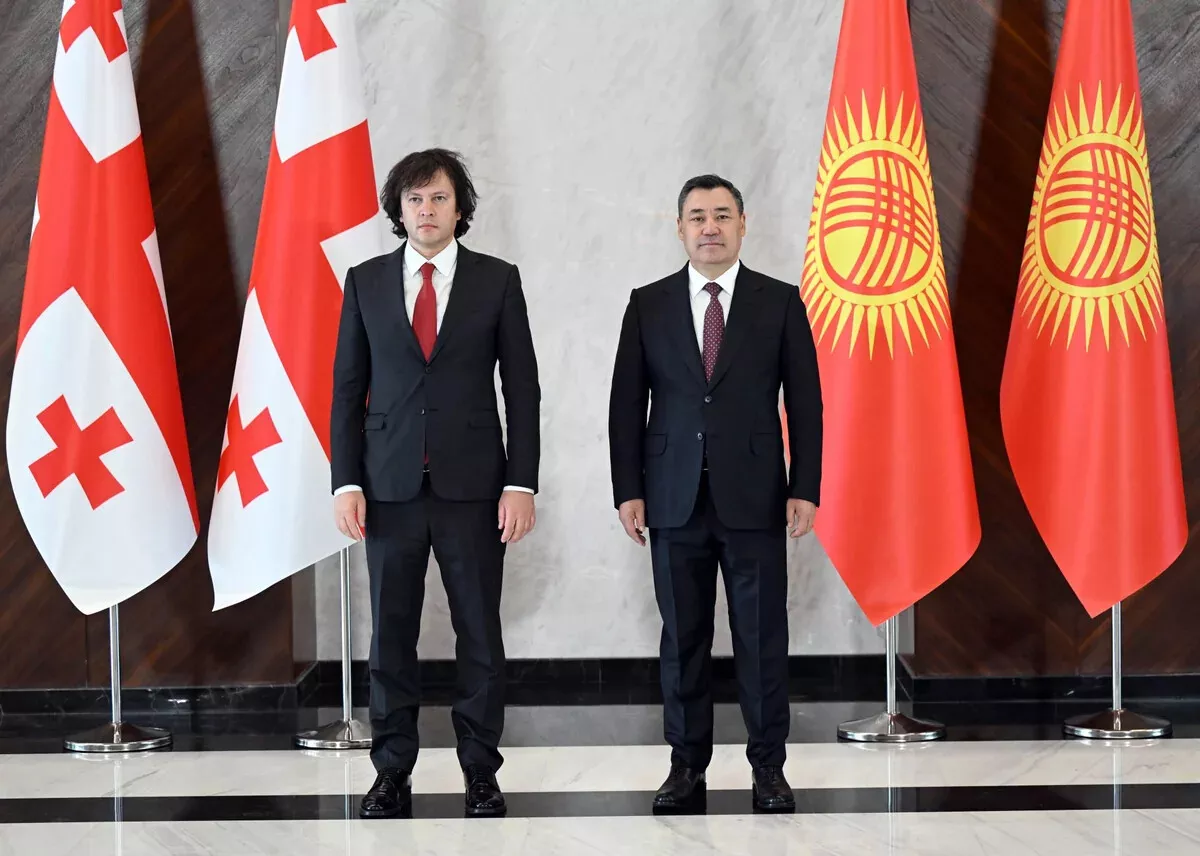
Georgia is building relations with the countries of Central Asia directly, without “supervision” from the leading geopolitical powers. The official visit of Georgian Prime Minister Irakli Kobakhidze to Kyrgyzstan on June 11–12, 2026, provided a vivid illustration of this trend.
During the Soviet era, interaction between the “peripheral” republics that did not share a common border was generally conducted through the Union’s central authority—Russia. In today’s geopolitical realities, however, this situation is changing.
Georgia and Kyrgyzstan, despite being geographically distant from one another, have found themselves situated along Eurasia’s most promising transit route—the Middle Corridor. Military conflicts in Ukraine and the Middle East have further increased its strategic importance. For Kyrgyzstan, a landlocked country, Georgia’s ports have consequently become the closest gateway to the global ocean, accessible via the Caspian Sea, Azerbaijan, and Georgia.
According to the results of 2025, Kyrgyzstan became Georgia’s leading foreign economic partner in terms of exports. However, this was largely driven by shipments of used vehicles, primarily imported from the United States. Only about 2 per cent of the cars re-exported through Georgia ultimately reach the Kyrgyz market, while the vast majority are destined for Russia. In 2026, cooperation between Georgia and Kyrgyzstan in the automobile trade continued: during the first four months of 2026, approximately 22,000 vehicles were shipped to Kyrgyzstan through Georgia’s ports.
It is evident that a business model based on automobile re-exports cannot serve as the foundation for long-term economic relations. Far greater potential lies in cooperation between Georgia and Kyrgyzstan within the framework of developing the Middle Corridor, especially given that the highly promising so-called Southern Route passes through Kyrgyz territory. Its importance is expected to grow further with the construction of the China–Kyrgyzstan–Uzbekistan railway.
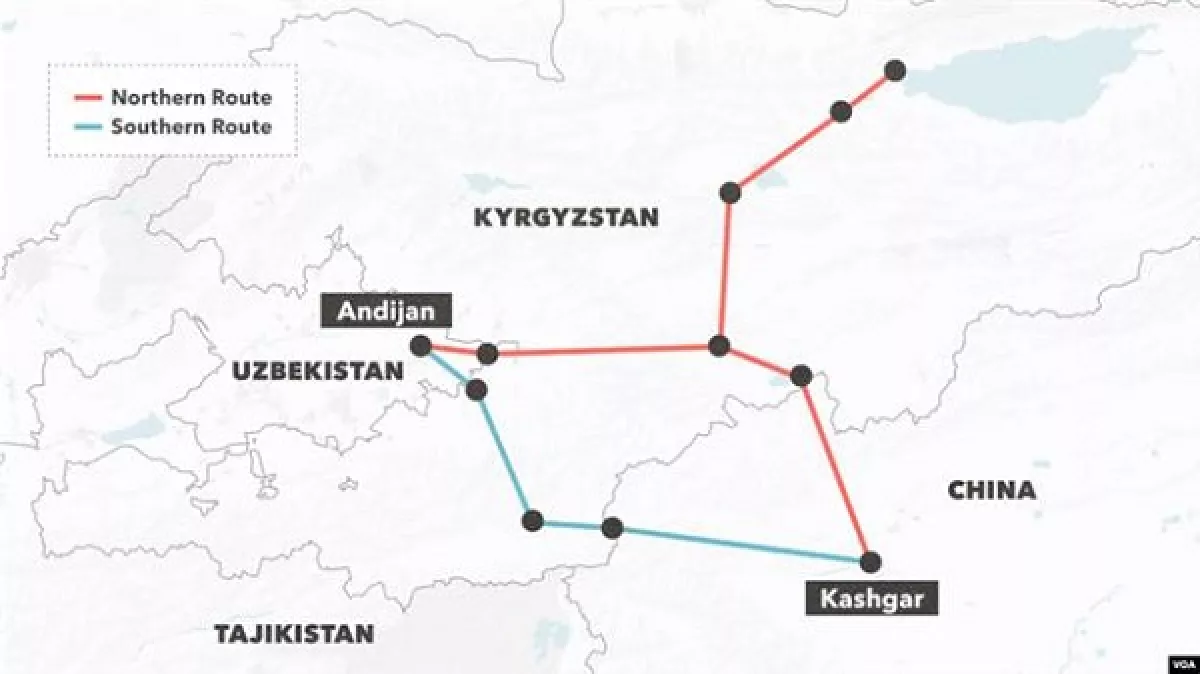
Construction of the railway linking the city of Kashgar in China’s Xinjiang Uyghur Autonomous Region with Kyrgyzstan via the Torugart Pass, the Makmal transshipment station, and the Kyrgyz city of Jalal-Abad began in 2025. In the Jalal-Abad area, the line will connect with Uzbekistan’s railway network. The project is of great importance for Kyrgyzstan itself, as international transit is expected to stimulate the development of the country’s southern regions.
From Uzbekistan, rail freight can reach the Caspian Sea through either Kazakhstan or Turkmenistan. In particular, the port of Turkmenbashi International Seaport, which has undergone extensive modernisation in recent years, is capable of handling up to 17 million tonnes of cargo annually. From there, a ferry connection with Azerbaijan has already been established, allowing goods to continue onward by rail to Georgia.
Interestingly, Russia has also shown interest in the growing transit potential of the Southern Route of the Middle Corridor, which runs through Kyrgyzstan, Uzbekistan, Turkmenistan, and the Caspian Sea. Russian officials have proposed redirecting a portion of Kyrgyz transit traffic away from the traditional overland route through Kazakhstan and instead through Uzbekistan, Turkmenistan, the Caspian Sea, and Russia’s own Caspian ports.
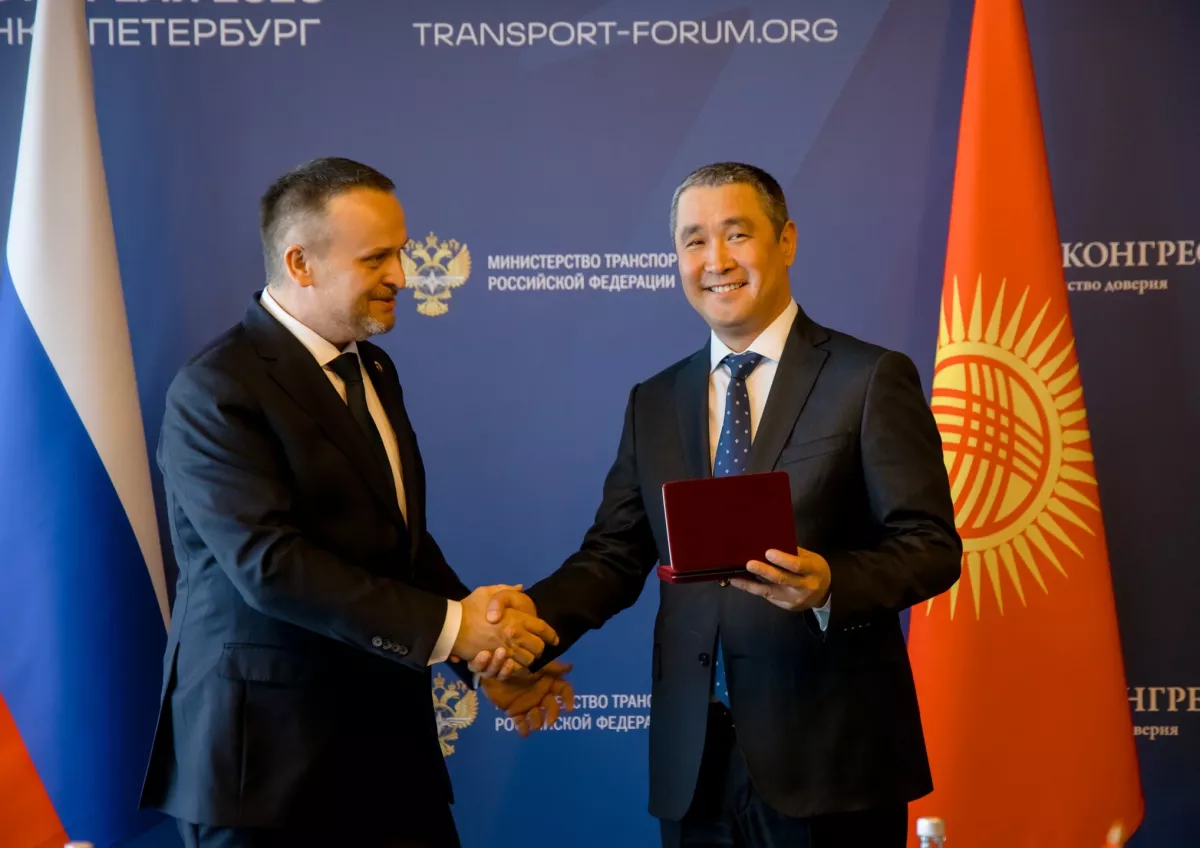
In early April 2026, during the International Transport and Logistics Forum in St. Petersburg, Kyrgyz Minister of Transport and Communications Talantbek Soltobaev and Russian Transport Minister Andrei Nikitin discussed the launch of an international logistics corridor across the Caspian Sea. The proposed route would pass through Uzbekistan to the port of Turkmenbashi International Seaport and onward to Russian ports. At the same time, it was emphasised that this corridor could operate in conjunction with existing freight transit routes from Kyrgyzstan through Kazakhstan, as well as through the South Caucasus and Georgia’s ports.
Thus, for Kyrgyzstan, the development of transport links along the Middle Corridor is of interest not only as a route bypassing Russia, but also as an alternative logistical connection with Russia itself—a country with which Bishkek has no intention of completely severing cooperation within the framework of the Eurasian Economic Union.
On June 12, 2026, following talks with Irakli Kobakhidze in Bishkek, President of the Kyrgyzstan Sadyr Japarov made a statement to the media in which he placed particular emphasis on cooperation aimed at integrating the China–Kyrgyzstan–Uzbekistan railway with Georgia’s port infrastructure.
For his part, Kobakhidze thanked Kyrgyzstan for its support of Georgia’s territorial integrity in a statement to the press. He also emphasized the importance of developing the Middle Corridor and expressed strong interest in the China–Kyrgyzstan–Uzbekistan railway project.
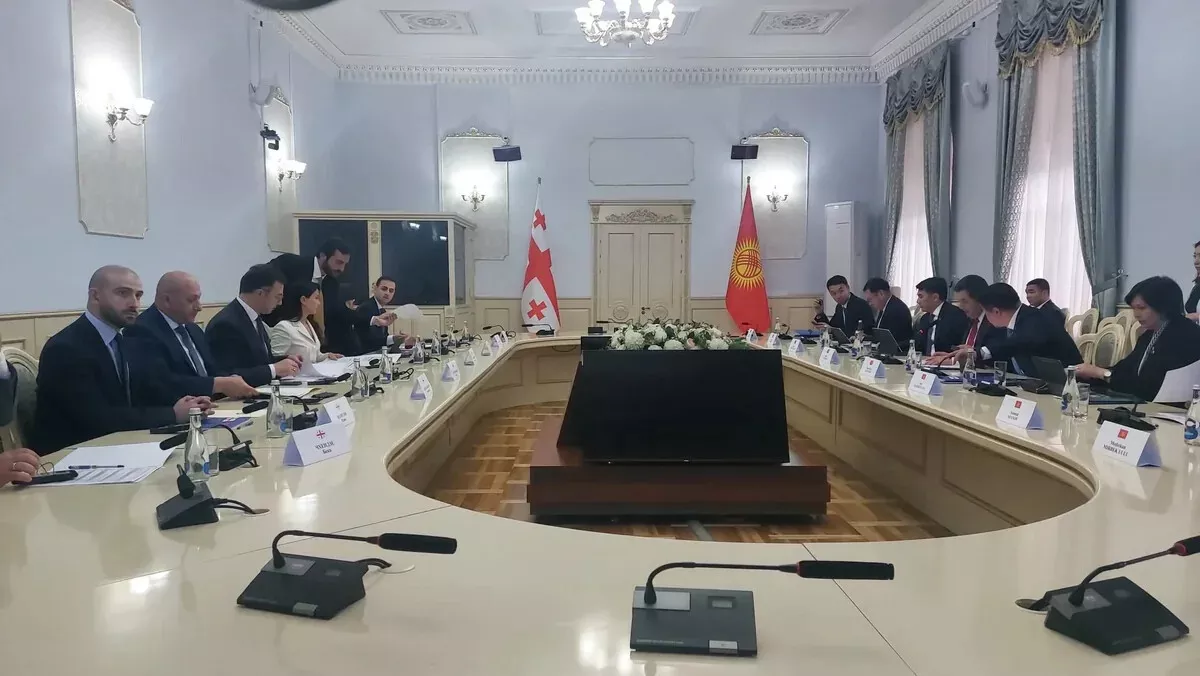
During the Georgian prime minister’s visit to Kyrgyzstan, the two sides signed a package of agreements covering a broad range of areas of cooperation. They agreed to strengthen collaboration between the civil aviation authorities of both countries, expand cooperation in state property management, veterinary supervision, and livestock development. In addition, a cooperation program between the foreign ministries of Kyrgyzstan and Georgia for 2027–2028 was approved.
In addition, Bishkek and Tbilisi concluded an agreement on the advance exchange of information regarding goods and vehicles transported between the two countries. Separate arrangements were also reached in the fields of radiation protection, nuclear safety, and the physical protection of nuclear facilities. Following the talks, the parties signed a memorandum of cooperation in the field of education.
It is also symbolic that Sadyr Japarov invited Georgian athletes to take an active part in the Sixth World Nomad Games, which will be held in 2026 in Kyrgyzstan. The role of nomadic and semi-nomadic pastoralism, along with the cultural traditions associated with it, is being re-evaluated today in many countries, not only among Turkic nations. Historically, a form of transhumant livestock herding closely related to nomadic pastoralism was widespread in Georgia, practised not only by the Turkic populations living in the country but also by ethnic Georgians, particularly among ethnographic groups such as the Mokhevians and the Tushetians.
The promotion of traditions associated with nomadic and semi-nomadic ways of life could contribute to the economic revitalisation of Georgia’s mountainous livestock-breeding regions, and in this regard, Kyrgyzstan’s experience may prove particularly valuable.
By Vladimir Tskhvediani, Georgia, exclusively for Caliber.Az







 editor@caliber.az
 +994 55 444-88-98
 Азербайджан, Баку, ул. Низами, 203, Af Business House, 5-й этаж