










Azerbaijani community in Belarus A story of respect, development and equality
The 15th Republican Festival of National Cultures took place in Grodno on 5–7 June. One of its most prominent participants was the Azerbaijani community in Belarus, which showcased the richness of its culture and traditions. What principles underpin Belarus’s policy of interethnic harmony?
“People have been drawn to us - we must not push them away”
The importance attached to friendship among peoples in Belarus is illustrated by the fact that the Grodno festival was opened by the President of Belarus, Alexander Lukashenko himself. At that moment, it began to rain, and the head of state joked that he had decided to bring Grodno residents not only a hospital as a gift, but also rain.
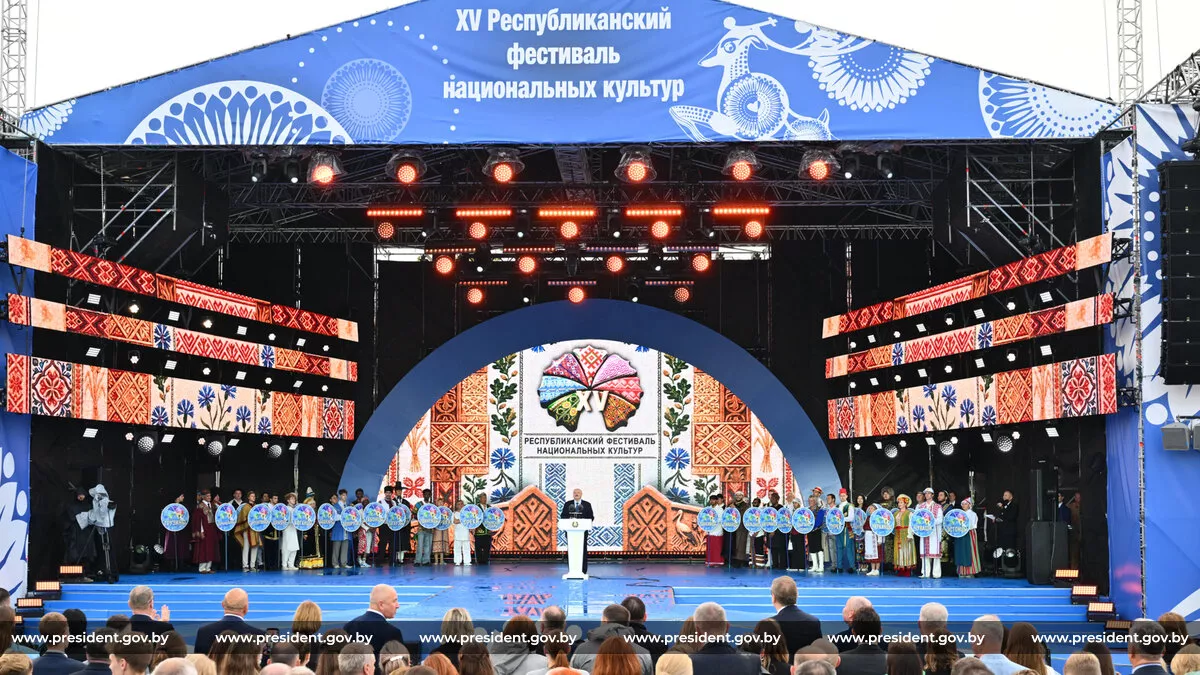
Alexander Lukashenko described the unique character of the festival as follows: “The idea of this celebration reflects the rich history of our native land. This land is located at the crossroads of trade routes, where civilisations met (and clashed), where peoples met, religions met, where our national mentality was formed. This means openness, hospitality, the ability to work together, to be friends, and the readiness to welcome everyone who comes in peace and with goodwill. People have been drawn to us - we must not push them away. We must show our openness. If we take pride in our mentality and our hospitality, we must demonstrate that hospitality. Everyone should feel good living in our Belarus. This is our future.”
The Belarusian president noted that representatives of different ethnic groups living in the republic help maintain good relations with their countries and act as true people-to-people diplomats. He also expressed support for interethnic families, which have become a normal part of Belarusian society and in which “wonderful, beautiful, intelligent children” are born.
In the early 1990s, forces in the country became more active in promoting ideas of extreme nationalism and intolerance toward other peoples as an official doctrine. After Alexander Lukashenko became president of the country in 1994, such tendencies were brought to an end.
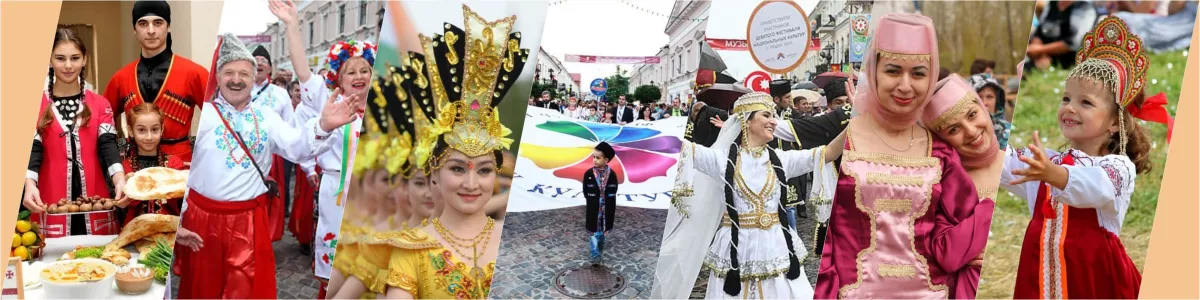
The first Festival of National Cultures in Belarus was held 30 years ago, in 1996. At that time, representatives of 11 nationalities took part, whereas in 2026, more than 40 nationalities were represented.
From a regional event, it has evolved into a nationwide Festival of National Cultures. In a colourful theatrical procession through Grodno on the first day of the festival, 800 people in ethnographic costumes took part — a record number of participants. From the traditional national belts worn by participants, a “Costume of Unity” was assembled on the main stage.
The festival brought together Belarusians, Russians, Ukrainians, Jews, Poles, Roma, Tatars, Crimean Tatars, Moldovans, Gagauz, Dagestanis, Georgians, Armenians, Uzbeks, Tajiks, Turkmen, Kazakhs, Bashkirs, Udmurts, Chuvash, Buryats, Latvians, Lithuanians, Estonians, Koryaks, Czechs, Greeks, Chinese, Koreans, Mongols, Argentinians, Gabonese, Guineans, Egyptians, Indians, Sri Lankans, Yemenis, Maldivians, Cameroonians, Congolese, Nigerians, Afghans, Lebanese, Palestinians, Pakistanis, and Turks.
And within this multinational procession, the Azerbaijani community held a dignified place. The men wore black cherkesskas and papakhas, while the women wore bright traditional dresses. On the first day of the festival, Azerbaijanis, together with representatives of 14 other cultures, demonstrated their musical and choreographic art. The men also showcased virtuosic skill in handling traditional cold weapons on stage.
Azerbaijani pavilion
Among the 20 national pavilions presented at the festival, the Azerbaijani pavilion was also featured on Sovetskaya Street, 22. On the same street, at Sovetskaya 3, the Armenian pavilion was also located.
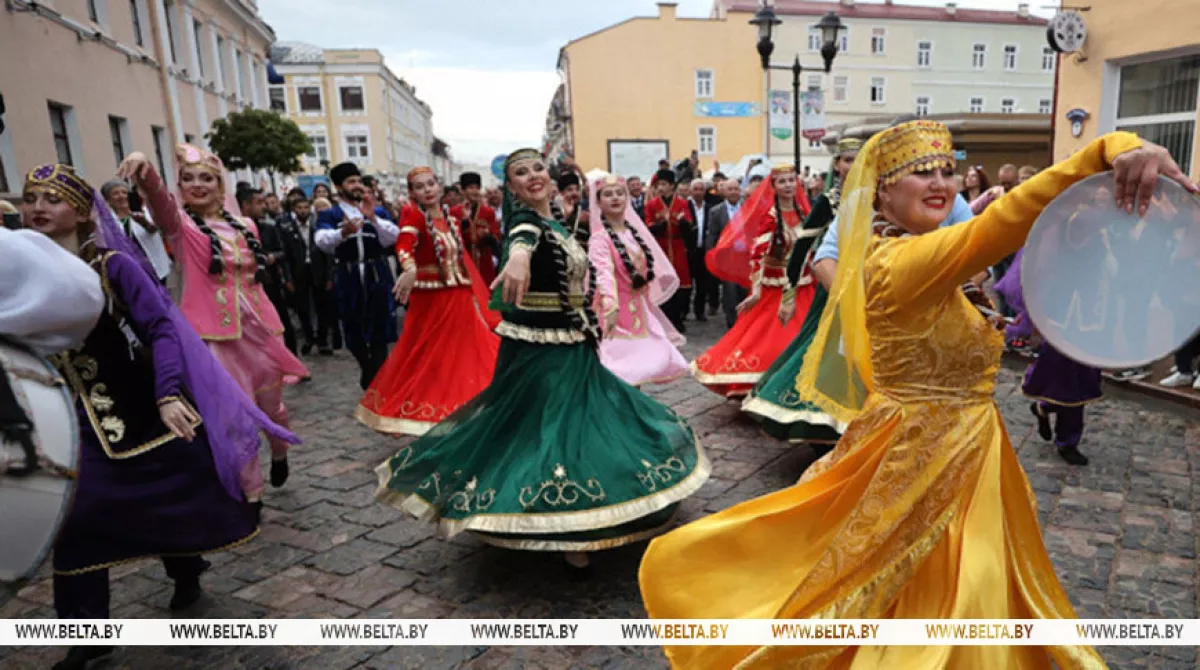
At times, it was simply impossible to move through the pavilion due to the crowds. A large number of spectators — both Belarusians and foreign guests — gathered to watch performances by Azerbaijani dance groups, as well as master classes in folk dances. In addition, visitors had the opportunity to explore Azerbaijani national cuisine, which is as vibrant and colourful as its culture. Guests were offered baklava, shekerbura, and other traditional sweets.
Notably, Azerbaijani gastronomy has a long-standing history in Grodno. According to some sources, as early as the 1930s, Azerbaijani cuisine was the second most popular in this historic Belarusian city.
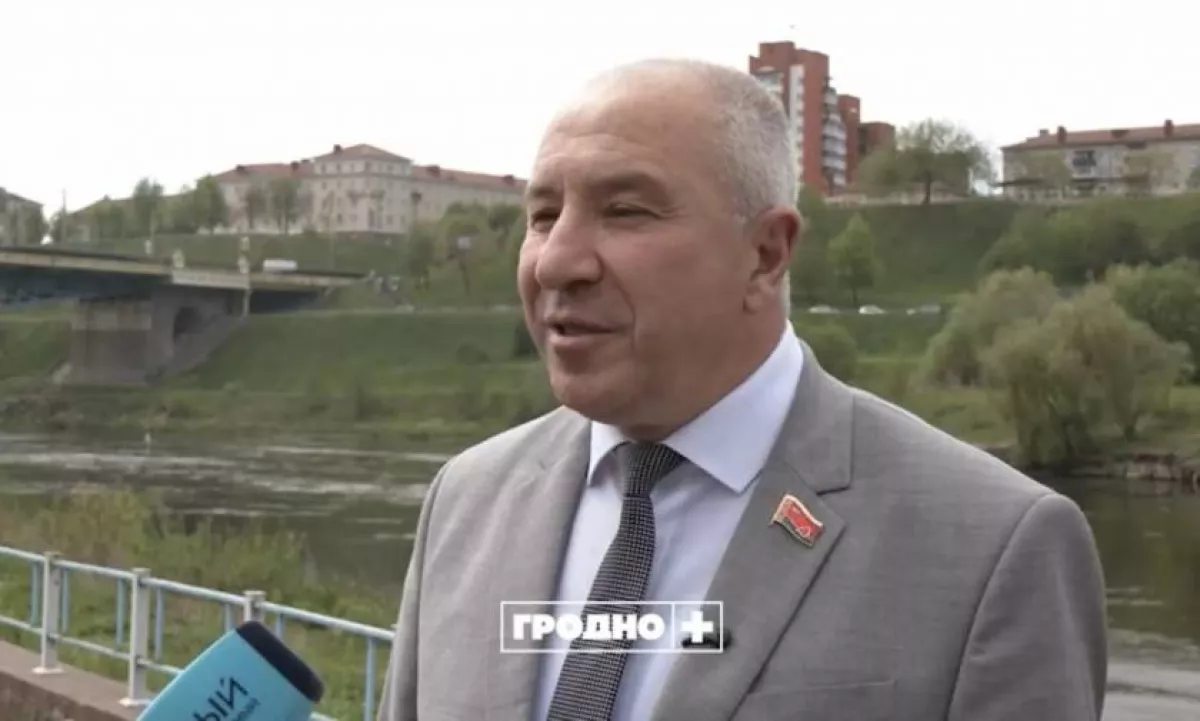
“Such a variety of cuisine as in Azerbaijan cannot be found among any other people in the world,” said the Governor of the Grodno Region, Yuri Karayev, who is Ossetian by nationality. At the same time, the dishes were prepared by Belarusian women — the wives of members of the Azerbaijani community.
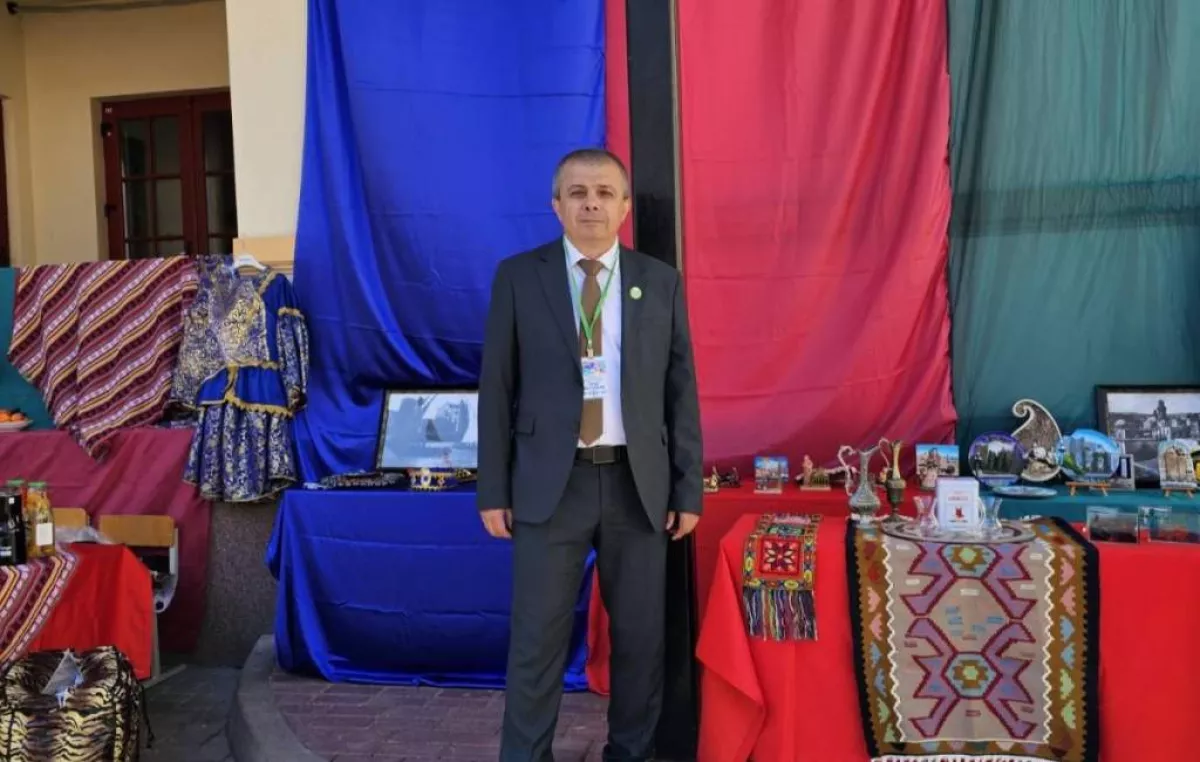
According to the chairman of the Azerbaijani community in Grodno, Elkhan Baylarov, preparations for the festival took almost a year. The pavilion was transformed into a kind of ethnographic exhibition featuring handwoven carpets, copperware, and historical artefacts dating back to the 17th–18th centuries.
Many Azerbaijani soldiers of the Red Army took part in the liberation of Belarus from Nazi occupation. A considerable number of Azerbaijanis remained in Belarus from Soviet times, when they served or worked there, formed families, and settled on Belarusian soil. The modern Azerbaijani community in Grodno was established in 2003 and today numbers around 200 people.
The Congress of Azerbaijani Communities of Belarus is one of the oldest national organisations in the republic. The Azerbaijani national-cultural association already took part in the first Festival of National Cultures in Grodno in May 1996.
The Azerbaijani community in Grodno promotes its culture through national celebrations, primarily Novruz. In 2025, the pomegranate festival was celebrated in Grodno for the first time.
Peace zone
The festival participants were engaged not only in songs and dances. For the first time in the history of the festival, a discussion of legislative initiatives took place with the participation of deputies and leaders of all national associations.
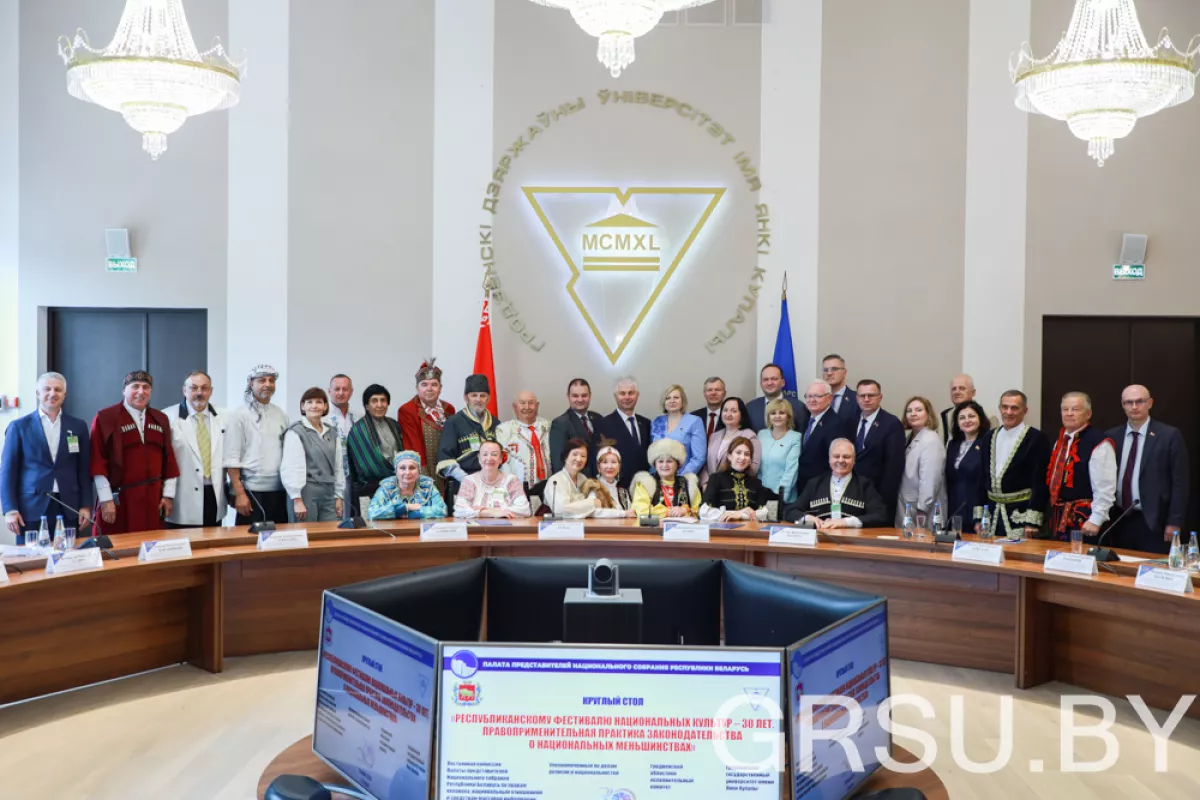
On June 5, a roundtable was held at Yanka Kupala State University of Grodno, with the participation of the Standing Commission of the House of Representatives on Human Rights, National Relations and the Media, the Commissioner for Religious and Ethnic Affairs, as well as representatives of the Grodno Regional Executive Committee.
The meeting discussed the possibility of introducing amendments to the Law “On National Minorities of the Republic of Belarus.” The law was adopted in 1992, and its current version was approved in 2004. Later, the document was also amended, including in 2007.
However, life does not stand still, and representatives of the legislative and executive authorities deemed it necessary to consult national organisations on whether the law requires additions or amendments.
Belarus is a country of peace and order, and Grodno in particular. This was once again demonstrated by the current festival: throughout its duration, law enforcement agencies did not record a single violation, either on interethnic or everyday grounds.
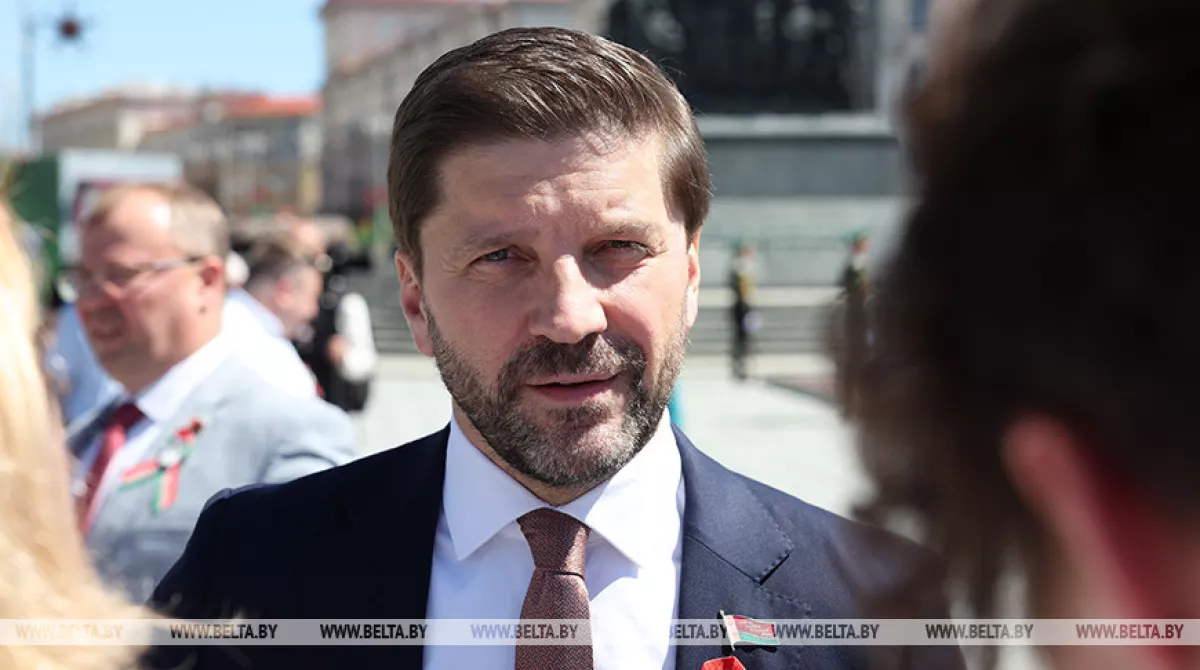
As noted at the festival in Grodno by the Chairman of the National State Television and Radio Company, Ivan Eismont: “I witnessed a remarkable story. We were leaving the Azerbaijani pavilion, and Armenian dancers were entering it. You can only see this in Belarus at this festival. It stayed with me and deeply moved me.”
Belarus continues to remain an island of peace amid wars and military preparations affecting many regions of the world. Recently, there have also been an increasing number of attacks—so far only verbal—against the republic itself.
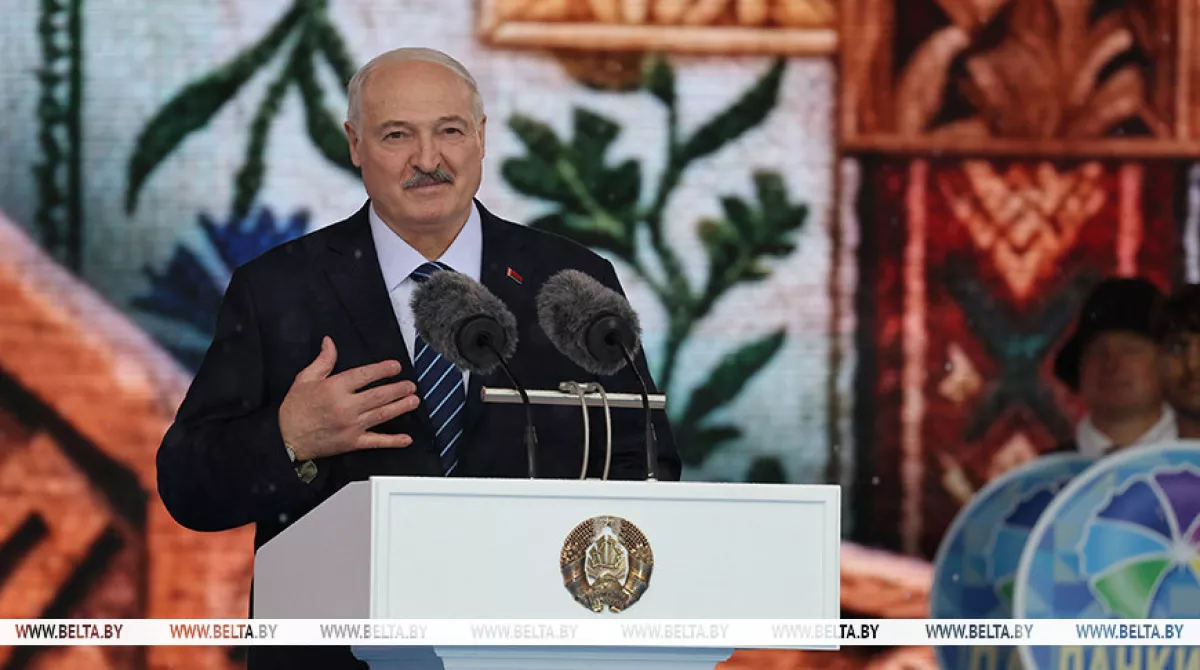
Alexander Lukashenko also addressed the theme of war and peace in his speech at the forum: “War will never give us the opportunity to come together like today. We do not need war. We can only win in peace, in peaceful labour.”
Incidentally, a Ukrainian pavilion was operating near the Russian pavilion in Grodno. Thus, perhaps the hospitable Belarusian land, in the current era of global instability, is capable of becoming a zone of peace and a platform for reconciliation between conflicting sides?







 editor@caliber.az
 +994 55 444-88-98
 Азербайджан, Баку, ул. Низами, 203, Af Business House, 5-й этаж