










Stuck in the past: Sherman’s latest failure Article by Matanat Nasibova
Another anti-Azerbaijani campaign has once again collapsed in the U.S. Congress. The initiative was orchestrated by Congressman Brad Sherman, well known for his staunchly pro-Armenian position and his long record of serving the interests of the Armenian lobby.
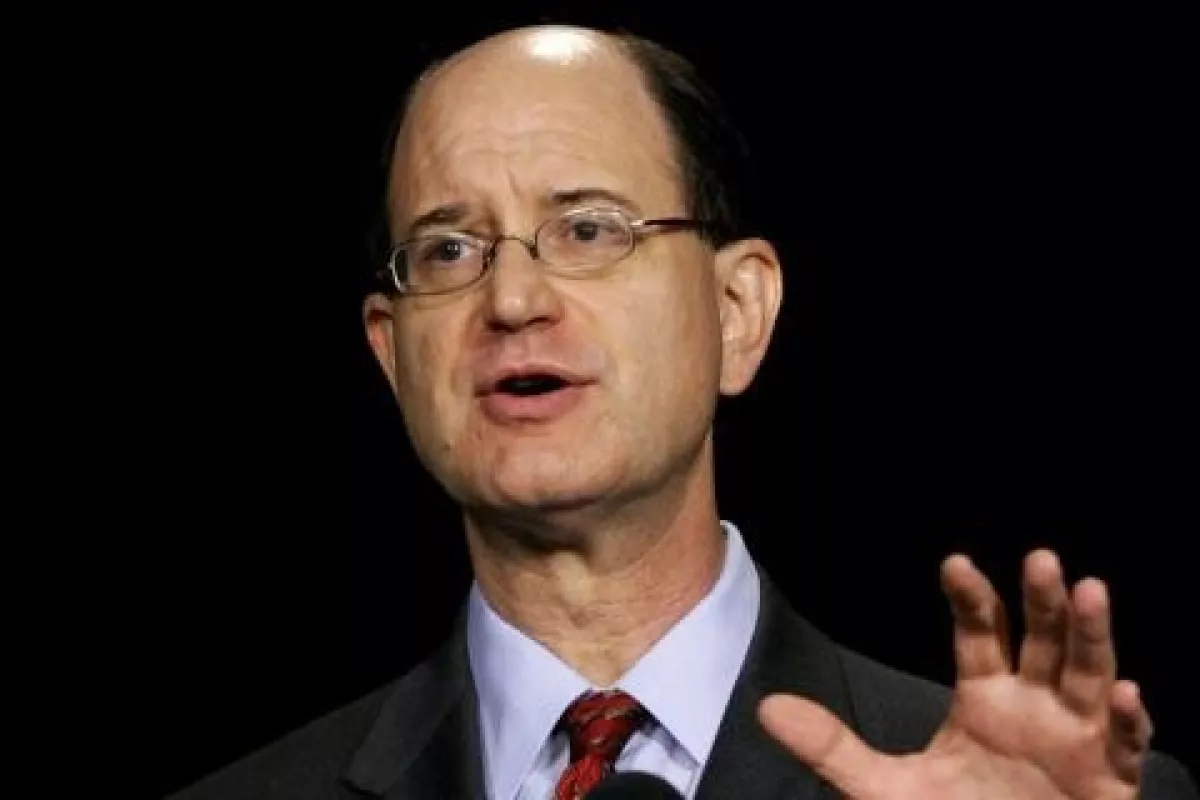
To fully appreciate the extent of this American lawmaker’s “achievements,” a brief look back is necessary. In May 2016, following the April War—which demonstrated the heroism of the Azerbaijani people and armed forces—it was Sherman who called on Congress to apply the Leahy Law to Azerbaijan. The law prohibits the U.S. government from providing military or police assistance to units of foreign security forces when there is credible information that they have committed gross violations of human rights. Sherman justified his appeal by claiming that Baku, having received millions of dollars in U.S. military assistance, had allegedly allowed widespread “human rights abuses during the conflict with Nagorno-Karabakh from April 2 – 7.”
In September 2023, the congressman once again made a series of patently absurd statements, baselessly accusing Azerbaijan of carrying out “ethnic cleansing” and calling on the then U.S. administration to impose sanctions against the country. “This is the 21st century - the U.S. cannot turn a blind eye to ethnic cleansing,” he wrote at the time on his X account (formerly Twitter).
And now, in 2026, Sherman sought to push through Congress an anti-Azerbaijani amendment to the bill “To direct the Secretary of State to take actions with respect to certain foreign affairs matters.” The amendment called for the enforcement of Section 907 and for consideration of sanctions under the Magnitsky Act, which authorises U.S. government agencies to impose targeted sanctions—including visa restrictions and asset freezes—on individuals deemed responsible for human rights violations and corruption.
However, the Chairman of the House Foreign Affairs Committee, Republican Congressman Brian Mast, stated that the document could not be approved specifically because of the provision calling for the implementation of Section 907. As a result, the longtime ally of the Armenian lobby had little choice but to remove from the text both the clause on enforcing Section 907 and the proposed sanctions under the Magnitsky Act.
Consequently, the key provisions aimed at increasing pressure on Azerbaijan were stripped from the initiative at the committee stage, fundamentally altering its original intent. This marked yet another setback for the American congressman, widely regarded as a conduit for the interests of the global Armenian lobby, which remains deeply attached to the idea of “miatsum.”
So entrenched is this mindset that its advocates appear unable to recognise that the decision by the House Foreign Affairs Committee and its chairman constitutes yet another clear and tangible indication that Azerbaijani-American relations have entered a new phase following the Washington-2025 developments.
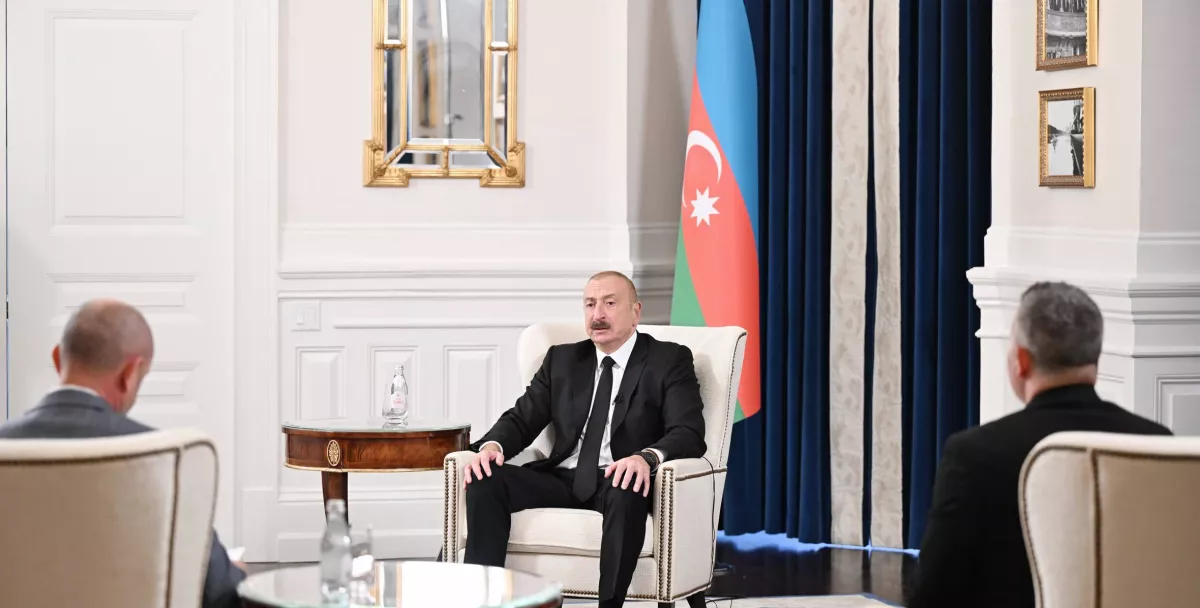
This is evident throughout the entire sequence of events. On August 8, 2025, for example, U.S. President Donald Trump signed a document in the Oval Office, in the presence of Azerbaijani President Ilham Aliyev, repealing Section 907 of the Freedom Support Act. As Aliyev later noted in an interview with Azerbaijani media representatives in Washington, “He [Donald Trump – ed.] could have done it in another form or signed it later, but he chose to do it in front of the President of Azerbaijan — a country that was unjustly sanctioned by Congress back in October 1992.”
It should be recalled that Section 907 prohibited the U.S. administration from providing assistance to Azerbaijan. Following the September 11, 2001, terrorist attacks, Congress passed the Foreign Operations, Export Financing, and Related Programs Appropriations Act, granting the U.S. president the authority to waive the provision. However, after the withdrawal of American troops from Afghanistan, the restriction was reinstated. In this regard, the Azerbaijani leader repeatedly pointed to the unfairness of such treatment toward his country.
“Azerbaijan was one of the first countries to join the mission in Afghanistan, sending military contingents and increasing them multiple times. Azerbaijan also resolved critical transportation and logistics issues for the United States. Until they needed us, the Section 907 was waived, but when we were no longer needed, it was reinstated. What does this mean? It has a name: ingratitude. This is ingratitude, and what trust can we talk about?” President Aliyev stated in an interview with local television channels on January 7, 2025.
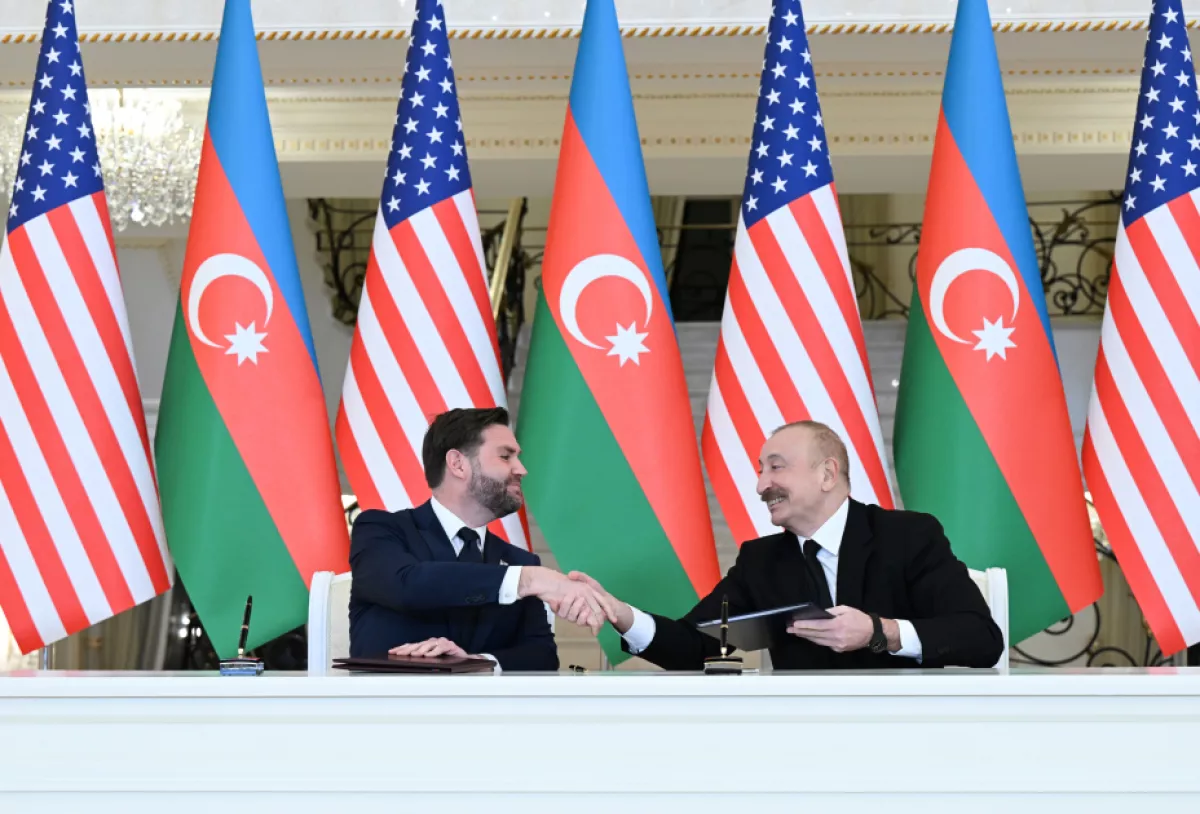
Another milestone in Azerbaijan–US relations was the February visit to our country by United States Vice President J.D. Vance, during which a strategic document was signed between the two countries — the Charter on Strategic Partnership. This document not only consolidated the Washington agreements but also outlined new directions and priorities for cooperation between Azerbaijan and the United States.
However, all these developments, it must be assumed, went unnoticed by the Armenian lobby and its allies in Congress. The reason for such blindness is, in essence, obvious—an unrelenting desire to revive the Armenian–Azerbaijani conflict consigned to history and once again turn the South Caucasus into an arena of confrontation. Yet the new realities indicate that there will be no return to the past. To see this, Sherman and his like-minded colleagues need only look at the results of the parliamentary elections in Armenia, where the “party of peace”—the Civil Contract party led by Nikol Pashinyan—secured victory.
Thus, all attempts by corrupt adherents of the global Armenian lobby in the U.S. Congress to drive a wedge into Azerbaijani–American relations and advance anti-Azerbaijani initiatives are bound to end in complete failure—similar to the collapse of Congressman Sherman’s aforementioned efforts, as well as the appeal by 60 congressmen led by Mike Lawler, Frank Pallone, Gus Bilirakis, and Gabe Amo calling on Secretary of State Marco Rubio to halt U.S. military aid to Azerbaijan.
This truth should be understood not only by American lawmakers but also by parliamentarians in France, Switzerland, the Netherlands, and, of course, members of the European Union’s legislative body—the Members of the European Parliament.







 editor@caliber.az
 +994 55 444-88-98
 Азербайджан, Баку, ул. Низами, 203, Af Business House, 5-й этаж