










Letter, envoy, and refusal What was Zelenskyy hiding?
The age-old truth that everything secret sooner or later becomes known, often against the wishes of the party interested in keeping it hidden, has once again proven itself.
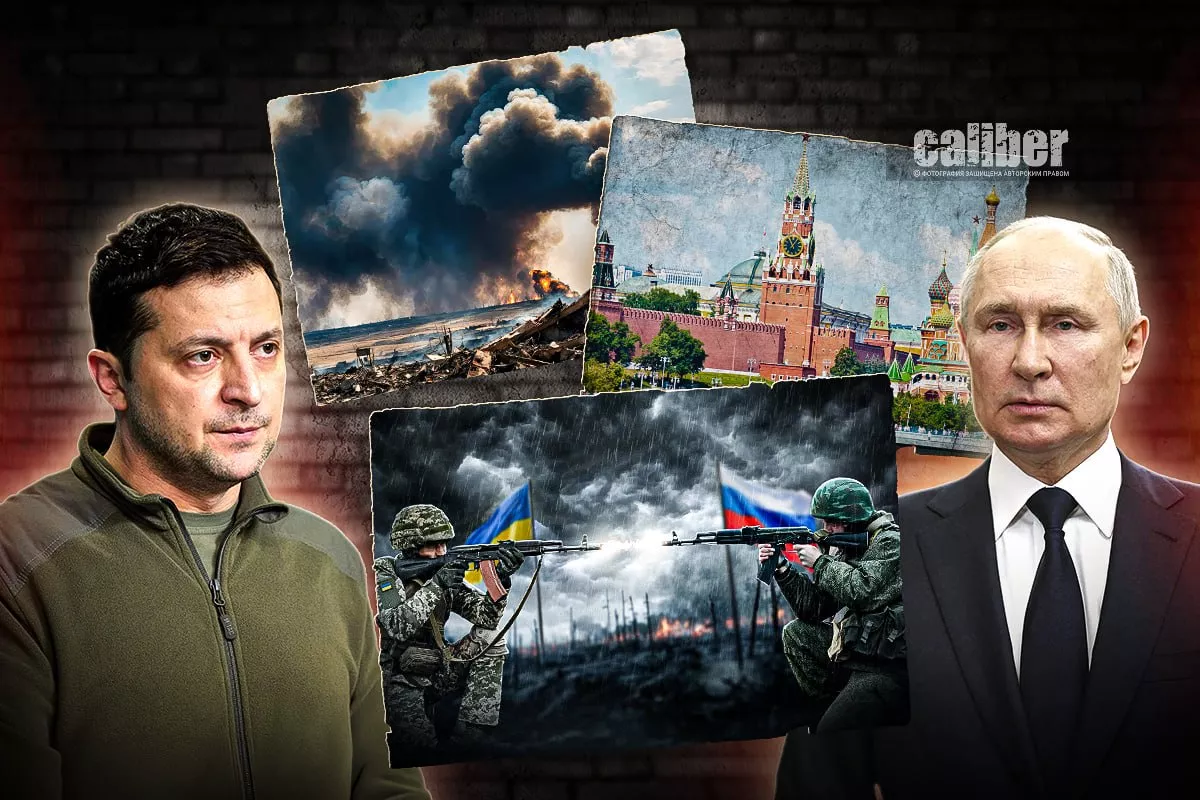
As we previously wrote, the President of Ukraine sent an open letter to the President of Russia, Vladimir Putin, who, as was generally expected, refused Zelenskyy’s main request — a meeting. After this, the Ukrainian leader stated that Moscow does not want peace and is once again choosing to continue the war.
“Unfortunately, the Russian side is once again choosing war — everyone heard today’s response. A weak response. It simply does not want to end the war,” he wrote on his Telegram channel, adding that, in his view, the response had “disappointed many around the world.”
To begin with, this statement by Zelenskyy is pure manipulation, as confirmed by the following: it can be stated with absolute certainty that no one in the world believed for even a moment that Putin would agree to meet him, especially at this stage. Overall, the Ukrainian president’s reaction to the refusal is very reminiscent of the Princess’s words from the fairy-tale film An Ordinary Miracle: “I chased after you for three days — yes! — just to tell you how indifferent I am to you!”
Against this backdrop, one rather interesting detail draws attention. Speaking at a plenary session of the St. Petersburg International Economic Forum, Vladimir Putin revealed something that Zelenskyy would prefer to keep hidden, and this largely explains the rather defiant tone of his open letter.
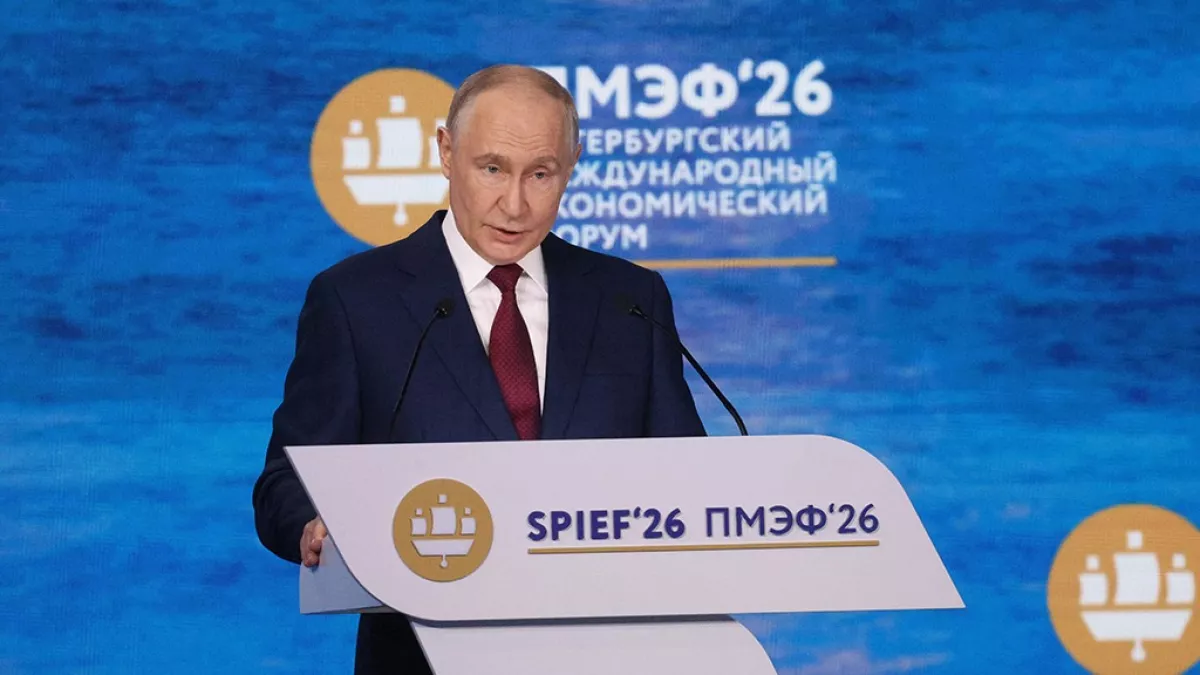
According to the head of the Russian state, three weeks ago, one of his long-time trusted business acquaintances informed him of an invitation to visit Kyiv. This is an important detail, indicating that it was in fact Zelenskyy who sought a meeting with Putin, using any available channels of communication. We emphasise this point in particular, as we have repeatedly heard public statements from the Ukrainian leader claiming that he sees no point in a meeting with Putin.
So, the businessman travelled to Kyiv, met with Zelenskyy at his residence, and upon returning, reported everything to the Russian leader. Putin also clarified that the Ukrainian president had conveyed, through the businessman, a proposal for a personal meeting. “I said that I have never refused. But meeting just for the sake of it, as we say, shifting from empty to empty — I know this, I’ve been through it,” he said.
And here one has to acknowledge that there is consistency in his words: the Russian leader has always set the same conditions for a meeting with Zelenskyy, whereas the Ukrainian president has often shifted from one extreme to another — at times publicly stating the futility of such a meeting, and at other times sending an open letter to the Russian president proposing one.
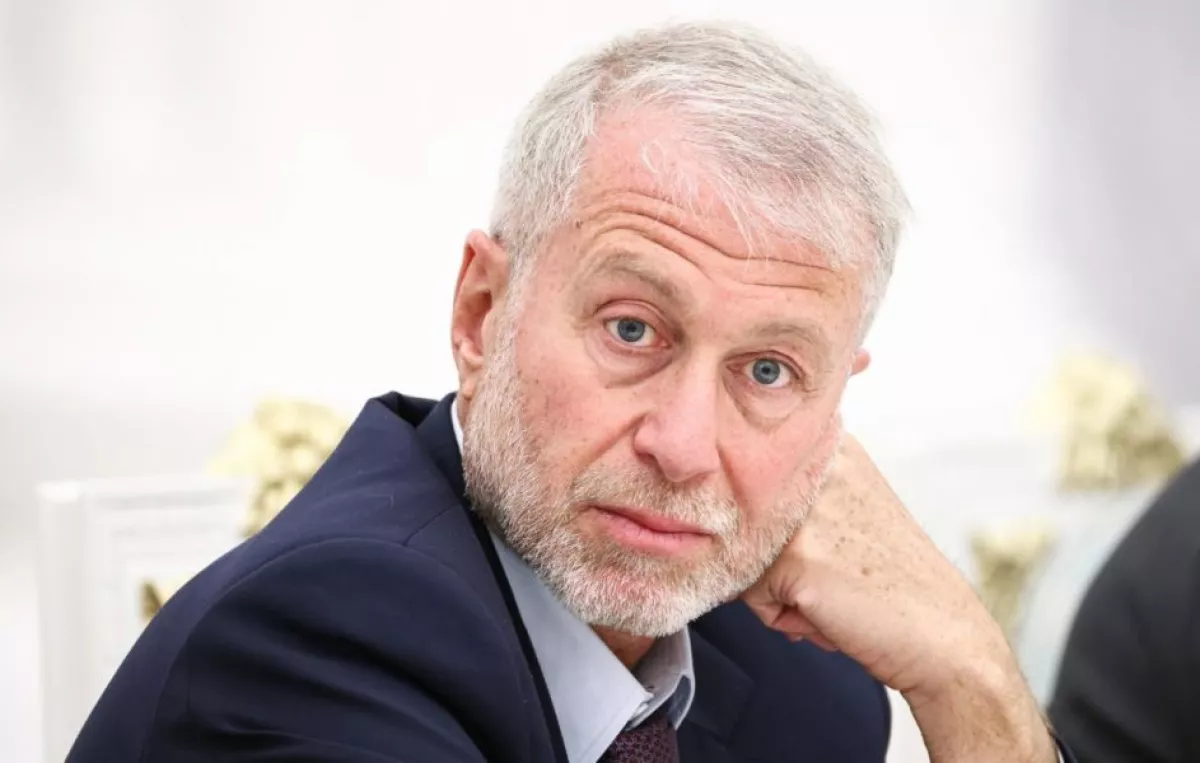
In light of these developments, the question naturally arises: who was the businessman who secretly visited the Ukrainian president and assumed the role of a “messenger”? The first to answer it was Ukrainian MP Oleksiy Honcharenko, a member of the European Solidarity faction, who stated that the individual in question was oligarch Roman Abramovich. Supporters of the Ukrainian president, however, accused the lawmaker of spreading disinformation.
Soon afterwards, the influential newspaper the Financial Times reported, citing its sources, that the Ukrainian leader had invited Russian billionaire Abramovich to Kyiv last month in order to convey a message to President Putin.
Following this, the Ukrainian president was compelled to acknowledge that the meeting had taken place. In an interview with Sky News, he recounted the following: "Abramovich, he came to Kyiv. He said that, 'I have a message direct to you, and I want to get a message and take a message from you and to give it to Putin.'”
To be frank, these remarks appear more like an attempt to put a brave face on an awkward situation, as it seems fairly clear that Abramovich did not travel to Kyiv on his own initiative. Rather, he was invited by Zelenskyy in an effort to arrange a meeting with Putin.
At the same time, one should not overlook the fact that in 2022, Roman Abramovich was placed under European Union sanctions, including an asset freeze and a travel ban, which ultimately forced him to sell the football club Chelsea F.C. The proceeds from that sale remain frozen, while both the United Kingdom and the European Union have maintained a firm position that the funds should be used exclusively for Ukraine. Abramovich holds a fundamentally different view, arguing that assistance should be directed to “all victims of the war” — effectively placing Russian and Ukrainian civilians on the same footing.
And yet it is with a man holding such views that the president of a country which has been resisting a major nuclear power for more than four years chose to meet in secret, entrusting him with the role of a special envoy and intermediary.
In this context, it is worth recalling another fact: Davyd Arakhamia — a native of the Russian city of Sochi, a former citizen of Georgia who obtained Ukrainian citizenship in 2015, and the head of the Servant of the People faction in the Ukrainian parliament — previously wrote a letter in support of Roman Abramovich. Lawyers representing the Russian oligarch later used that letter as evidence in legal proceedings in both the European Union and the United Kingdom.
As we can see, the former owner of Chelsea F.C. has maintained notably close contacts with members of Ukraine’s current political elite. Moreover, it remains unclear where else such private meetings may have taken place, with whom they were held, and what understandings, if any, were reached during them.
Against this backdrop, a phrase from the NABU recordings connected to the case involving businessman Timur Mindich, who is considered close to Volodymyr Zelenskyy, takes on renewed significance. The phrase referred to “two million to Moscow” — an alleged transfer of two million dollars to the Russian capital that investigators claim was part of a money-laundering scheme.







 editor@caliber.az
 +994 55 444-88-98
 Азербайджан, Баку, ул. Низами, 203, Af Business House, 5-й этаж