










Cracks in the front of trust Ukraine and the limits of social mobilisation
To the vast list of large-scale problems that have entangled Ukraine—now in its fifth year of war against a major nuclear power—another one has been added, which can neither be ignored nor paused in anticipation of better times.
Thus, according to the results of a sociological survey published on June 10 and conducted on behalf of Slovo i Delo, the level of Ukrainians’ willingness to join military service personally or through close relatives ranges between 15% and 17.5%, depending on the expected duration of the war. If it lasts three years, 17.5% of respondents say they are ready to serve; in the case of a five-year war, the figure is 16%; if it drags on for ten years, it drops to 15%. Under a three-year scenario, 41.5% of respondents said they are not ready to serve; under a ten-year scenario, this rises to 47%. The survey was conducted between May 22 and 29 using an online questionnaire among 1,200 respondents aged 18 and older. The statistical margin of error does not exceed 2.89%.
The results of this poll can confidently be described as a political, moral, and institutional verdict on a country that is waging a war for its very existence as an independent state. These figures leave no room for self-complacency; they point to a deep crisis of trust and raise a blunt, almost explosive question: “Why?”
The answer is deeply uncomfortable and painfully obvious: what is happening is the result of the policies of Ukraine’s leadership.
As is well known, any mobilisation and societal consolidation in the face of an existential threat rests primarily on trust in the authorities: people must understand what they are risking their lives for. This trust, in turn, stems from fairness and from the principle that defending the homeland is a shared responsibility for all—that is, from parity. And it is precisely here that the system of governance has failed.
Over the course of the nearly full-scale Russian–Ukrainian war, Ukrainian society has been repeatedly witnessing corruption scandals in which, to varying degrees, representatives of the authorities are implicated. At a steady pace, the country discusses abuses in the distribution of humanitarian aid, procurement processes, and infrastructure projects; high-profile journalistic investigations are published, and various accusations are made.
Even if some of these cases never reach the courtroom, the scale of suspicion steadily erodes public trust, much like water wears down stone. Each such episode hits the government’s approval ratings—and, crucially, the motivation to fight—because it creates a simple and deeply troubling dilemma: “Why do some risk their lives in war, while others profit from it?”
An equally damaging factor is the unfairness within the mobilisation system itself. Reports of harsh methods used by Territorial Recruitment Centres (TRCs) regularly appear in the public space; such incidents are widely discussed in both the media and parliament. In particular, the Parliamentary Commissioner for Human Rights, Dmytro Lubinets, has repeatedly criticised the methods of TRC personnel, openly stating that recruitment centres are increasingly turning into “places of deprivation of citizens’ liberty,” and that the actions of some recruitment officers are creating a “system of lawlessness” and “impunity,” thereby discrediting the country’s mobilisation process.
Another problem is distrust in official information. Ukrainian society often questions the completeness and reliability of official data regarding casualties, the real situation at the front, and the state of the economy. Even if some of these doubts are unfounded, they point to a central issue: communication between the state and its citizens has been disrupted.
And finally, there is the factor of personal example. In any country at war, the behaviour of its elites is of critical importance. When society sees that the rules apply equally to everyone, the willingness to make sacrifices increases. Conversely, when people perceive double standards, that willingness rapidly declines.
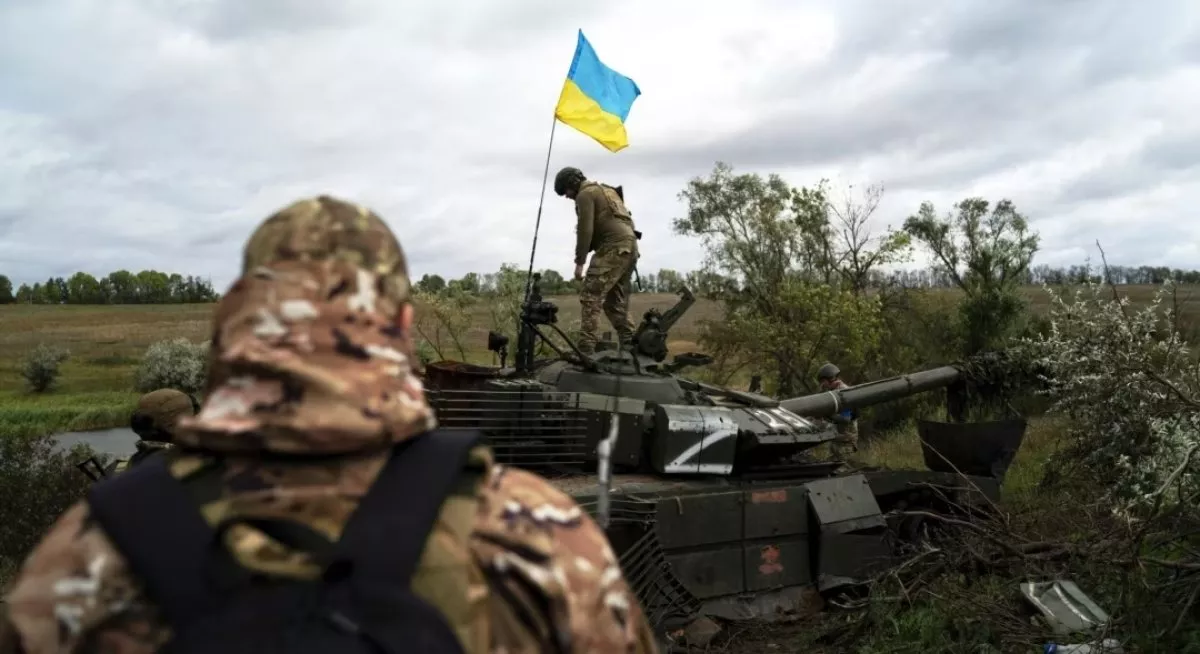
At the beginning of the war, Ukrainians demonstrated an extraordinary readiness to resist. Long queues at recruitment offices, volunteers joining the armed forces, and the rapid formation of territorial defence units became symbols of a society united in the face of a common threat. Today, however, the picture is markedly different. Millions have left the country, a significant portion of citizens have distanced themselves from the issue of military service, and the willingness to fight remains consistently low.
This is a crisis whose roots lie not in so-called “war fatigue,” but in a system that has failed to preserve public trust. Reversing the trend requires urgent and effective measures: a fair and transparent mobilisation system, a genuine rather than declarative fight against corruption, greater openness in decision-making, accountability among the political elite, and an honest dialogue with society.
Without such steps, the situation is likely to deteriorate further. The question, however, is whether the current authorities are prepared to take them. And there is a lingering sense that, in practical terms, no clear answer to that question will be forthcoming.







 editor@caliber.az
 +994 55 444-88-98
 Азербайджан, Баку, ул. Низами, 203, Af Business House, 5-й этаж