










Oil market after the ceasefire: end of the price rally or a temporary breather? Overview by Khazar Akhundov
On June 15, commodity exchanges reacted to reports of a likely agreement between the United States and Iran aimed at ending the war in the Middle East and restoring shipping through the Strait of Hormuz, with oil prices falling by 5%. Earlier, Pakistani Prime Minister Shehbaz Sharif stated that the parties had agreed to sign the relevant treaty on June 19 in Switzerland. However, a number of experts point to the fact that not all political contradictions have been resolved, which keeps future risks in place.
In addition, a sharp decline in prices should not be expected in the near term, given that OPEC oil production over the three months of the conflict fell to its lowest level in 20 years. It will also take time to repair damaged extraction infrastructure, pipelines, and port terminals.
Experience in the 20th and the first quarter of the 21st centuries demonstrates the inseparable link between war and oil prices: conflicts, especially those affecting the Middle East, have a direct impact on commodity price dynamics.
Thus, last year, during the intense 12-day Iran–Israel confrontation, a short-lived rise in oil prices was observed. An even larger-scale conflict with devastating consequences began on February 28, 2026, leading to the destruction of oil production infrastructure, refineries and liquefied natural gas (LNG) production facilities, port terminals, and a range of other industry assets in regional countries.
Due to the double blockade of the Strait of Hormuz and the threat of attacks on oil tankers, the transportation of hydrocarbons was almost completely halted. From the end of the first ten days of April until the beginning of June, a fragile ceasefire was in place, and difficult negotiations were ongoing between Washington and Tehran. However, the contradictory dialogue was later almost completely broken off, followed by a series of reciprocal missile strikes, oil prices surged sharply, and it seemed that no peaceful outcome was possible in the near future.
However, on June 15, global media reported that a peace agreement had been reached between the United States and Iran, which is expected to be officially signed in Switzerland. The deal reportedly envisages the opening of the Strait of Hormuz to tariff-free shipping and the lifting of the blockade. According to The Wall Street Journal, the reopening of this waterway will be one of the key indicators confirming whether a preliminary understanding between the United States and the Islamic Republic can evolve into a full-fledged agreement.
Analysts believe that, if this scenario materialises, it will lead to the full resumption of operations at oil ports in Arab countries and enable a broader return of Iranian oil to the international market. In turn, this would increase global hydrocarbon supply and exert downward pressure on prices.
In any case, the first market reaction to the news of de-escalation in the Middle East was a decline in oil prices on commodity exchanges. By the afternoon of June 15, August Brent crude futures on the London ICE Futures exchange had fallen by 5.03% to $82.94 per barrel. A similar trend was observed in North American WTI crude, with July futures on the NYMEX exchange decreasing by 5.37% to $80.32 per barrel.
It is worth noting that on the previous Saturday, ahead of these developments, the price of Azerbaijan’s Azeri Light crude on a CIF basis at the Italian port of Augusta also dropped by 6.57% to $90.50 per barrel.

Thus, it will become clear in the near future whether a sustained “bearish” trend will prevail in the oil market following the scheduled June 19 meeting between American and Iranian representatives in Switzerland. At the same time, it should be noted that any potential progress on this track is associated with a number of risks, as the agreements remain politically fragile: Israel and Iran continue to maintain fundamentally divergent positions, while significant uncertainty persists regarding implementation, sequencing of commitments, and enforcement mechanisms.
For his part, President Donald Trump stated on Truth Social that the deal with Iran is “complete,” adding that he had authorised the “toll free opening of the Strait of Hormuz” and ordered the “immediate removal of the United States Naval blockade.” Meanwhile, the Islamic Republic has taken a more cautious stance: Iranian Foreign Minister Abbas Araghchi stressed that responsibility for the proper implementation of the agreement lies with the United States. In addition, Tehran insists on the cessation of Israel’s “military actions against Lebanon.”
In this context, it is worth noting that, on the eve of these developments, the Mehr news agency circulated information on certain details of a draft memorandum reportedly agreed between Iran and the United States.
According to the report, the 14-article document envisages the immediate and permanent cessation of hostilities on all fronts, including Lebanon. The United States, in turn, is expected to withdraw its forces from regions adjacent to the Islamic Republic of Iran, while a full lifting of the naval blockade within 30 days and the opening of the Strait of Hormuz to free navigation are also outlined.
The document further includes provisions for the suspension of sanctions on oil sales, a commitment by the United States not to impose new restrictions, and the unfreezing of Iranian assets. Tehran, according to the memorandum, undertakes not to produce nuclear weapons. A final agreement would be reached after 60 days of negotiations. The document is also expected to be endorsed by a United Nations Security Council resolution, with a special monitoring mechanism to be established for its implementation.
At present, it is difficult to assess how reliable the conditions of the agreement are in the Iranian interpretation. At the same time, in Israel, the document does not appear to be recognised as binding on its security policy: National Security Minister Itamar Ben-Gvir stated that the agreement “does not bind Israel,” stressing the country’s sovereign right to independently determine its national security measures.

The expert and analytical community also largely agrees that the agreement remains highly fragile. In particular, analysts at Rystad Energy, one of Norway’s largest energy consulting and analytics firms, describe the current arrangements as the most realistic scenario, but still a fragile agreement.
Chief economist Claudio Galimberti noted that while the United States is interested in preventing a rise in gasoline prices, Iran in easing sanctions and increasing export revenues, and global markets in stabilising supplies through the Strait of Hormuz, this alignment of interests and the signing of documents do not yet amount to a functioning agreement. He pointed to disagreements over the sequencing of obligations, with each side expecting the other to take the first steps.
He also identified Lebanon as a potential destabilising factor capable of influencing the dynamics of the deal even if diplomatic progress continues overall. Galimberti further stressed that even under an optimistic scenario, normalisation of the oil market would be gradual: it would require time for supply chains to be restructured, logistics to adjust, and risk premiums embedded in prices to decline.
Until the agreement is officially signed and practical implementation begins, the market is likely to remain volatile, responding primarily to political signals and news flow rather than to fundamental changes in supply conditions.
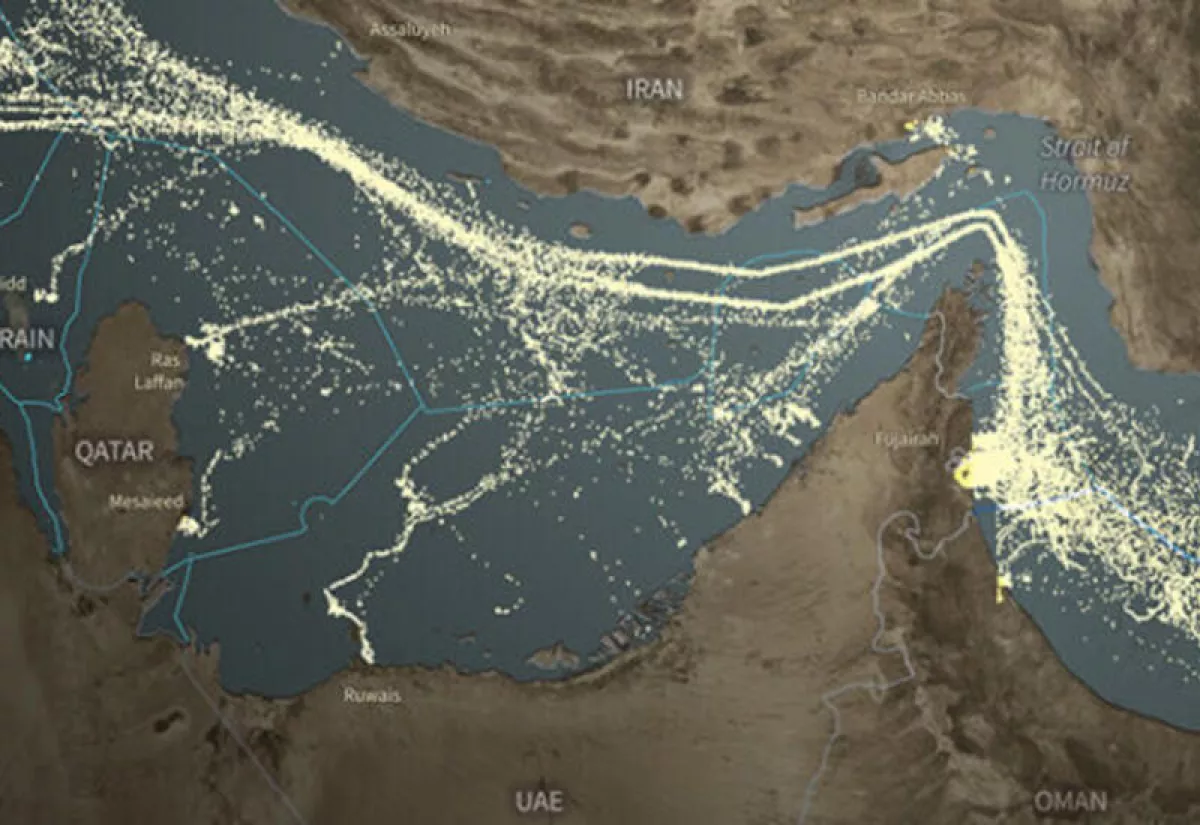
It should also be taken into account that the repair and restoration of port terminals and other oil infrastructure in Gulf countries damaged during the war require time, as does the clearance of fairways for full-scale tanker operations. According to some reports, demining the Strait of Hormuz could take 40–50 days.
Moreover, by the end of May, oil production by OPEC countries had reached a 26-year low. According to Reuters, cartel output fell by 1.06 million barrels per day compared to the previous month, reaching 16.13 million barrels per day — the lowest monthly level at least since 2000. Returning production to pre-war levels will therefore take considerable time, meaning that a sharp decline in oil prices is not expected until the end of summer.
Under an optimistic geopolitical scenario in the Middle East, there is a possibility that by autumn Brent prices could return to the pre-war average level of $70 per barrel. For Azerbaijan, this is considered acceptable: it should be recalled that, under a conservative scenario and taking into account global risks, the “cut-off price” used for calculating oil revenues in Azerbaijan’s 2026 state budget was reduced to $65 per barrel.
Overall, Azerbaijan clearly supports the OPEC+ policy of limiting oil production and maintaining a balance between supply and demand.







 editor@caliber.az
 +994 55 444-88-98
 Азербайджан, Баку, ул. Низами, 203, Af Business House, 5-й этаж