










The preacher and the mirror Poland’s scale of values
In recent years, in the familiar debates on so-called European values, Warsaw’s voice has been growing ever louder. Acting as a mentor, it looks down on its EU partners, positions itself as an arbiter of democracy and human rights, and, without the slightest hesitation or trace of embarrassment, issues critical assessments of third countries — including Azerbaijan — when it comes to compliance with those very values it has appointed itself to safeguard.
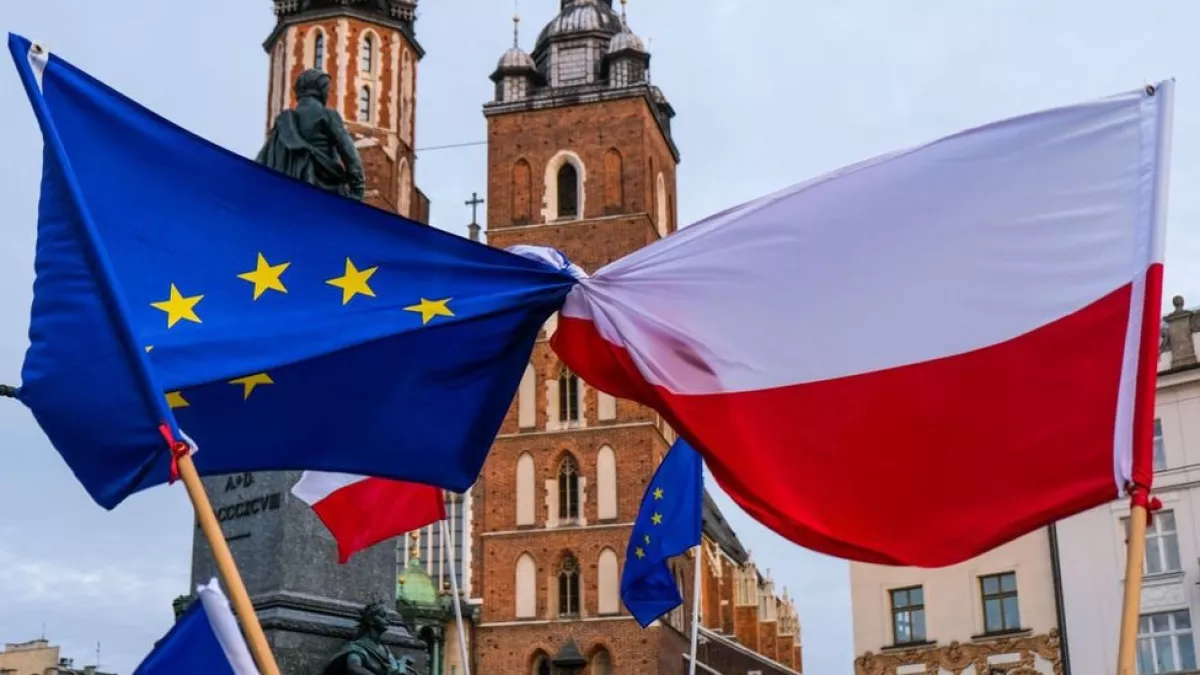
What can one say — the mission is certainly an honourable one, and at first glance it even appears natural: a country with a difficult history, one that passed through the totalitarian regimes of the twentieth century, has a moral basis to speak about freedom. The problem is that the internal reality of Poland in recent years has increasingly failed to correlate with the role this country plays on the European stage. And this discrepancy is being noted not by Warsaw’s opponents, but by quite reputable institutions — ranging from international human rights organisations to sociological agencies.
It is worth beginning with a subject to which Poland is particularly sensitive for understandable historical reasons — its attitude towards the Jewish community. A survey published in early 2026 showed that the proportion of Poles expressing hostility towards Jews had reached forty per cent. The figure itself is high, but what is troubling is not only this, but also the trend, and the way the authors of the study explain it: according to their observations, Poles’ national sympathies and antipathies have ceased to be stable and are increasingly dependent on the current political agenda and the rhetoric circulating in public discourse. In other words, hostility does not lie dormant in the depths of society but is activated by political language, which makes the responsibility of those who use that language particularly significant.
Measurements taken over different years fluctuate, and it would be an oversimplification to portray Polish society as monolithically hostile — this is not the case. It is also important that for nearly ten years, until the end of 2023, the country was governed by the right-wing populist Law and Justice party, during which the issue of the Holocaust and historical memory became a tool of political manipulation, later giving way to a centrist coalition — meaning that the current government is not identical to the one under which this background was formed. However, the consistently high level recorded by researchers year after year has not disappeared with the change of government.
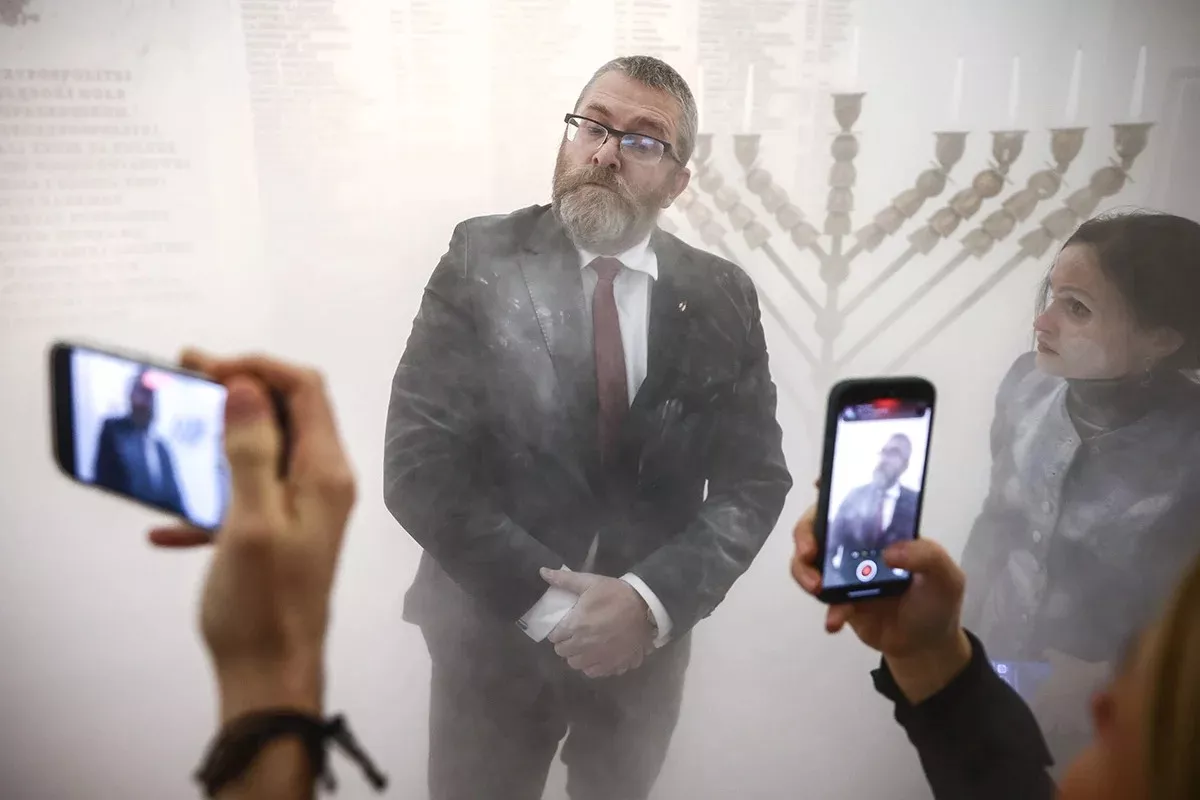
This background takes on concrete form in episodes that are difficult to dismiss as statistical noise. Their emblematic figure is Grzegorz Braun, a politician who has moved from the Polish Sejm to the European Parliament. In December 2023, in front of his colleagues, he extinguished Hanukkah candles lit inside the Sejm building with a fire extinguisher, calling the holiday satanic. Later, he ran a campaign in the European Parliament under the slogan “Hanukkah or Christmas? Europe, it's up to you,” and in a radio interview claimed that the gas chambers of Auschwitz were a hoax, while stating that “ritual murder is a fact,” for which he came under investigation.
On July 10, 2025, a group led by him disrupted a ceremony commemorating the victims of the Jedwabne pogrom, shouting antisemitic slogans. One deputy does not represent an entire country, and Braun belongs to the radical nationalist fringe rather than the Polish mainstream. However, a person carrying such narratives is not on the margins but sits in both national and supranational parliaments, which already says something not only about him personally, but about the shifting boundaries of what is considered acceptable in Polish politics. A separate report recorded a 67% increase in antisemitic incidents in the country in 2024 alone.
This ties in with the sensitive handling of Poland’s own historical memory. Episodes of violence against Jews associated with places such as Jedwabne and Kielce remain, for part of Polish society and the political class, not a matter of repentance but of defensive denial built around the image of the Pole exclusively as a victim. To be fair, there have also been countervailing gestures in Polish history: in 2001, President Aleksander Kwaśniewski formally apologised for the Jedwabne massacre, where in the summer of 1941 local residents killed hundreds of their Jewish neighbours. But precisely because such an act of contrition was once expressed at the highest level of the state, its current marginalisation and ridicule appear as a retreat from that standard. Historical truth is more complex than either heroic or purely victim-based narratives, and attempts to reduce it to a convenient one-sided picture raise more questions the higher the platform from which they are made.
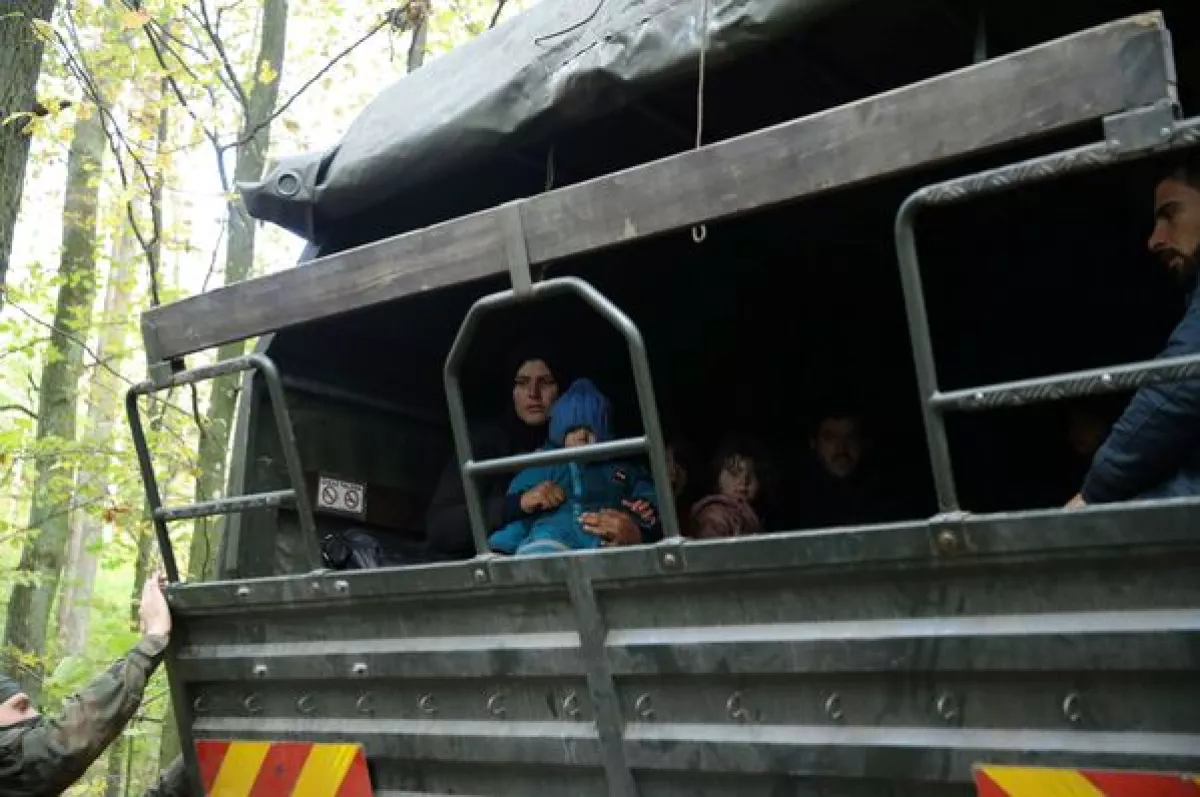
This brings another issue into focus: on the border with the Republic of Belarus, Polish authorities have erected a wall and actively apply a “pushback” policy (forced returns). According to the Polish authorities, this is “to protect against the Belarusian regime,” even though Minsk has made no claims, and continues to make no claims, to Polish territory. In the name of Warsaw’s perceived threats, thousands of people are left in forests and swampy areas without access to basic necessities and are exposed to violence. This has drawn criticism from non-governmental organisations, as such practices not only violate fundamental norms of international law but also clearly conflict with Poland’s own constitution.
The European Union, meanwhile, prefers not to dramatise the situation, not least because it is itself partially financing the strengthening of Poland’s border — tens of millions of euros through relevant EU funding instruments. The result is a kind of politics of silence, in which the protection of the Union’s external border is effectively paid for by the suspension of the very principles the Union insists upon when speaking to the outside world.
The third aspect is migration policy in a broader sense, constructed around the idea of a “Christian club,” which has gained considerable traction in Europe. A clear illustration of this trend is the growing wave of Islamophobia: the burning of the Quran in several European cities, bans on wearing the hijab, and, in a broader geopolitical sense, the reluctance to accept the Muslim country of Türkiye as a member of the European Union. Within this framework, Muslim migrants are presented to society primarily as a source of cultural and physical threat, while Poland’s refusal to participate in EU-wide refugee redistribution mechanisms is framed as the defence of national identity.
The contrast in the treatment of different categories of migrants is also telling. Ukrainian refugees, whom Poland has received in large numbers and who have proved useful to the economy, are gradually being placed in a system where social support is being reduced and their value is measured in terms of labour market contribution. Muslim migrants, within this framework of reference, are from the outset denied even this form of recognition — they are classified as inherently “other.” In this way, images of an external enemy constructed around the figures of the Muslim and the Jew become a functional instrument of a certain type of politics.
It is important not to fall into a mirror-image exaggeration. Poland is not a unique case and, arguably, not the most severe one in Europe. Polish society is far from monolithic; strong countercurrents exist within it — civic activists assisting migrants at the border despite pressure, Jewish and interfaith organisations, and researchers who themselves publish these troubling figures. The issue is not a collective indictment of a country or its people, but rather a specific gap between two images of Poland: the one it presents on the European stage as an unyielding guardian of values, and the one that emerges from its own internal statistics and practices. This gap exists objectively, regardless of how one chooses to view the country.
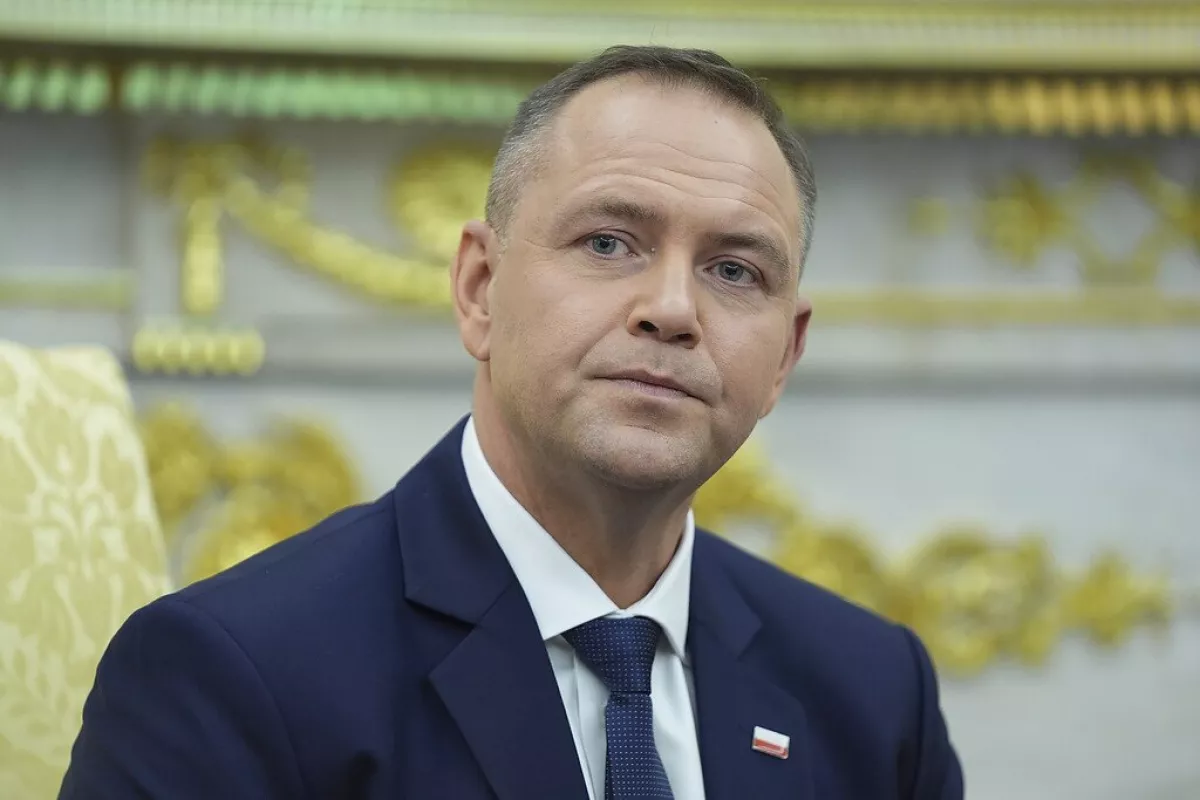
A recent episode illustrates this selectivity from an unexpected angle — showing that Polish moral rhetoric can sharpen when performed publicly, but also soften when political calculation demands it, depending on the opponent. In May 2026, Volodymyr Zelenskyy signed a decree assigning one of the Ukrainian Special Operations Forces units a name referring to heroes of the Ukrainian Insurgent Army (UPA) — an organisation Poland considers responsible for the Volhynia massacre.
The reaction was sharp. President Karol Nawrocki announced his intention to strip Zelensky of the Order of the White Eagle, Poland’s highest state honour, and on June 8 the chapter of the order submitted its opinion to the head of state. The grounds for outrage were clear: this was seen as the glorification of those whom Polish historical memory regards as perpetrators. But at that point geopolitics entered the equation.
Prime Minister Donald Tusk, whose signature under the constitution effectively determines the fate of such a decision, moved towards de-escalation: in his view, Ukrainians had shown a lack of tact, but escalation should be avoided because effective support for Ukraine remains a priority of Polish security policy, and the dispute over the UPA primarily serves Moscow’s interests. As a result, Nawrocki’s initiative stalled without action, and a topic that had recently appeared to be a matter of national honour began to dissolve into formulations about higher strategic interests.
The contrast with the story of the menorah and the border forest is almost laboratory-like: when it comes to Hanukkah candles or a Muslim migrant, Polish moral language sounds loud and uncompromising; when relations with Kyiv are at stake — on which Warsaw’s entire eastern policy is built — that same moral stance reveals a readiness to postpone principles. This unevenness is further highlighted by a small but telling detail: former German Chancellor Gerhard Schröder, long associated with Russian energy interests, remains a recipient of the Order of the White Eagle, and discussions in Warsaw about stripping him of this honour are far less frequent.
Taken together, this creates a picture that extends beyond Poland alone. A country that carries such a range of unresolved domestic issues — concerning minority rights, migration, and its own historical memory — continues to present itself within the European Union as a moral authority, including in its criticism of states such as Azerbaijan. The right to criticise in itself is not in question; the persuasiveness of that criticism depends on whether the critic is willing to apply the same standards to themselves.
And here Warsaw proves to be highly inconsistent: the same values are applied externally as an instrument of pressure, while internally they are enforced only in a residual manner, with moral sensitivity switched on or off depending on the political climate. European values are real and worth defending; the problem is not with them, but with this selectivity. Poland is a particularly illustrative example in this regard, and precisely for that reason it is a useful starting point for a broader discussion about what these values are worth when they are applied not to a neighbour, but to the preacher himself.







 editor@caliber.az
 +994 55 444-88-98
 Азербайджан, Баку, ул. Низами, 203, Af Business House, 5-й этаж