










Logistics of growth: Azerbaijan stimulates non-oil exports Overview by Khazar Akhundov
In recent years, the Azerbaijani government has placed particular emphasis on accelerating the transition from an energy-export-driven model to the expansion of non-oil exports. To diversify its export base, the country has been actively supporting the development of non-commodity production.
In this regard, a network of industrial clusters has been established, accompanied by fiscal incentives as well as utility and credit support mechanisms. Export procedures have also been digitalised, while products are being promoted abroad under a unified national brand coordinated by the Ministry of Economy.
A logical continuation of these efforts has been the recent presidential decree introducing additional measures to stimulate exports of non-oil and gas products, including support for transportation costs.
The need to accelerate reforms in this area is driven by the fact that more than four-fifths of Azerbaijan’s exports still consist of oil and gas commodities. For instance, in 2025, Azerbaijan’s non-oil exports amounted to $3.6 billion, marking an 8.1% increase. However, despite this relatively strong growth, the share of non-oil products in the country’s overall foreign trade remains modest.
To address this imbalance, the government is steadily accelerating the transition from an energy-export-oriented model toward a more diversified economy.
Several years ago, a medium-term target was set to raise total non-oil exports to $5.3 billion by the end of 2027. Under this strategy, non-oil exports are expected to grow by 1.8 times, non-oil GDP by 1.3 times, while the private sector’s share of GDP is projected to reach 88%.
Within this framework, a range of measures has been planned to develop and strengthen an export-oriented economic model. The relevant document, prepared by the Ministry of Economy, provides for expanded access for businesses to credit resources, broader application of preferential trade regimes, and the introduction of other innovative mechanisms aimed at increasing exports of non-oil products to new markets while strengthening positions in existing ones.
In this context, greater use is expected of the opportunities offered by the Alat Free Economic Zone, as well as the export potential of industrial parks, industrial districts, and agro-parks.
In addition, efforts to diversify non-commodity exports in terms of both structure and geography have been ongoing for around eight years. Alongside Türkiye, Russia, Georgia, and Central Asian countries, Azerbaijani agro-industrial products are now being exported to markets in the Middle East, Africa, and China, and are also actively promoted in Eastern and Southern Europe.
At the same time, financial instruments to support exporters are being actively deployed to expand shipments, alongside mechanisms such as Azerbaijan’s trade houses and wine houses, which promote the “Made in Azerbaijan” brand internationally.
Thanks to the efforts of the Azerbaijan Export and Investment Promotion Agency (AZPROMO), a range of presentations and seminars has been organised, while domestic agricultural companies and SMEs are supported in participating in international exhibitions and forums. In addition, consulting services are provided to help businesses assess target markets, along with assistance in completing international certification procedures.
These measures have undoubtedly contributed to the growth of non-oil exports. As Azerbaijan’s Minister of Economy, Mikayil Jabbarov, stated in an exclusive interview with Public Television (İTV) and AZERTAC, while outlining the priority areas of the non-oil sector, “over the past six years, the country’s non-oil exports have almost doubled, and in January–April of this year they increased by more than 17%. Azerbaijan is working to expand the geography of foreign trade, including through preferential trade agreements with countries such as Türkiye, the UAE, and Pakistan.”
It is also worth noting that AZPROMO has developed a mechanism to support domestic producers and suppliers of non-oil products, including logistics subsidies for local exporters. The relevance of such assistance to domestic trade and logistics companies is particularly significant today, as the global economy—under pressure from ongoing tariff disputes—is becoming increasingly fragmented and reorganised into regional blocs. As a result, disruptions in trade and transport chains are being observed.
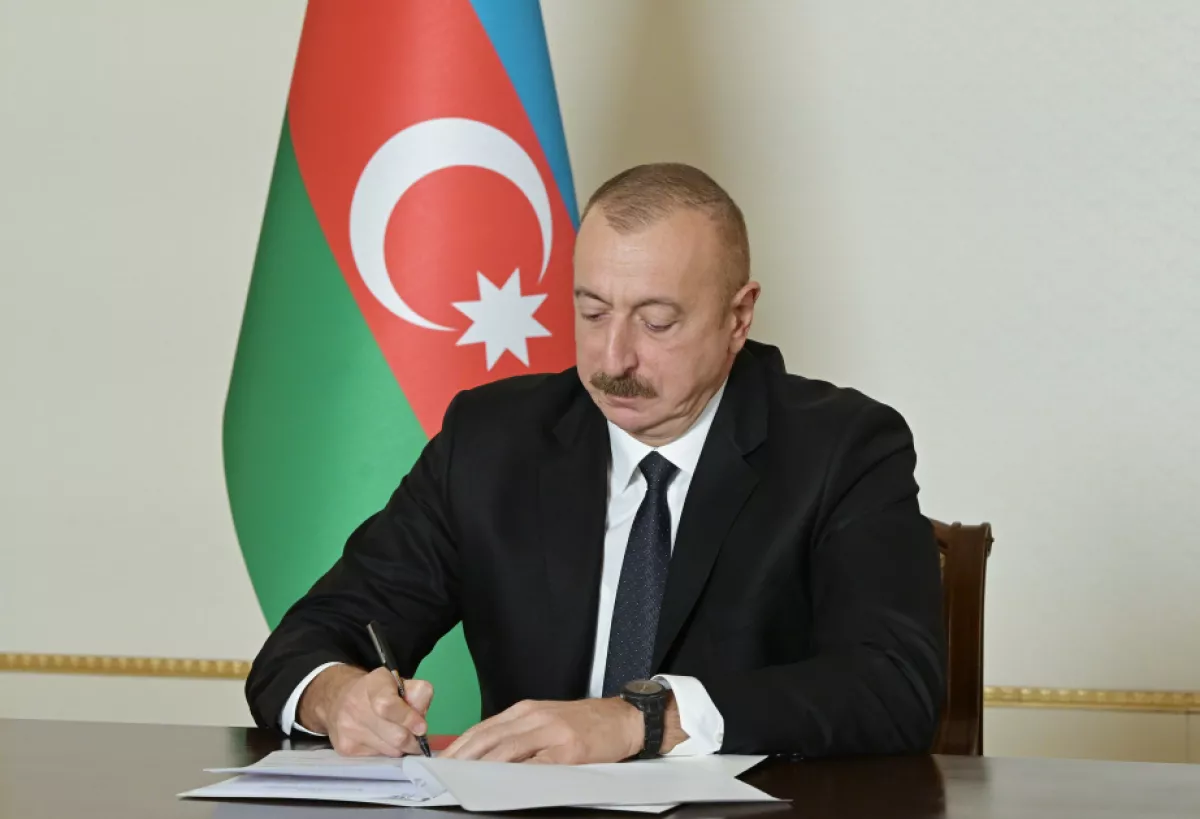
“Developing the non-oil sector is of particular importance for strengthening Azerbaijan’s economic resilience, minimising the negative impact on the national economy of complex geopolitical processes unfolding in the world, disruptions in global supply chains and instability in external markets, as well as ensuring the country’s strategic economic sovereignty,” the preamble of the decree signed by the President of Azerbaijan Ilham Aliyev, entitled “On additional measures related to stimulating exports of non-oil and gas products and supporting transportation costs,” states.
The document emphasises that, despite positive dynamics in the structure of the non-oil sector, opportunities for local goods to access foreign markets remain limited. The same applies to the transportation of products manufactured in the Nakhchivan Autonomous Republic (NAR) to mainland Azerbaijan, which is also constrained to a significant extent by high logistics costs. As a result, excessive transportation expenses significantly reduce the competitiveness of domestic producers and hinder the diversification of foreign trade geography, particularly in relation to shipments of locally produced non-oil goods to new external markets.
In order to mitigate these barriers, the presidential decree stipulates that, in the case of exports of domestic non-oil goods, part of transportation costs will be covered through an “export transport support” mechanism financed from the state budget. In addition, an “internal transport support” mechanism will be applied to cover the costs of transporting non-commodity goods produced in the Nakhchivan Autonomous Republic to mainland Azerbaijan via land routes.
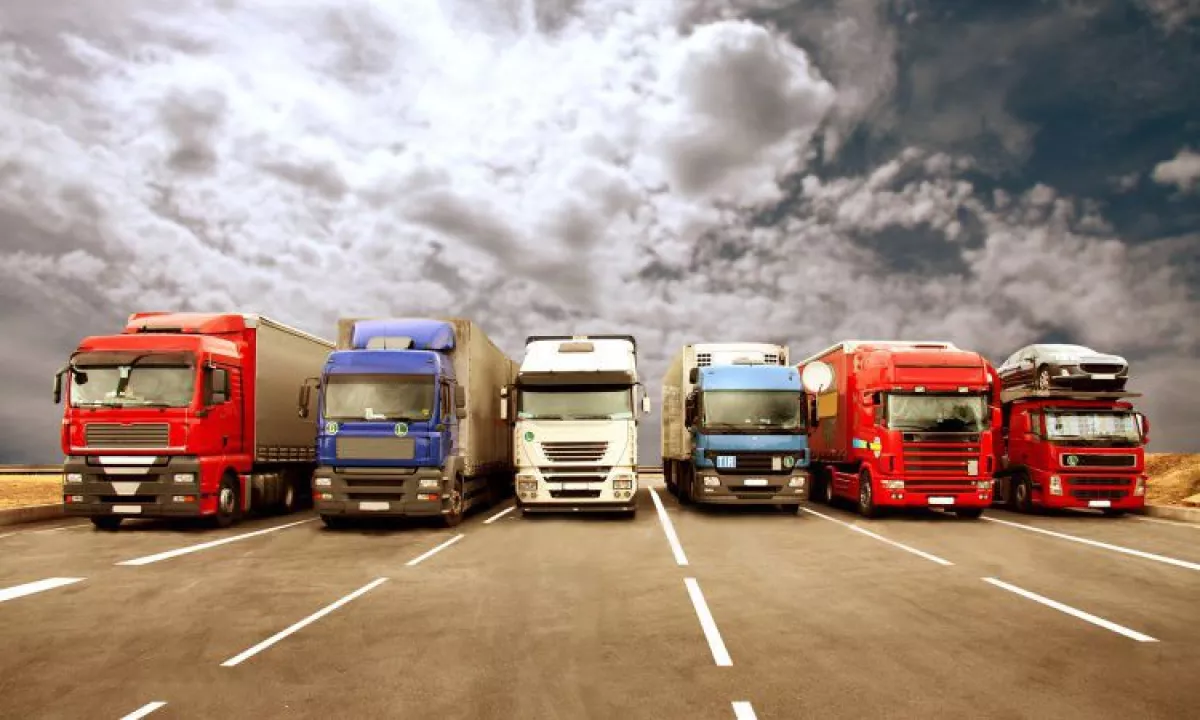
The decree also sets out a mechanism for calculating subsidies for export transportation, taking into account the costs incurred in transporting goods as well as the types of transport used. In particular, when goods are transported by rail, air, sea, or by motor vehicles registered in Azerbaijan, the maximum subsidy may reach up to 70% of the incurred costs. However, if the motor vehicle is not registered in the country, the subsidy rate is reduced to 50%.
At the same time, depending on the mode of transport used, the customs value of exported goods, and a number of other factors, the level of budgetary support may be lower. The final amount of the export transport subsidy is determined as the lower of the amounts calculated in accordance with subclauses 3.1.1 and 3.1.2 of the decree.
As for subsidies for domestic transportation, they are set at the level of 70% of the amount paid via non-cash settlements for the transportation of non-oil goods from the Nakhchivan Autonomous Republic to other regions of the country by land transport. The document notes that subsidies for both export and domestic transportation will be paid by the Ministry of Economy after the end of each quarter, based on an application submitted by the exporter and the seller (consignor).
Thus, the presidential decree serves as another instrument aimed at increasing the share of domestic non-oil products in Azerbaijan’s overall export volume.







 editor@caliber.az
 +994 55 444-88-98
 Азербайджан, Баку, ул. Низами, 203, Af Business House, 5-й этаж